Shostakovich: Children's Album Sheet Music Preview

Shostakovich: Children's Album

By Dmitri Shostakovich

Item: 00-PC-0009438

Digital Download
$0.99
Description
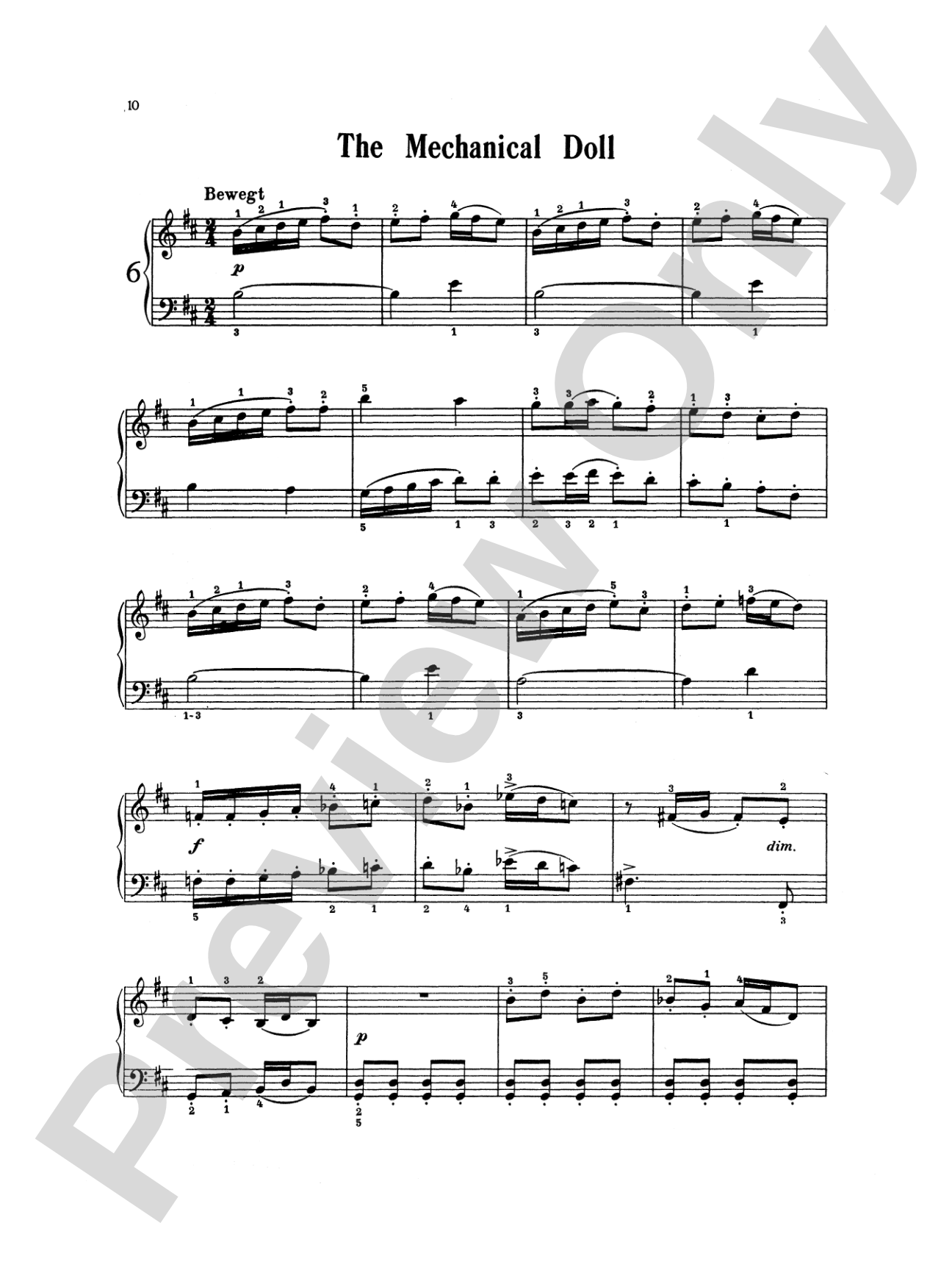
Titles: No. 1, March * No. 2, Valse * No. 3, The Bear * No. 4, A Funny Story * No. 5, A Sad Story * No. 6, The Mechanical Doll.

Don't just read it, hear it, play along with it, and watch your students grow with it. In MakeMusic Cloud, Shostakovich: Children's Album comes alive with professional accompaniment, adjustable tempo, and built-in practice tools that turn solo practice into real progress.

Sample Audio
No sample audio found.
Sample Video
Additional Details
Series: Kalmus Edition
Publisher: Alfred Music
Page Count: 12
SKU: 00-PC-0009438

More about this title

About the Composer: Dmitri Shostakovich

Dmitri Shostakovich (1906-1975) was a Russian composer whose output spanned symphonies, chamber works, film scores, and keyboard music. His compositional voice was unmistakably modern, marked by sharp harmonic language, wit, and emotional directness even in works intended for younger audiences.

The Children's Album represents Shostakovich's gift for writing music that respects young musicians' intelligence while remaining genuinely rewarding to play. Rather than condescend, he crafted short character pieces that introduce pianists to twentieth-century harmony and rhythmic sophistication within accessible technical frameworks.

Why we love this

These six pieces prove that contemporary classical language doesn't require technical pyrotechnics to engage intermediate students. Each movement stands alone as a complete musical thought, making the set ideal for recital programming or as stepping stones into more complex twentieth-century repertoire without overwhelming young performers.

What to expect

The album balances mechanical precision with emotional warmth. A march chugs alongside a waltz; a bear stomps through its narrative while a mechanical doll whirrs with deliberate, unsettling accuracy. Yet beneath the wit and character sketches lies genuine compositional craft that respects the instrument and the listener.

Who it's for

Intermediate pianists ready to move beyond Romantic-era conventions and explore twentieth-century writing with confidence. These pieces work equally well for students building recital programs and for teachers introducing modern harmonic language without requiring advanced technical facility.

How to get the most out of it

  • Treat each piece as a character study. The titles aren't mere labels; they're invitations to shape touch, tempo, and articulation to match each miniature's personality.
  • Navigate the harmonic language with rhythmic clarity. Shostakovich's unexpected chord progressions land best when the pulse feels grounded and the phrasing is deliberate.
  • Balance transparency with weight. The textures are often sparse, so allow melodic lines to sing while keeping accompanying material light and rhythmically precise.
  • Resist the temptation to rush. These pieces benefit from unhurried tempos that give their quirky humor and melancholic moments room to register.

How to use it

Program these pieces as a thematic set in student recitals, or scatter individual movements throughout a concert to demonstrate stylistic range and twentieth-century sensibility. They also serve as excellent bridge material in a teaching studio, preparing students for the harmonic and textural demands of more advanced contemporary works.

Skills your students will build

  • Reading twentieth-century harmony and unexpected chord progressions
  • Maintaining rhythmic clarity in sparse, transparent textures
  • Interpreting character and mood through touch and articulation choices
  • Understanding extended techniques and modern notation conventions
  • Building independence between hands in non-traditional harmonic contexts

You May Also Like