
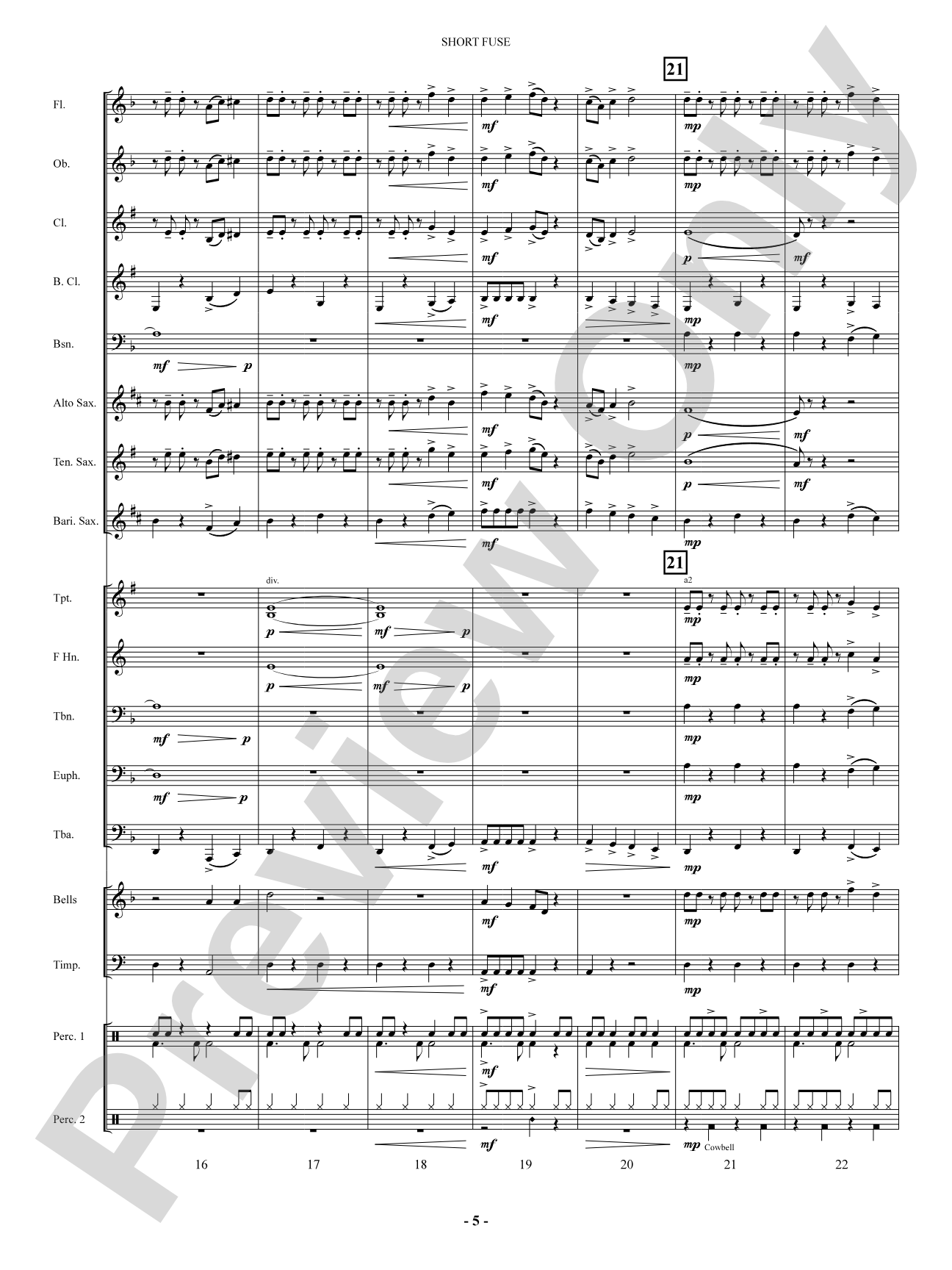
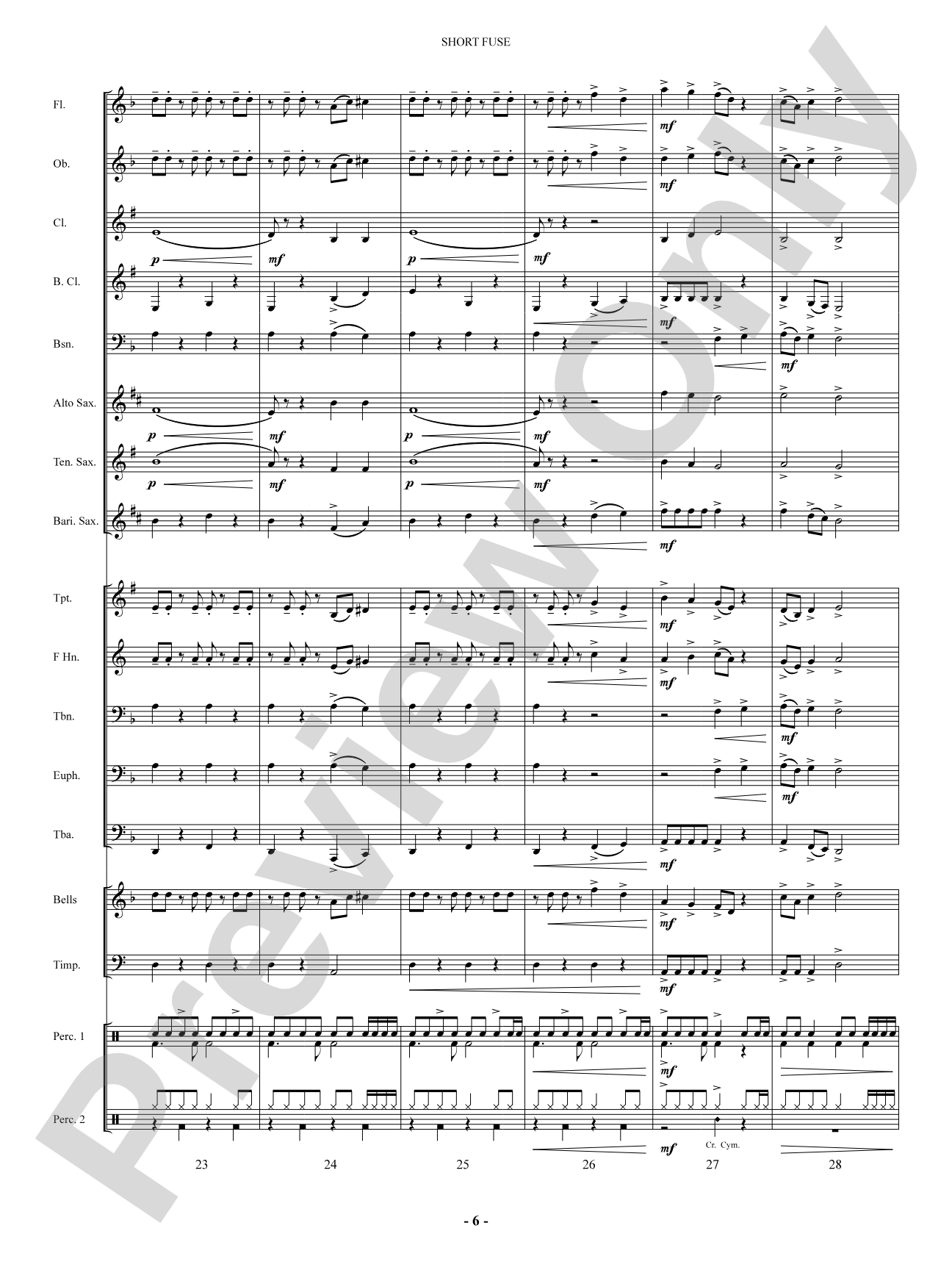
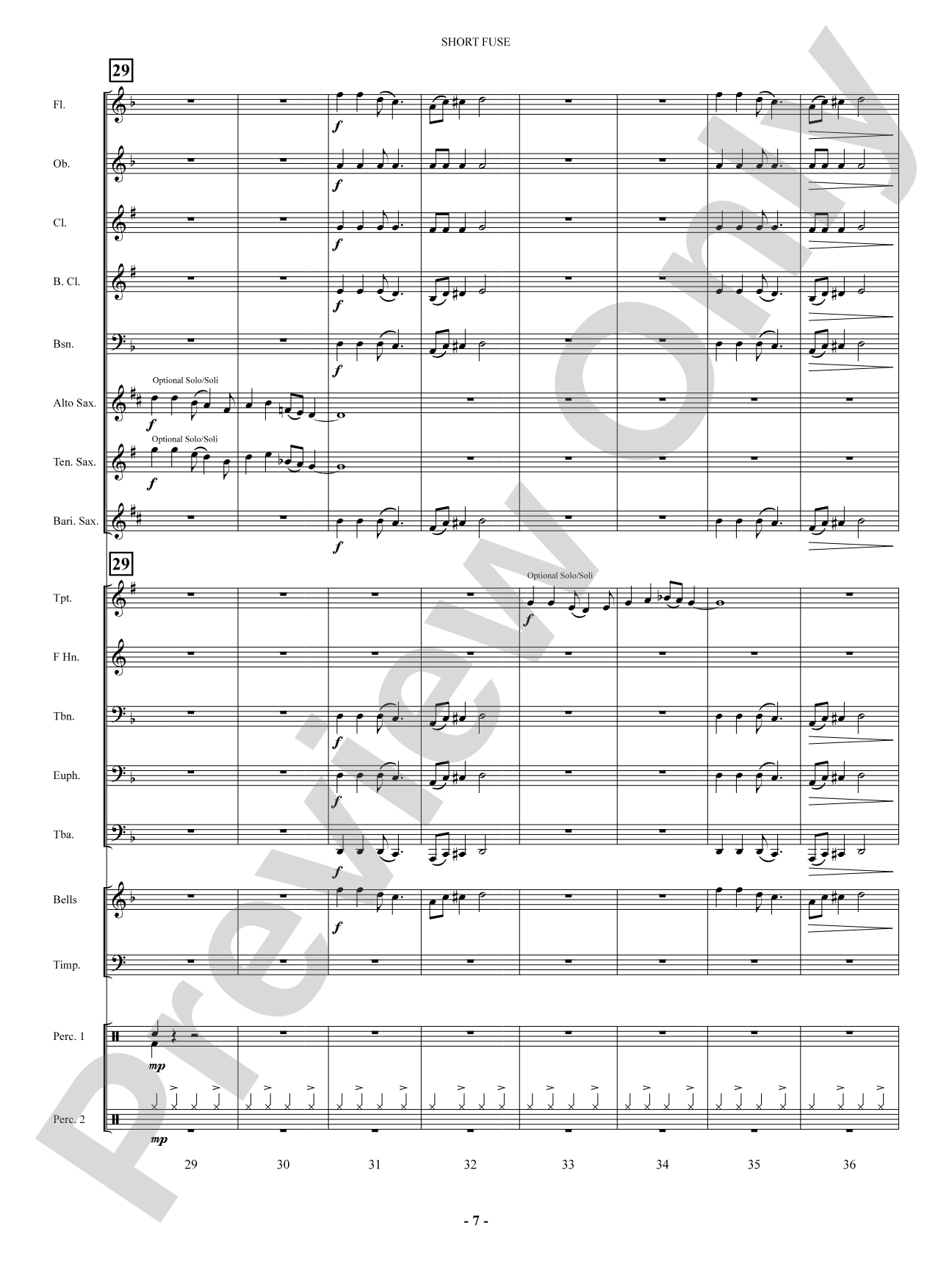
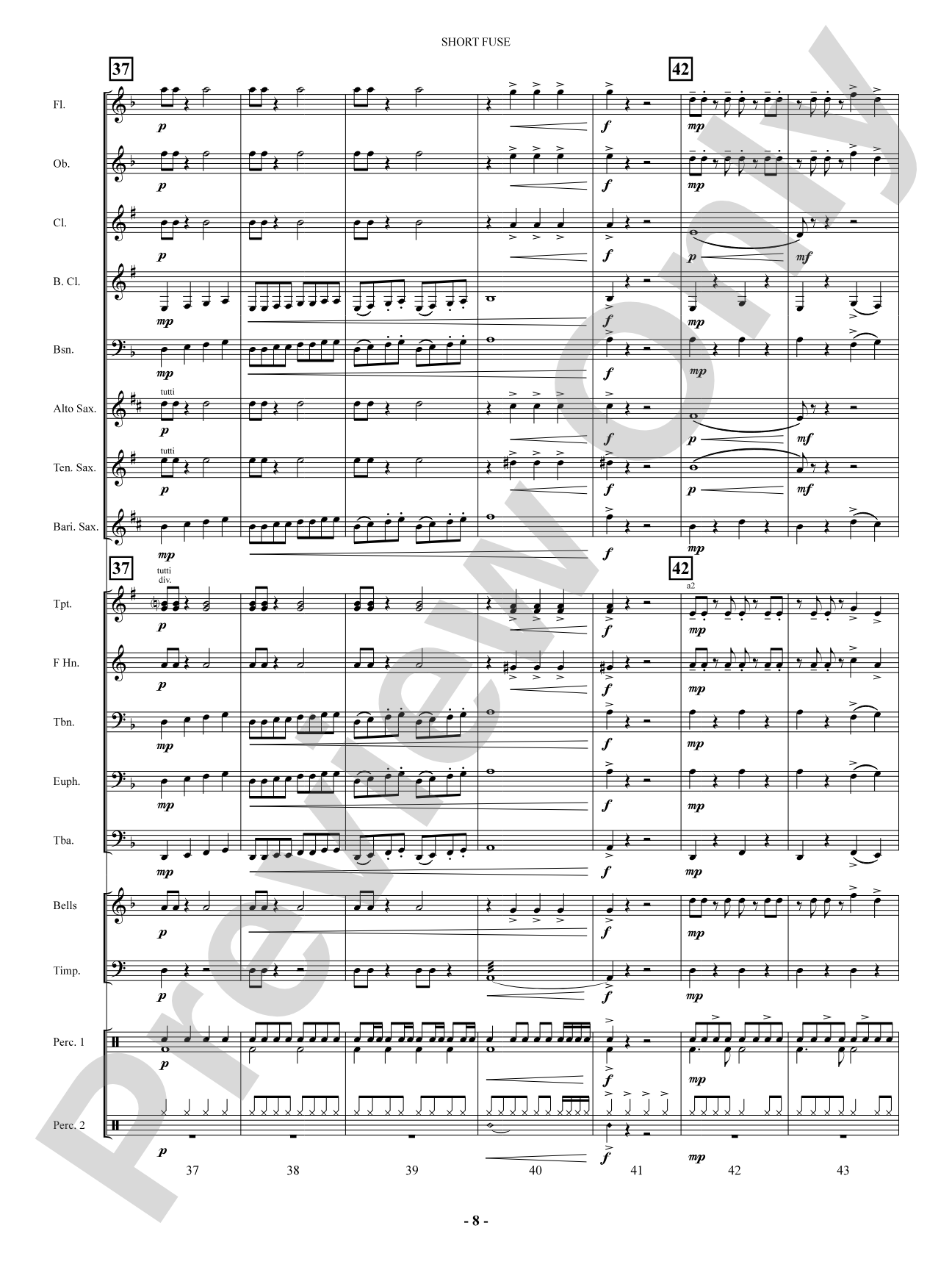
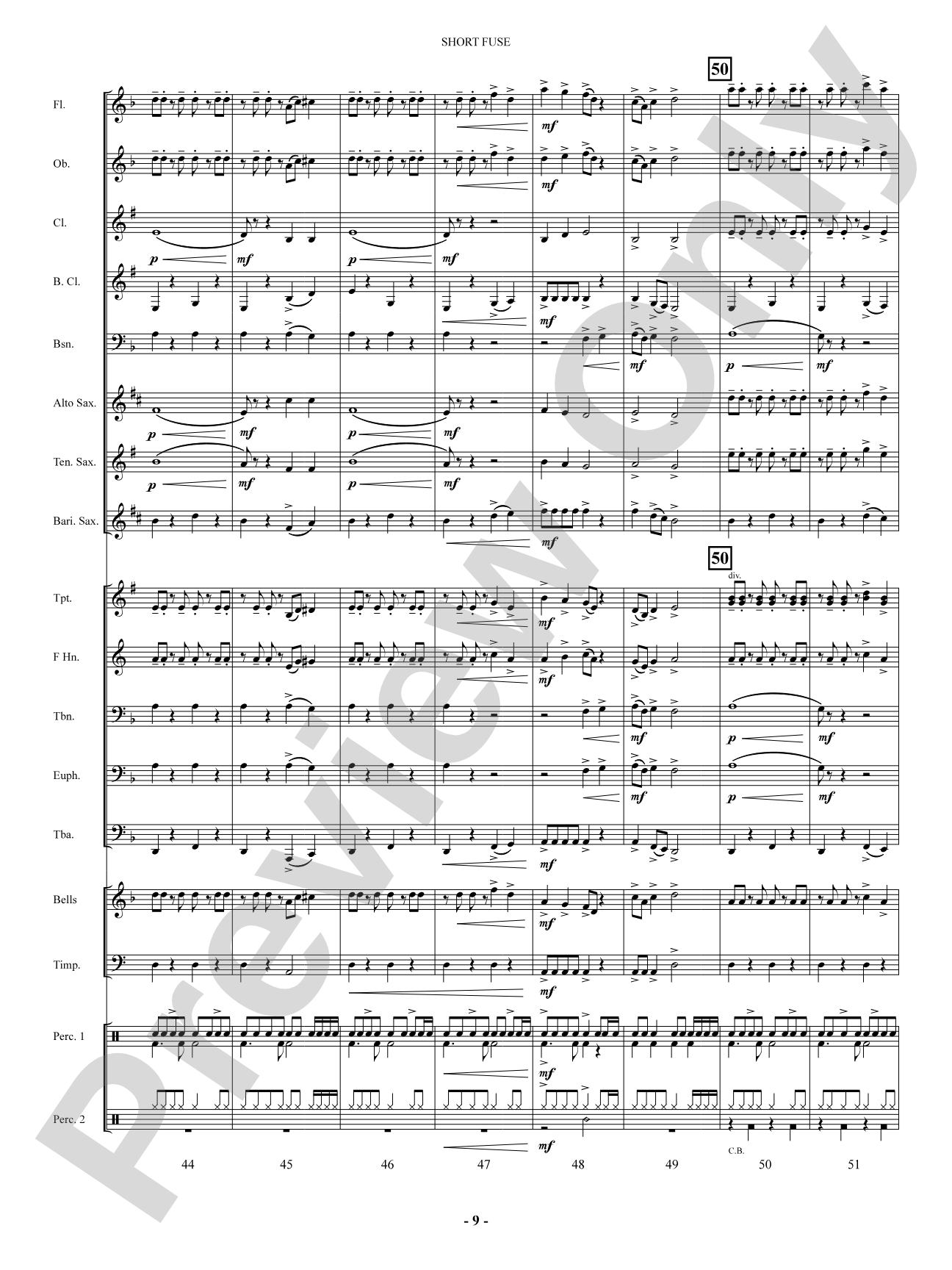
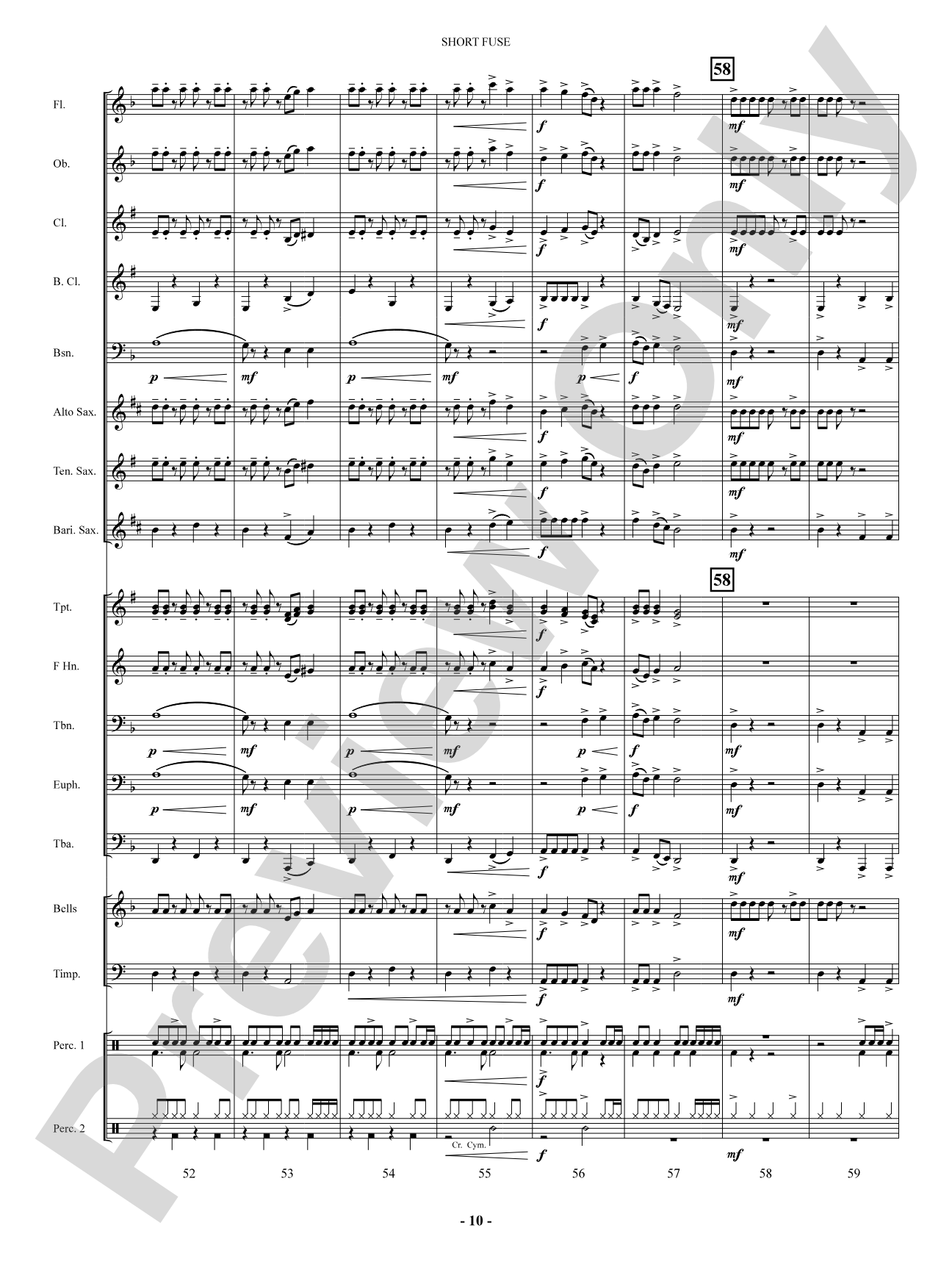
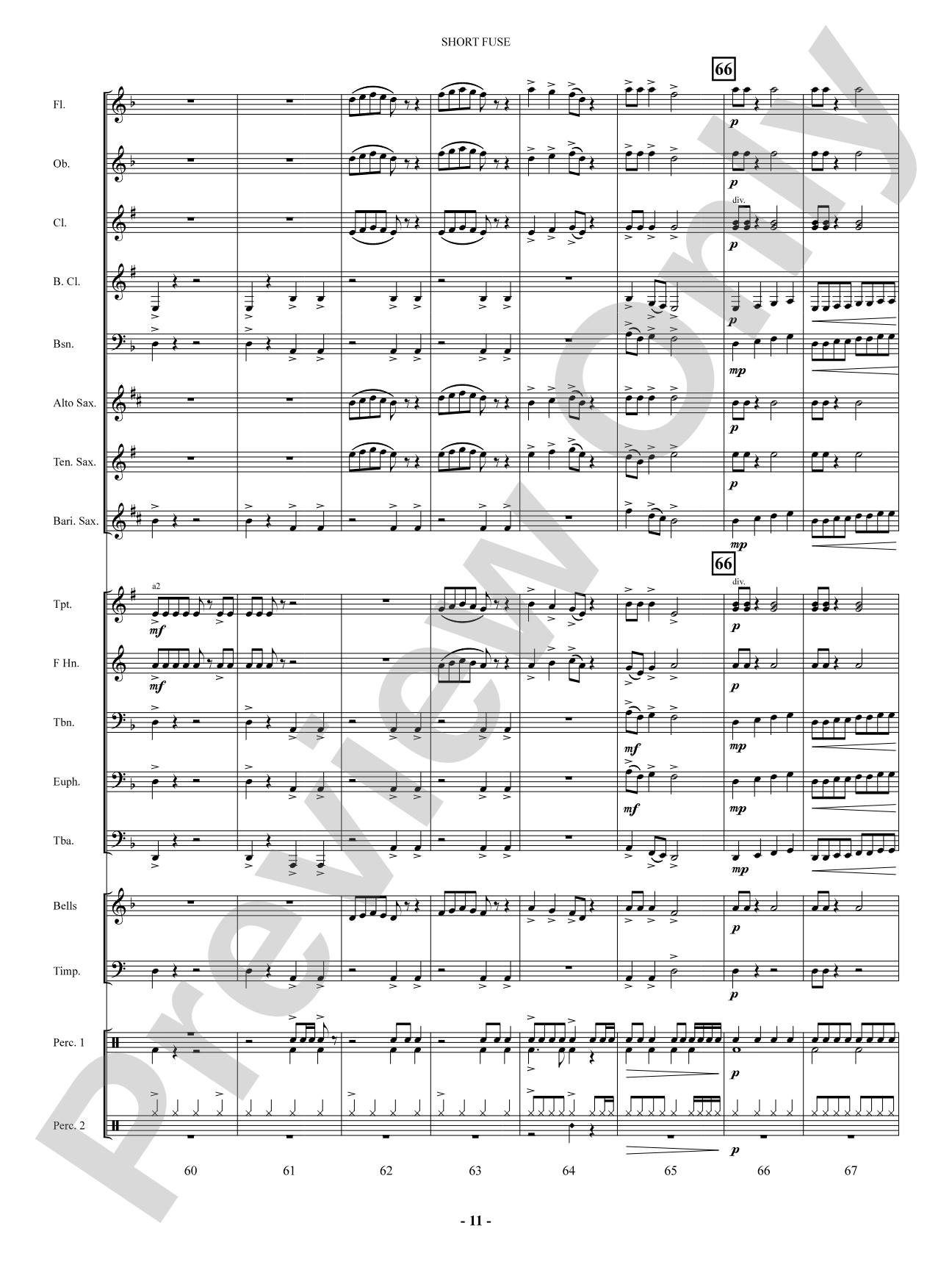
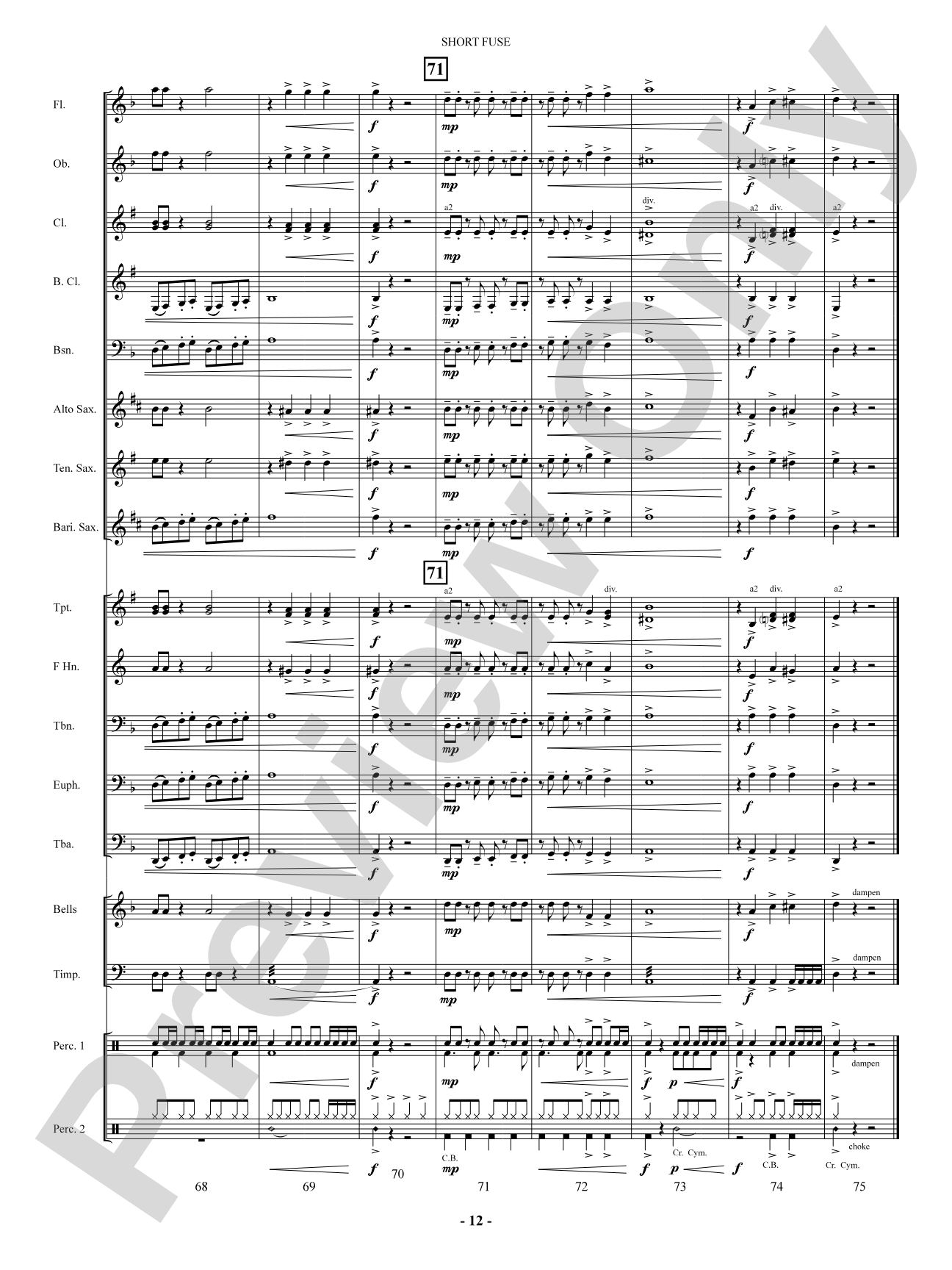

Short Fuse: Concert Band Conductor Score & Parts
By Heather Ellis Koehn
Grade: 1.5
Item: 98-PK-0000016
$58.00
Pickup currently not available
Buy Extra Parts (Digital PDF Download)
| Product | Price | Quantity |
|---|---|---|
| Short Fuse: Score | $8.00 | |
| Short Fuse: Flute | $3.00 | |
| Short Fuse: Oboe | $3.00 | |
| Short Fuse: 1st B-flat Clarinet | $3.00 | |
| Short Fuse: B-flat Bass Clarinet | $3.00 | |
| Short Fuse: Bassoon | $3.00 | |
| Short Fuse: E-flat Alto Saxophone | $3.00 | |
| Short Fuse: B-flat Tenor Saxophone | $3.00 | |
| Short Fuse: E-flat Baritone Saxophone | $3.00 | |
| Short Fuse: 1st B-flat Trumpet | $3.00 | |
| Short Fuse: 1st F Horn | $3.00 | |
| Short Fuse: 1st Trombone | $3.00 | |
| Short Fuse: Baritone B.C. | $3.00 | |
| Short Fuse: Baritone T.C. | $3.00 | |
| Short Fuse: Tuba | $3.00 | |
| Short Fuse: Mallets | $3.00 | |
| Short Fuse: Timpani | $3.00 | |
| Short Fuse: 1st Percussion | $3.00 | |
| Short Fuse: 2nd Percussion | $3.00 |
Parts Added to Cart!
Related Items
Short Fuse: Concert Band Conductor Score & Parts |
$58.00
|
View |
Description
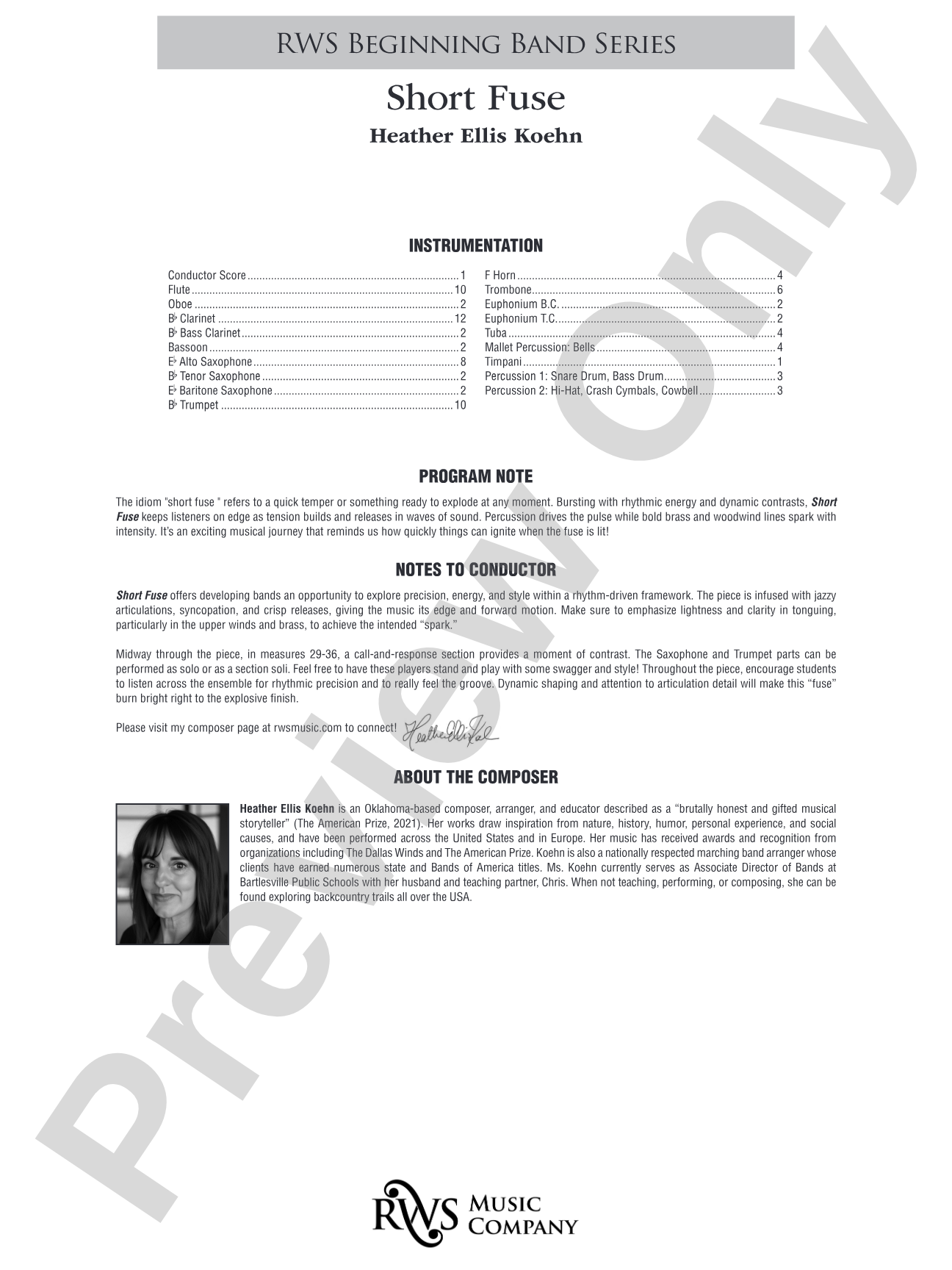
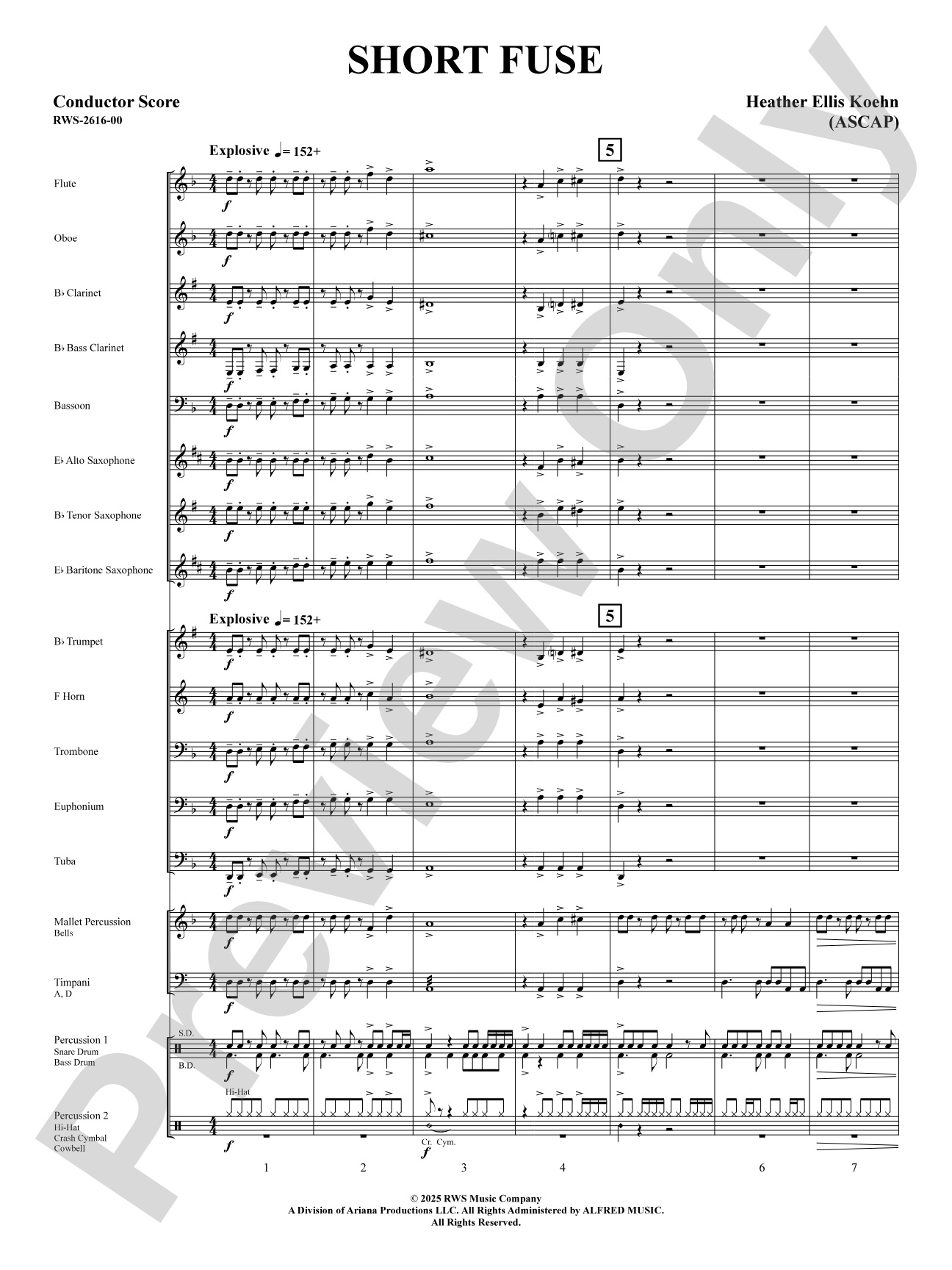
Short Fuse bursts to life from the first note and never lets up! This high-energy Grade 1.5 piece, full of rhythmic drive, percussive intensity, and dynamic contrasts, will keep both performers and audiences on edge. With tight grooves, explosive accents, and a sense of building tension throughout, it is the perfect concert opener or closer for developing bands ready to light the stage on fire.


Short Fuse: Concert Band Conductor Score & Parts isn't in MakeMusic Cloud just yet...but it could be. Let us know you'd like to see it, and you'll help shape what comes next. In the meantime, start a free trial and dive into thousands of interactive titles your students can play along with today.
Request This Title
Tell us you want it.
Start Your Free Trial
Explore everything that's ready to play right now.
Sample Audio
1
Audio File
--:--
0:00
0:00
Sample Video
Additional Details
Series:
RWS - Beginning Band
Publisher:
RWS Music Company
SKU:
98-PK-0000016
More about this title
About the Composer: Heather Ellis Koehn
Heather Ellis Koehn is a composer and arranger known for writing music that speaks directly to student musicians. Her work balances accessibility with musical substance, creating pieces that allow developing ensembles to sound confident and energized without requiring advanced technical demands.
Koehn understands what works on the concert stage at every level. Her compositions for beginning and intermediate bands consistently combine engaging rhythmic content with clear harmonic progressions, giving students meaningful musical ideas to execute rather than simple note reading.
Why we love this
This piece operates at the sweet spot where Grade 1.5 bands can generate genuine excitement without technical overreach. The rhythmic drive carries the entire work, meaning your sections stay locked in and engaged from measure one through the final chord. You get a crowd-pleaser that doubles as solid foundational work in articulation and ensemble precision.
What to expect
Restless and propulsive from the opening note. The piece refuses to settle into a groove long enough for audiences to get comfortable; each section arrives with fresh rhythmic texture and dynamic surprise, creating a sense of forward momentum that builds to release.
Who it's for
Beginning and early intermediate concert bands ready to tackle repertoire with genuine energy and punch. If your students have spent the year building rhythmic confidence and basic articulation skills, this piece proves they can handle real ensemble demands.
How to get the most out of it
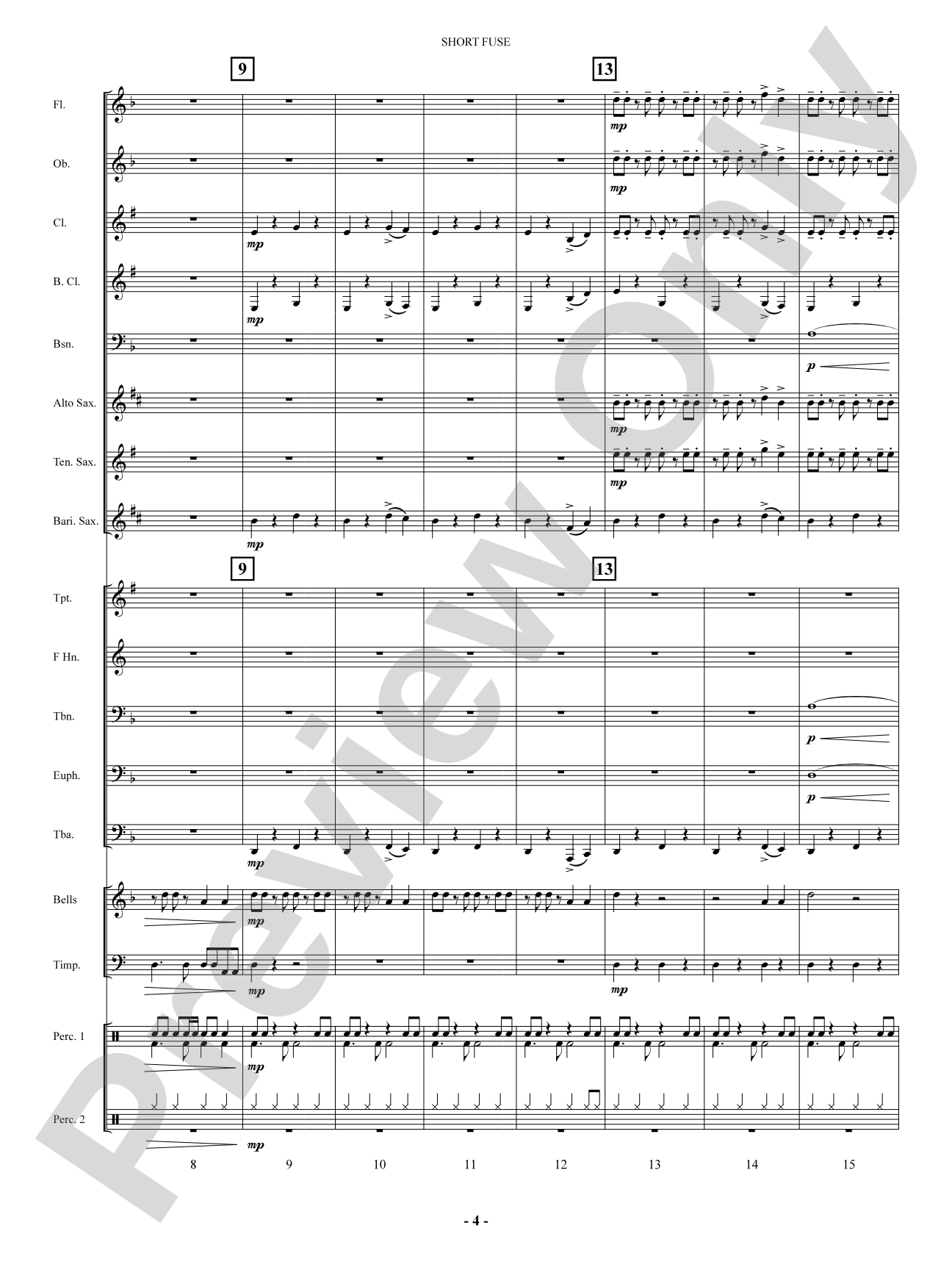
- Establish the groove pocket in your opening rehearsal. These students must internalize the rhythmic foundation before adding any expressive layer; run the bass line, snare, and kick drum pattern together in isolation first.
- Shape the dynamic contrasts through careful balance. The piece builds tension, so resist the urge to play loudly throughout. Softer passages amplify the impact of explosive accents when they arrive.
- Anchor the harmonic motion with your low brass and woodwinds. At this level, the upper voices naturally want to carry the melody, but the piece's forward momentum lives in the bass voices and their conversation with the rhythm section.
- Mark the accented figures clearly in parts so players recognize them as architectural moments, not random attacks. Young musicians need visual cues to execute the 'tight grooves' the score calls for.
How to use it
Open your spring concert with this. It sets an immediate tone of confidence and energy that carries through the rest of your programming. Alternatively, use it as a closer if you want the audience leaving on an upbeat surge rather than a lyrical note.
Skills your students will build
- Articulating precise rhythmic patterns in ensemble
- Responding to sudden dynamic and textural changes
- Maintaining steady tempo through rhythmic complexity
- Balancing melodic line against rhythmic accompaniment figures
- Executing accented attacks with controlled intensity