
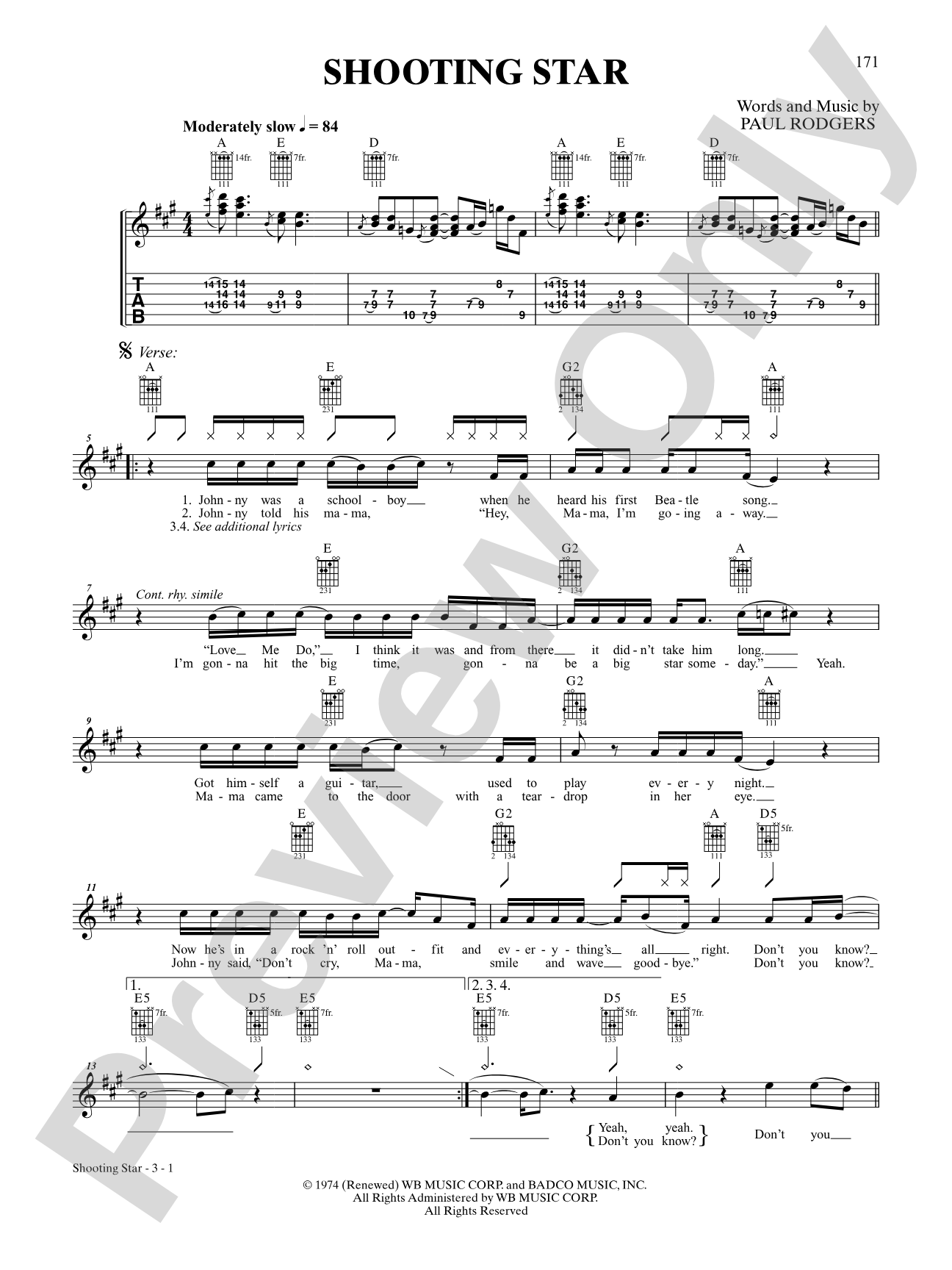

Shooting Star: Interm./Easy Guitar TAB
56 Essential Songs of the Era
Item: 00-PS-0011410
$4.99
One moment…
Description
As the baby boom generation changed the world, they also changed and evolved. This book is the soundtrack of that change. This book contains easy guitar TAB arrangements of 56 songs by the greatest artists of the '70s and '80s, including Pink Floyd, The Doobie Brothers, The Rolling Stones, Fleetwood Mac, Jimmy Buffett, Eric Clapton, James Taylor, Led Zeppelin, Joe Cocker, Journey, Santana, The Sex Pistols, The Eagles, Van Morrison, Loggins & Messina, John Denver, Gordon Lightfoot, The Allman Brothers Band, Bad Company, The Bee Gees, Bruce Springsteen, and many more!


Shooting Star: Interm./Easy Guitar TAB isn't in MakeMusic Cloud just yet...but it could be. Let us know you'd like to see it, and you'll help shape what comes next. In the meantime, start a free trial and dive into thousands of interactive titles your students can play along with today.
Request This Title
Tell us you want it.
Start Your Free Trial
Explore everything that's ready to play right now.
Sample Audio
No sample audio found.
Sample Video
No sample videos found.
Additional Details
Series:
The Boomer's Book
Publisher:
Alfred Music
Page Count:
260
SKU:
00-PS-0011410
More about this title
About the Composer: Paul Rodgers
Paul Rodgers co-founded Free in 1968 and went on to become the lead vocalist and guitarist for Bad Company, one of the defining rock bands of the 1970s. His powerful voice and songwriting shaped the hard rock sound of that era, delivering anthems like "Feel Like Makin' Love" and "Can't Get Enough." Beyond performing, Rodgers has remained active in music across decades, collaborating with artists across genres and contributing arrangements and compositions to educational and popular music collections.
Why we love this
This folio captures the breadth of rock's golden age through accessible TAB arrangements, making 56 classics within reach of students who are still building their technical foundation. The collection balances iconic power ballads, driving rockers, and folk-influenced pieces, so students encounter real variety in style and approach without leaving the intermediate and easy difficulty range. Programming songs students actually recognize and want to play builds motivation in ways that isolated exercises never can.
What to expect
Opening this book transports you straight into the heart of rock's most generative decades. Songs range from the bluesy, soulful grooves of Santana and Joe Cocker to the soaring melodic confidence of Journey and The Eagles, each carrying the distinctive character of its era while remaining fundamentally accessible on the fretboard.
Who it's for
Intermediate and easy-level guitarists ready to tackle recognizable rock repertoire with TAB notation as a guide. This collection works well for students building reading skills alongside technique, as well as for guitarists who want to develop their interpretive voice by learning songs they genuinely connect with.
How to get the most out of it
- Spend time with the original recordings before diving into the TAB. Hearing the actual vocal melody and rhythm section will anchor your phrasing, especially in songs where feel matters more than technical precision.
- Pay attention to the voicings and chord shapes throughout the book. Many of these songs rely on specific fingering patterns that create the signature sound, so don't default to simplified versions.
- Let dynamics shape your interpretation. Rock from this era thrived on contrast between quiet verses and explosive choruses; your dynamics should reflect that arc.
How to use it
Assign individual songs as repertoire students perform in recitals, allowing each guitarist to choose an arrangement that speaks to them personally. You can also build ensemble arrangements by having multiple students tackle different sections of the same song, creating full-band experiences without requiring advanced musicianship from every participant.
Skills your students will build
- Reading TAB notation in the context of complete songs
- Translating vocal and instrumental melodies to the guitar fingerboard
- Recognizing and executing rock rhythm patterns across multiple genres
- Understanding chord voicings and how specific fingerings affect tone and character
- Interpreting dynamics and phrasing in non-classical contexts