

Shooting Star: 2-Part Choral Octavo
Words and music by Andy Beck
Item: 00-PO-0000722

$2.05
Minimum order quantity: 10 copies
Please note: Under U.S. copyright law, you must purchase the exact number of copies needed for your ensemble. Printing, duplicating or sharing additional copies is strictly prohibited.
Pickup currently not available
Description
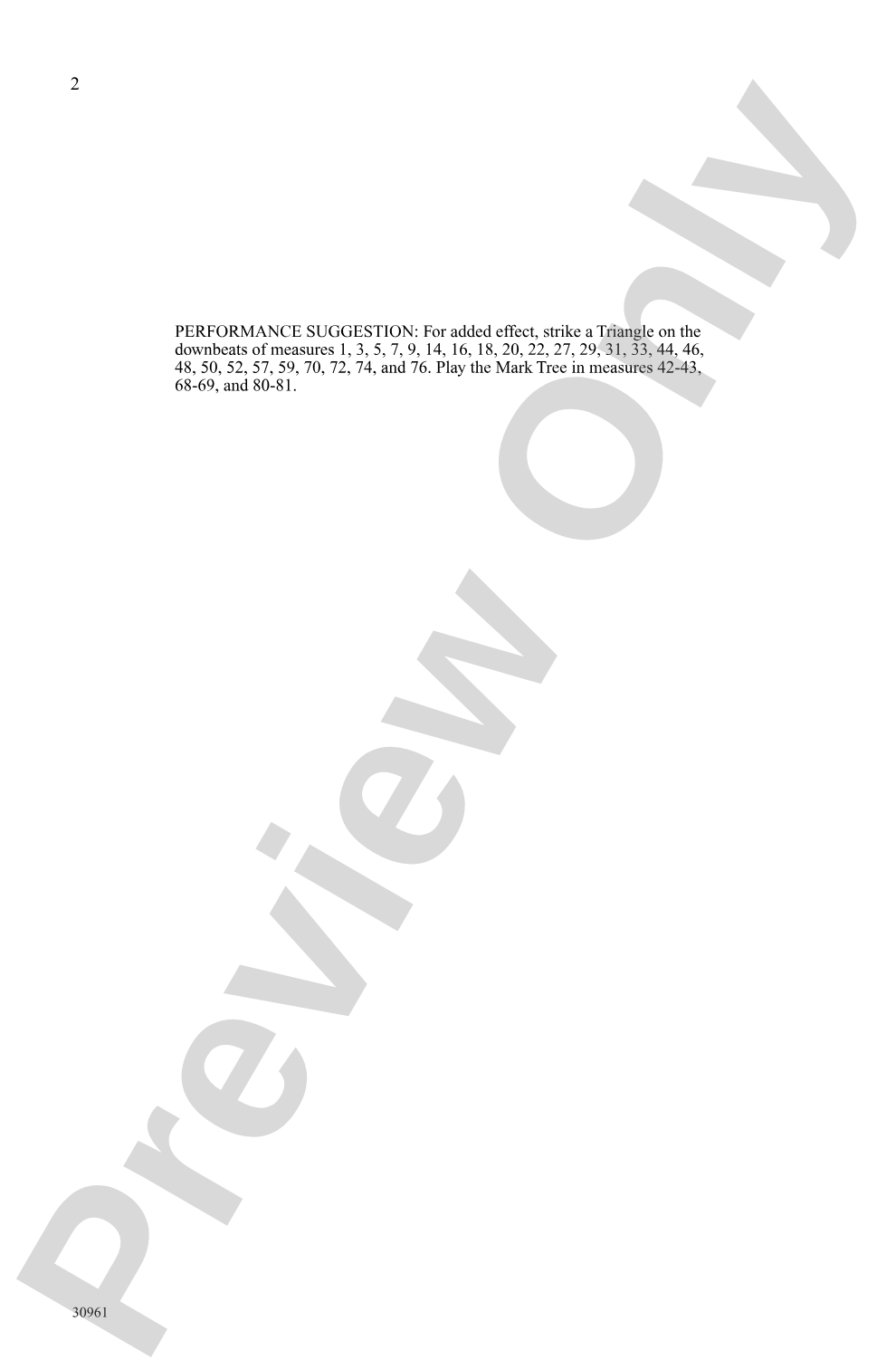
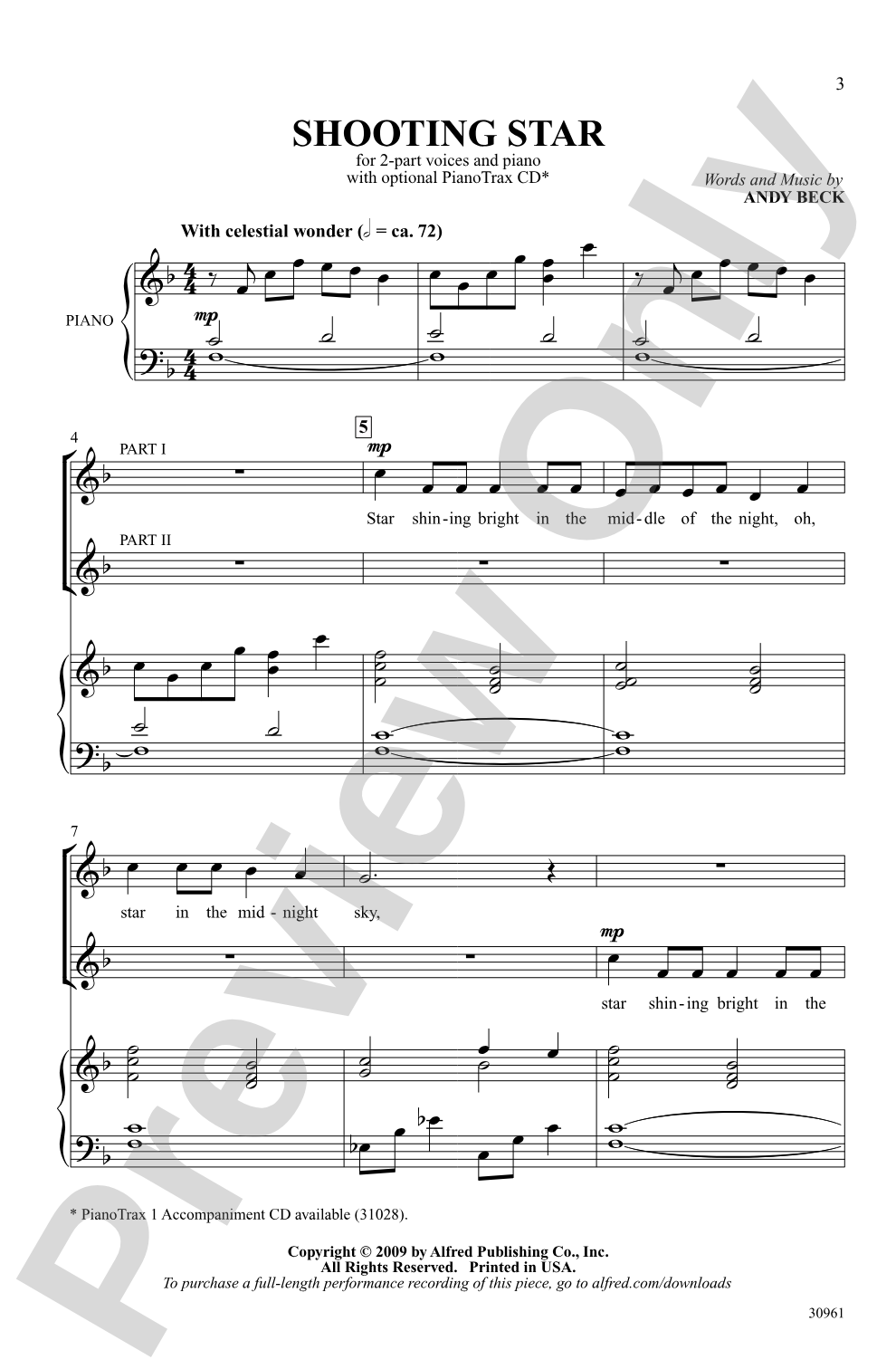
A sparkling piano motive unites the delicate sections of this celestial charmer, crafted exclusively for 2-part voices. Harmony is easily achieved when the graceful tune is paired with a long-tone countermelody. And a special friendship is made as the singers converse with a shooting star. Percussion instructions included. Accompaniment included on PianoTrax 1 CD (00-31028). This title is available in MakeMusic Cloud.


Don't just read it, hear it, play along with it, and watch your students grow with it. In MakeMusic Cloud, Shooting Star: 2-Part Choral Octavo comes alive with professional accompaniment, adjustable tempo, and built-in practice tools that turn solo practice into real progress.
Open in the Player
Jump straight in and assign it today.
Start Your Free Trial
Open this title and explore the full library in minutes.
Sample Audio
1
Audio File
--:--
0:00
0:00
Sample Video
No sample videos found.
Additional Details
Series:
Alfred Choral Designs
Publisher:
Alfred Music
Page Count:
12
SKU:
00-PO-0000722
More about this title
About the Composer: Andy Beck

Andy Beck directs choral publications at Alfred Music and has composed and arranged more than 450 choral works now in active repertoires worldwide. His output spans from accessible two-part pieces to sophisticated multi-voiced arrangements, and he has also developed influential choral resources including Sing at First Sight and Vocalize! 45 Vocal Warm-Ups That Teach Technique. His music circulates globally, performed by choirs at every level, a fact reflected in the breadth of his YouTube presence.
Beyond his publishing role, Beck maintains an active presence as guest conductor, adjudicator, and clinician for music educators across the United States and internationally. He has served as commissioned composer and conductor for honor choirs and all-state groups, particularly throughout the Southeast. A trained tenor with degrees in music education from Ithaca College and Northwest Missouri State University, Beck brings classroom experience and performance artistry to every project he undertakes.
Why we love this
Beck writes for two-part choirs with genuine musical sophistication rather than oversimplification. The pairing of a sparkling piano figure with a graceful melody and long-tone countermelody creates an elegant harmonic foundation that novice singers can achieve without strain, making this a piece that sounds mature even in less experienced voices.
What to expect
Shimmering and lyrical, this piece evokes the quiet wonder of watching the night sky. The combination of twinkling piano accompaniment and the singers' conversation with a celestial visitor creates an intimate, almost dreamlike quality that feels both contemporary and timeless.
Who it's for
This piece suits beginning and intermediate two-part choirs, particularly those new to part singing or building confidence in harmonic blend. It works equally well in middle school settings where voices are changing and in community or adult choirs seeking approachable yet musically rewarding repertoire.
How to get the most out of it
- Establish the piano motive clearly in rehearsal before voices enter; this figure acts as the musical glue throughout the piece, so ensemble familiarity with its rhythmic and harmonic contour helps singers stay grounded.
- Shape the long-tone countermelody with subtle dynamic contours to avoid static, disconnected singing; encourage singers to listen actively to the primary melody line so the harmonies feel responsive rather than independent.
- Balance Part 1 and Part 2 carefully during the conversational section with the shooting star; this interplay works best when both lines project equally and singers maintain rhythmic precision while allowing expressive phrasing to emerge naturally.
- Use the included percussion instructions to enhance the celestial atmosphere; these additions should shimmer delicately without overwhelming the choral sound.
How to use it
Program this as a standalone feature on a spring or winter concert to provide textural contrast with heavier or faster pieces; its delicate nature pairs well with more robust repertoire. The celestial theme also suits concert programs centered on wonder, imagination, or seasonal celebration, and its moderate length makes it an efficient festival or competition selection.
Skills your students will build
- Singing in two parts with secure harmonic awareness
- Sustaining long tones while maintaining pitch stability
- Responding to piano accompaniment cues and following melodic phrasing
- Balancing independent vocal lines within ensemble texture
- Coordinating with percussion parts to enhance musical expression