
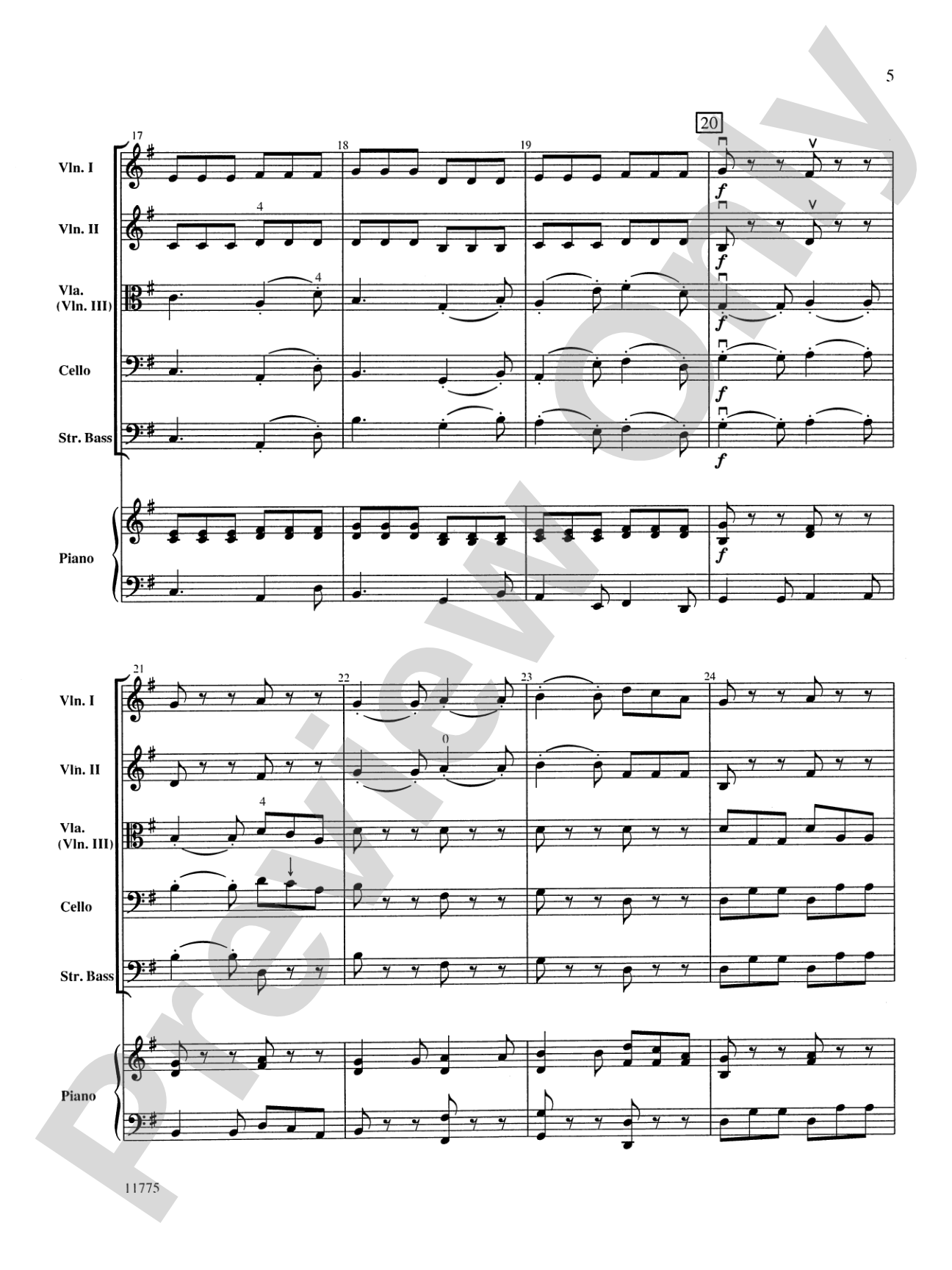
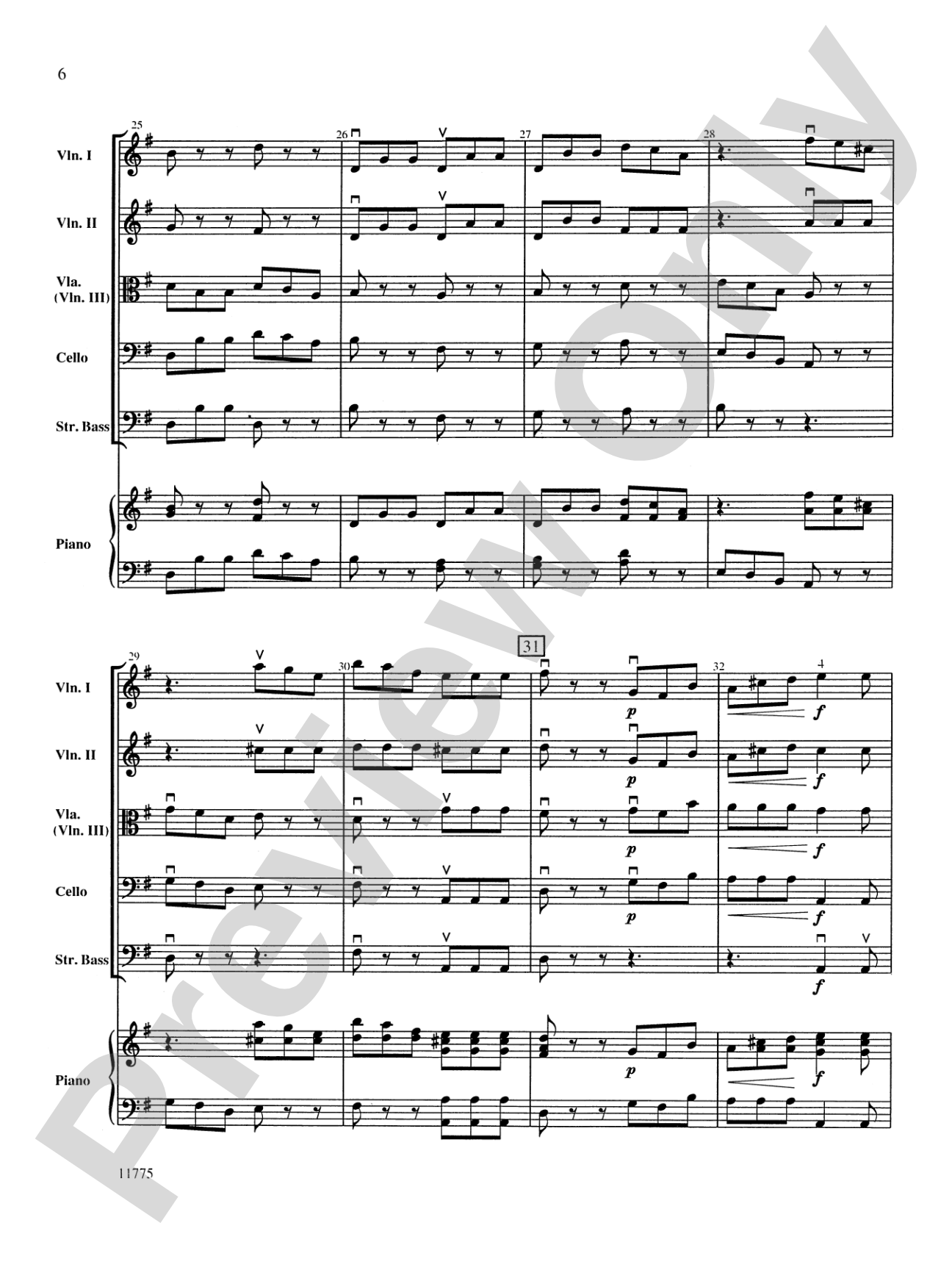
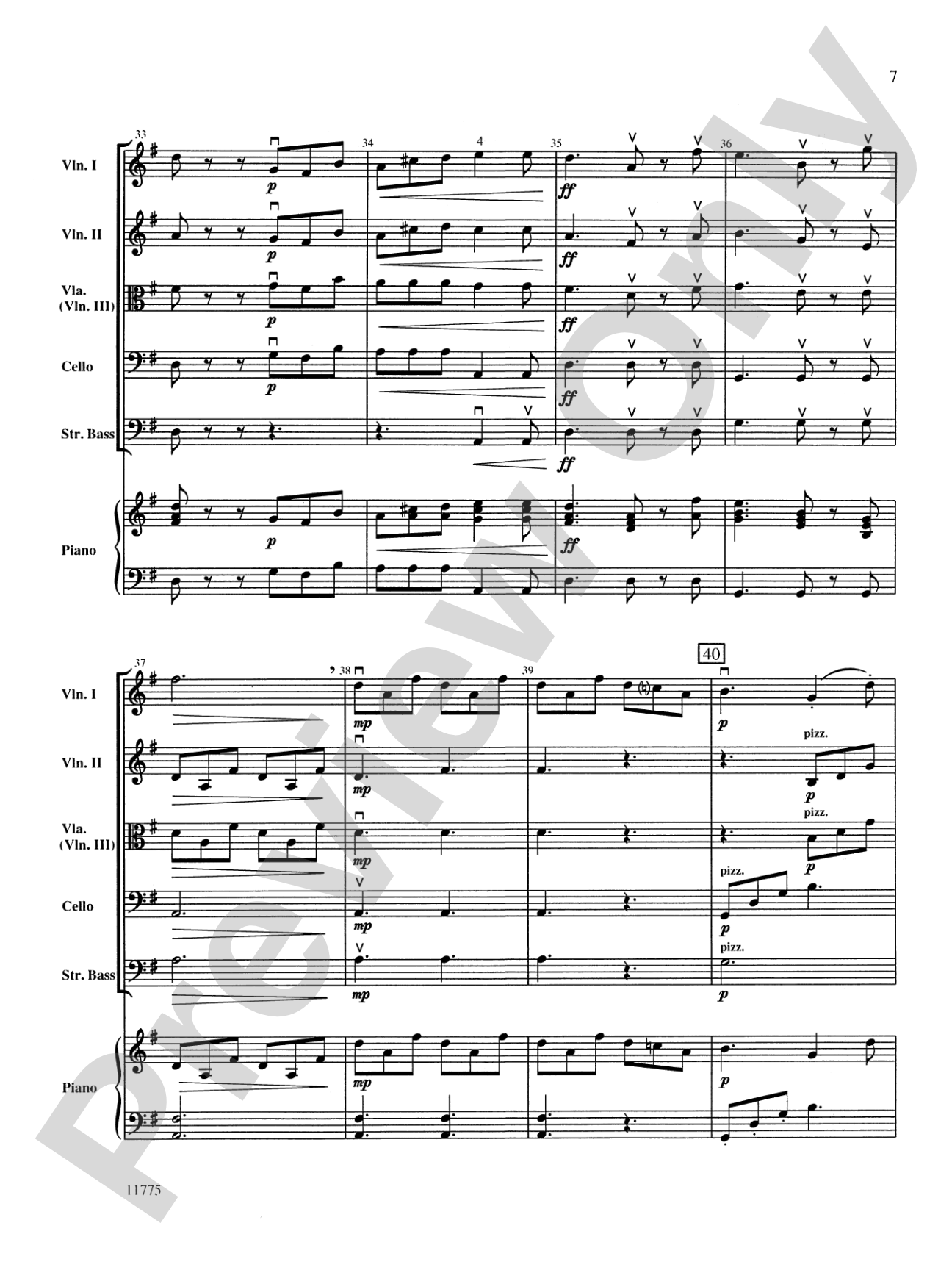
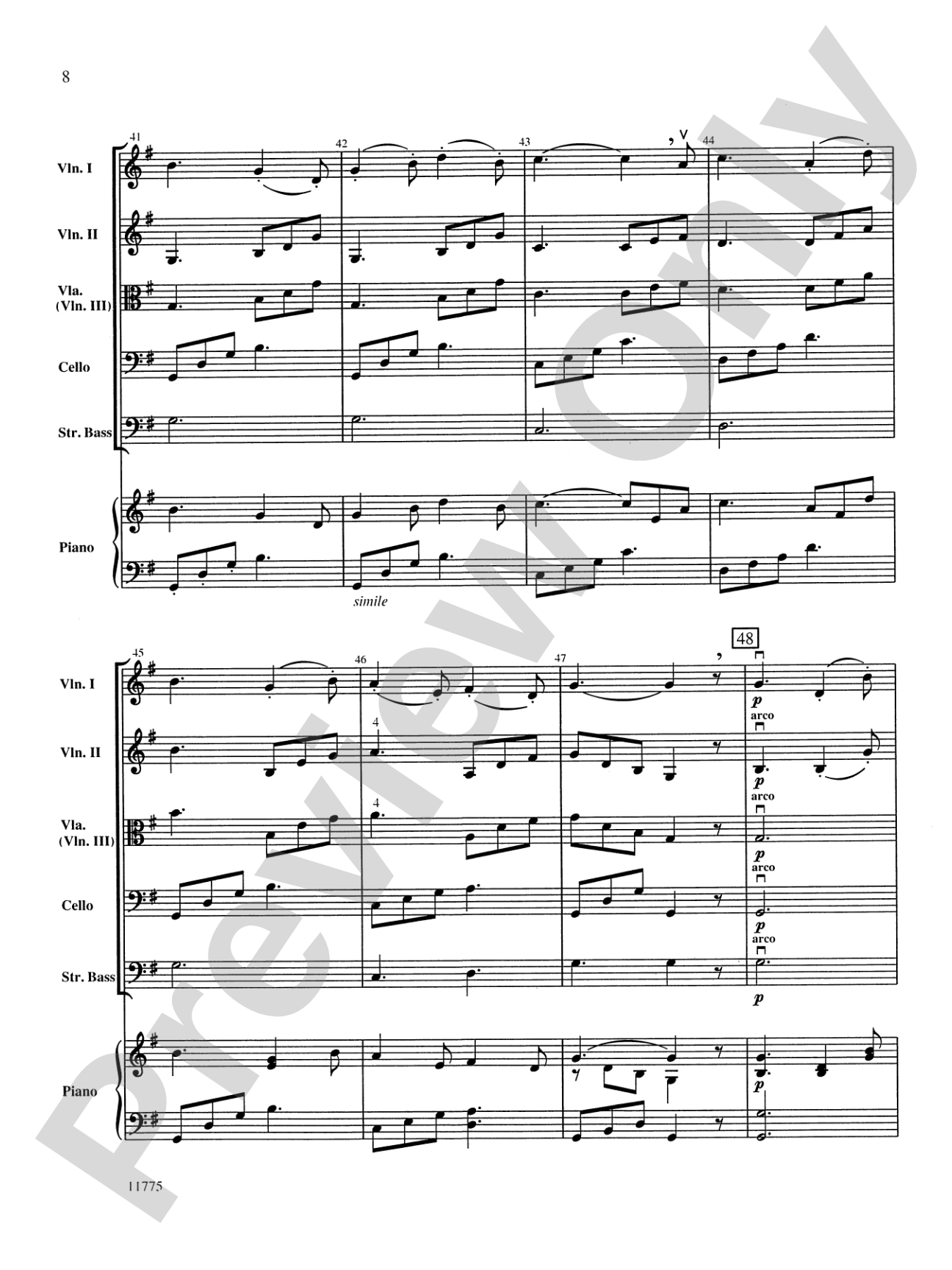
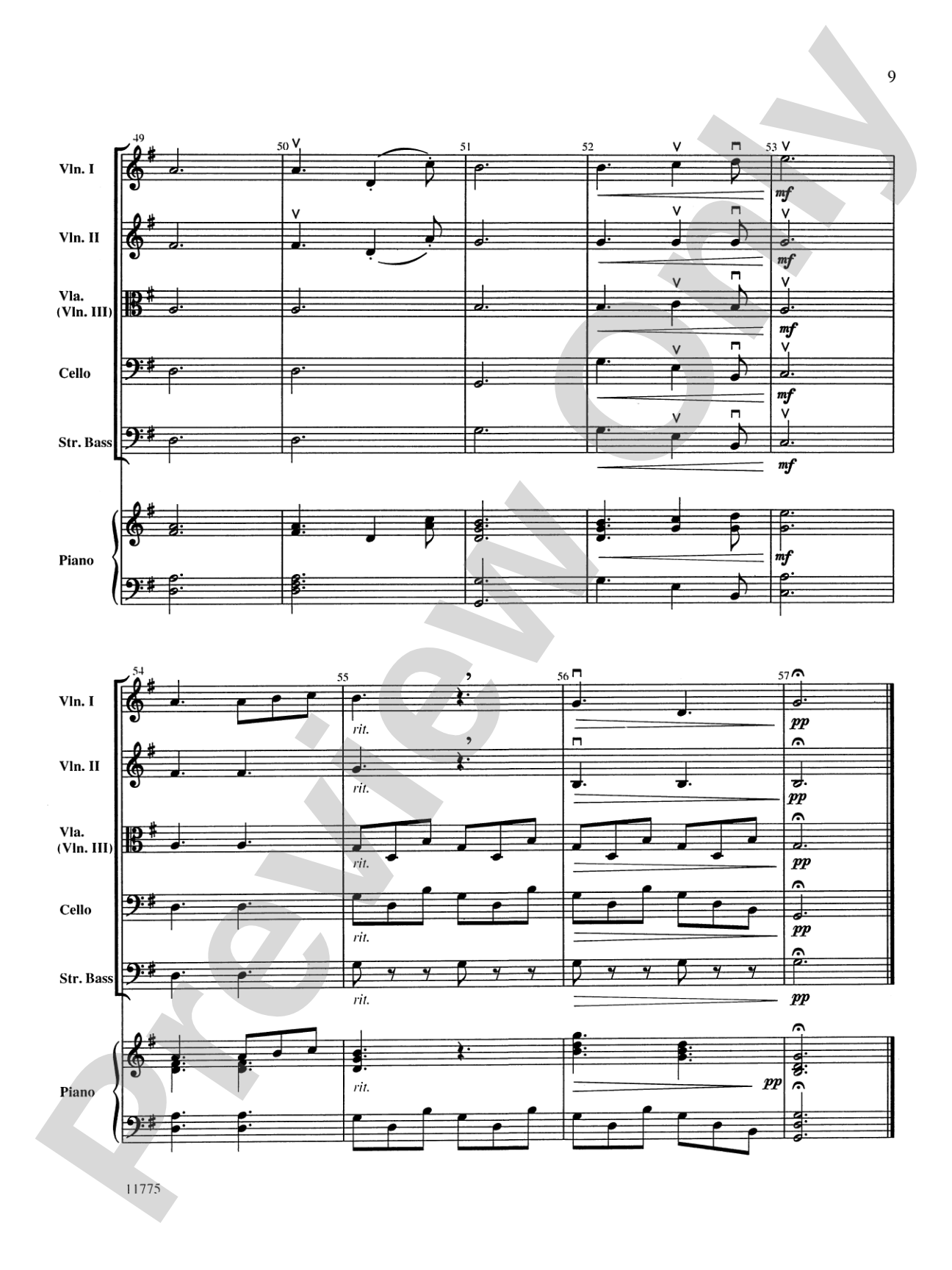




Shepherd's Hymn: String Orchestra Conductor Score & Parts
By Richard Meyer
Grade: 1
Item: 00-PK-0000025

$46.00
Pickup currently not available
Buy Extra Parts (Digital PDF Download)
| Product | Price | Quantity |
|---|---|---|
| Shepherd's Hymn: Score | $8.00 | |
| Shepherd's Hymn: 1st Violin | $5.99 | |
| Shepherd's Hymn: 2nd Violin | $5.99 | |
| Shepherd's Hymn: 3rd Violin (Viola [TC]) | $5.99 | |
| Shepherd's Hymn: Viola | $5.99 | |
| Shepherd's Hymn: Cello | $5.99 | |
| Shepherd's Hymn: String Bass | $5.99 | |
| Shepherd's Hymn: Piano Accompaniment | $5.99 |
Parts Added to Cart!
Description
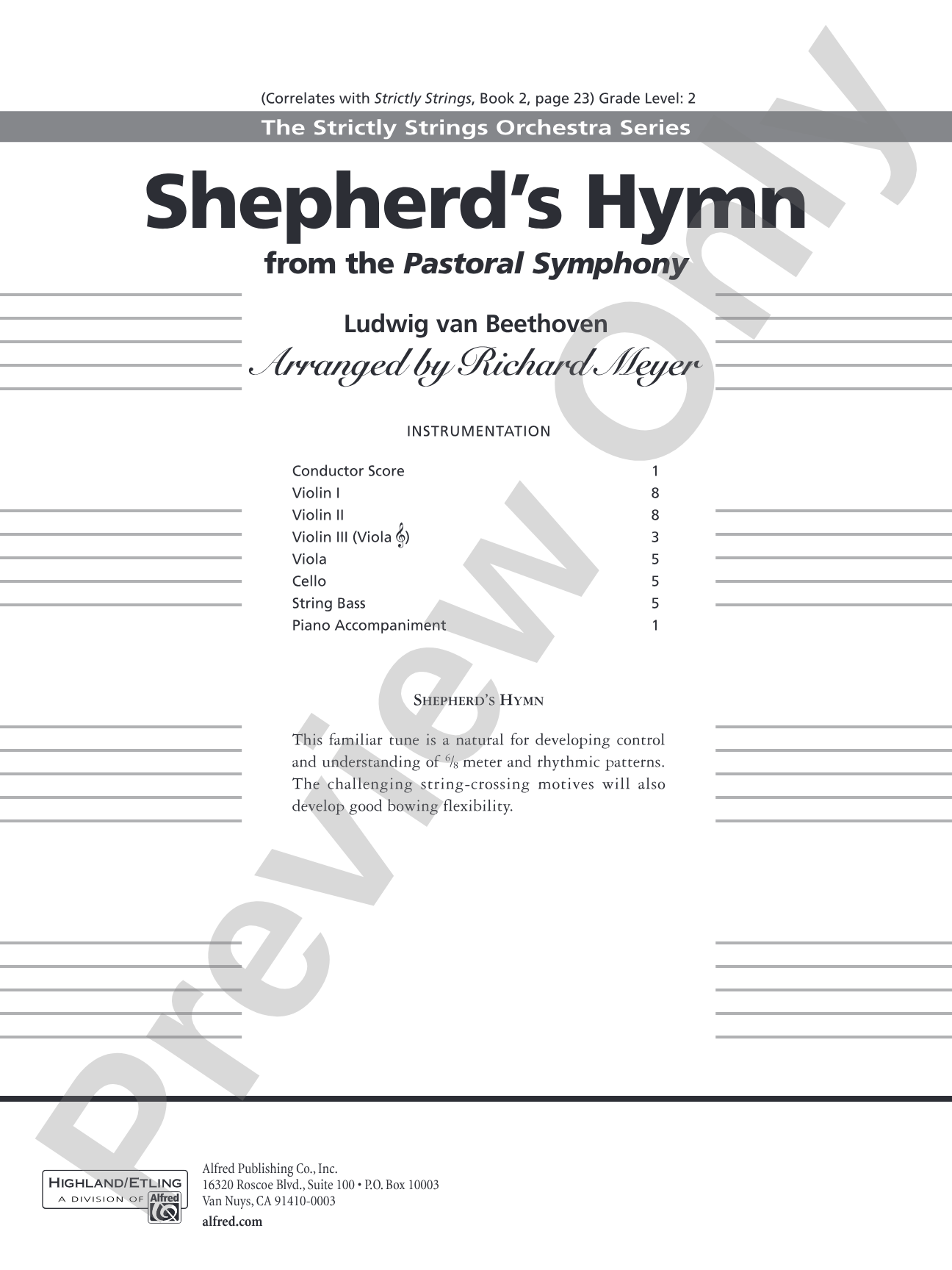
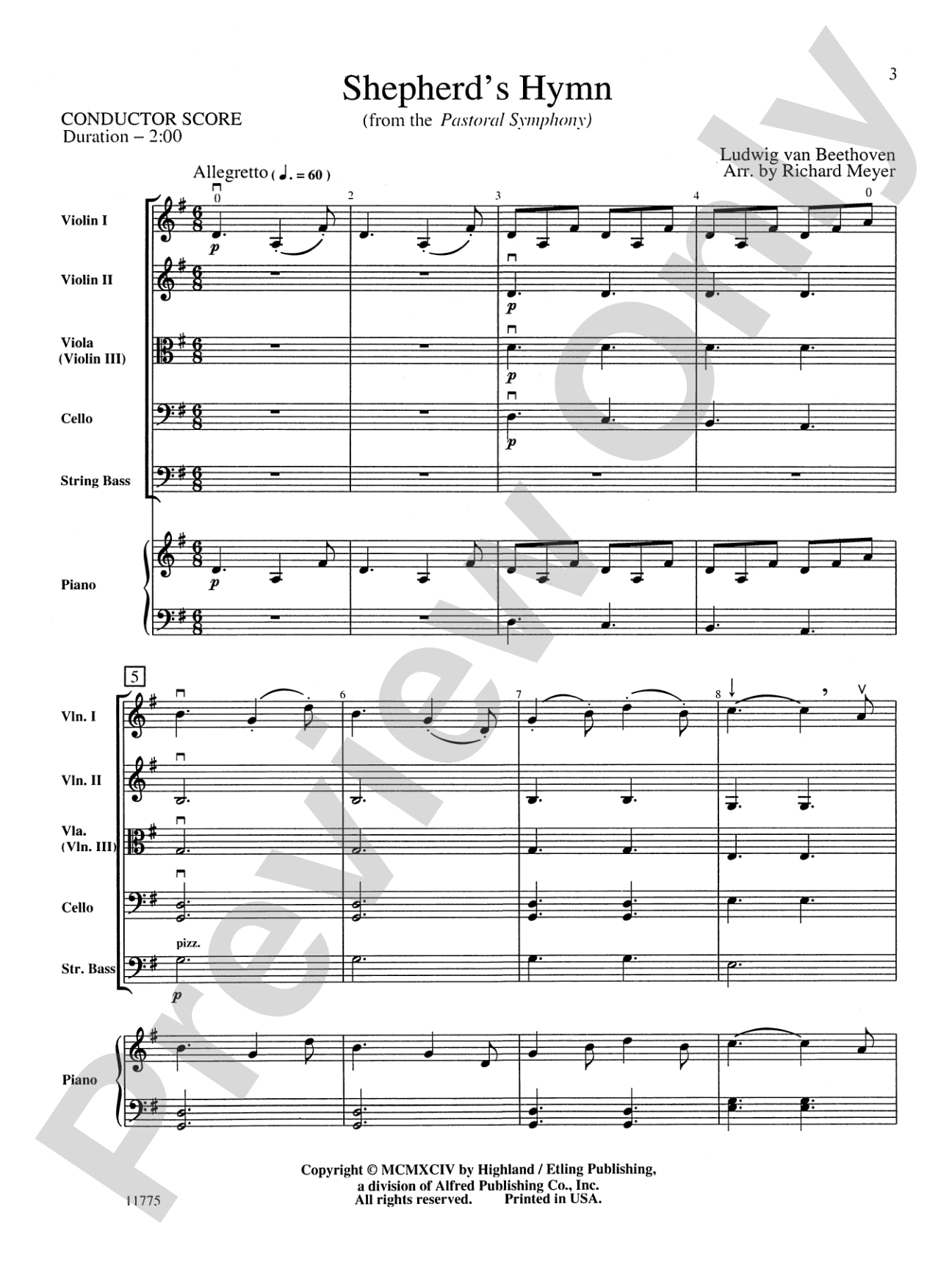
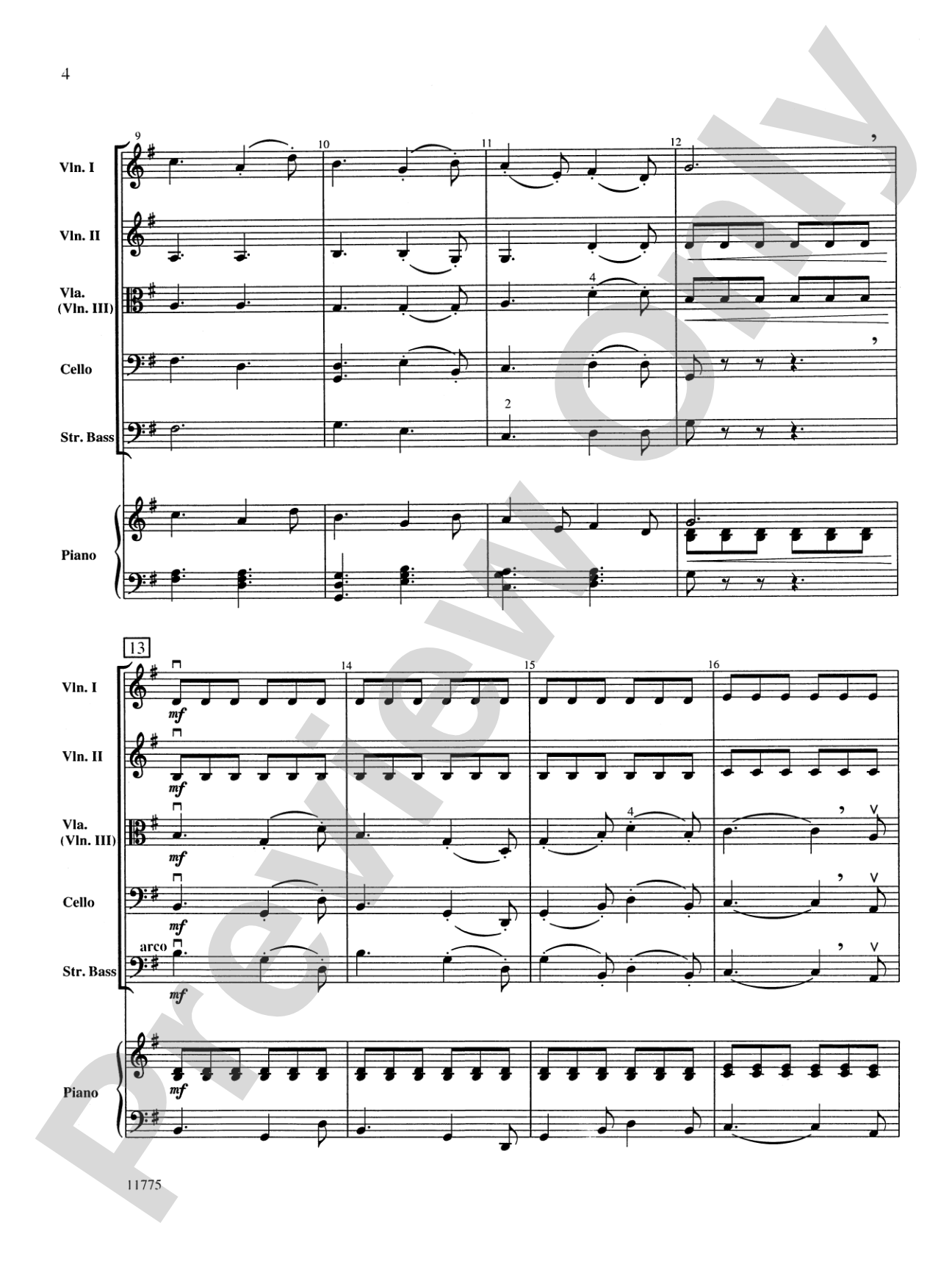
This familiar tune is a natural for developing control and understanding of 6/8 meter and rhythmic patterns. The challenging string-crossing motives will also develop good bowing flexibility.


Don't just read it, hear it, play along with it, and watch your students grow with it. In MakeMusic Cloud, Shepherd's Hymn: String Orchestra Conductor Score & Parts comes alive with professional accompaniment, adjustable tempo, and built-in practice tools that turn solo practice into real progress.
Open in the Player
Jump straight in and assign it today.
Start Your Free Trial
Open this title and explore the full library in minutes.
Sample Audio
1
Audio File
--:--
0:00
0:00
Sample Video
No sample videos found.
Additional Details
Series:
Highland/Etling Strictly Strings
Publisher:
Alfred Music
Page Count:
72
SKU:
00-PK-0000025
More about this title
About the Composer: Richard Meyer

Richard Meyer brings four decades of string education experience to his compositions and arrangements. After 35 years teaching string students across elementary, middle, and high school levels in California public schools, he transformed Oak Avenue Intermediate School's orchestra from 29 students to 200 while simultaneously directing the city's elementary string program for 22 years. His innovative "Giving Bach" program, launched in 2009, has earned national recognition for using interactive concerts to reach special needs and underserved student populations throughout Southern California.
As a guest conductor and clinician, Meyer has led All-State and Honor Orchestras across multiple states and served as music director of the Pasadena Youth Symphony Orchestra for 16 years, conducting performances internationally. A prolific composer with over 190 works in print, he also spent 16 years as string editor for Alfred Publishing Company and co-authored several string method resources, including the String Explorer Series and Sight-read It for Strings.
Why we love this
Meyer has crafted an economical introduction to 6/8 meter that feels genuine rather than contrived. The familiar tune gives students an anchor while the string-crossing passages build real bowing facility without sacrificing musicality, making this piece work equally well for festival preparation or concert programming.
What to expect
Grounded and straightforward, with the quiet dignity of a well-known melody presented without sentimentality. The bowing work keeps hands engaged while the familiar tune allows ears to rest in something comfortable.
Who it's for
String orchestra directors working with Grade 1 ensembles who want to develop metrical understanding and bowing control simultaneously. This piece serves players just confident enough to handle rhythmic independence but still building fundamental technique.
How to get the most out of it
- Establish 6/8 as two strong beats per measure rather than six. Model this clearly in early rehearsals so students feel the larger pulse instead of fighting the notation.
- Isolate the string-crossing motives in sectional rehearsals. Have students practice the shift pattern separately before combining it with rhythm.
- Balance the parts carefully; the familiarity of the tune can tempt students to play aggressively. Remind them that clarity of line emerges from restraint.
How to use it
Use this as a festival or contest piece where the clear pedagogical goals align with adjudication feedback. It also works well on a concert program alongside one substantial work, providing contrast and demonstrating student progress in foundational skills.
Skills your students will build
- Reading and conducting 6/8 meter signatures with emphasis on duple pulse rather than six-beat division
- String crossings on repeated notes and stepwise motion
- Coordinating rhythmic patterns across multiple parts while maintaining pitch accuracy
- Sustaining tone quality during scalar passages with varied bow distribution