
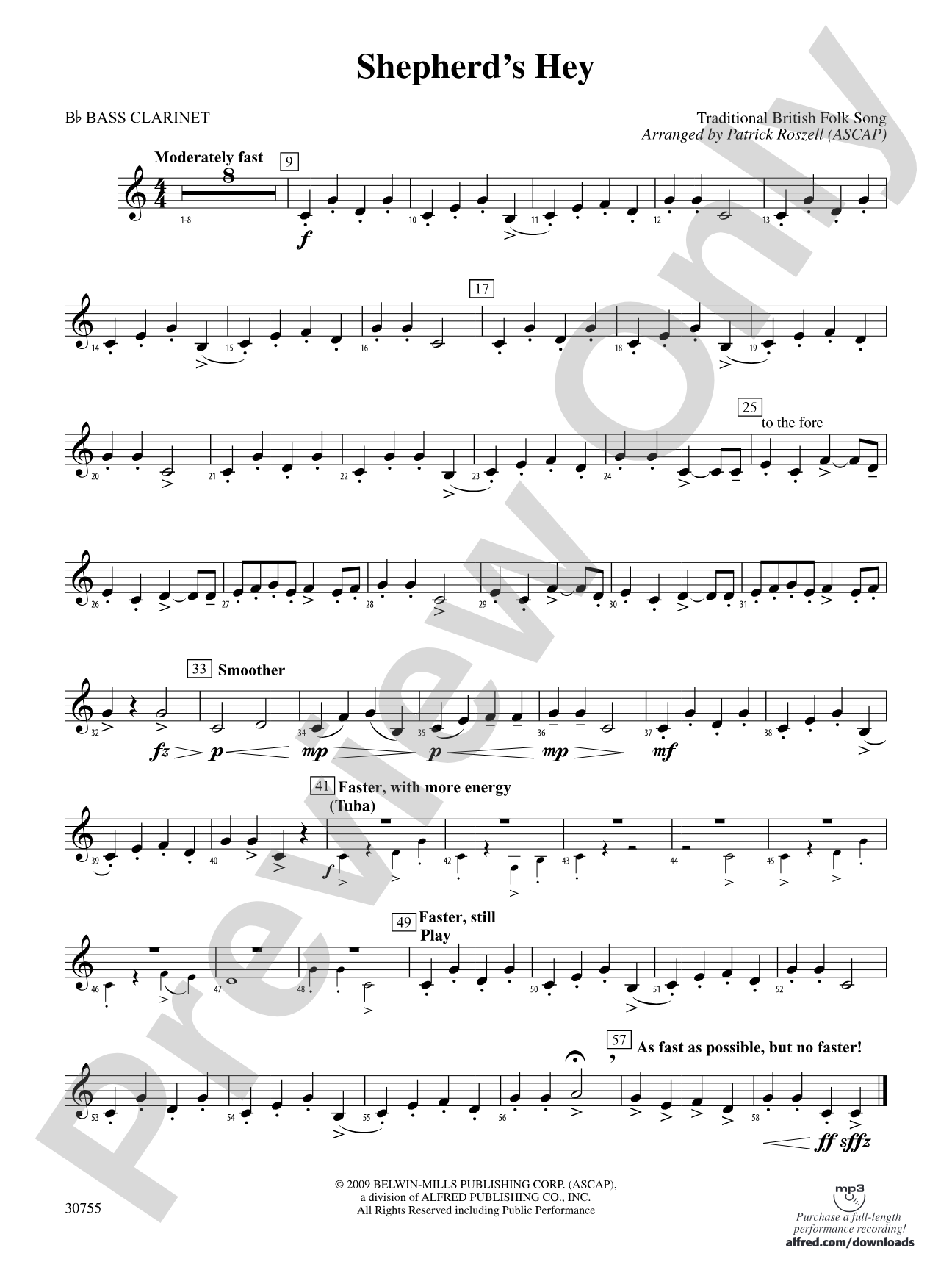

Shepherd's Hey: B-flat Bass Clarinet
Traditional British Folk Song / arr. Patrick Roszell
Grade: 1 (Very Easy)
Item: 00-PC-0001664_BC
$3.00
Pickup currently not available
Description
This very familiar traditional British folk song scored for your beginners begins with a simple melodic statement. The arrangement builds in intensity and tempo through the final musical punctuation. Subtle intricacies are clearly demonstrated with the addition of characteristic counter melodic material. A solid choice, your beginning band will sound polished and professional! (1:45) This title is available in MakeMusic Cloud.


Don't just read it, hear it, play along with it, and watch your students grow with it. In MakeMusic Cloud, Shepherd's Hey: B-flat Bass Clarinet comes alive with professional accompaniment, adjustable tempo, and built-in practice tools that turn solo practice into real progress.
Open in the Player
Jump straight in and assign it today.
Start Your Free Trial
Open this title and explore the full library in minutes.
Sample Audio
1
Audio File
--:--
0:00
0:00
Sample Video
Additional Details
Series:
Belwin Beginning Band
Publisher:
Alfred Music
Page Count:
134
SKU:
00-PC-0001664_BC
More about this title
Why we love this
Roszell understands what makes a Grade 1 arrangement effective: he opens with transparency so young players gain confidence, then gradually layers in counter-melodic writing that rewards their growing ability without overwhelming them. The piece proves that beginning band doesn't mean musical compromise. Your students will hear themselves sounding genuinely polished, which matters as much as any technical skill at this level.
What to expect
Shepherd's Hey carries the warmth and accessibility of the traditional melody while building momentum like a folk celebration gathering steam. Young musicians feel the architecture as the piece unfolds: first they play it simply, then they discover they're part of something more textured and layered. By the end, they're playing with genuine musical purpose.
Who it's for
Beginning concert bands ready to move beyond strictly unison writing and tackle ensemble balance. This arrangement works for groups that have basic tone control and can manage changing dynamics without falling apart. It's equally valuable for a festival or contest setting where you want your ensemble to make a strong impression at the Grade 1 level.
How to get the most out of it
- Shape the opening melody with gentle phrasing rather than playing it straight; even beginners can hear the difference between a line that breathes and one that flatlines.
- Watch the tempo build carefully in rehearsal so the acceleration feels purposeful, not rushed. Mark specific measure numbers where the tempo shifts so everyone recognizes the landmarks.
- Balance the counter-melodic material when it enters; it should support and color the main line, not compete with it. A light touch from those sections keeps the texture clear.
- Let the final punctuation land decisively. This is where your young band gets to stake a claim after earning their way through the piece.
How to use it
Open a concert with this piece to establish confidence in your young ensemble, or program it mid-set as a moment of clarity and joy between heavier works. The familiar melody also makes it approachable for audiences unfamiliar with concert band literature, which strengthens community connection at a beginning-level performance.
Skills your students will build
- Recognizing and responding to dynamic changes within a steady tempo
- Playing counter-melodic material while tracking the principal line
- Sustaining musical phrasing across four-to-eight bar phrases
- Executing tempo transitions and accelerations as an ensemble
- Balancing individual voice part independence with vertical blend