
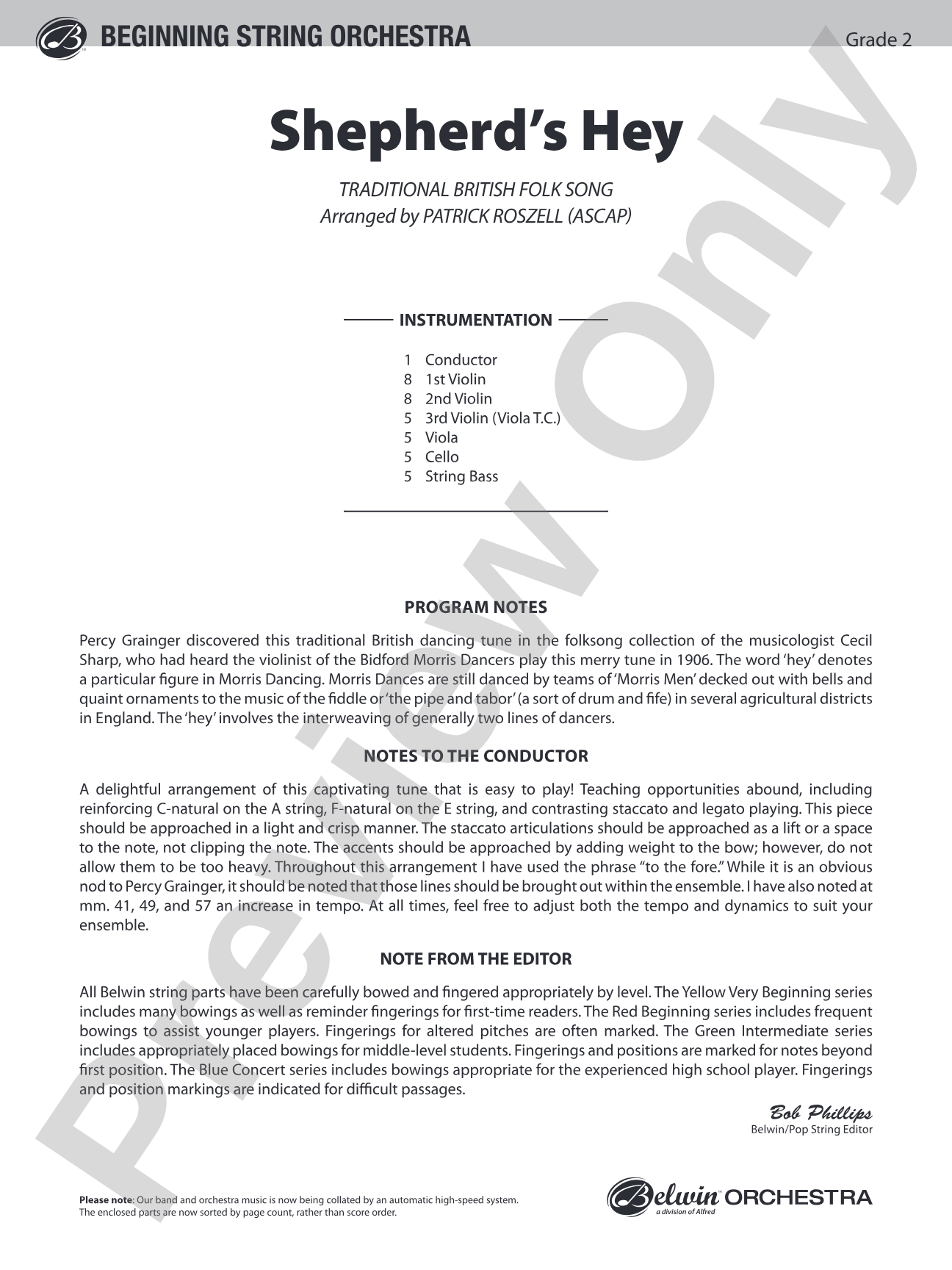
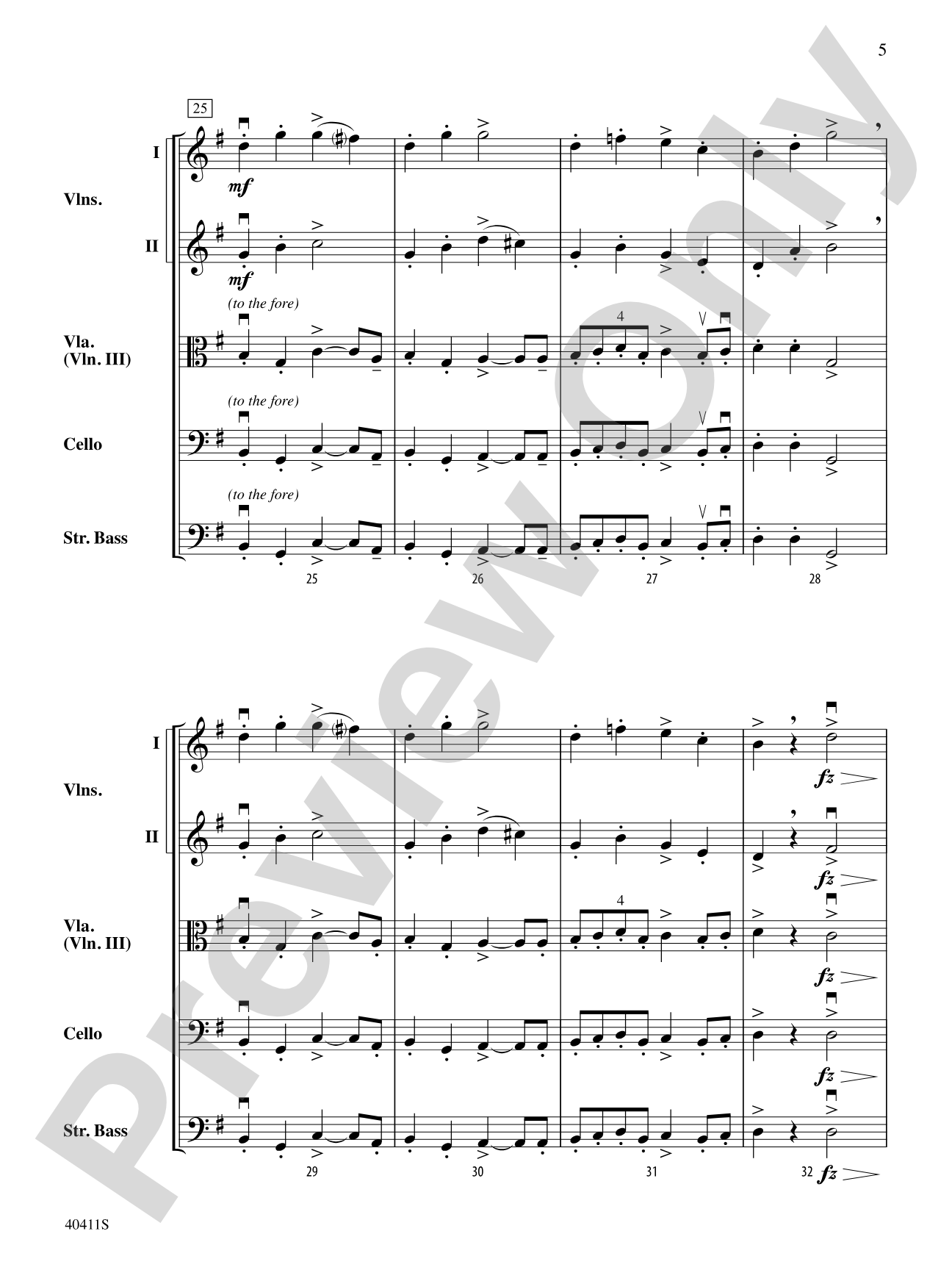
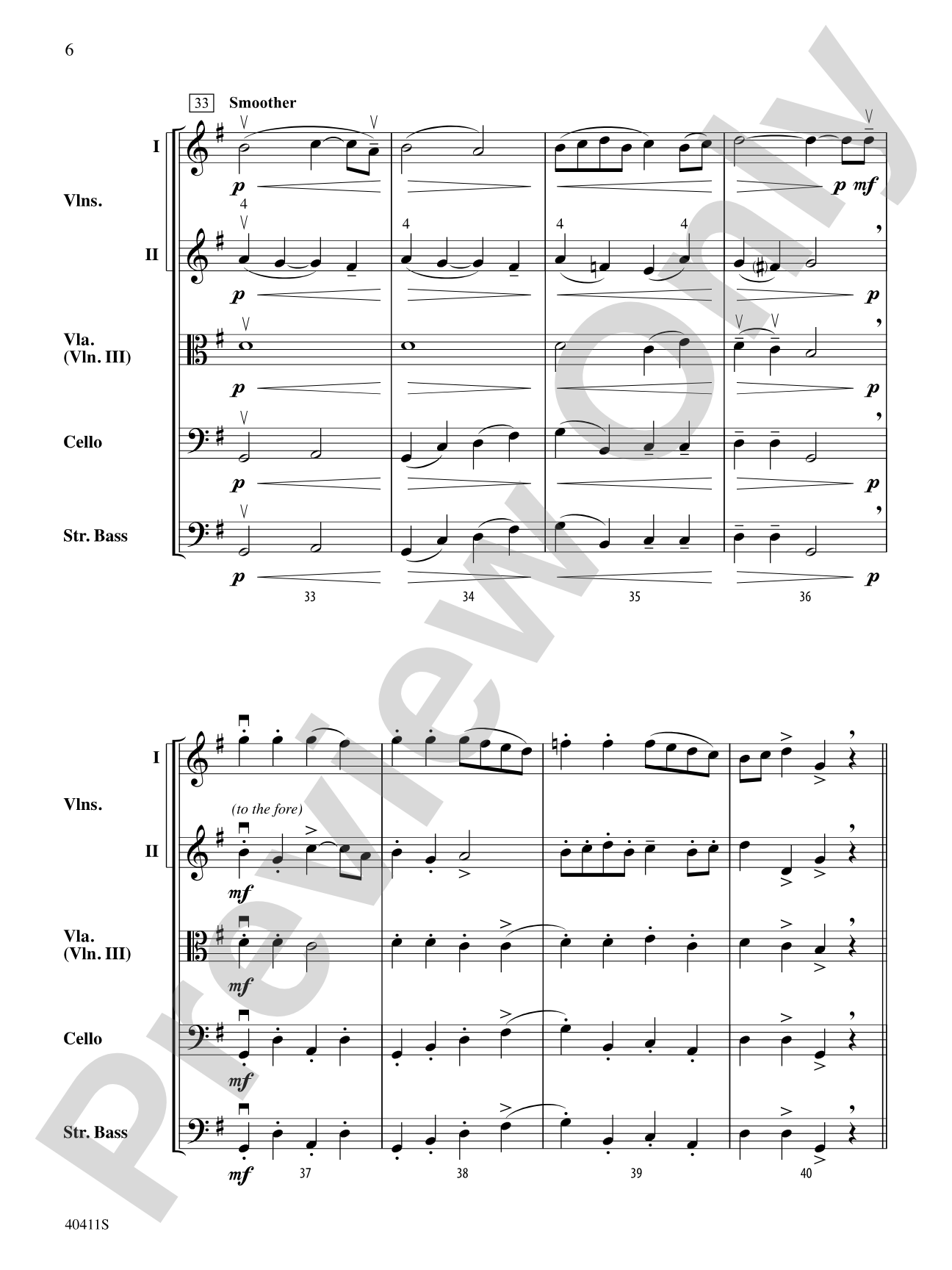
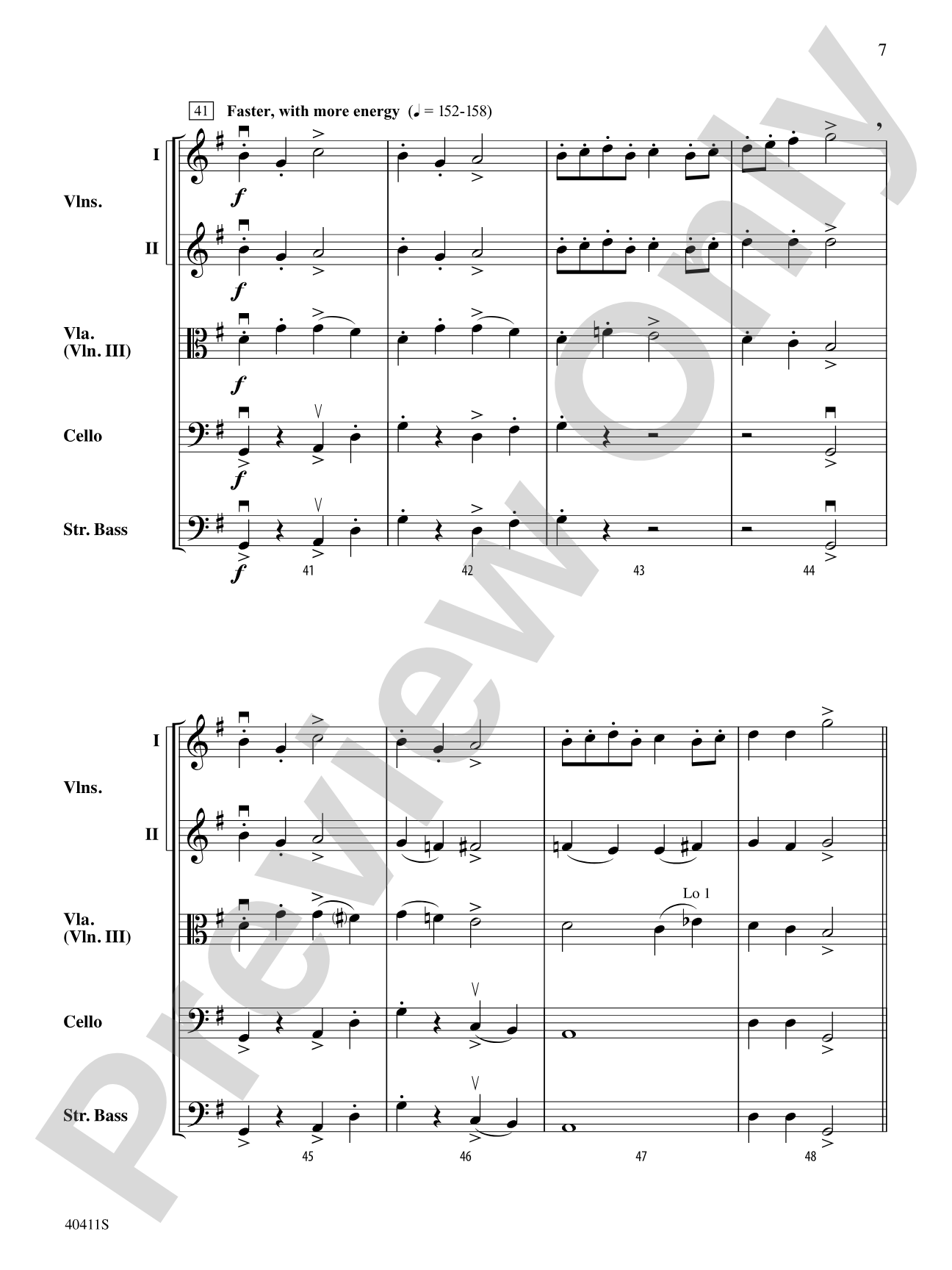
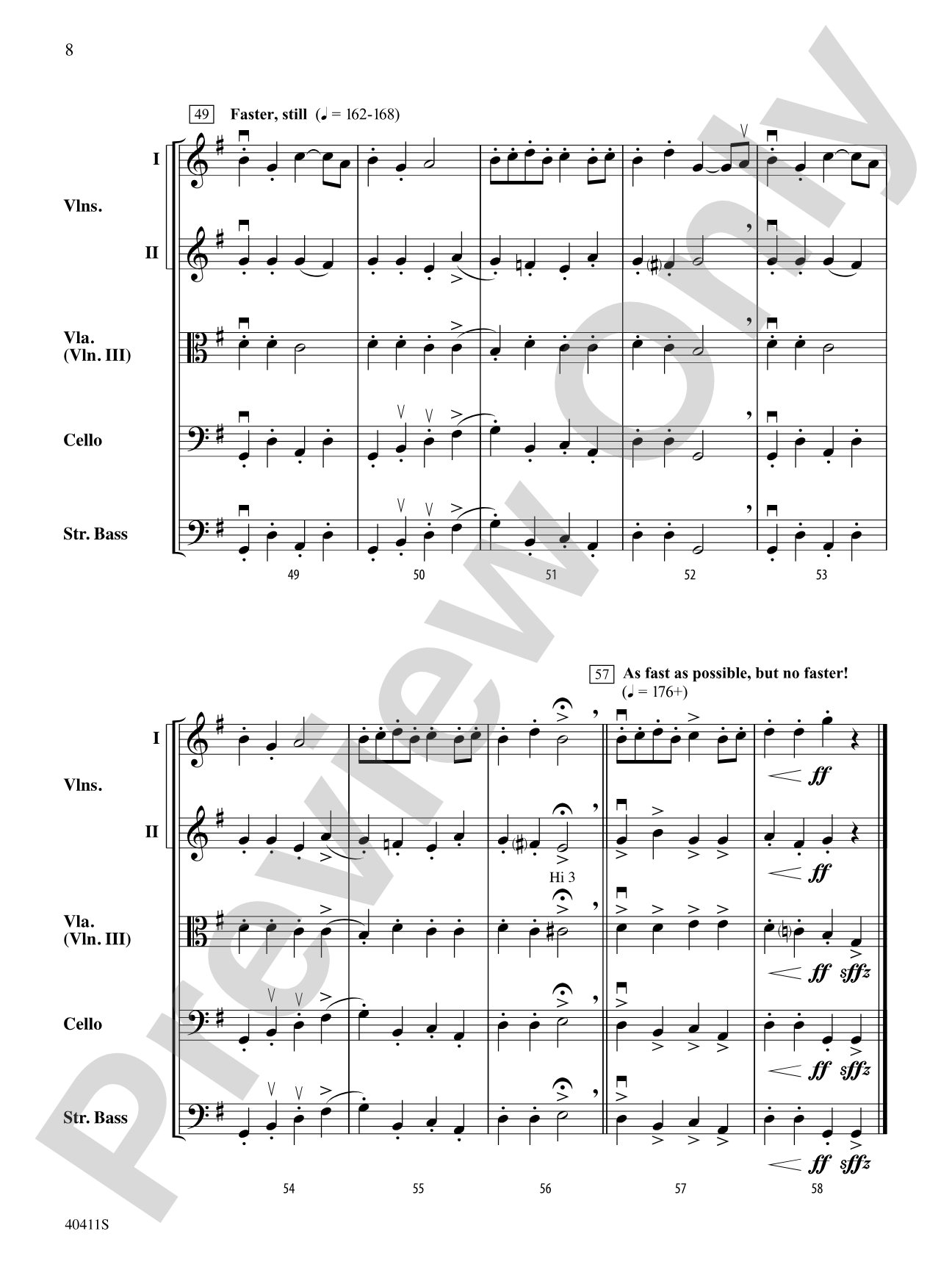

Shepherd's Hey: String Orchestra Conductor Score & Parts
Traditional British Folk Song / arr. Patrick Roszell
Grade: 2
Item: 00-PK-0005694

$46.00
Pickup currently not available
Buy Extra Parts (Digital PDF Download)
| Product | Price | Quantity |
|---|---|---|
| Shepherd's Hey: Score | $6.00 | |
| Shepherd's Hey: 1st Violin | $5.99 | |
| Shepherd's Hey: 2nd Violin | $5.99 | |
| Shepherd's Hey: 3rd Violin (Viola [TC]) | $5.99 | |
| Shepherd's Hey: Viola | $5.99 | |
| Shepherd's Hey: Cello | $5.99 | |
| Shepherd's Hey: String Bass | $5.99 |
Parts Added to Cart!
Related Items
Shepherd's Hey: Concert Band Conductor Score & Parts |
$56.00
|
View | |
Shepherd's Hey: Concert Band Conductor Score & Parts |
$56.00
|
View | |
Shepherd's Hey: Concert Band Conductor Score |
$10.00
|
View | |
Shepherd's Hey: String Orchestra Conductor Score & Parts |
$40.00
|
View | |
Shepherd's Hey: String Orchestra Conductor Score |
$6.00
|
View |
Description
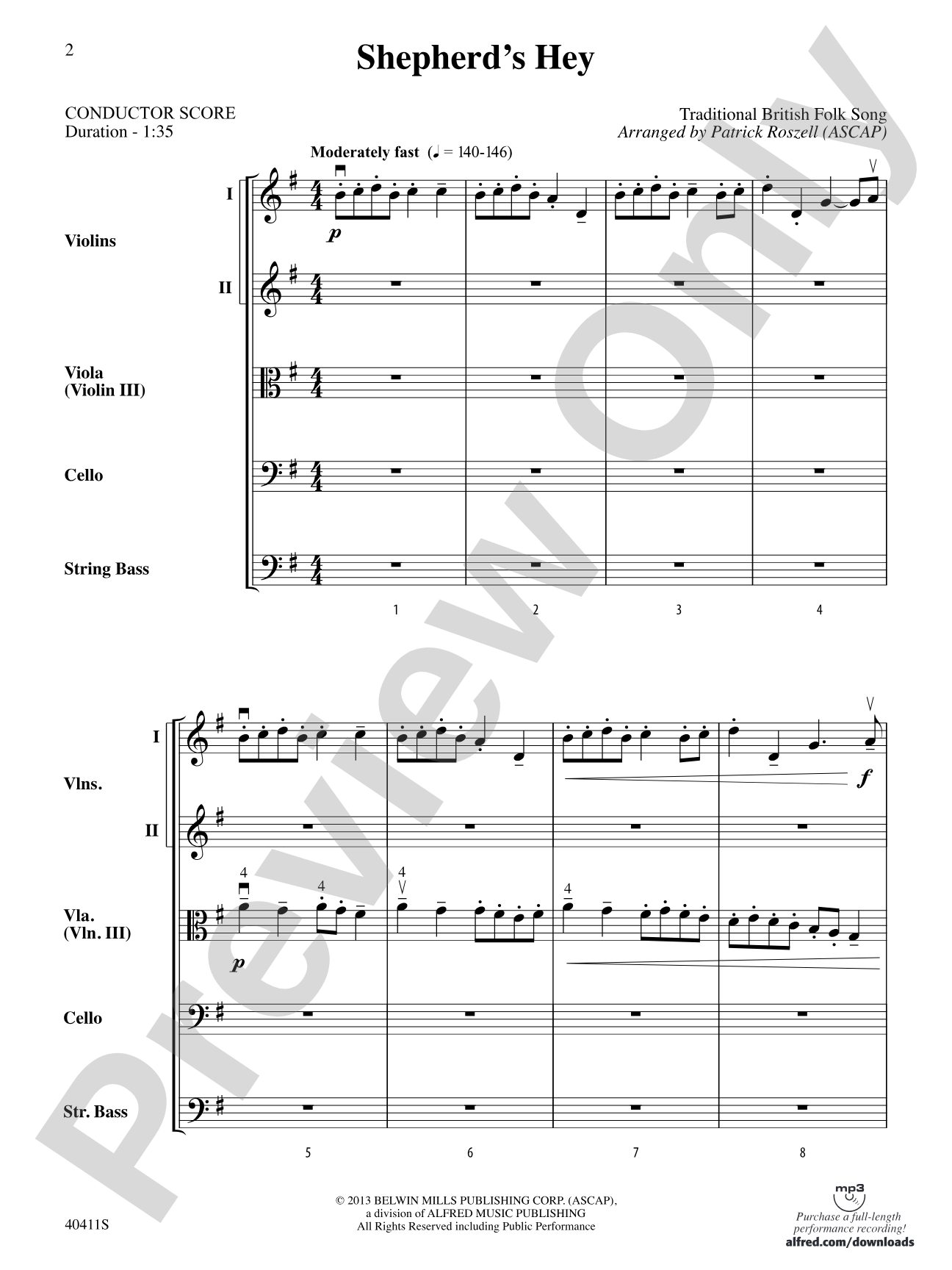
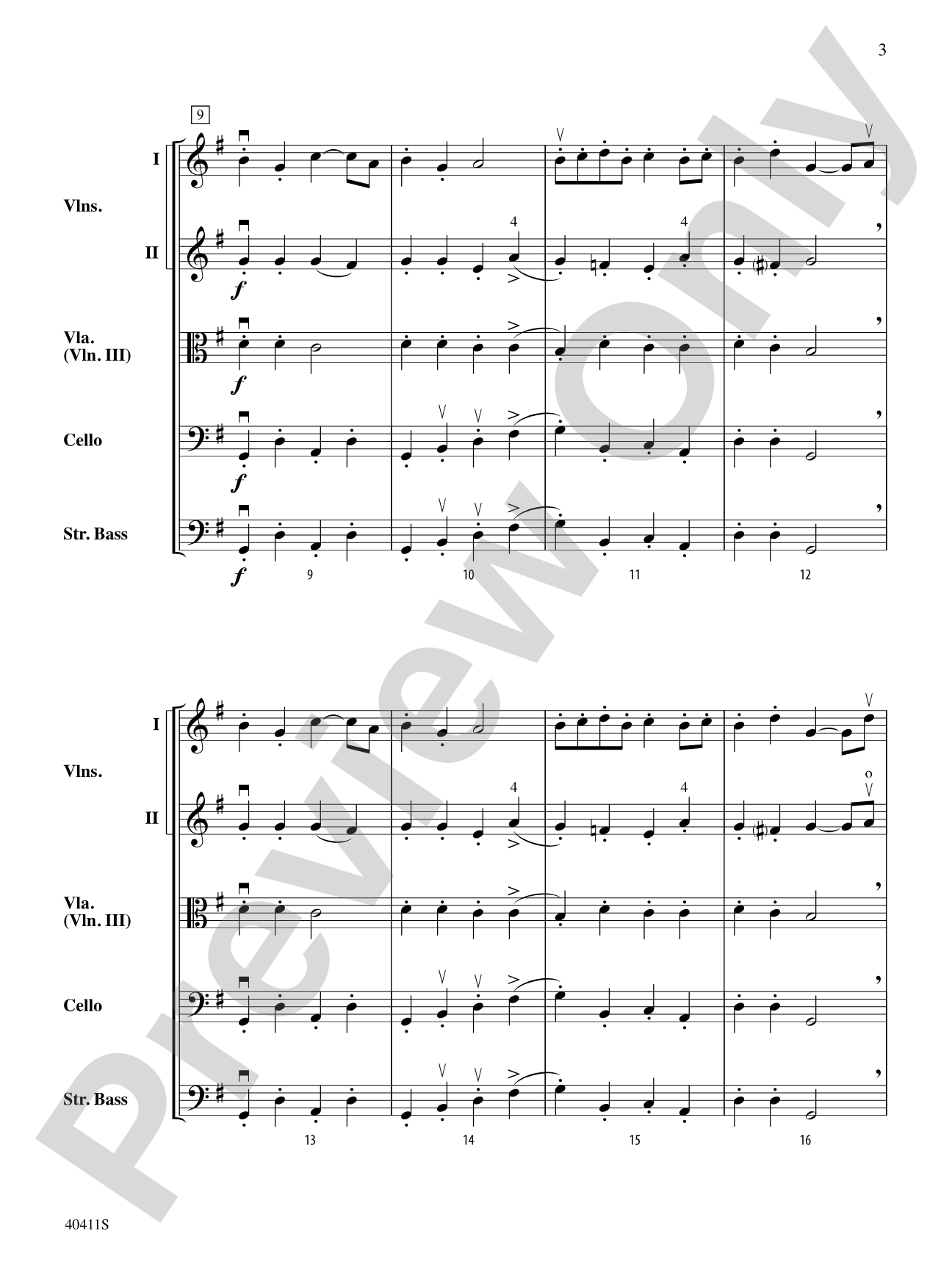
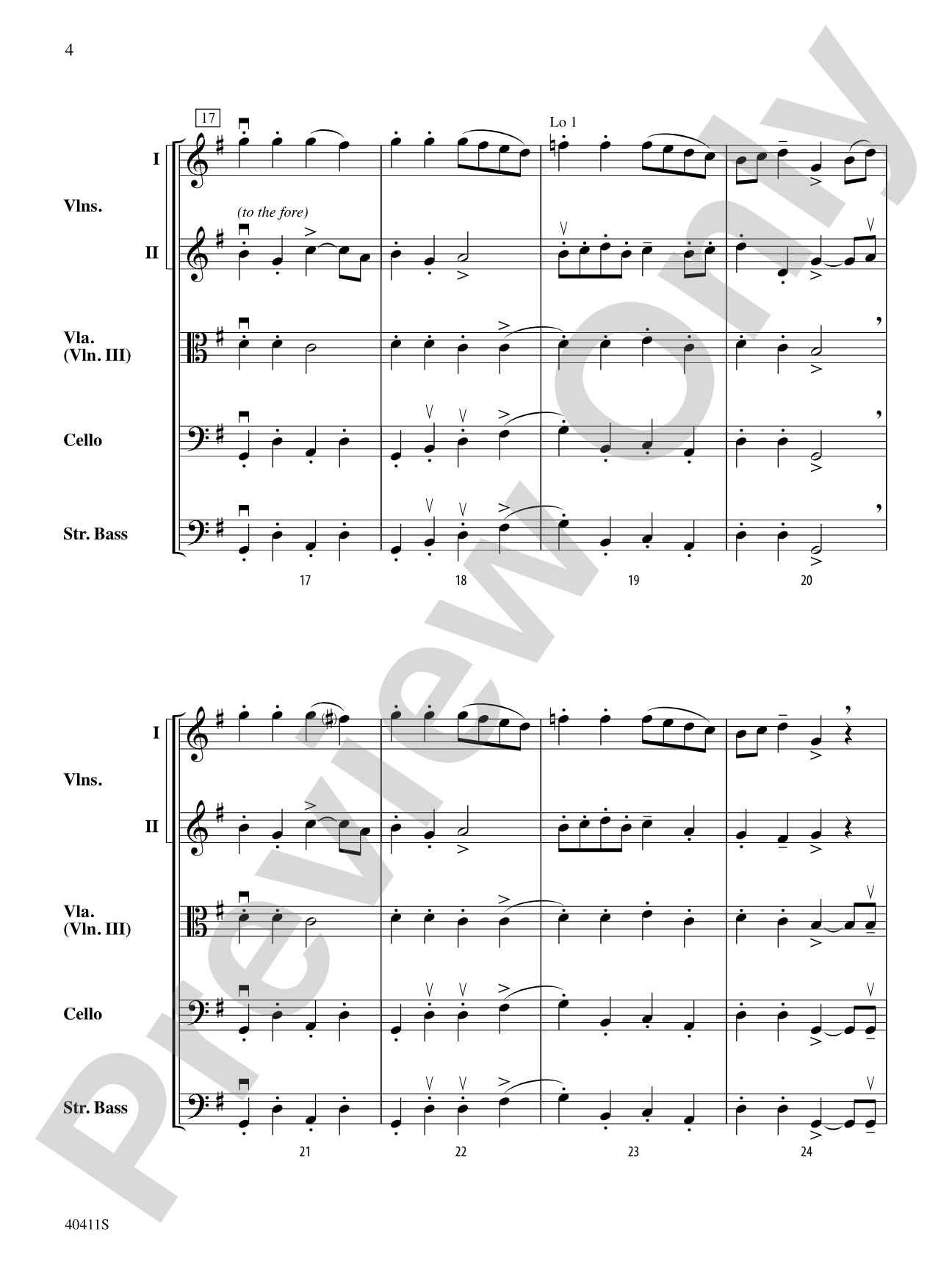
A delightful arrangement of this captivating tune that is easy to play! Teaching opportunities abound, including reinforcing C natural on the A string, F natural on the E string, and contrasting staccato and legato playing. This title is available in MakeMusic Cloud.


Don't just read it, hear it, play along with it, and watch your students grow with it. In MakeMusic Cloud, Shepherd's Hey: String Orchestra Conductor Score & Parts comes alive with professional accompaniment, adjustable tempo, and built-in practice tools that turn solo practice into real progress.
Open in the Player
Jump straight in and assign it today.
Start Your Free Trial
Open this title and explore the full library in minutes.
Sample Audio
1
Audio File
--:--
0:00
0:00
Sample Video
No sample videos found.
Additional Details
Series:
Belwin Beginning String Orchestra
Publisher:
Alfred Music
Page Count:
72
SKU:
00-PK-0005694
More about this title
Why we love this
Roszell strips away the complexity while keeping the tune's infectious character intact. The embedded teaching points—natural notes on unfamiliar string locations, articulation contrasts—make this feel like a carefully designed lesson, not a worksheet.
What to expect
Bright and sprightly, like a country dance heard from a distance. The melodic line dances forward with genuine charm, and the interplay between smooth and detached bowing gives the arrangement personality that keeps young players engaged.
Who it's for
Beginning string orchestras in grades 2 and above who are ready to tackle accidentals with confidence and explore bow control. This works equally well for orchestras with mixed experience levels where some players benefit from reinforcing fundamentals without feeling unchallenged.
How to get the most out of it
- Isolate the C natural passages on the A string in separate rehearsals before putting the full arrangement together; many students will default to C sharp instinctively.
- Mark staccato and legato sections with different colored pencils so players can see the contrast visually before they hear it.
- Keep the tempo light and bouncy; resist the urge to drag, which flattens the folk tune's natural swing.
- Balance the melody across sections as it passes between violins and lower strings; many young players unconsciously soften when they're not playing the tune.
How to use it
Pair this with other folk-tune arrangements to build a light concert or family concert set that feels cohesive without demanding heavy rehearsal investment. It also slots well into a concert designed around contrasting articulation studies, where you program pieces that highlight different bow strokes.
Skills your students will build
- Reading C natural on the A string
- Reading F natural on the E string
- Distinguishing and executing staccato versus legato articulation
- Maintaining rhythmic accuracy in rhythmically simple but stylistically important passages
- Balancing melody across multiple voice parts