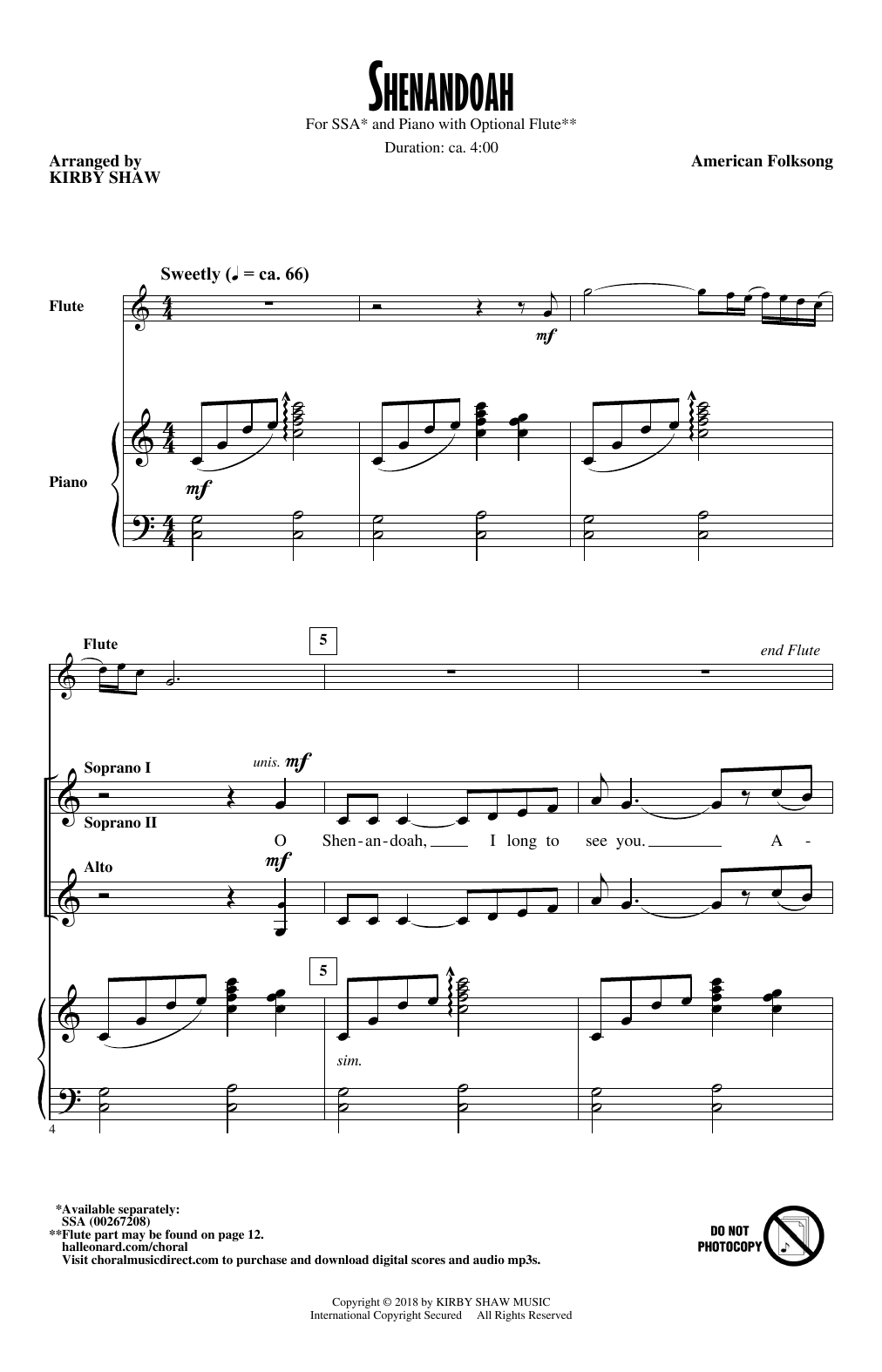
American folksong tradition emerged from the convergence of British ballads, African American spirituals, and the lived experience of settlers across Appalachia and beyond. These songs were shaped by generations of singers who adapted melodies and lyrics to reflect their own struggles, hopes, and communities. They became the musical backbone of American culture, passed down orally until collectors and arrangers like Cecil Sharp and John Jacob Niles began documenting them in the early 20th century.
Songs like Shenandoah carry the weight of this heritage. Originally a river chanty, the piece has been reimagined countless times, each version reflecting the era and sensibility of its performers. For music educators, American folksong offers an accessible entry point into arranging traditions, ensemble singing, and the historical dimensions of music making.