

Shenandoah: SSA Choral Octavo
American Folk Song / arr. Victor C. Johnson
Item: 00-PO-0006001
$2.05
Minimum order quantity: 20 copies
Pickup currently not available
Description
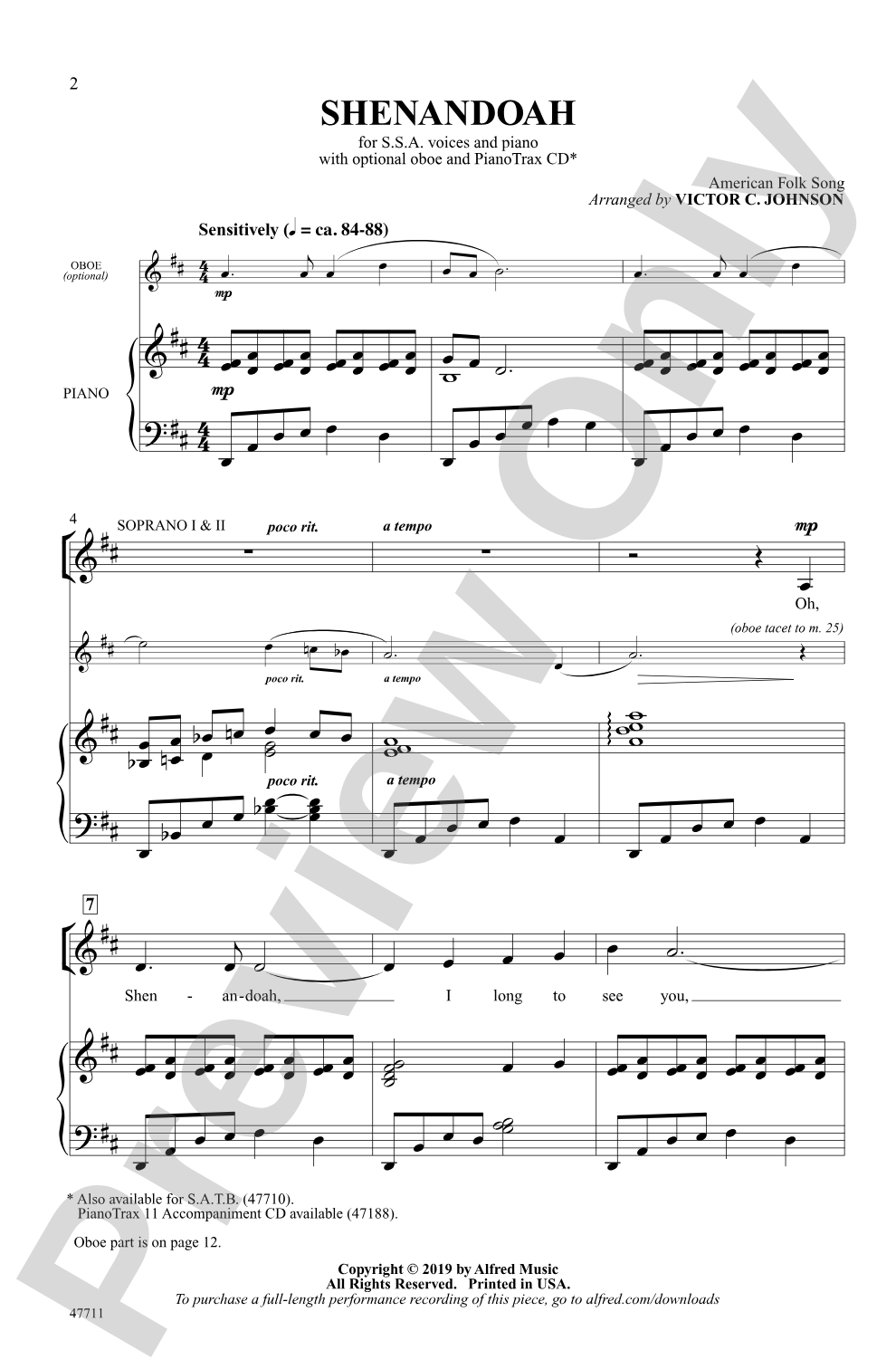
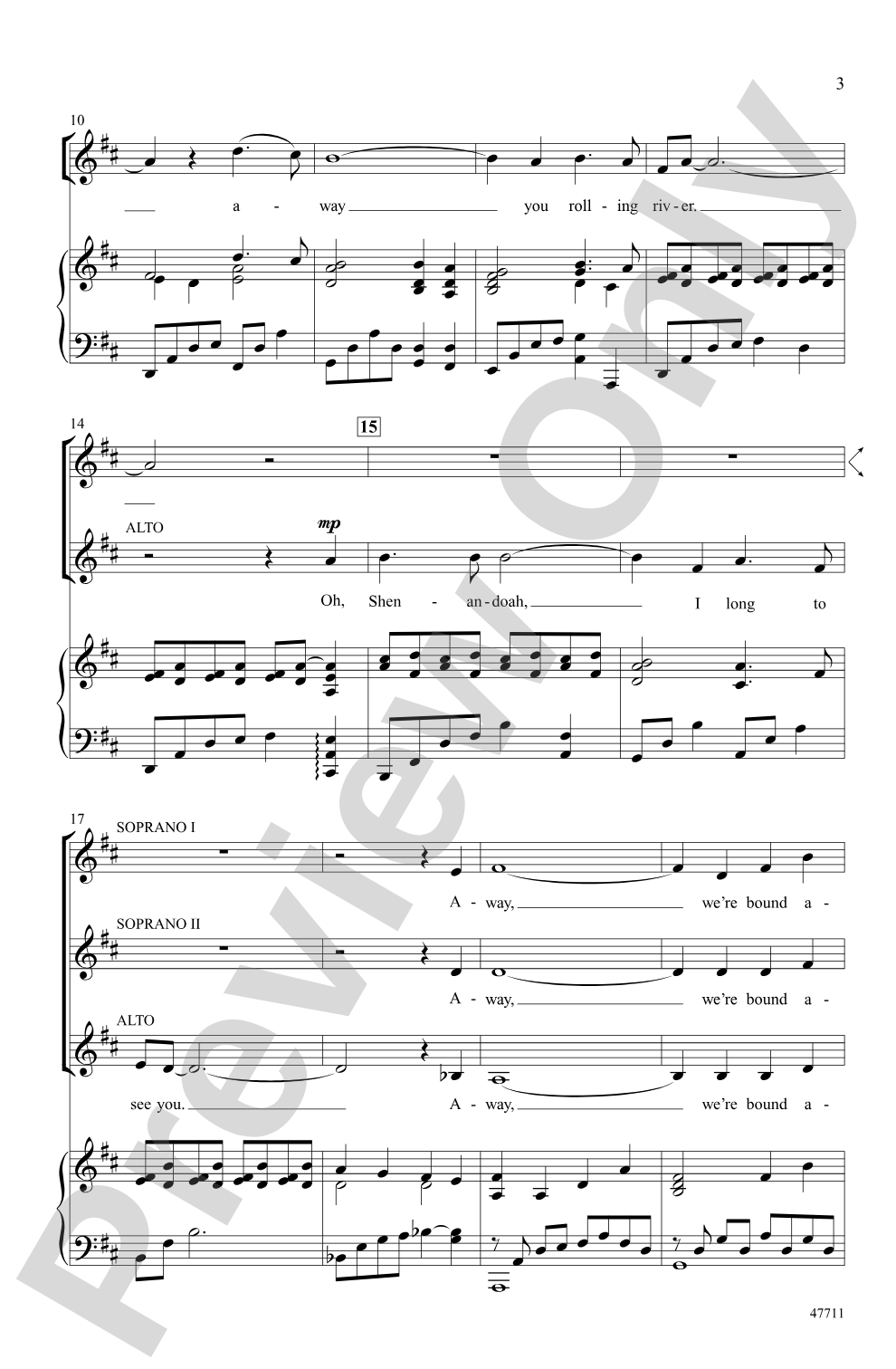
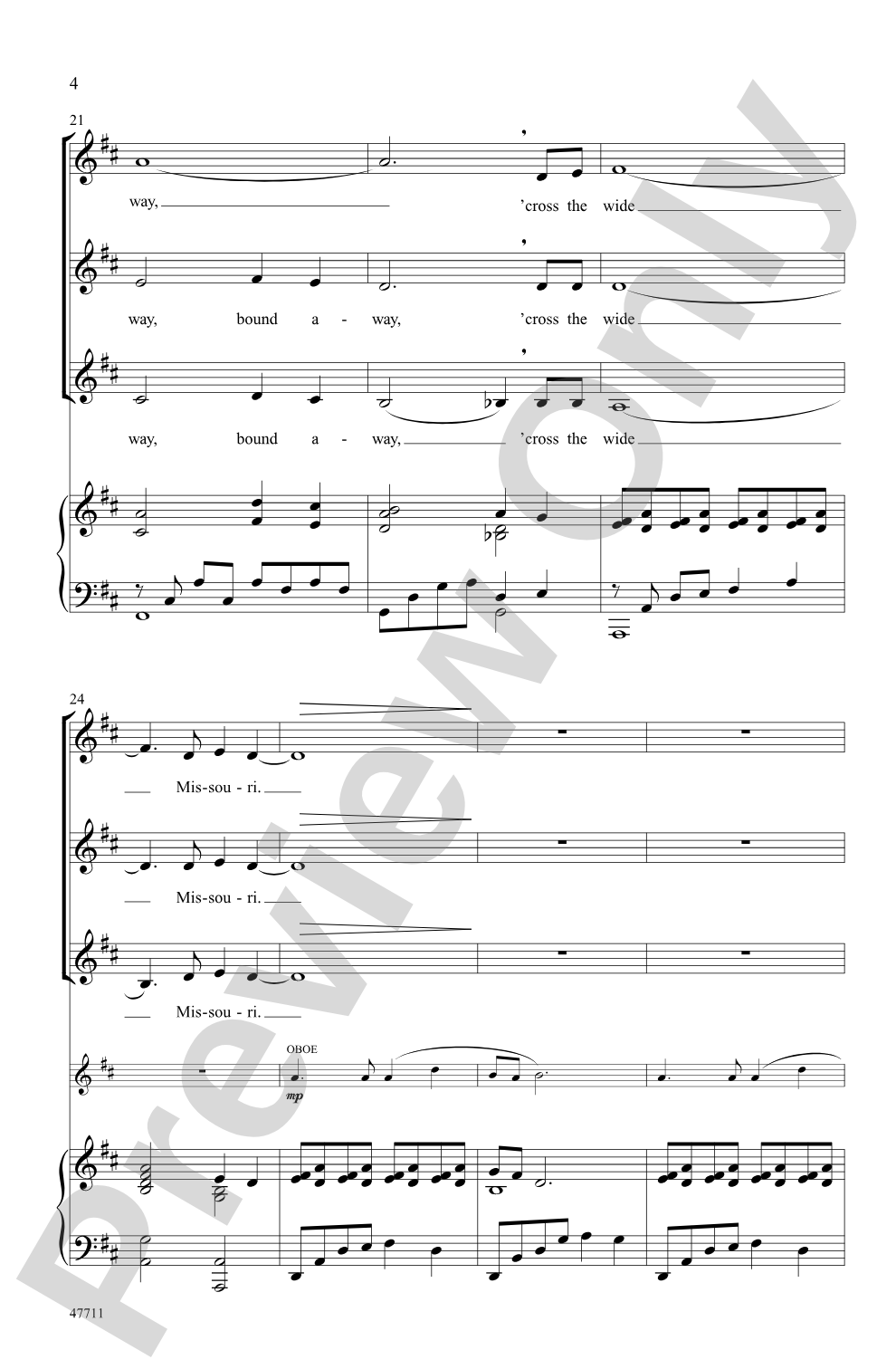
A plaintive oboe solo floats above an expressive piano accompaniment in this inspired arrangement of the much-loved American folk song. Featuring unique harmonic twists and turns, and a gradual broadening of the original melody that mimics the movement of the river itself. A refreshing reimagining of a treasured classic.


Shenandoah: SSA Choral Octavo isn't in MakeMusic Cloud just yet...but it could be. Let us know you'd like to see it, and you'll help shape what comes next. In the meantime, start a free trial and dive into thousands of interactive titles your students can play along with today.
Request This Title
Tell us you want it.
Start Your Free Trial
Explore everything that's ready to play right now.
Sample Audio
1
Audio File
--:--
0:00
0:00
Sample Video
Additional Details
Series:
Alfred Choral Designs
Publisher:
Alfred Music
Page Count:
12
SKU:
00-PO-0006001
More about this title
About the Arranger: Victor C. Johnson

Victor C. Johnson has shaped choral music education as both a working director and prolific composer-arranger. A Dallas native, he served as choral director at Ft. Worth Academy of Fine Arts from 2000 to 2018, where he built and conducted multiple ensembles including the Academy Singers and the Singing Girls of Texas. His catalog now exceeds 500 published works across choral literature, vocal solos, and keyboard collections.
Currently, Johnson serves as School Choral Editor for Sing!, the educational publishing division of Choristers Guild, and was appointed conductor of the Dallas Symphony Children's Chorus Mixed Ensemble in 2022. His involvement with major professional organizations including the American Choral Directors Association, Texas Music Educators Association, and ASCAP reflects his deep commitment to the field.
Why we love this
Johnson's approach to this American standard resists simple nostalgia. The harmonic language feels contemporary without abandoning the song's folk roots, and the way he choreographs the melody's expansion mirrors the river's flow in musically intelligent ways. Directors looking for repertoire that honors tradition while offering something fresh for concert or festival programming will find this arrangement distinctly rewarding to teach and perform.
What to expect
Contemplative and flowing, with an almost impressionistic quality. The oboe voice lends instrumental lyricism while the SSA voices create a gentle harmonic foundation that shifts and deepens beneath the melody, evoking the patient, winding movement of water through landscape.
Who it's for
This octavo works well for treble choirs at the intermediate to advanced level who have secure intonation and the ability to blend around unconventional harmonic movement. It suits singers ready to engage with arrangement choices that ask them to listen actively and shape phrases through harmonic color rather than text alone.
How to get the most out of it
- Balance the oboe solo so it projects clearly above the SSA voices. The arrangement asks the accompaniment and choir to support, not compete with, that sustained melodic line.
- Use the harmonic color shifts to shape phrase direction. Johnson's unconventional chord progressions are compositional choices, not accidents; let them breathe and guide rubato naturally.
- Approach the gradual broadening as a physical and emotional arc. As the melody expands, your singers should feel permission to open their tone and deepen their commitment to the text.
- If using the recorded accompaniment, rehearse enough passages a cappella that your singers internalize the harmonic language independently.
How to use it
Program this as a reflective moment in a concert of American repertoire, or pair it with other folk arrangements to create a set that explores how contemporary arrangers reimagine traditional material. It also reads as a festival competition piece for choirs seeking thoughtful, text-light selections that prioritize musicianship and blend.
Skills your students will build
- Listening to and balancing multiple harmonic voices (oboe, voices, accompaniment)
- Singing with flexibility through non-functional harmonic progressions
- Shaping phrase direction through ensemble blend rather than text-driven emphasis
- Recognizing how arrangement choices (harmonic color, expanded melody) create musical meaning