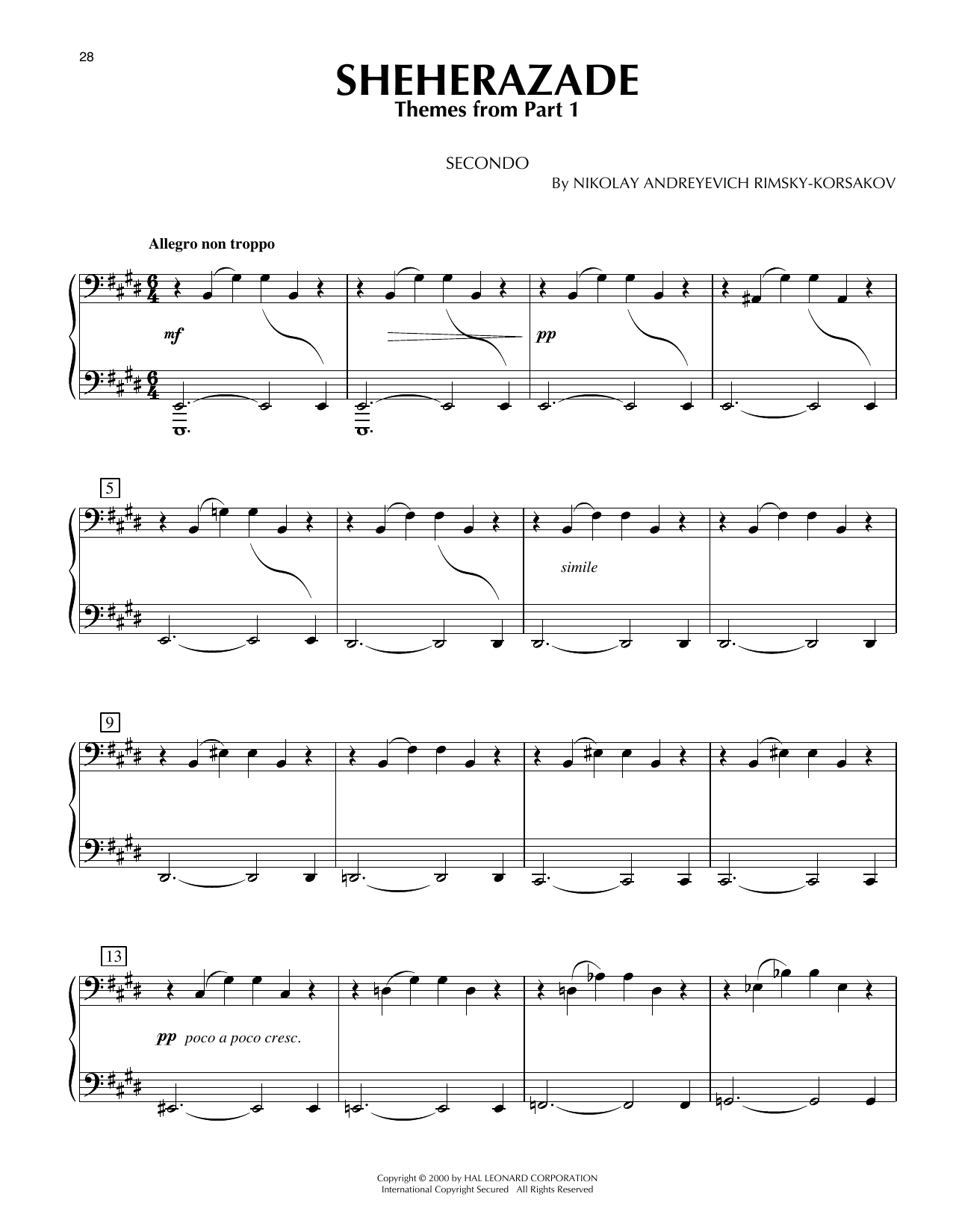
Sheherazade, Themes from Part 1: Piano Duet

As performed by Nikolay A. Rimsky-Korsakov

Item: 35-DS01823721

Digital Download
$5.99
Description

Discover MakeMusic Cloud: thousands of interactive titles your students can play along with today.

Sample Audio
No sample audio found.
Sample Video
Additional Details
Publisher: Hal Leonard
Page Count: 10
SKU: 35-DS01823721

More about this title

About the Artist: Nikolay A. Rimsky-Korsakov

Nikolay Rimsky-Korsakov shaped Russian orchestral music through his mastery of harmonic color and exotic orchestration. His career as both composer and teacher at the St. Petersburg Conservatory established him as a central figure in 19th-century Russian music, and his influence extends through generations of composers who studied his approach to instrumental writing.

Rimsky-Korsakov's fascination with folk melodies, Eastern scales, and orchestral experimentation appears throughout his catalog. Scheherazade stands as his most performed work, showcasing techniques that remain essential study for conductors and composers interested in how orchestral color can carry narrative.

Why we love this

These themes distill the most memorable musical material from Scheherazade's sprawling first movement into a focused, playable format. The excerpt preserves the suite's signature melodic beauty while eliminating some of the orchestral complexity, making it accessible for musicians still building their interpretive voices.

What to expect

Opulent and mysterious, with the swagger of a storyteller leaning in to share secrets. Rimsky-Korsakov layers lush harmonies beneath soaring lines, creating an atmosphere that feels both intimate and grand, anchored by the recurring sultry voice of the solo violin theme.

Who it's for

Pianists exploring Romantic-era Russian repertoire, ensemble musicians arranging or adapting themes for educational purposes, and music students who need an introduction to Scheherazade's musical language without tackling the full orchestral score.

How to get the most out of it

  • Bring out the principal melody with warmth but restraint; Rimsky-Korsakov's orientalism works best when lines sing naturally rather than with heavy drama.
  • Pay close attention to the shifting harmonic context around repeated thematic ideas. The same melody often appears in different harmonic environments, which subtly shifts its character.
  • Balance the exotic flavor with musical clarity. Avoid letting unfamiliar scales or chromatic passages become muddied; articulation and line integrity anchor the listener.

How to use it

Include this alongside other Russian orchestral highlights in a themed concert exploring 19th-century nationalism, or use it as a bridge piece in a recital that moves from classical elegance into more colorful Romantic writing. It also serves as an excellent gateway for audiences encountering Scheherazade for the first time.

Skills your students will build

  • Navigating chromatic and modal harmonic progressions
  • Executing ornamental figuration with clarity and precision
  • Recognizing leitmotif technique across varying harmonic contexts
  • Shaping lyrical lines with appropriate tonal color for exotic orchestration

You May Also Like