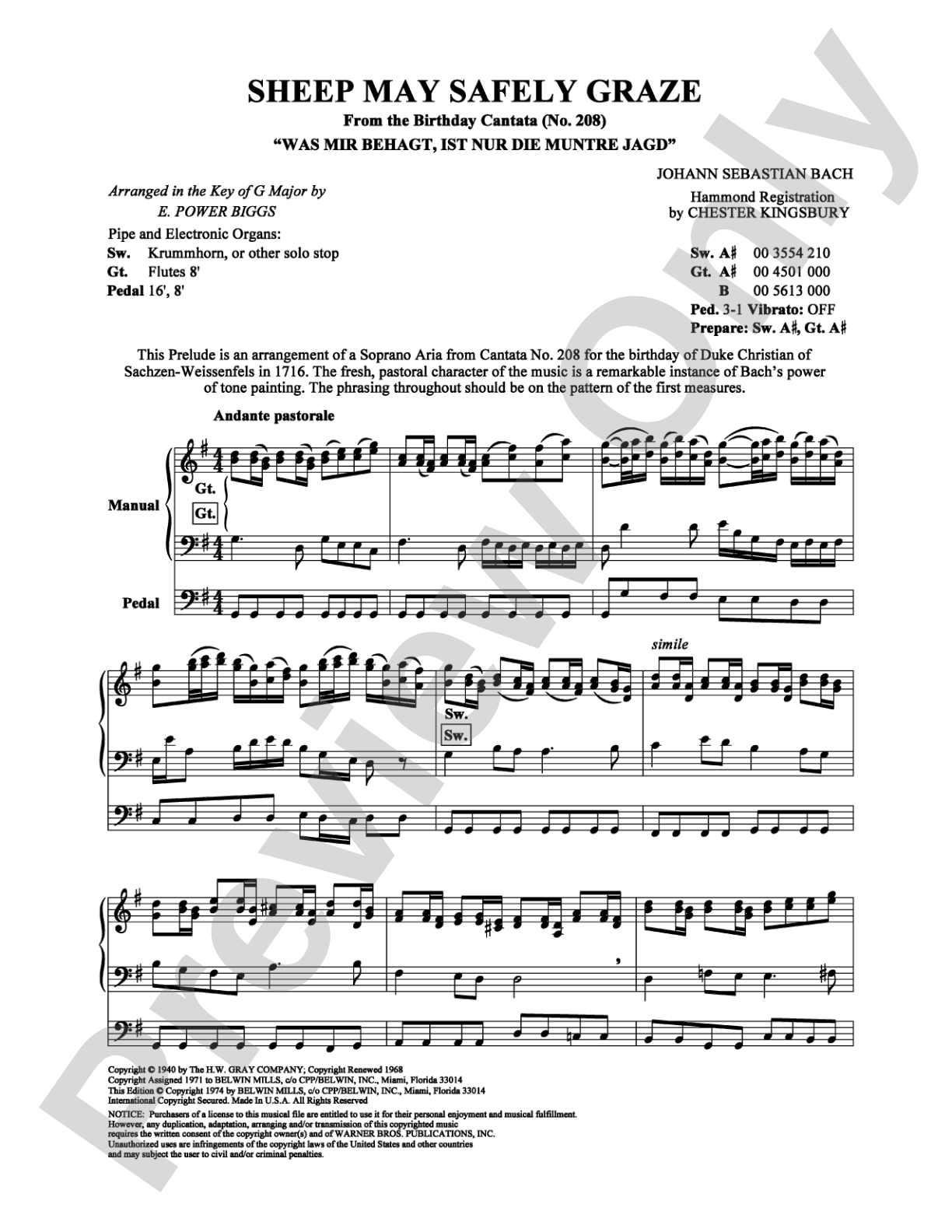
Sheep May Safely Graze, in G Major (from Cantata No. 208): Organ Digital Sheet Music

Sheep May Safely Graze, in G Major (from Cantata No. 208): Organ Digital Sheet Music

Johann Sebastian Bach

Item: 00-PS-0000502

Digital Download
$3.99
Description

Sheep May Safely Graze, in G Major (from Cantata No. 208): Organ Digital Sheet Music isn't in MakeMusic Cloud just yet...but it could be. Let us know you'd like to see it, and you'll help shape what comes next. In the meantime, start a free trial and dive into thousands of interactive titles your students can play along with today.

Sample Audio
No sample audio found.
Sample Video
Additional Details
SKU: 00-PS-0000502

More about this title

About the Creator: Johann Sebastian Bach

Johann Sebastian Bach composed Cantata No. 208 around 1713, a secular work written for a patron's hunting festival in Saxony. The cantata showcases Bach's gift for blending courtly elegance with profound musical substance, a hallmark of his output during the Weimar and Cöthen periods.

This particular movement has transcended its original context to become one of Bach's most recognizable melodies. The serene, pastoral character made it an ideal candidate for adaptation across countless arrangements and instruments, including this organ setting that captures the work's inherent tranquility.

Why we love this

The transparency of Bach's counterpoint shines clearly on organ, where each voice emerges without need for orchestral doubling. This version sits naturally under the hands and offers organists a chance to work on cantabile registration and the balance between manual and pedal parts without excessive technical demands.

What to expect

Sunlight through stained glass. The melody unfolds with unhurried grace while gentle harmonic motion beneath creates a sense of protection and peace. There's nothing decorative here, only the essential beauty of a perfect tune set in perfect proportion.

Who it's for

Organists at intermediate level and above will find this manageable and musically rewarding. It works equally well for church service repertoire, recital programming, or as a teaching piece for students developing independence between hands and feet.

How to get the most out of it

  • Choose registrations that let the melody sing; a solo reed on the swell paired with a warm foundation on the great creates the necessary separation between tune and accompaniment
  • Shape the phrases gently rather than mechanically, treating Bach's bar lines as suggestions for natural breathing rather than immovable walls
  • Keep the accompaniment voices supporting rather than competing; the pastoral mood depends on intimate clarity, not weight

How to use it

Pair this with other keyboard works for a recital focused on Baroque sacred music, or program it as a prelude before a congregational hymn. Its modest length and familiar melody make it an effective closer for a service when you want listeners to leave with something memorable yet profound.

Skills your students will build

  • Voicing independent manual and pedal parts with clarity and balance
  • Legato phrasing across register breaks and manual changes
  • Registration choices that enhance rather than obscure counterpoint
  • Reading and executing Bach's figured bass language on keyboard

You May Also Like