
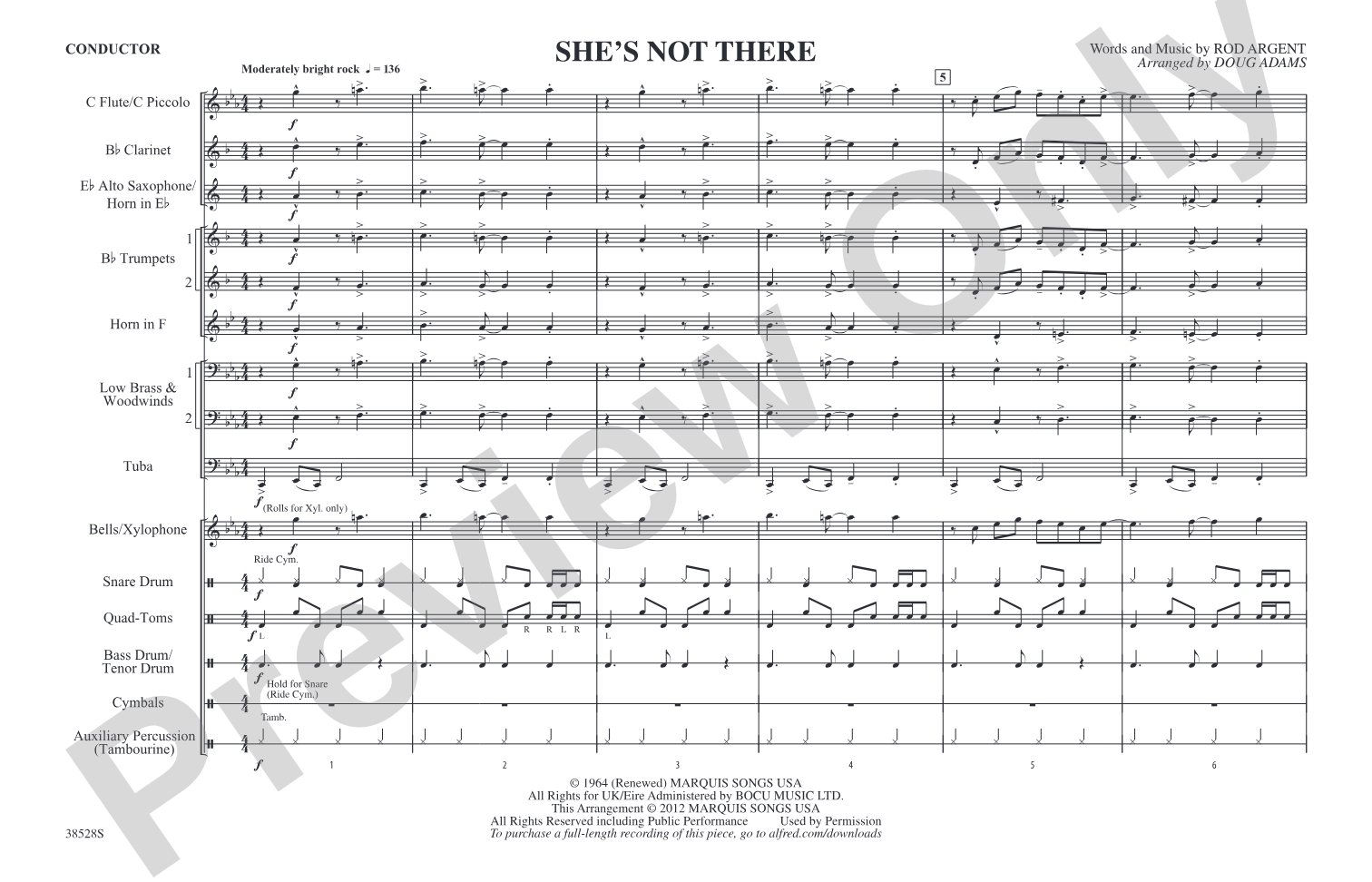
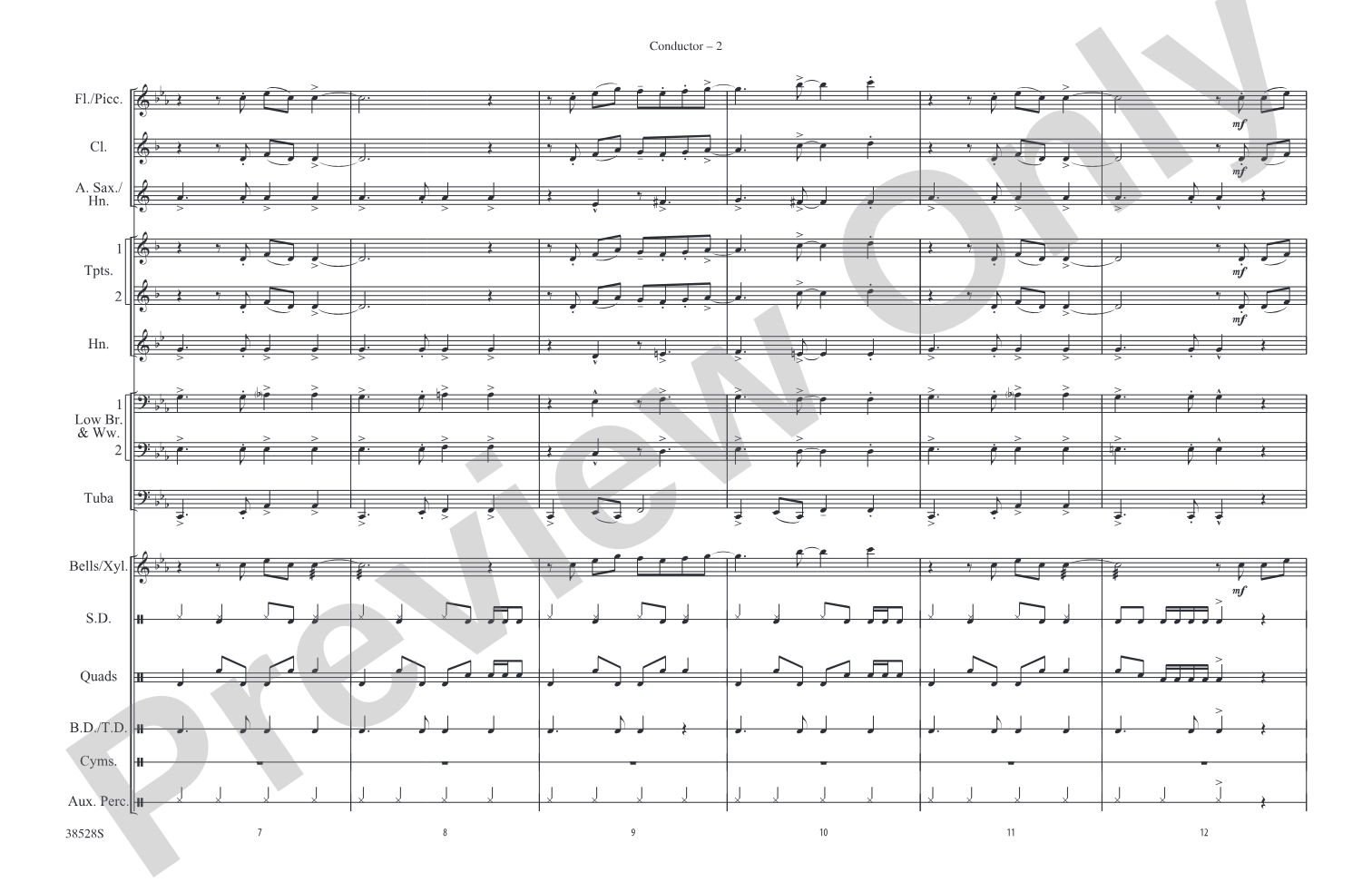
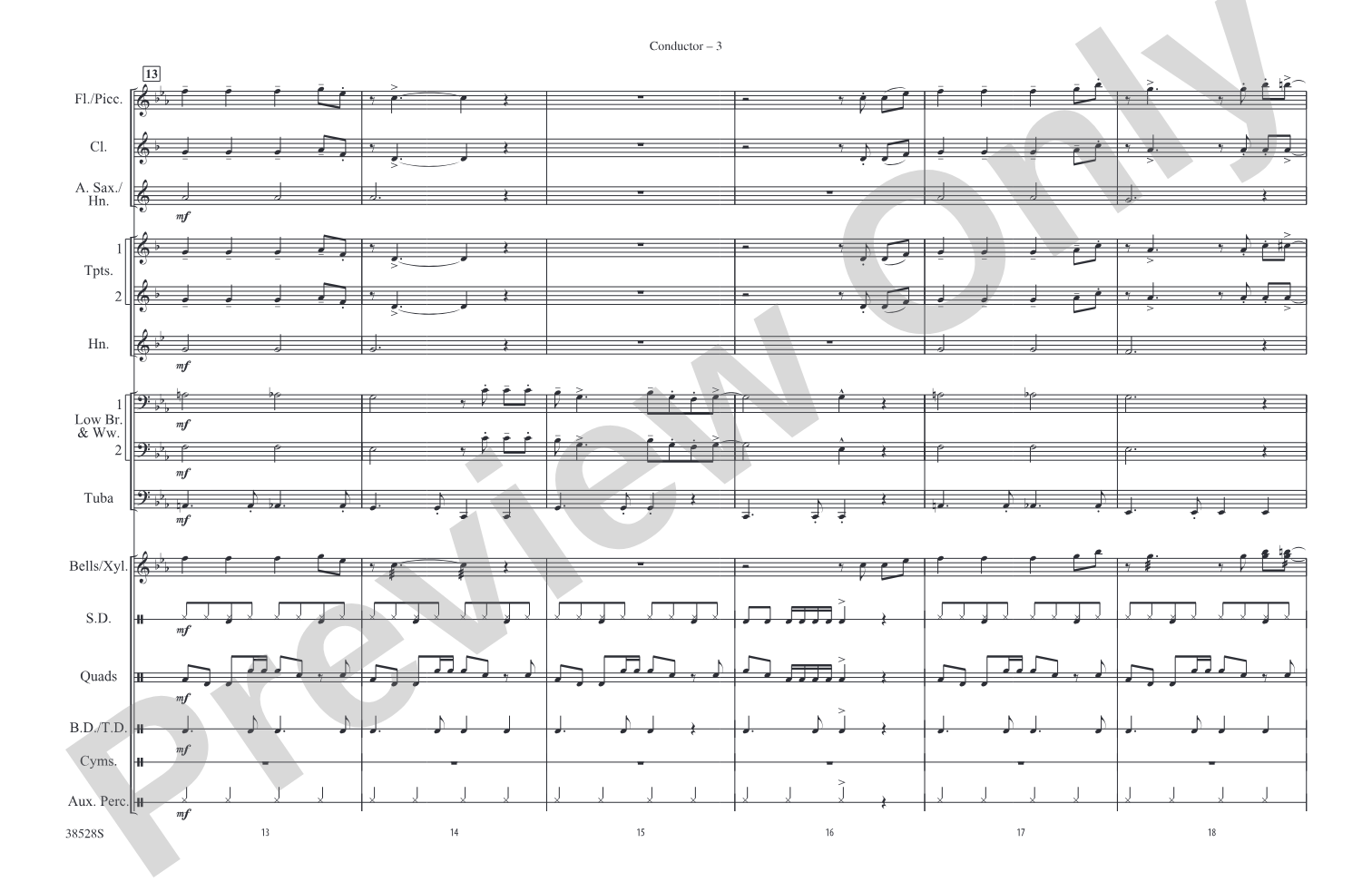
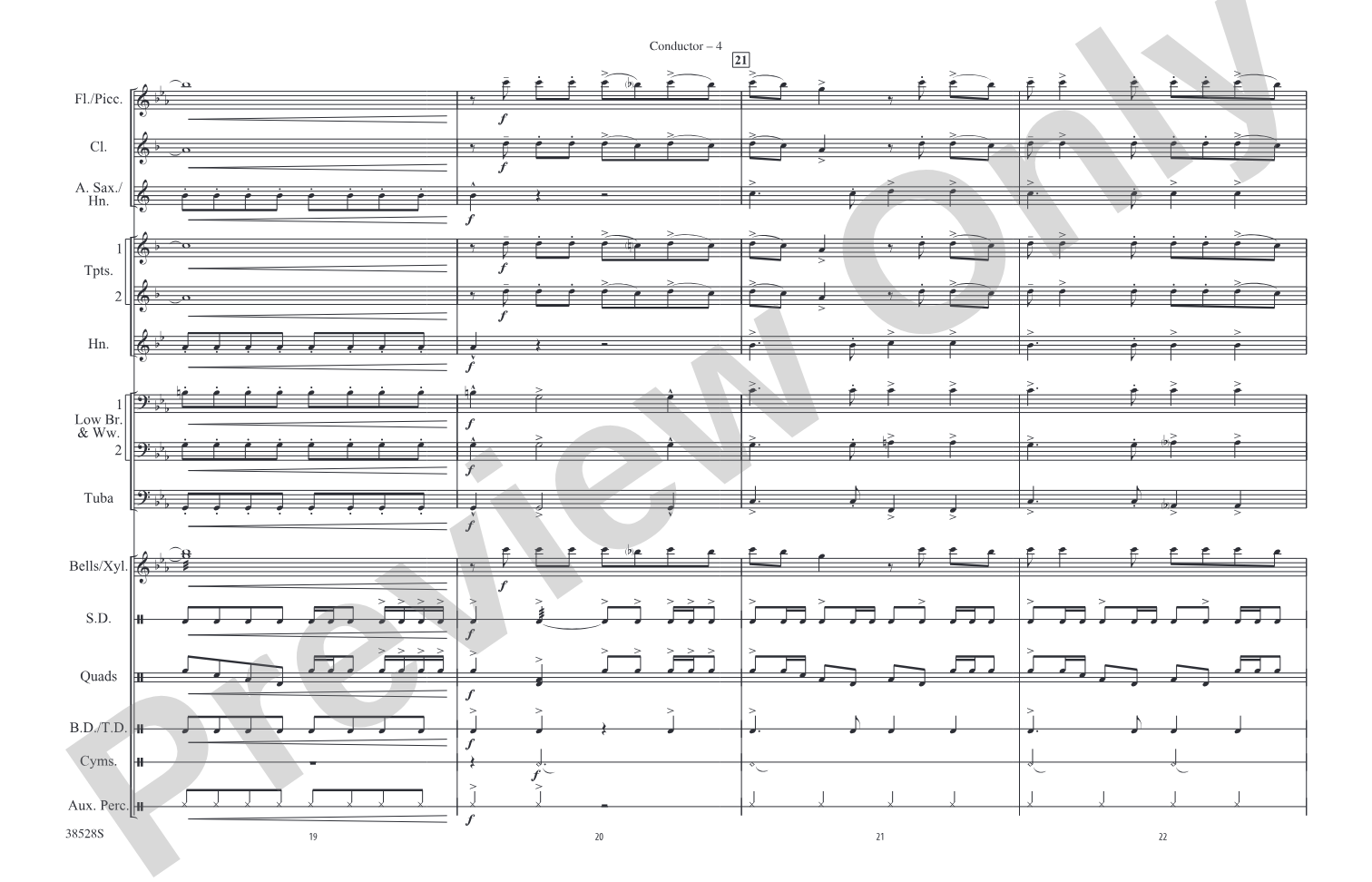
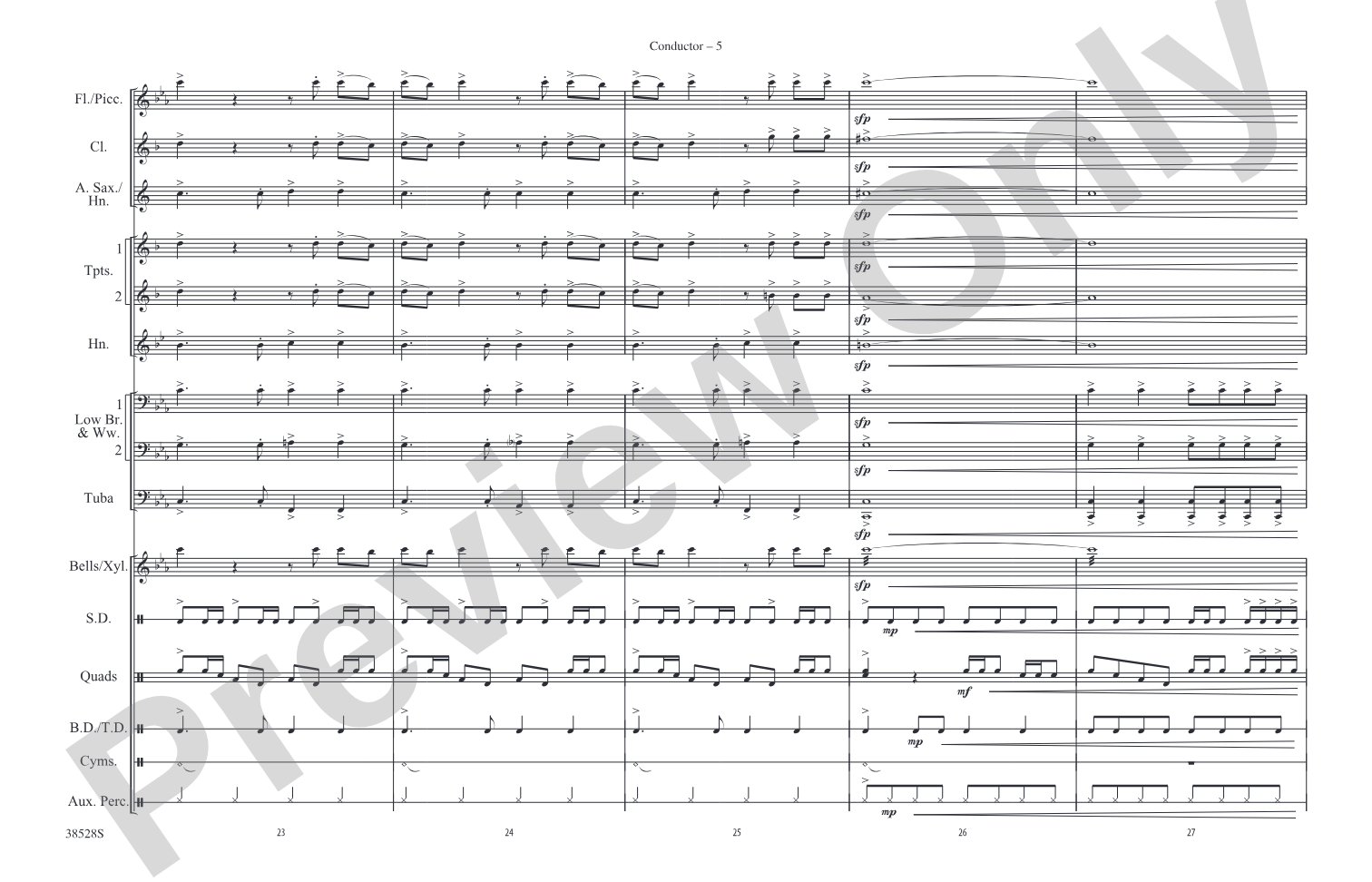
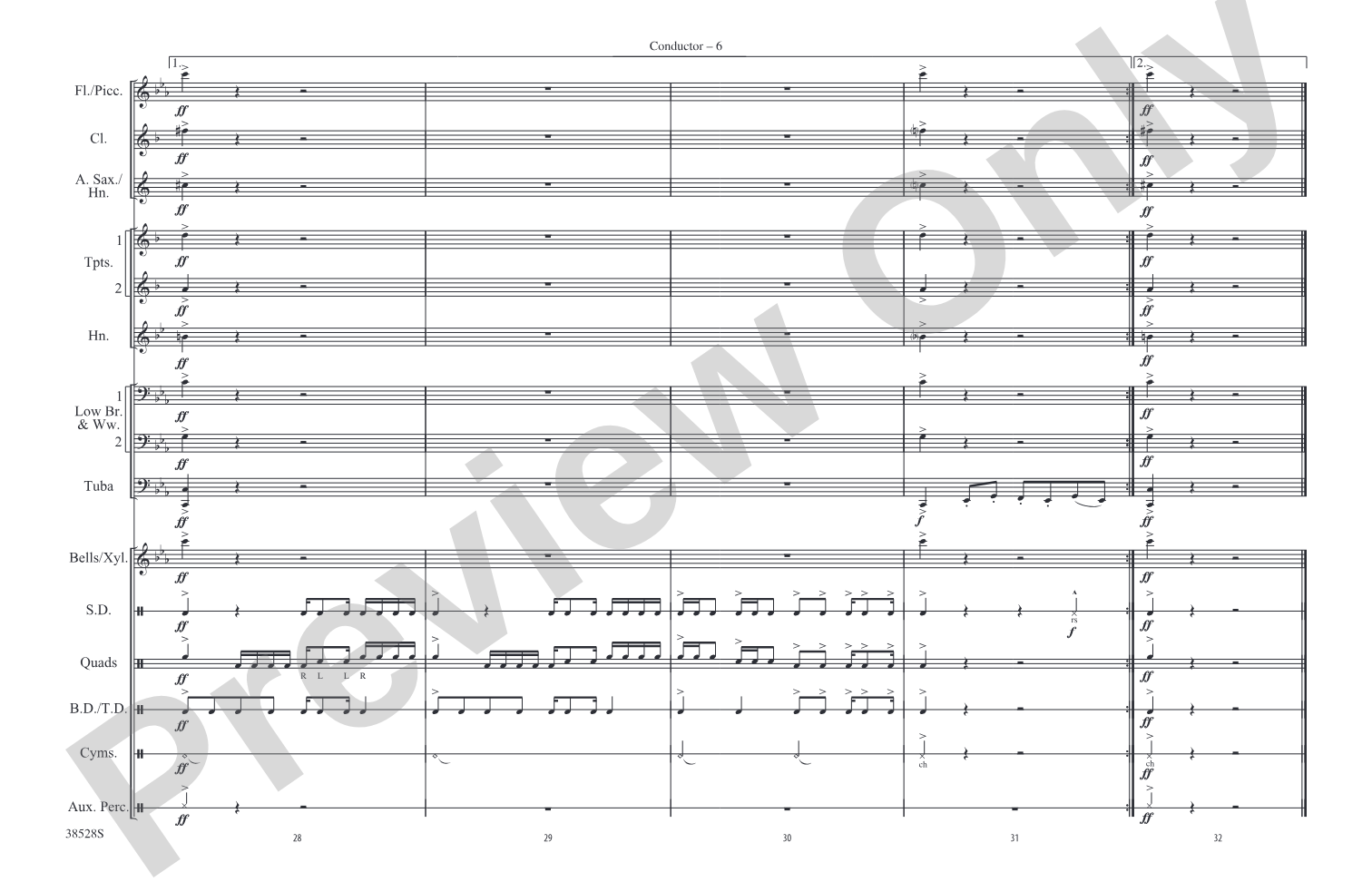

She's Not There: Score
Words and music by Rod Argent [The Zombies] [Glee] / arr. Doug Adams
Grade: 2 (Easy)
Item: 00-PR-0006477
$7.00
Pickup currently not available
Description
Doug Adams takes one of the coolest rock tunes ever and crafts a solid new arrangement for your marching or pep band. Originally performed by The Zombies, this tune was recently featured on the hit TV show Glee. It's a chart that will work well for any level band---don't miss it! (1:45)


Don't just read it, hear it, play along with it, and watch your students grow with it. In MakeMusic Cloud, She's Not There: Score comes alive with professional accompaniment, adjustable tempo, and built-in practice tools that turn solo practice into real progress.
Open in the Player
Jump straight in and assign it today.
Start Your Free Trial
Open this title and explore the full library in minutes.
Sample Audio
1
Audio File
--:--
0:00
0:00
Sample Video
No sample videos found.
Additional Details
Series:
Easy Pops for Marching Band
Publisher:
Alfred Music
Page Count:
124
SKU:
00-PR-0006477
More about this title
About the Composer: Rod Argent
Rod Argent was the keyboardist, vocalist, and primary songwriter of The Zombies, the British rock band that emerged from the mid-1960s British Invasion. He wrote "She's Not There" when he was just 17 years old, crafting a track that became one of the era's most distinctive hits and helped define the band's sophisticated pop-rock sound. His contributions to rock music demonstrate how melodic sensibility and instrumental creativity can shape a generation of popular music.
Why we love this
Doug Adams nails the swagger of this rock classic without sacrificing the Grade 2 accessibility your band needs. The arrangement preserves what made "She's Not There" iconic—that hypnotic organ hook and lean, angular melody—while distributing the musical interest across your full instrumentation. Your students get to play a song they'll recognize and feel genuinely cool performing, which matters as much as any pedagogical benefit.
What to expect
Lean, propulsive, and infectious. "She's Not There" carries the restless energy of 1960s British rock—there's always something in motion, whether it's the organ ostinato or the rhythmic interplay between the horn sections. The tune feels closer to pop than heavy rock, with an almost hypnotic quality that pulls listeners into its minimal but memorable landscape.
Who it's for
Marching and pep bands at the Grade 2 level who want crowd-pleasing rock repertoire that doesn't compromise on musicianship. This works equally well for bands building foundation skills and those looking to add contemporary material that generates genuine student enthusiasm.
How to get the most out of it
- Keep the tempo locked and steady at the quarter note. The tune lives in its groove, and any rubato will disrupt the mechanical precision that makes the original arrangement so effective.
- Balance the melody line carefully between sections. This piece trades the main hook between instruments, so spotlighting each entrance clearly prevents the tune from losing its hook-based identity.
- Emphasize the rhythmic kicks and punctuations in the lower voices and percussion. These articulate the rock pocket and give the piece its forward momentum beyond just the melodic line.
- Mark breath points in advance with your band. At Grade 2, some players may rush or lose shape during longer phrases, so clear communication about where everyone breathes together keeps the line connected.
How to use it
Position this on a concert that mixes classic and contemporary styles. It pairs effectively with other rock-era standards or modern pop arrangements, and its recognizable melody makes it an excellent choice for community events where audience engagement matters. The modest difficulty level also makes it reliable for early-season performances or smaller venue appearances.
Skills your students will build
- Maintaining steady tempo and groove under rhythmic ostinatos
- Balancing horn melody lines across multiple instrumental voices
- Articulating rock-style rhythmic punctuation with precision
- Reading and executing section-specific rhythmic patterns that interlock