Buddy Guy stands as one of the last living links to the Chicago blues tradition, a guitarist whose expressive playing and raw emotional delivery shaped electric blues for generations. His ability to coax singing, almost vocal-like tones from the guitar while maintaining rhythmic precision made him both a technical innovator and a storyteller; his influence runs through rock, blues, and jazz in ways both obvious and subtle.
Why we love this
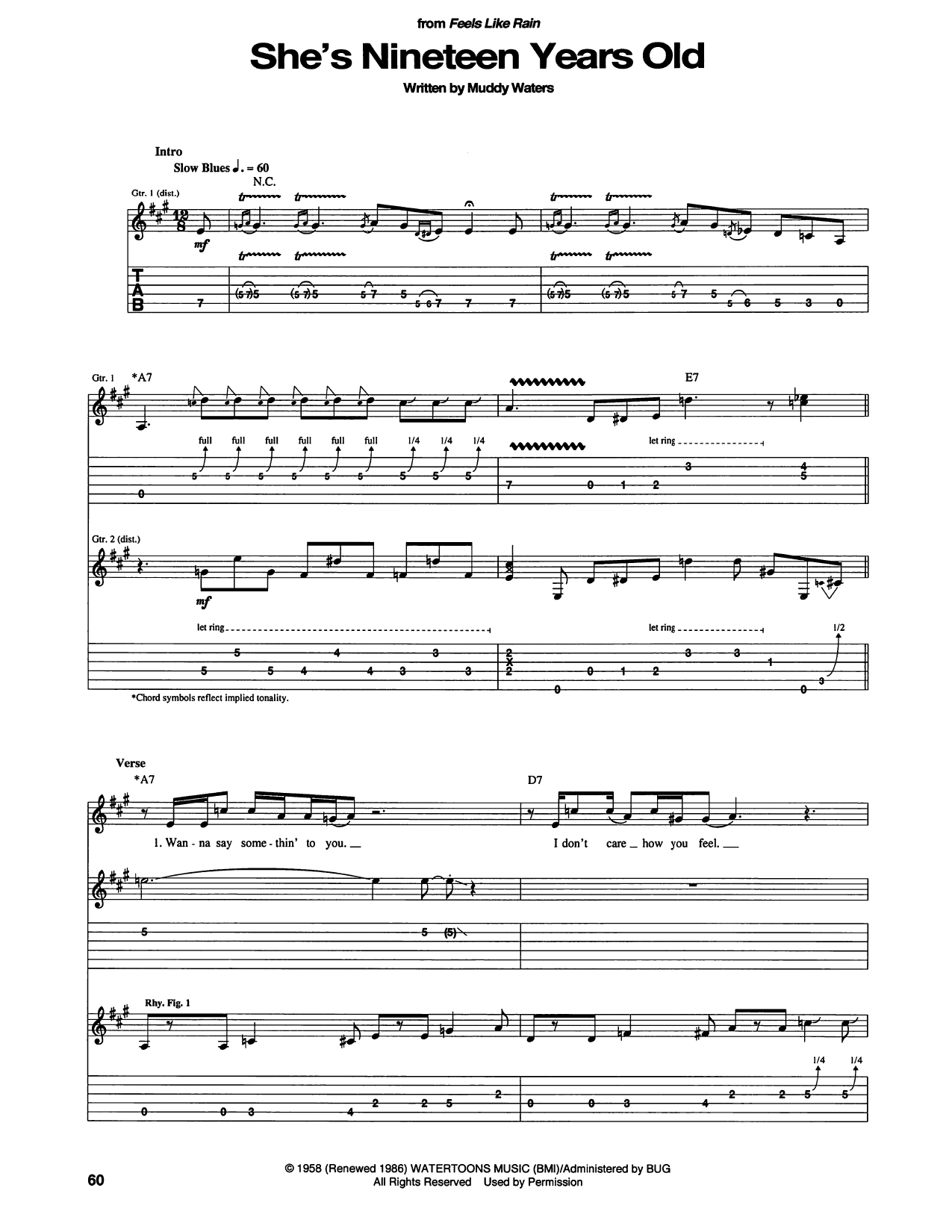
This tab captures the essence of classic blues guitar phrasing without requiring a rhythm section to make it work, giving students a chance to wrestle with the real language of the blues idiom. The song's straightforward structure means students can focus on tone, bend accuracy, and the expressive timing that separates adequate blues playing from authentic blues playing.
What to expect
Relaxed yet charged with tension, the song swings with a casual confidence that masks the precision underneath. There's room to breathe and to push, to sit back in the groove while still making every note count.
Who it's for
Guitar students ready to move beyond beginner blues patterns and engage with how professional blues guitarists construct solos and melody lines. This works especially well for students who want to understand blues language as a complete musical system rather than a collection of licks.
How to get the most out of it
Pay attention to where bends start and end; blues guitar relies on these micro adjustments to create emotional weight, not just hitting the right note at the right time.
Listen closely to how the original recording handles space and silence. Blues guitarists are known for what they don't play as much as what they do.
Work the rhythm feel in sections before trying to play the whole piece. Lock in the pocket first, then layer in the melodic and harmonic details.
How to use it
Pair this with listening assignments that compare different artists' approaches to the same tune, or use it as part of a blues history unit that moves from Delta traditions through to modern electric playing. It's equally effective as a solo study piece or as material for small ensemble work where guitar anchors the rhythm.
Skills your students will build
Blues bending technique and intonation control
Phrasing and rhythmic placement in a swing feel
Reading and interpreting guitar tab with expressive notation
Solo construction and melodic development in the 12-bar blues form
Listening transcription skills and ear training for blues idioms
You May Also Like
Scan to Complete Your Purchase
Use your phone's camera to scan the code below
You'll log in on your phone and the order will be added to your account