She's Always a Woman (arr. Theo Janssen) Sheet Music Preview

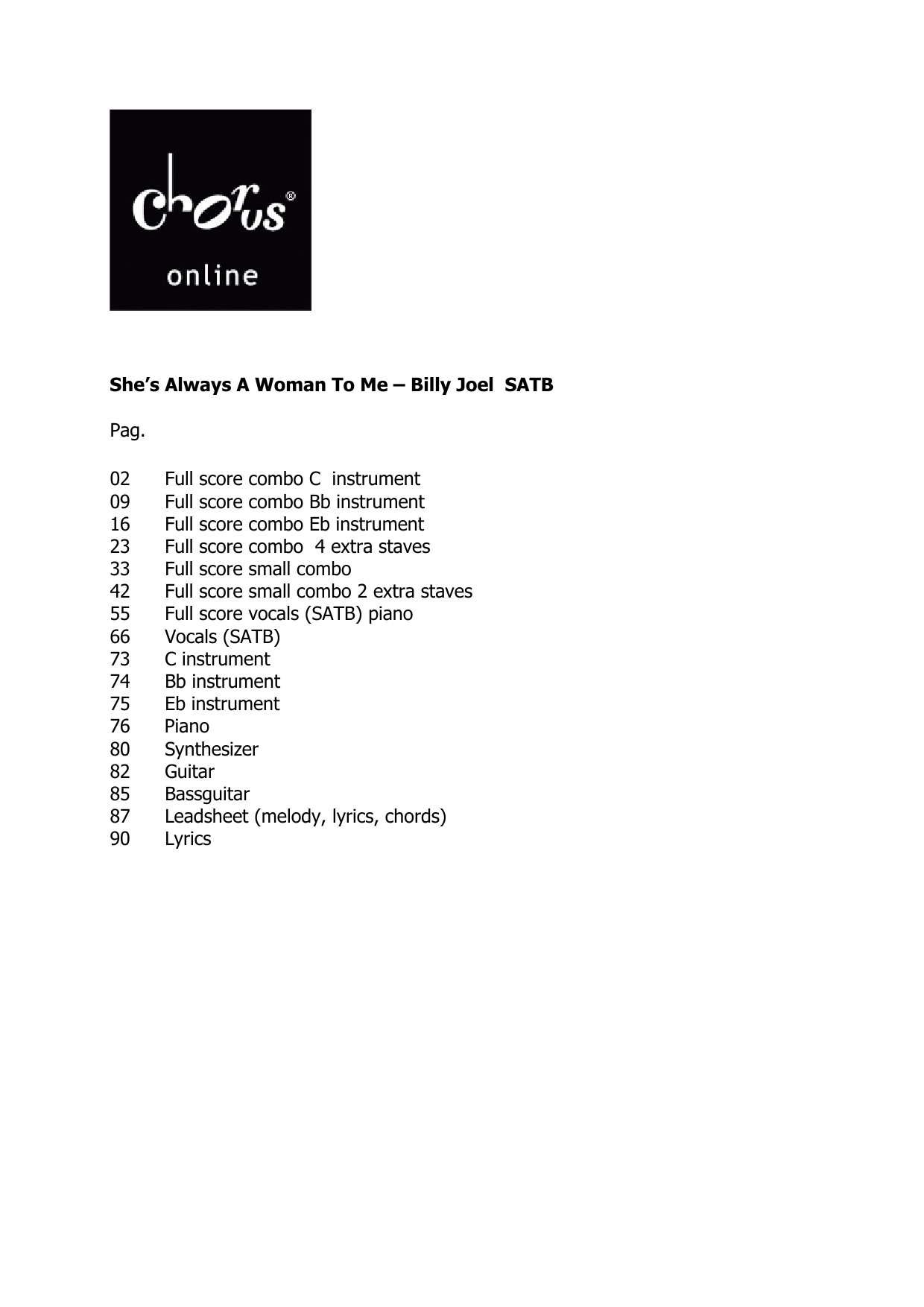
She's Always a Woman (arr. Theo Janssen): SATB Choral Octavo

As performed by Billy Joel / Arranged by Theo Janssen

Item: 35-DS00489061

Digital Download
$2.99
Description

She's Always a Woman (arr. Theo Janssen): SATB Choral Octavo isn't in MakeMusic Cloud just yet...but it could be. Let us know you'd like to see it, and you'll help shape what comes next. In the meantime, start a free trial and dive into thousands of interactive titles your students can play along with today.

Sample Audio
No sample audio found.
Sample Video
Additional Details
Publisher: Hal Leonard
Page Count: 90
SKU: 35-DS00489061

More about this title

About the Artist: Billy Joel

Billy Joel stands as one of the most distinctive voices in American popular music, with a career spanning five decades and a catalog that bridges classical training, jazz sensibility, and rock accessibility. His gift for melody and his ability to capture complex human emotions in conversational lyrics made him a dominant force on radio and in concert halls, earning him induction into the Songwriters Hall of Fame and numerous Grammy Awards. For music educators, Joel's work represents a remarkable opportunity to engage students with songs that combine harmonic sophistication, singable melodies, and genuine emotional depth.

Why we love this

Theo Janssen's arrangement preserves the emotional core of Joel's original while creating a genuine four-part writing that feels composed rather than adapted. The 90-page score suggests rich harmonic movement and textural variety, giving your singers real musical substance to engage with beyond simple note-singing. Programming a Billy Joel song offers an unexpected entry point for choirs to explore contemporary material with the sophistication and depth that typical pop arrangements often lack.

What to expect

The song carries a tender, observational quality as it unfolds through the four-part texture, allowing the lyrical vulnerability of Joel's original to come through with clarity. Harmonically warm and conversational in tone, the arrangement invites singers to find emotional truth in their lines rather than perform mechanics. The extended page count suggests moments of both intimacy and fuller ensemble sound that showcase different facets of the piece.

Who it's for

Choirs seeking accessible repertoire with genuine musical substance will find this arrangement meets that need squarely. High school and community choirs looking to perform recognizable songs with vocal integrity will value Janssen's treatment. This works equally well for directors building a program that bridges classical and contemporary idioms.

How to get the most out of it

  • Attend to the dynamic arc across all four voice parts; the richness of a good SATB arrangement lives in how the voices support and color each other rather than in solo moments.
  • Investigate where Janssen doubles or separates the voices for textural effect. These choices drive the song's emotional trajectory and deserve careful rehearsal attention.
  • Record a full run-through early in your preparation so singers can hear how their individual parts fit into the harmonic landscape of the whole piece.
  • Work the alto and tenor lines with particular care; these voices often carry harmonic weight in contemporary arrangements and tend to get under-rehearsed.

How to use it

This arrangement fits naturally into spring concerts or programs exploring songwriting across genres, where it can sit alongside both classical and contemporary works without tonal jarring. Consider pairing it with other Janssen arrangements if your choir is building familiarity with his voice, or use it as an accessible entry point for singers less experienced with pop repertoire. The song's subject matter and emotional maturity make it suitable for audiences of all ages while remaining engaging for performers.

Skills your students will build

  • Balancing four-part harmony in a contemporary idiom
  • Finding expressive phrasing and breath placement in text-driven material
  • Listening to inner voice lines and their relationship to overall harmonic structure
  • Sustaining musical focus in non-rhythmically-driven arrangements
  • Interpreting dynamics and color shifts across multiple voice parts

You May Also Like