
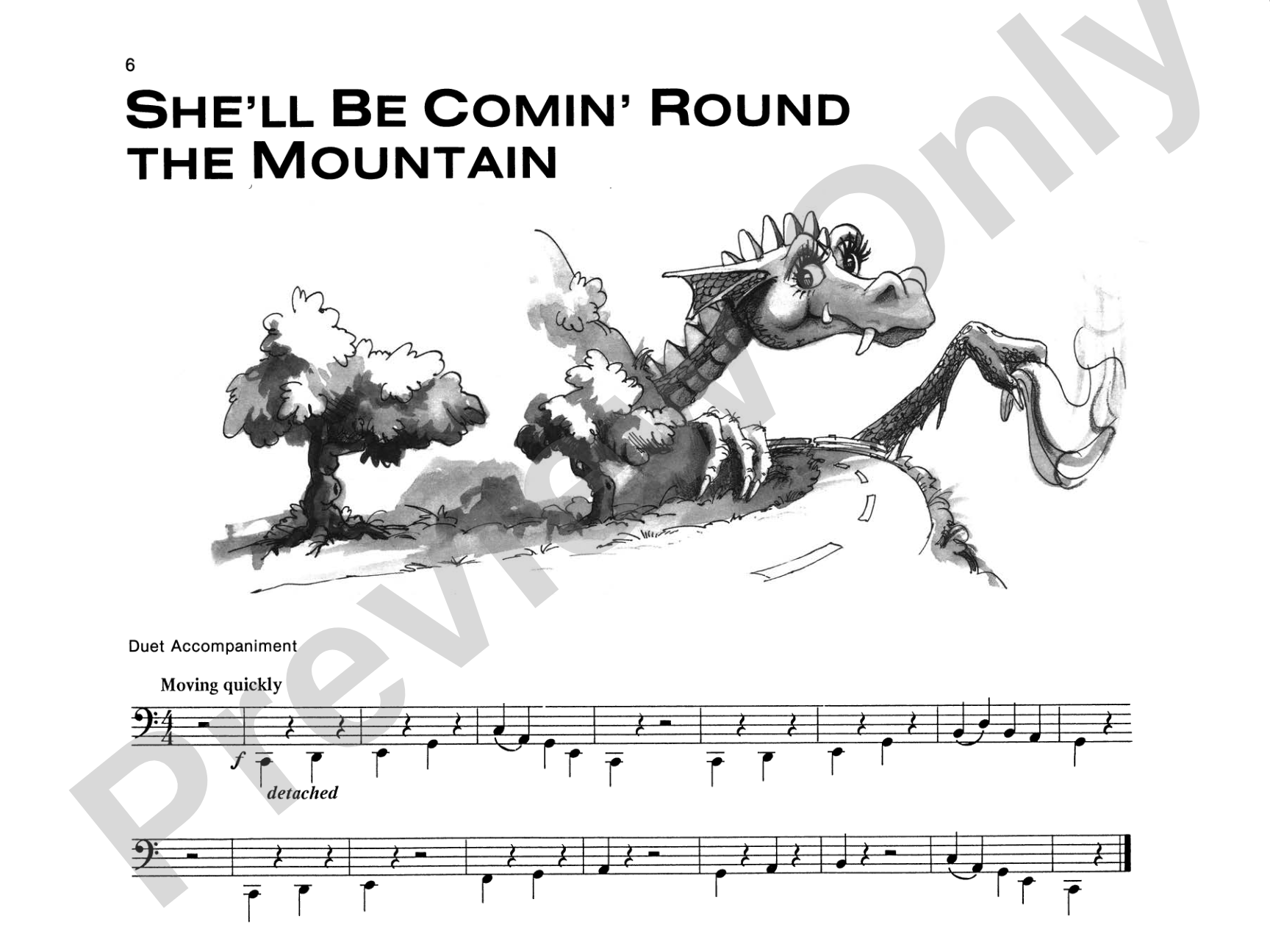

She'll Be Comin' 'Round the Mountain - Piano Solo (with Optional Duet Accompaniments): Piano Solo
15 Songs for Beginning Piano
Arranged by Lynn Freeman Olson
Level: Early Elementary / Elementary
Item: 00-PS-0017261
$4.99
Pickup currently not available
Related Items
Au Clair de la Lune - Piano Solo (with Optional Duet Accompaniments): Piano Solo |
$4.99
|
View | |
Bingo - Piano Solo (with Optional Duet Accompaniments): Piano Solo |
$4.99
|
View | |
Boating Song - Piano Solo (with Optional Duet Accompaniments): Piano Solo |
$4.99
|
View | |
Brahms' Lullaby - Piano Solo (with Optional Duet Accompaniments): Piano Solo |
$4.99
|
View | |
Down in the Valley - Piano Solo (with Optional Duet Accompaniments): Piano Solo |
$4.99
|
View | |
Li'l Liza Jane - Piano Solo (with Optional Duet Accompaniments): Piano Solo |
$4.99
|
View | |
Morning Has Broken - Piano Solo (with Optional Duet Accompaniments): Piano Solo |
$4.99
|
View | |
Nobody Knows - Piano Solo (with Optional Duet Accompaniments): Piano Solo |
$4.99
|
View | |
O! Susanna - Piano Solo (with Optional Duet Accompaniments): Piano Solo |
$4.99
|
View | |
Old MacDonald Had a Farm - Piano Solo (with Optional Duet Accompaniments): Piano Solo |
$4.99
|
View | |
Skip to My Lou - Piano Solo (with Optional Duet Accompaniments): Piano Solo |
$4.99
|
View | |
The Skater's Waltz - Piano Solo (with Optional Duet Accompaniments): Piano Solo |
$4.99
|
View | |
Where Is My Little Dog Gone? - Piano Solo (with Optional Duet Accompaniments): Piano Solo |
$4.99
|
View | |
Yankee Doodle - Piano Solo (with Optional Duet Accompaniments): Piano Solo |
$9.99
|
View | |
First Favorite Melodies: Piano Book |
$9.99
|
View |
Description
Easy five-finger arrangements of the world's most popular melodies, designed to encourage independent reading. Duet accompaniments provide a fuller sound and a chance for involvement by a teacher, friend or family member. A Federation Festivals 2024-2028 selection.


She'll Be Comin' 'Round the Mountain - Piano Solo (with Optional Duet Accompaniments): Piano Solo isn't in MakeMusic Cloud just yet...but it could be. Let us know you'd like to see it, and you'll help shape what comes next. In the meantime, start a free trial and dive into thousands of interactive titles your students can play along with today.
Request This Title
Tell us you want it.
Start Your Free Trial
Explore everything that's ready to play right now.
Sample Audio
No sample audio found.
Sample Video
No sample videos found.
Additional Details
Publisher:
Alfred Music
Page Count:
32
SKU:
00-PS-0017261
More about this title
About the Arranger: Lynn Freeman Olson
Lynn Freeman Olson has shaped early piano pedagogy for decades through arrangements that respect both the developmental needs of young pianists and the integrity of beloved melodies. Her work prioritizes musical independence and joy, creating accessible entry points into standard repertoire without oversimplifying the learning experience.
Why we love this
This collection strikes the rare balance between genuine melodic recognition and authentic five-finger technique. The optional duet parts transform what could be a solo exercise into a shared musical experience, turning practice sessions into real ensemble moments that motivate young players and engage families in the learning process.
What to expect
Straightforward and inviting, with the comfort of recognizing a world-famous tune the moment your fingers touch the keys. The five-finger limitations never feel restrictive; instead, they create clarity and allow young players to focus entirely on musical expression rather than technical negotiation.
Who it's for
Early elementary pianists building confidence in reading and hand independence, particularly those ready to move beyond single-note exercises but not yet comfortable with position changes. Teachers and private studio instructors will find these arrangements essential for students preparing for festival performances or seeking familiar material that still offers genuine learning value.
How to get the most out of it
- Let the melody sing by maintaining steady finger independence; resist the temptation to help with hand position shifts or pivot movements that the five-finger pattern can accomplish alone.
- Coordinate with your accompanist during rehearsals to establish a consistent tempo; duet arrangements work best when both parts breathe together from the first phrase.
- Shape the melodic contour with dynamic awareness, even within the five-finger position; a single hand can communicate musical intention through subtle dynamic shaping.
- Practice the duet part separately so you understand the harmonic context; knowing what supports the melody helps young pianists play with musical confidence rather than mechanical accuracy alone.
How to use it
Feature duet performances at studio recitals with teacher or family accompanist to showcase student progress while keeping the spotlight on the young pianist. This collection works particularly well as a bridge between method book exercises and more substantial solo repertoire, or as Festival Festivals 2024-2028 preparation material with reliable, proven arrangements.
Skills your students will build
- Reading melodic lines in treble clef within the five-finger position
- Maintaining steady tempo and rhythmic accuracy without hand position changes
- Listening to harmonic accompaniment and tracking musical direction
- Performing with a second pianist and responding to a partner's musical phrasing
- Building finger independence and evenness within limited hand positions
- Recognizing and internalizing melodic contour and phrasing in familiar songs