
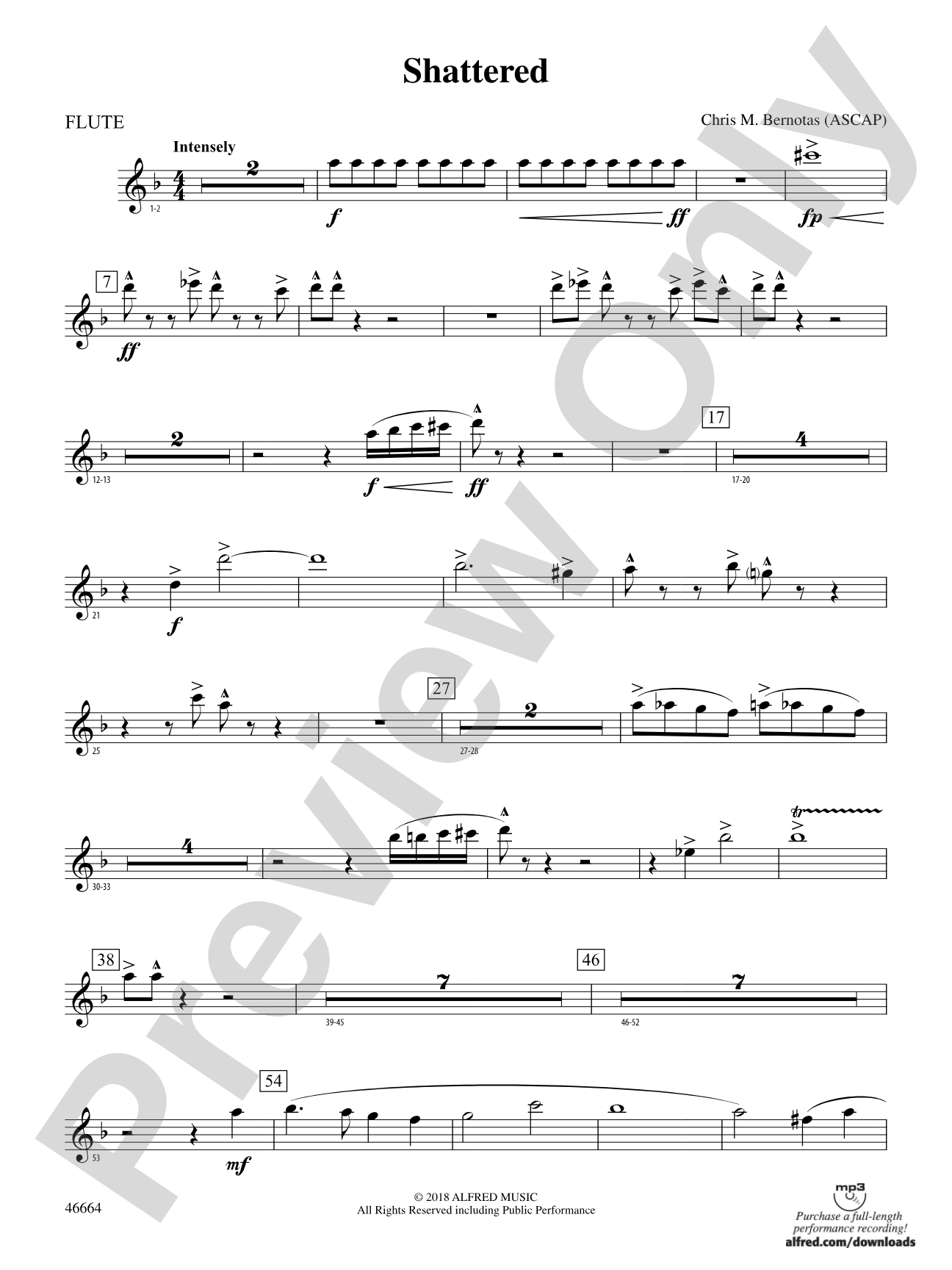

Shattered: Flute
By Chris M. Bernotas
Grade: 2.5 (Medium Easy)
Item: 00-PC-0018094_F1
$3.00
Pickup currently not available
Description
Fierce and explosive with its intensity and rhythmic drive, "Shattered" is relentless in its forward momentum and rhythmic interplay between all winds and percussion. Students will be energized and engaged from the very first beat as strong dynamics, clear articulation, and rhythmic precision are all paramount.


Don't just read it, hear it, play along with it, and watch your students grow with it. In MakeMusic Cloud, Shattered: Flute comes alive with professional accompaniment, adjustable tempo, and built-in practice tools that turn solo practice into real progress.
Open in the Player
Jump straight in and assign it today.
Start Your Free Trial
Open this title and explore the full library in minutes.
Sample Audio
1
Audio File
--:--
0:00
0:00
Sample Video
Additional Details
Series:
Young Symphonic
Publisher:
Alfred Music
Page Count:
280
SKU:
00-PC-0018094_F1
More about this title
About the Composer: Chris M. Bernotas

Chris M. Bernotas has shaped instrumental music education for over 25 years as a composer, conductor, and educator. As Director of Instrumental Publications at Alfred Music, he develops band and orchestra materials performed by ensembles worldwide, from beginning groups to advanced ensembles. His compositions balance musical substance with accessibility, grounded in his direct experience teaching students across all levels.
Bernotas brings classroom insight to every piece he writes, understanding the real demands directors face when building repertoire and developing musicians. His work extends beyond composition into conducting and mentorship; he regularly appears as a guest conductor and clinician while also co-authoring pedagogical resources including the Sound Innovations and Sound Artistry series. His dual commitment to composition and education ensures that his music serves both artistic and developmental purposes.
Why we love this
Bernotas captures the energy that Grade 2.5 bands need to feel like musicians, not students working through a scale book. The rhythmic interplay and driving momentum keep every section engaged without requiring technical gymnastics, and the strong dynamic contrasts give your band genuine reasons to play expressively and with purpose.
What to expect
Sharp, propulsive, and unapologetically modern in its rhythmic language. The piece pulls the band forward with constant forward motion and interplay between sections, creating a sense of controlled intensity and drive that makes every player feel part of something larger than their individual line.
Who it's for
Concert bands at the Grade 2.5 level looking for a high-energy selection that demands musicianship without overwhelming technical demands. This works equally well for contest programmers seeking an aggressive opener and for concert directors wanting a piece that energizes both ensemble and audience.
How to get the most out of it
- Lock the articulation across all wind sections during the opening and recurring rhythmic statements. Uniformity here sets the tone for the relentless feel.
- Push the rhythmic precision in the percussion parts; they are equal partners in the forward motion, not accompaniment. Rehearse them separate from winds when needed to tighten the interlocking patterns.
- Shape the dynamic contrasts deliberately rather than jumping between levels. Gradual builds into the forte sections create more impact and keep the band engaged with the shape of the phrase.
- Balance clarity with intensity. The piece thrives on articulation and precision, but not at the cost of blend. Check your tone quality even as you demand energetic attacks.
How to use it
Position this as an opener or closer on a concert program where you want immediate impact. The aggressive character and rhythmic precision make it an excellent choice for a contest or festival setting where you need to grab attention in the first thirty seconds. It also pairs effectively with more lyrical or baroque-era selections, providing programmatic contrast.
Skills your students will build
- Precision articulation and uniform tonguing across wind sections
- Rhythmic interplay and independence within a driving pulse
- Dynamic contrast and shape within a high-energy context
- Balance between individual line clarity and ensemble blend
- Energetic response to tempo and rhythmic momentum