
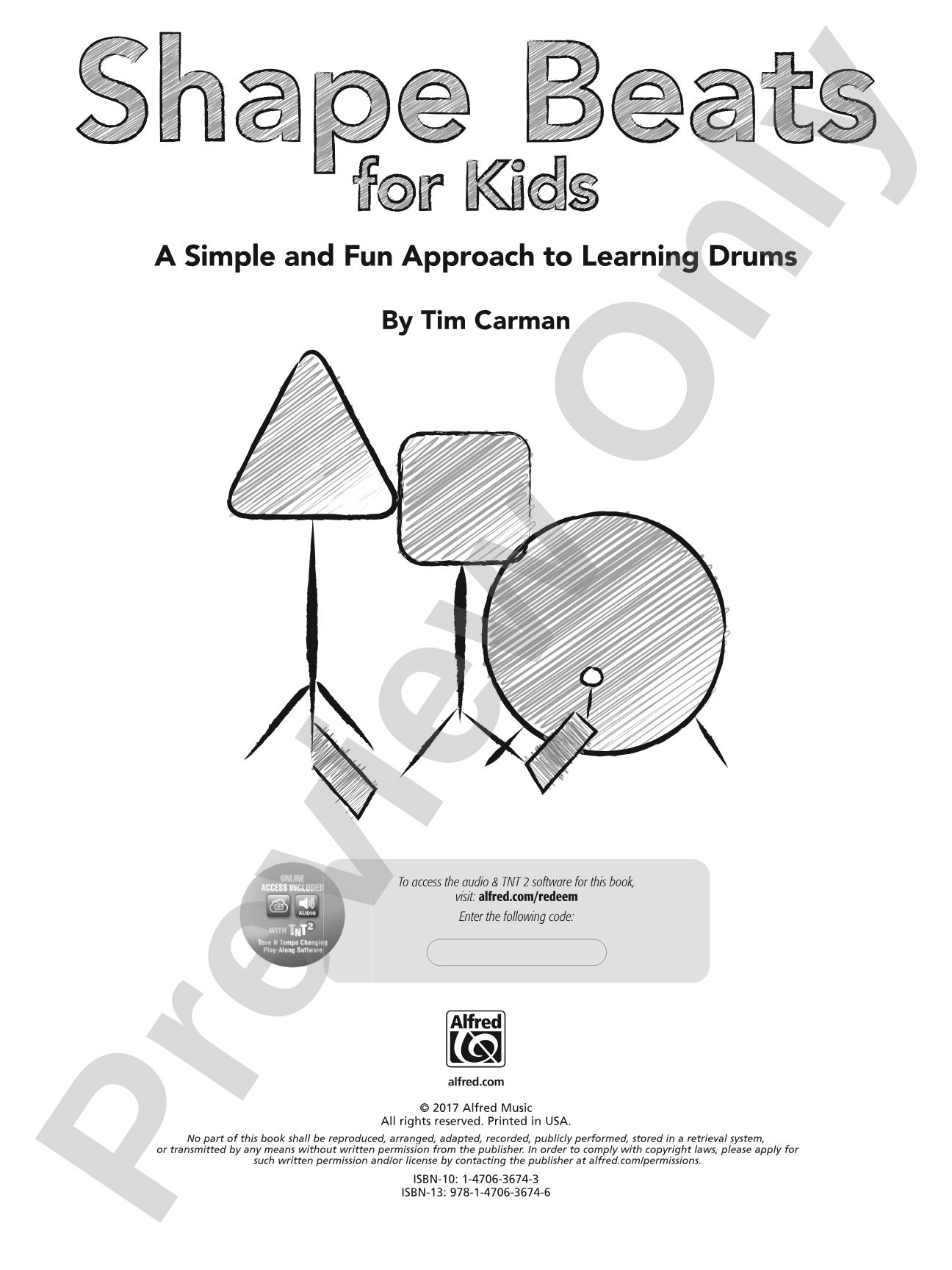

Shape Beats for Kids: A Simple and Fun Approach to Learning Drums
A Simple and Fun Approach to Learning Drums
By Tim Carman
Item: 00-PB-0002371
$15.99
Pickup currently not available
Related Items
Shape Beats for Kids: Drum Book & Online Audio/Software |
$15.99
|
View |
Description
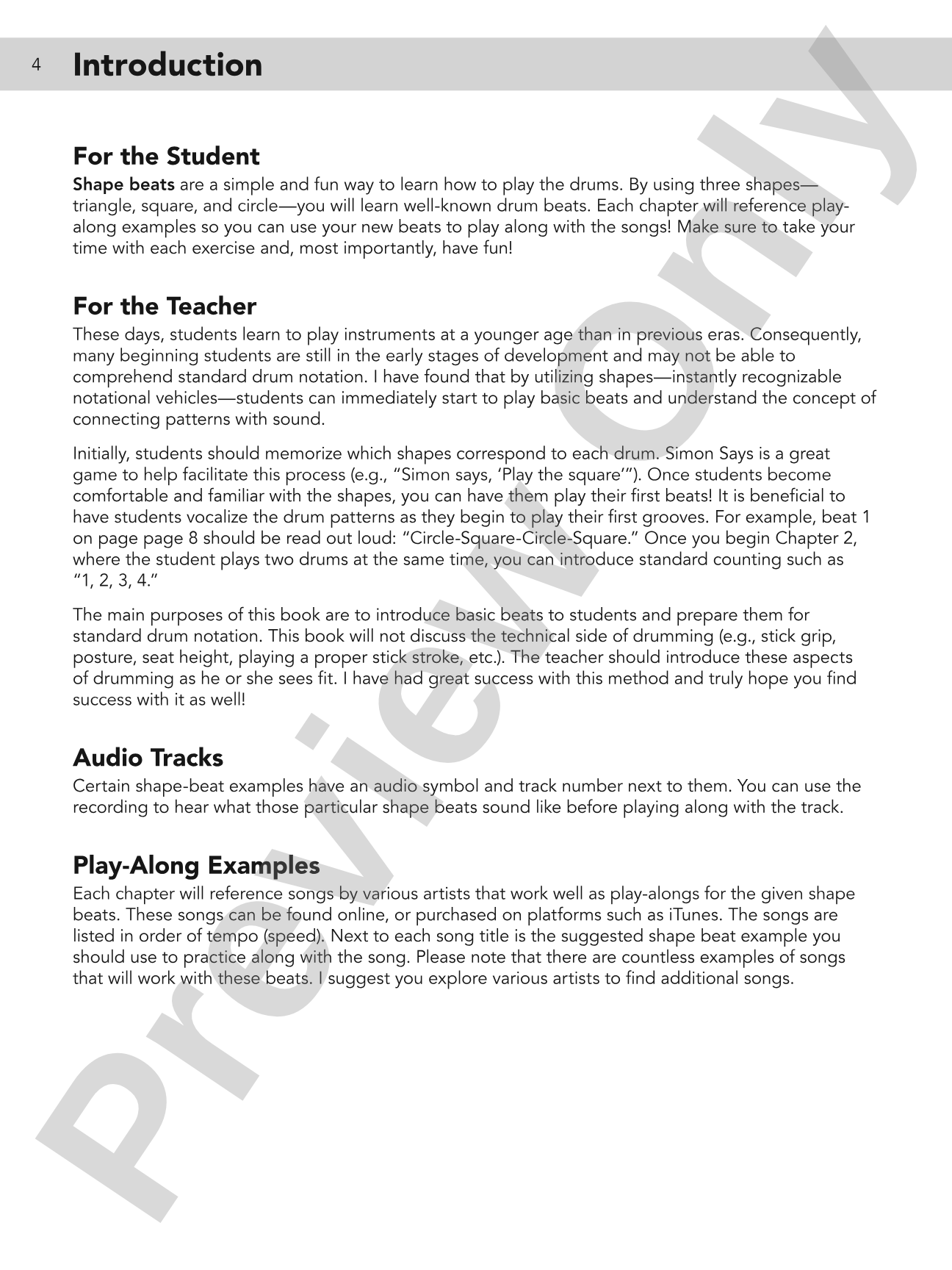
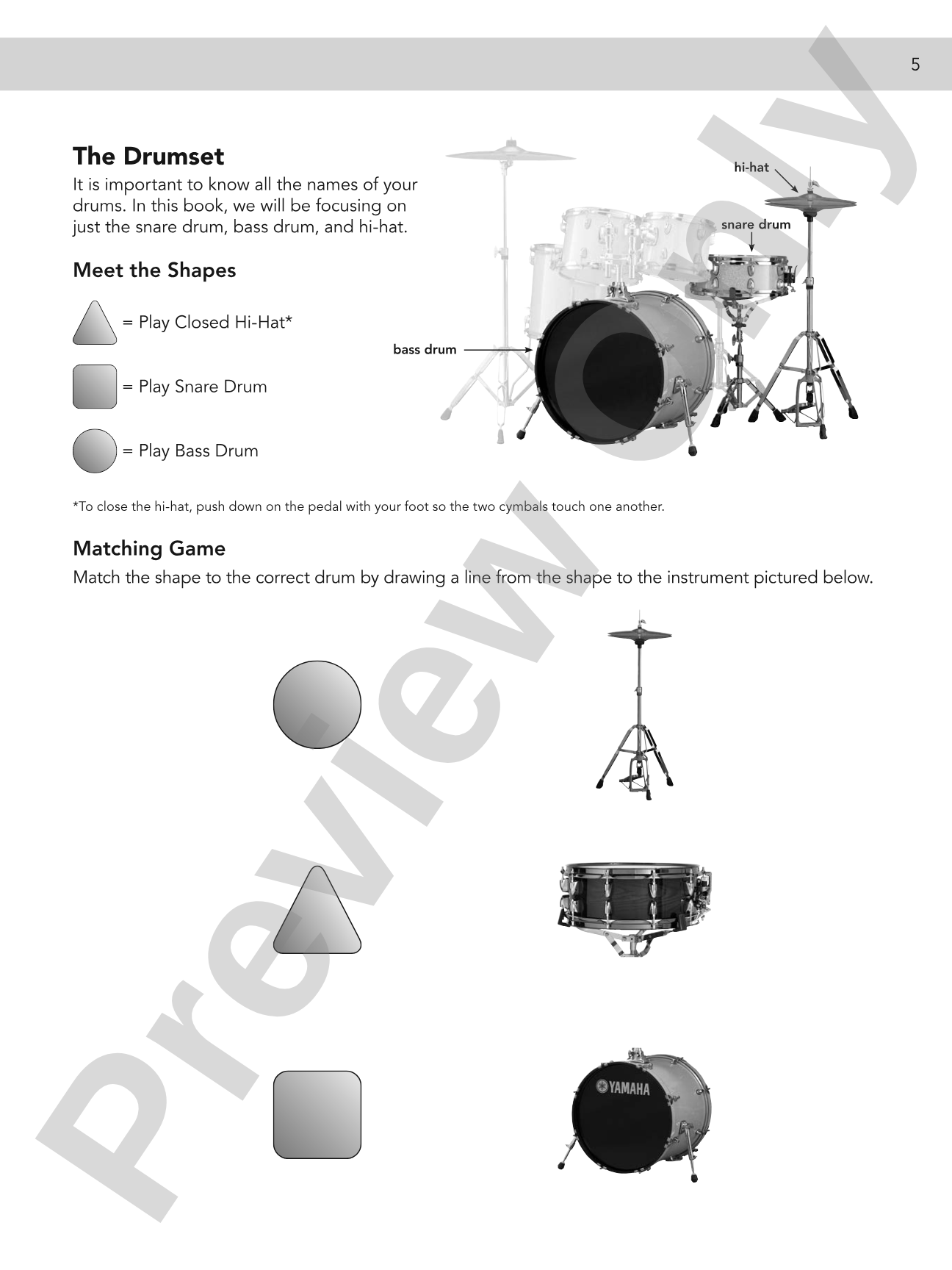
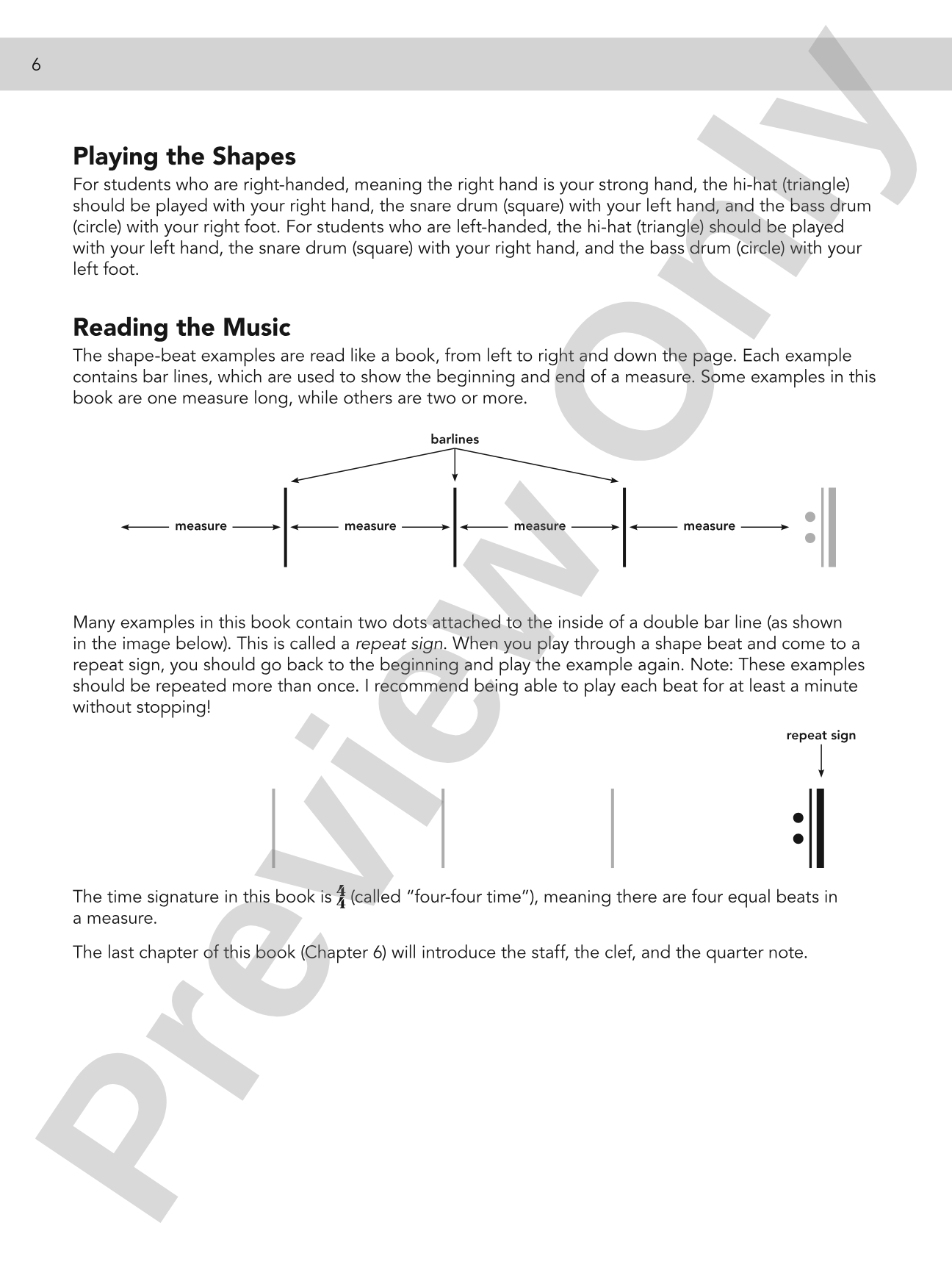
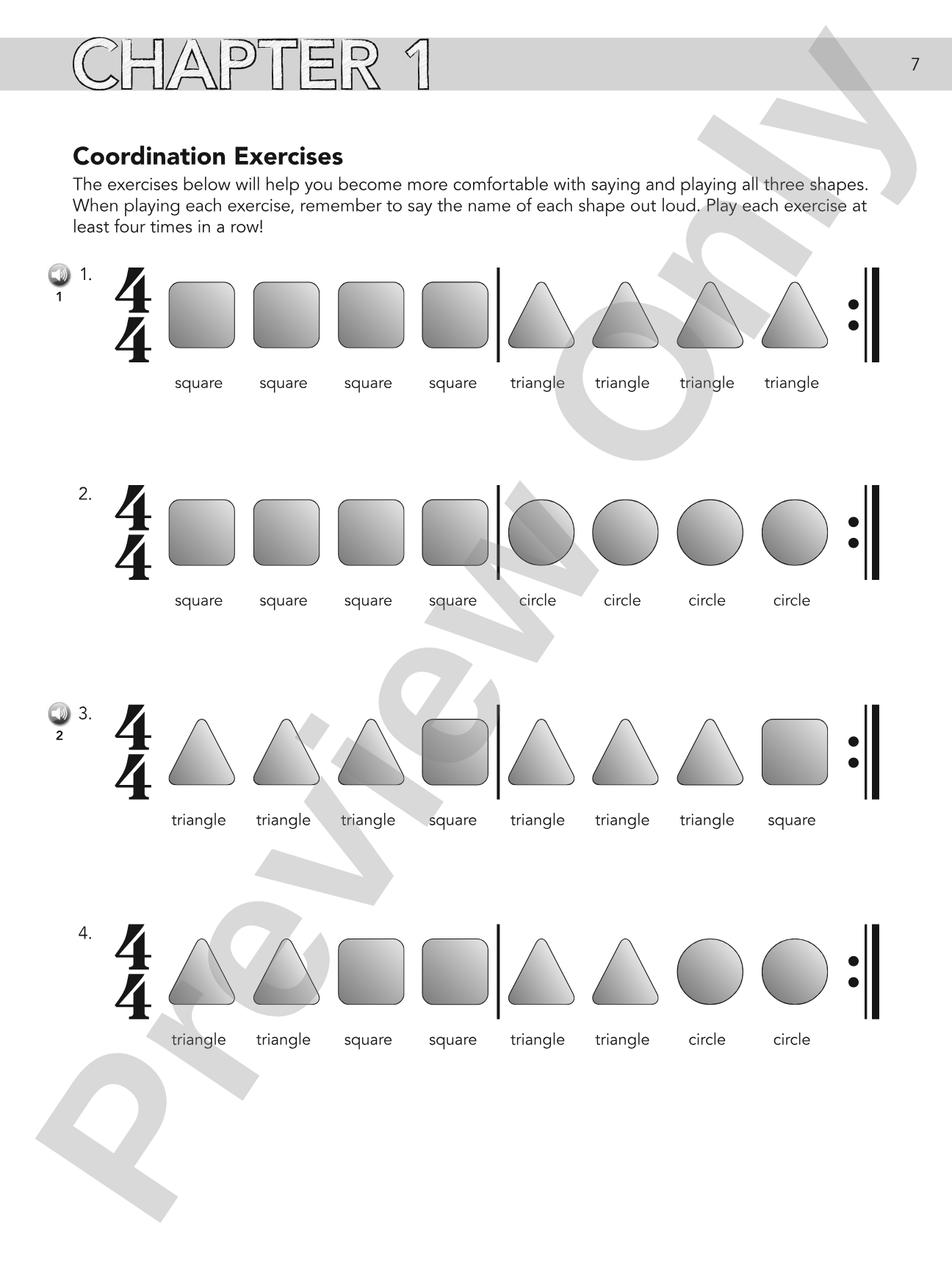
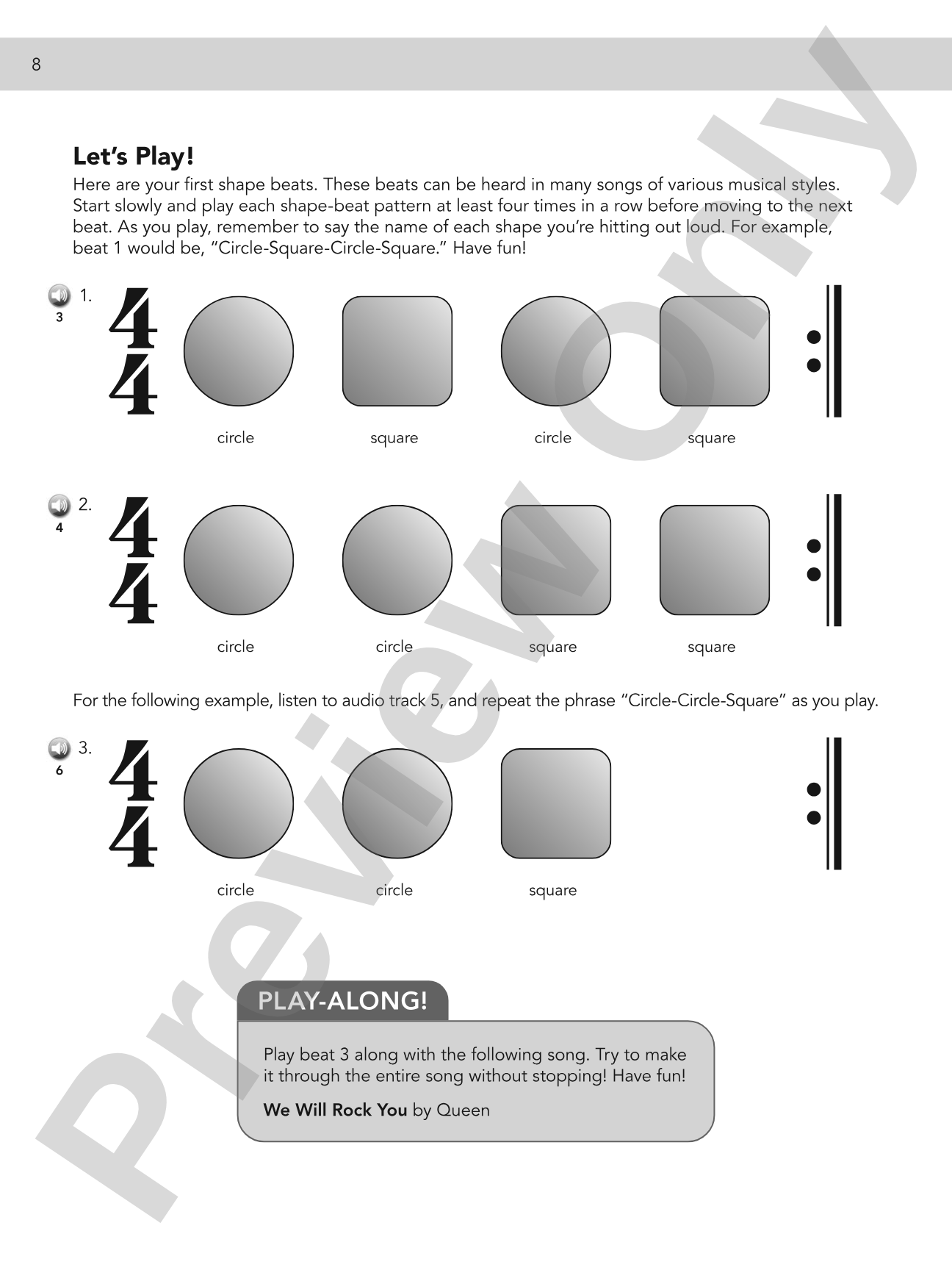
Shape Beats is a simple and fun way to learn how to play drums. Because many beginning students are still in the early stages of development and may not be able to comprehend standard drum notation, the book utilizes shapes---an instantly recognizable notational vehicle---to teach students basic drum beats. Each chapter contains play-along examples so the student can use their new beats to play along with the songs.


Discover MakeMusic Cloud: thousands of interactive titles your students can play along with today.
Sample Audio
No sample audio found.
Sample Video
No sample videos found.
Additional Details
Publisher:
Alfred Music
Page Count:
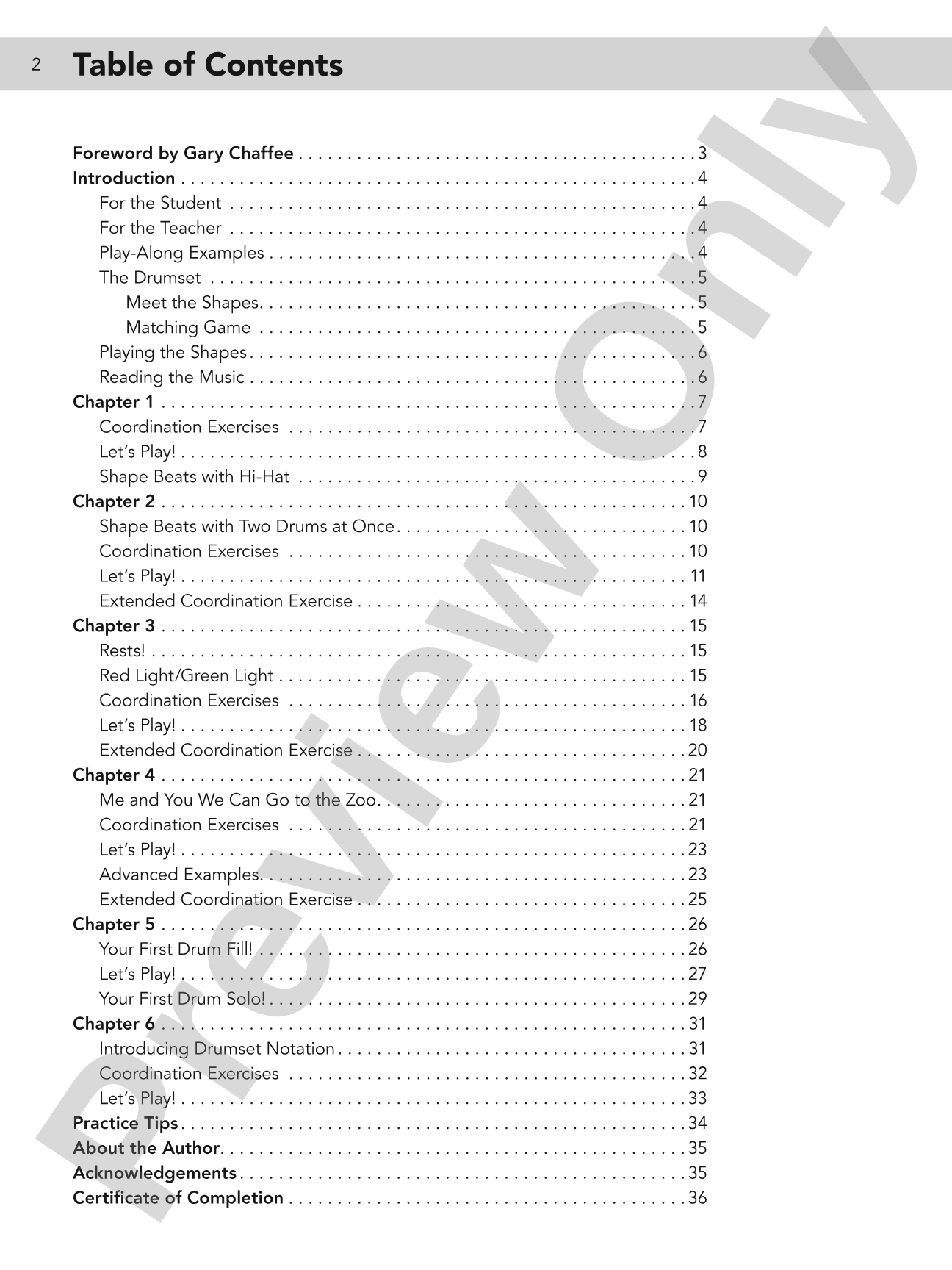
36
SKU:
00-PB-0002371
More about this title
About the Composer: Tim Carman
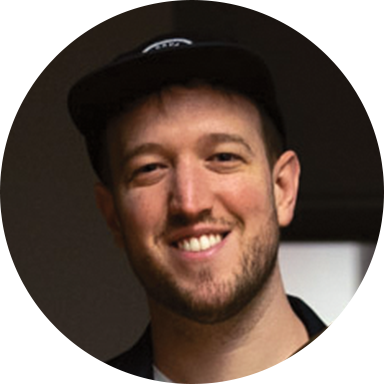
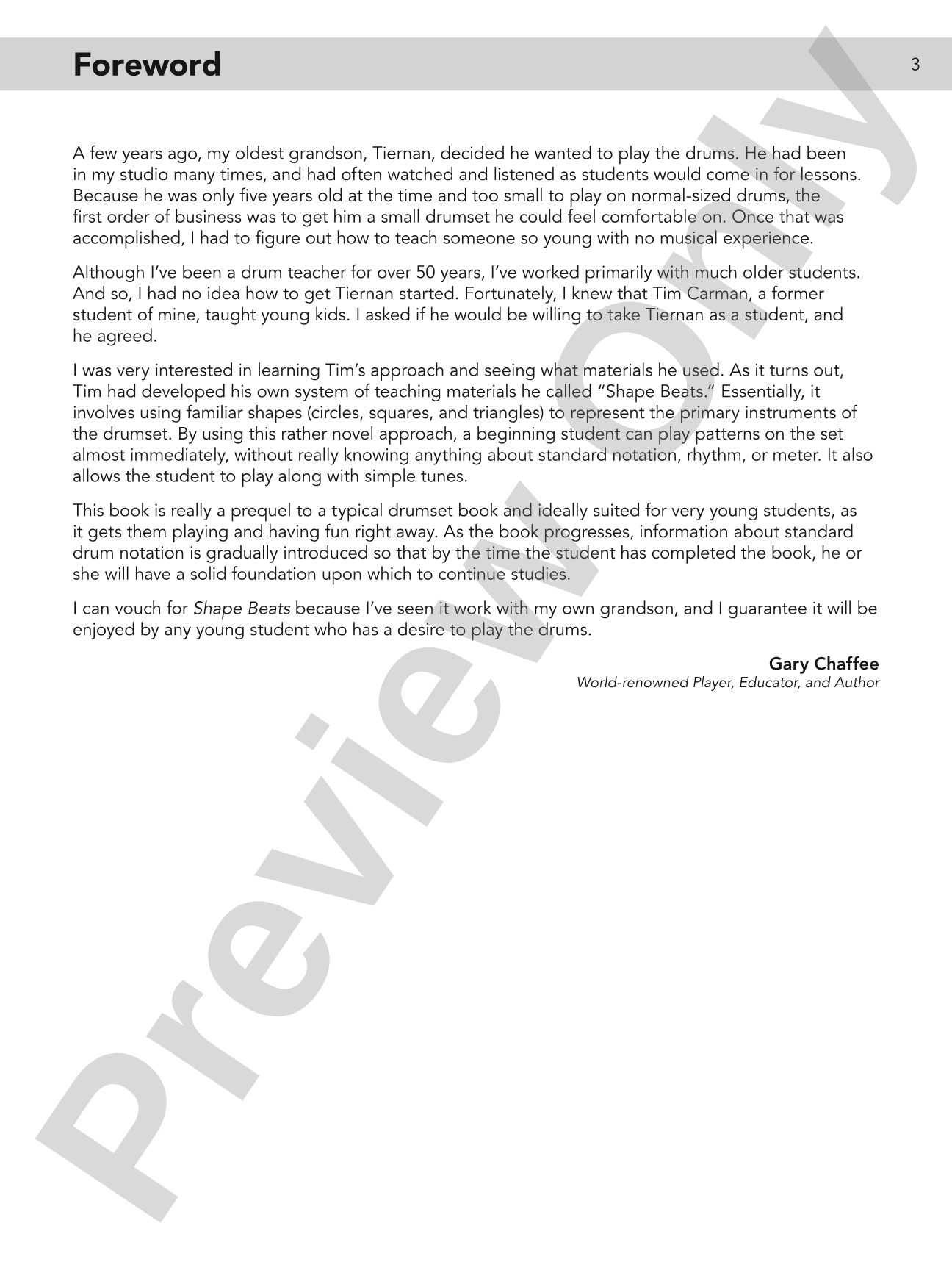
Tim Carman is a Boston-based drummer, composer, and educator with a decade of teaching experience. He performs internationally as the session drummer for GA-20, an electric blues trio on Karma Chief/Colemine Records, and leads Tim Carman & The Street 45s, a funk ensemble drawing from world grooves and soul traditions. His endorsements include Bosphorus cymbals and Walberg & Auge drums.
Carman's work as an educator directly shaped his approach to drum pedagogy. The 2017 release of Shape Beats for Kids through Alfred Music reflects his commitment to making percussion accessible to young learners who aren't ready for traditional notation. His experience in the studio and on stage informs both the rhythmic content and the play-along song selections throughout the method.
Why we love this
Shape Beats solves the real barrier many young drummers face: the cognitive leap from no notation to standard drum notation. By using shapes as an intuitive visual system, students can start playing grooves immediately while their reading skills develop in parallel. The play-along examples tie every pattern to actual music, keeping young students engaged and motivated from lesson one.
What to expect
Shape Beats feels like permission to play immediately. Young drummers recognize the shapes as familiar visual language (circles, squares, triangles) and experience the satisfaction of making real beats with their instruments in the first lesson. The play-along songs ground the learning in actual music-making rather than abstract technical exercise.
Who it's for
Beginning drummers in elementary and early middle school who benefit from a notational system that doesn't require reading skill. Classroom teachers and music specialists working with students not yet ready for standard drum notation will find this method bridges the gap between enthusiasm and technical readiness. Parents introducing percussion at home also appreciate the visual simplicity.
How to get the most out of it
- Start with the shape recognition alone before adding sticks to drums. Have students trace the shapes in the air or tap them on their legs to internalize the patterns without equipment friction.
- Use the play-along examples as your primary teaching tool. Let students hear the context for each beat before they attempt to match it themselves.
- Pair visual shapes with consistent verbal counting so students build multiple reinforcing pathways for rhythm internalization.
- Rotate between individual play-alongs and group settings where all the young drummers play the same beat together, creating ensemble awareness from the start.
How to use it
Integrate Shape Beats into your general music or ensemble rotation for K-2 classrooms as an introduction to rhythm instruments before students encounter traditional notation. In band or percussion programs, use it as a supplementary tool for very young or developmentally earlier students who need rhythm reinforcement without notation complexity. The short format (36 pages) works well as a seasonal unit or as enrichment alongside your standard curriculum.
Skills your students will build
- Visual rhythm recognition using shape notation
- Basic drum beat patterns and grooves
- Coordination between hands on drums
- Play-along ensemble listening and timing
- Transition from shape notation toward standard drum notation