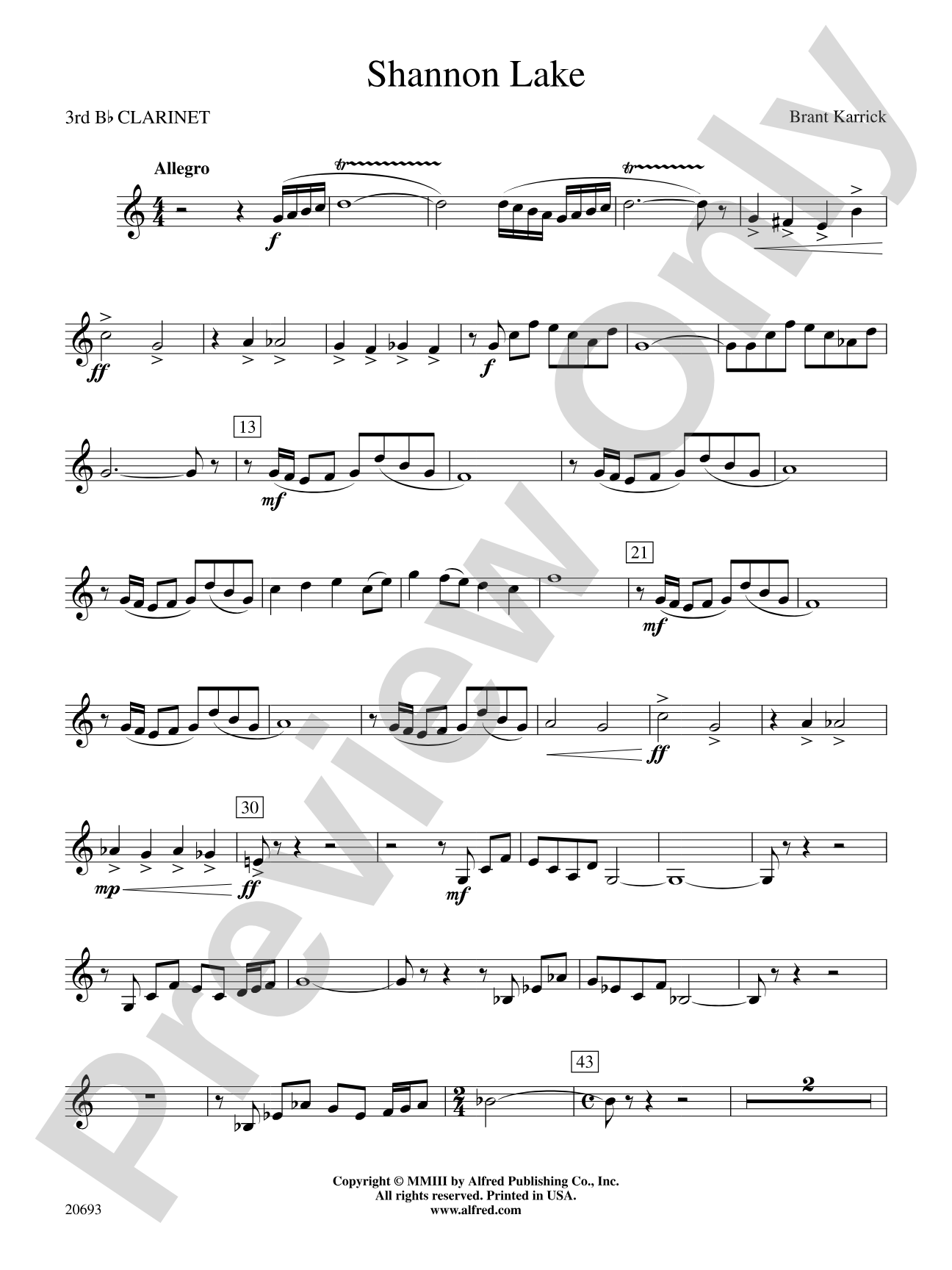
Shannon Lake: 3rd B-flat Clarinet Sheet Music Preview

Shannon Lake: 3rd B-flat Clarinet

By Brant Karrick

Grade: 3 (Medium)

Item: 00-PC-0000437_C3

Digital Download
$3.00
Description
Enjoy a warm sunny day, swimming, fishing, water skiing, and generally enjoying outdoor life near Shannon Lake. This fast-slow-fast overture contains two main themes with harmonies that are primarily triadic. Occurrences of simultaneously sounding major chords create a sense of bitonality throughout the work. Perfect for your fall or spring concert.

Don't just read it, hear it, play along with it, and watch your students grow with it. In MakeMusic Cloud, Shannon Lake: 3rd B-flat Clarinet comes alive with professional accompaniment, adjustable tempo, and built-in practice tools that turn solo practice into real progress.

Sample Audio
0:00
0:00
Sample Video
Additional Details
Series: Alfred Concert Band
Publisher: Alfred Music
Page Count: 3
SKU: 00-PC-0000437_C3

More about this title

About the Composer: Brant Karrick

Brant Karrick

Brant Karrick has shaped band programs across three decades, beginning with seven years in Kentucky public schools before joining the University of Toledo for nine years. Since 2003, he has served as Director of Bands at Northern Kentucky University, where he oversees the full band curriculum including conducting, instrumental methods, and music theory alongside administrating the Symphonic Winds, Concert Band, and Chamber Winds.

Karrick's compositions and arrangements have circled the globe, performed across North America, Europe, South Africa, South America, Japan, and Australia. Active as a guest conductor, adjudicator, and clinician, he holds a Ph.D. in music education from Louisiana State University and studied composition with David Livingston, Steve Beck, and Cecil Karrick. His work reflects deep roots in both performance and pedagogy.

Why we love this

Karrick captures genuine leisure and movement in a piece that stays musically sophisticated without demanding excessive technical firepower. The bitonality created through stacked major chords gives a Grade 3 ensemble sophisticated harmonic color, and the overture format (fast-slow-fast) teaches essential form while keeping rehearsal momentum high for fall and spring concerts alike.

What to expect

Sunshine and water define the mood: bright, accessible, moving easily between energetic outdoor activity and moments of quiet reflection. The harmonies feel open and modern without abandoning accessibility, creating a piece that sounds more sophisticated than its grade level suggests.

Who it's for

Grade 3 concert bands preparing fall or spring performances, including groups with mixed ability levels and limited technical demands. This overture suits festival competitions and concert programs where you want musical substance without sacrificing rehearsal efficiency.

How to get the most out of it

  • Balance the two main themes clearly so each registers distinctly when they return; the fast outer sections benefit from crisp articulation that lets the melody shine through the harmony.
  • Approach the slower middle section with expressive attention to phrasing; let the triadic harmonies breathe and support the melodic line rather than rushing the harmonic motion.
  • The bitonal moments (simultaneously sounding major chords) work best when brass and woodwind choirs maintain independent rhythmic clarity; avoid blending them into a single wash of sound.

How to use it

Open a spring concert with this overture to set an optimistic, season-appropriate tone, or use it mid-program to showcase your ensemble's ability to handle harmonic color and ensemble balance. Its three-page length and moderate rehearsal demands make it ideal for programming alongside more demanding works.

Skills your students will build

  • Identifying and playing bitonal harmonies (major chords sounding simultaneously)
  • Three-part form (fast-slow-fast) structure and sectional transitions
  • Balance and independence between brass and woodwind choirs
  • Expressive phrasing in lyrical sections at Grade 3 level

You May Also Like