Shangri-La: Piano Digital Sheet Music

Shangri-La: Piano Digital Sheet Music

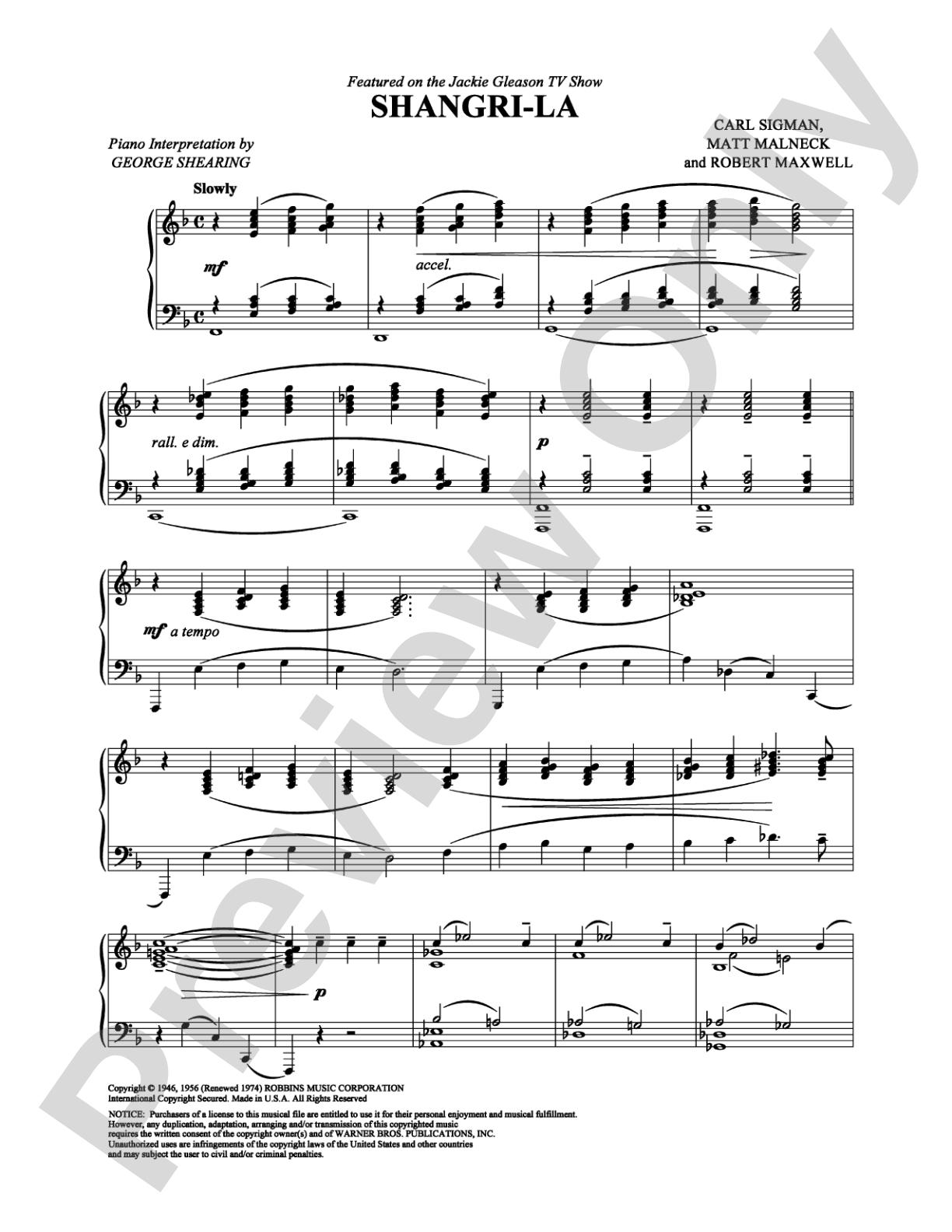
Carl Sigman, George Shearing, Robert Maxwell, Matt Malneck

Item: 00-PS-0003043

Digital Download
$3.99
Description

Shangri-La: Piano Digital Sheet Music isn't in MakeMusic Cloud just yet...but it could be. Let us know you'd like to see it, and you'll help shape what comes next. In the meantime, start a free trial and dive into thousands of interactive titles your students can play along with today.

Sample Audio
No sample audio found.
Sample Video
Additional Details
SKU: 00-PS-0003043

More about this title

About the Artist: George Shearing

George Shearing (1919-2011) was a British jazz pianist and composer who became one of the most commercially successful jazz artists of the post-war era. Blind from birth, Shearing developed a distinctive sound that blended bebop sophistication with accessible, swinging melodies, earning him five Grammy Awards and a place in the jazz canon alongside his peers. His lush voicings and rhythmic sensibility influenced generations of jazz pianists and remain central to the standard jazz repertoire taught in educational settings.

Why we love this

Shearing's writing balances harmonic sophistication with genuine melodic warmth, making this standard a rewarding study in jazz vocabulary without demanding pyrotechnic chops. The piece showcases his signature block chord approach and demonstrates how a thoughtful pianist can create swing and momentum through voicing choices rather than sheer speed. For students transitioning from classical to jazz or exploring the Great American Songbook, this tune offers clear harmonic architecture and a memorable melody that rewards careful listening.

What to expect

Shangri-La evokes a sophisticated, dreamy elegance with a gentle forward momentum that never rushes. The harmonies shimmer with warmth and refinement, inviting the listener into a lush, contemplative space where melody and harmony exist in perfect balance. Beneath the surface charm lies a swinging groove that rewards careful rhythmic attention and reveals Shearing's mastery of time and touch.

Who it's for

Jazz pianists exploring the standard repertoire and seeking to understand mid-century swing styles will find this piece essential listening and playing material. Students developing jazz comping skills and voice-leading awareness will benefit from analyzing Shearing's harmonic choices and chord voicings. Advanced pianists can use this tune as a vehicle for learning Shearing's distinctive approach to block chords and rhythmic interpretation.

How to get the most out of it

  • Anchor the left hand groove early; Shearing's sound emerges from rock-solid time and chord placement rather than elaborate bass lines, so lock in your pulse with the rhythm section or metronome before addressing melody.
  • Voice the chords with the fullness Shearing favored, using closed voicings in the right hand that sit comfortably under the fingers while maintaining clarity between chord tones.
  • Shape the melody with gentle dynamic contours that highlight the song's lyrical quality; avoid overplaying passages that feel naturally conversational.
  • Listen carefully to recorded versions by Shearing himself to internalize the specific rhythmic swing and time feel that defines his interpretation of the standard.

How to use it

Feature this arrangement in a jazz ensemble recital or student recital as a contrasting vehicle between up-tempo swingers and ballads, where it demonstrates the sophisticated side of standards interpretation. Use it as a study piece in jazz history units to explore the block chord voicing technique and its influence on contemporary jazz piano. Include it in programs highlighting Great American Songbook repertoire or as a solo interlude in a concert program mixing jazz and pop standards.

Skills your students will build

  • Jazz block chord voicing and voice leading
  • Swing rhythmic articulation and time feel
  • Harmonic analysis of standard song forms
  • Interpreting melody within chordal textures
  • Listening and transcription from recorded performances

You May Also Like