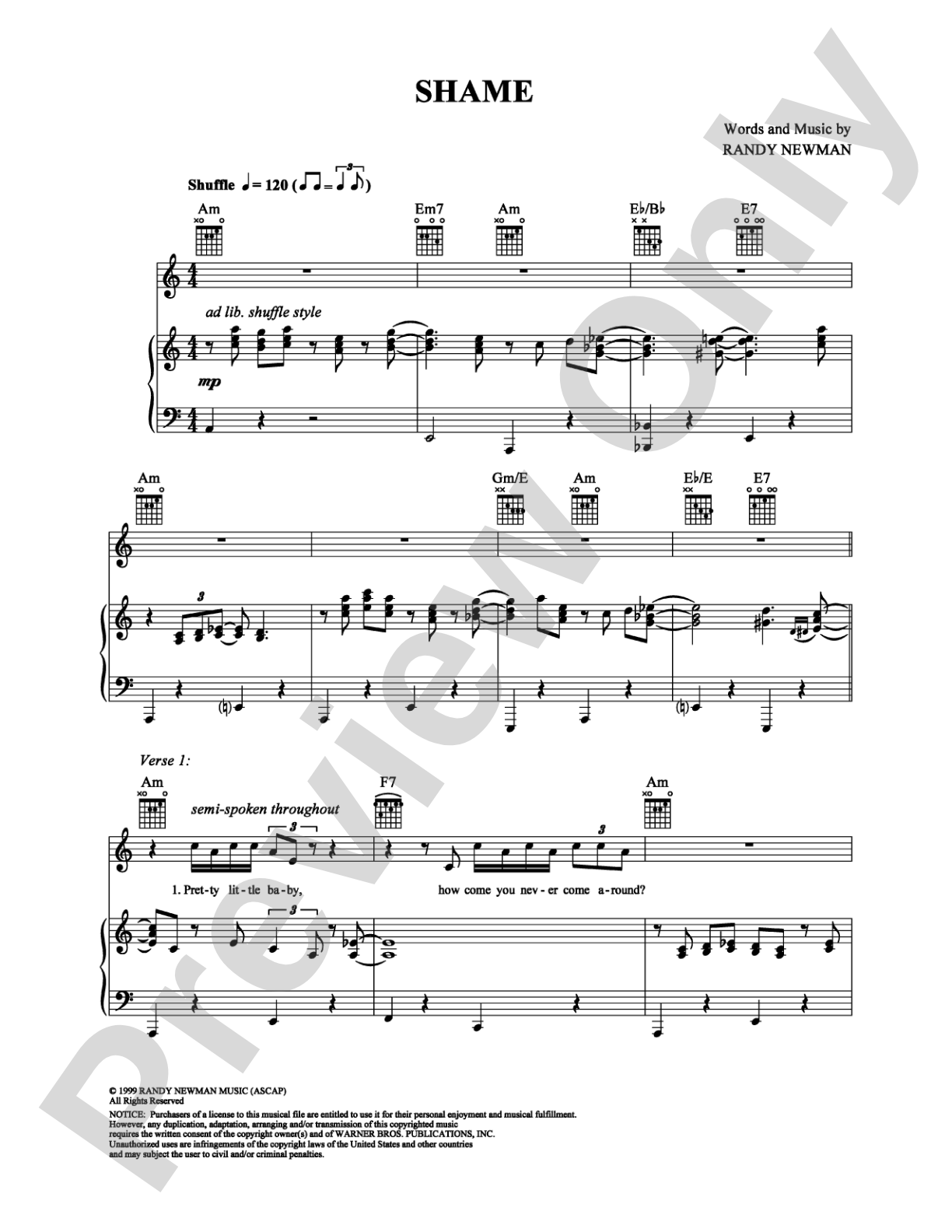
Shame: Piano/Vocal/Chords Digital Sheet Music

Shame: Piano/Vocal/Chords Digital Sheet Music

Randy Newman

Item: 00-PS-0001650

Digital Download
$3.99
Description

Shame: Piano/Vocal/Chords Digital Sheet Music isn't in MakeMusic Cloud just yet...but it could be. Let us know you'd like to see it, and you'll help shape what comes next. In the meantime, start a free trial and dive into thousands of interactive titles your students can play along with today.

Sample Audio
No sample audio found.
Sample Video
Additional Details
SKU: 00-PS-0001650

More about this title

About the Artist: Randy Newman

Randy Newman is a singer-songwriter and composer known for his distinctive vocal style, sophisticated harmonic language, and sharp lyrical wit. His work spans film scoring, popular song, and theatrical composition, earning him multiple Grammy Awards and Academy Awards for Best Original Song. Newman's influence on American popular music extends across generations of performers and songwriters who have drawn from his approach to melody, arrangement, and storytelling.

Why we love this

Newman's songs reward close listening and thoughtful interpretation. The piano/vocal/chords format lets singers engage directly with his compositional craft, where harmonic sophistication and lyrical nuance are inseparable from the melody. This is material that invites genuine artistic choice rather than rote execution.

What to expect

The song carries Newman's characteristic blend of melodic immediacy and emotional complexity, inviting both intimate reflection and wry observation. The harmonic language feels conversational yet sophisticated, grounded in the piano accompaniment in a way that emphasizes storytelling over spectacle.

Who it's for

Vocalists with solid piano skills who want to develop interpretive maturity and harmonic awareness. This works equally well for voice students preparing art song repertoire or popular music singers seeking material with real compositional substance. Pianists will find the accompaniment rewarding for both solo performance and collaborative work.

How to get the most out of it

  • Lean into the conversational quality of Newman's phrasing. His vocal lines often follow speech rhythms rather than regular metrical patterns, so allow flexibility in rubato while keeping the harmonic progression anchored.
  • Study the chord symbols carefully. Newman frequently employs extended harmonies and unexpected voice leading; these colors are essential to the song's character, not optional embellishment.
  • Balance vulnerability with Newman's trademark dry humor in the lyrical delivery. The emotional truth lies in restraint, not oversinging.
  • Use the piano part to shape dynamics and emotional trajectory. Newman's arrangements often rely on the piano to guide phrasing and emotional emphasis rather than explicit dynamic markings.

How to use it

Program this alongside other contemporary art songs or singer-songwriter material to showcase vocal maturity and interpretive range. It fits naturally in a recital focused on American popular song or in a mixed program that bridges classical vocal training and contemporary music. The piano/vocal format also makes it accessible for studio lessons or informal performance settings.

Skills your students will build

  • Interpreting extended and chromatic harmonic progressions
  • Singing over jazz-influenced chord changes
  • Balancing conversational phrasing with harmonic awareness
  • Collaborative listening between voice and piano
  • Lyrical interpretation and emotional restraint

You May Also Like