
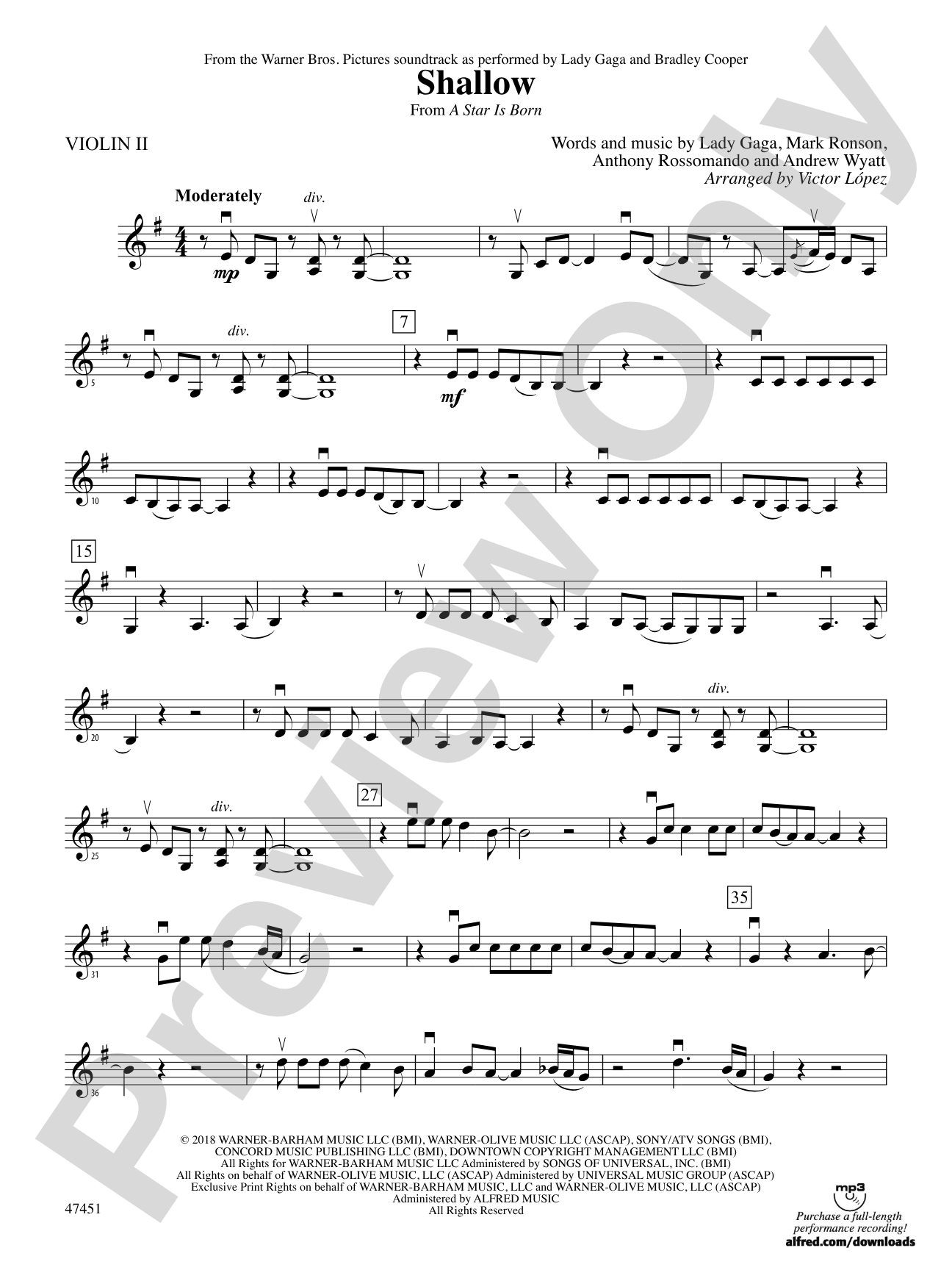

Shallow (from A Star Is Born): 2nd Violin
As Performed by Lady Gaga and Bradley Cooper
Words and music by Lady Gaga, Mark Ronson, Anthony Rossomando and Andrew Wyatt / arr. Victor López
Grade: 3
Item: 00-PC-0017804_VN2
$5.99
Pickup currently not available
Description
Winner of the 2019 GRAMMY® and Oscar for Best Original Song, this piece hits all the right notes and will knock it out of the park at your next concert. From the hit movie, A Star is Born, this slow-burning and emotional power ballad, Shallow, is set to become a favorite classic hit. Performed by Lady Gaga and Bradley Cooper and arranged for full orchestra by Victor López, this song is a selection for the ages! An optional vocal lead sheet is included. The flexible arrangement can be performed by strings with piano and drumset or full orchestra.


Don't just read it, hear it, play along with it, and watch your students grow with it. In MakeMusic Cloud, Shallow (from A Star Is Born): 2nd Violin comes alive with professional accompaniment, adjustable tempo, and built-in practice tools that turn solo practice into real progress.
Open in the Player
Jump straight in and assign it today.
Start Your Free Trial
Open this title and explore the full library in minutes.
Sample Audio
1
Audio File
--:--
0:00
0:00
Sample Video
Additional Details
Series:
Pop Concert Full Orchestra
Publisher:
Alfred Music
Page Count:
166
SKU:
00-PC-0017804_VN2
More about this title
About the Composer: Lady Gaga
Lady Gaga is a Grammy Award-winning singer, songwriter, and performer known for her genre-defying approach to pop music and theatrical artistry. Beyond her chart success, she has demonstrated serious compositional skill across film, Broadway, and concert music, earning recognition from major awards bodies for her songwriting depth and emotional intelligence.
Her collaboration with Mark Ronson, Anthony Rossomando, and Andrew Wyatt on "Shallow" represents a pivotal moment in contemporary songwriting, where pop sensibility meets cinematic storytelling and orchestral ambition. The song's success in both commercial and critical contexts makes it a compelling choice for orchestras seeking to connect with contemporary audiences.
Why we love this
Victor López's orchestration transforms a deeply personal ballad into a vehicle for full ensemble storytelling without losing the song's intimate core. The flexibility to perform this with strings and piano or add the full orchestra lets you choose the exact emotional weight you need, and the optional vocal lead sheet opens doors for soloist collaboration. Most importantly, your orchestra will play with genuine ownership because they already know this piece from the moment they open their parts.
What to expect
A slow-building emotional confession that never rushes. The arrangement unfolds with cinematic restraint, starting intimate and private before expanding into full orchestral expression. It feels both vulnerable and powerful, the musical equivalent of vulnerability given room to breathe.
Who it's for
Orchestra directors programming contemporary repertoire for mixed-level ensembles who want a piece with immediate cultural relevance and genuine emotional weight. This works equally well for high school and community orchestras that balance classical literature with accessible, engaging pop selections.
How to get the most out of it
- Balance the emotional arc carefully across the full score. The arrangement builds gradually, so resist the urge to push volume early; let the orchestration itself carry the intensity as parts layer in.
- Use the vocal lead sheet thoughtfully. If you include a soloist, ensure the orchestra supports rather than competes; this is a partnership, not an accompaniment relationship.
- Shape the rubato expressively, particularly in slower passages. This arrangement rewards subtle give-and-take in tempo, especially during the ballad's most vulnerable moments.
- Pay attention to the optional instrumentation cues. If you don't have full orchestra available, the strings and piano core is entirely viable; mark your parts clearly so musicians know which version you're performing.
How to use it
Program this as a centerpiece for a pops or contemporary concert, or pair it with a short classical work to frame the evening around themes of intimate storytelling. The song's Oscar and Grammy credentials make it a natural concert closer that leaves audiences emotionally satisfied.
Skills your students will build
- Balancing dynamic contrast across a large ensemble
- Sustaining long melodic lines with expressive control
- Coordinating with optional solo voice or alternative instrumentation
- Interpreting contemporary pop arrangements in orchestral context
- Ensemble cohesion during gradual textural buildups