Shall We Gather At The River? Sheet Music Preview

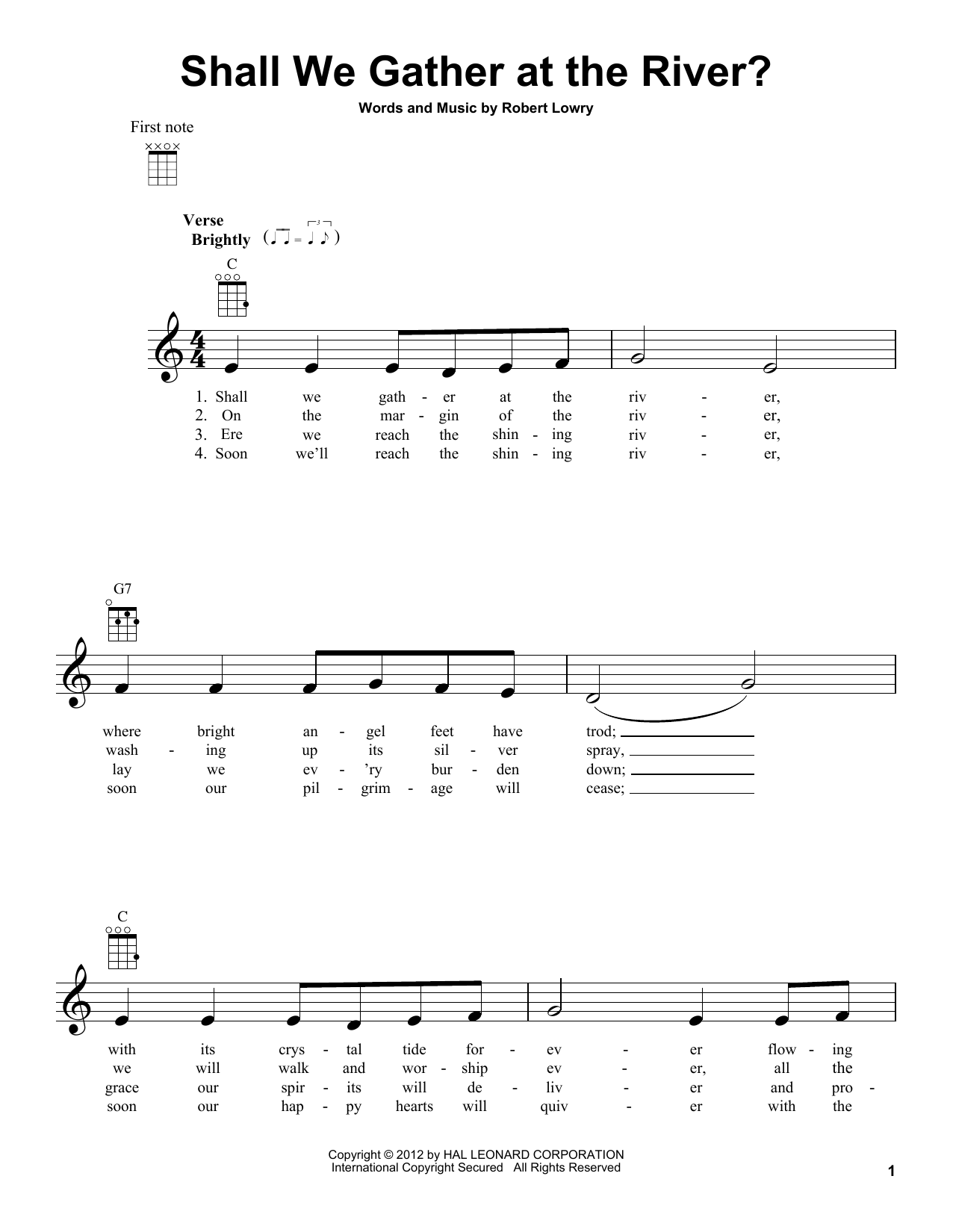
Shall We Gather At The River?: Ukulele

As performed by Robert Lowry

Item: 35-DS00245731

Digital Download
$3.99
Description

Shall We Gather At The River?: Ukulele isn't in MakeMusic Cloud just yet...but it could be. Let us know you'd like to see it, and you'll help shape what comes next. In the meantime, start a free trial and dive into thousands of interactive titles your students can play along with today.

Sample Audio
No sample audio found.
Sample Video
Additional Details
Publisher: Hal Leonard
Page Count: 2
SKU: 35-DS00245731

More about this title

About the Artist: Robert Lowry

Robert Lowry (1826–1899) was an American composer and minister whose prolific output shaped American gospel music in the nineteenth century. He wrote both the melody and text for "Shall We Gather at the River," which became one of the most enduring hymns in Christian worship and community singing.

Why we love this

This arrangement brings a beloved hymn into the ukulele repertoire with genuine warmth rather than cuteness. The two-page format keeps the arrangement accessible while preserving the melody's emotional weight, making it ideal for players building confidence with longer forms and standard hymn structures.

What to expect

Peaceful and affirming, with the gentle rolling quality characteristic of mid-nineteenth-century American hymnody. The melody breathes easily across the ukulele's range, inviting reverent rather than showy playing.

Who it's for

Ukulele students progressing beyond beginner chord songs who want repertoire with emotional substance and cultural roots. This also works for classroom settings, community music programs, or players seeking familiar melodies that connect across generations.

How to get the most out of it

  • Maintain steady quarter-note pulse throughout; the hymn's power comes from its unhurried, reflective character rather than any dramatic variation in tempo.
  • Shape phrases by thinking in four-bar units, allowing breath between sections even though ukulele produces no natural break in sound.
  • Balance melody and chord strums so neither overwhelms; listeners want to hear both the tune and the harmonic support.

How to use it

Feature this as a solo piece in a ukulele recital, or pair it with other spirituals and folk hymns to create a cohesive set. It works equally well as a community sing piece for multi-generational audiences or as a reflection moment in a mixed instrumental concert.

Skills your students will build

  • Reading and performing longer melodic phrases (2-4 measures) with shape and intention
  • Accompanying melody with chord strums while maintaining independence between hands
  • Interpreting hymnal style and historical repertoire on a modern instrument

You May Also Like