Shall We Dance? Sheet Music Preview

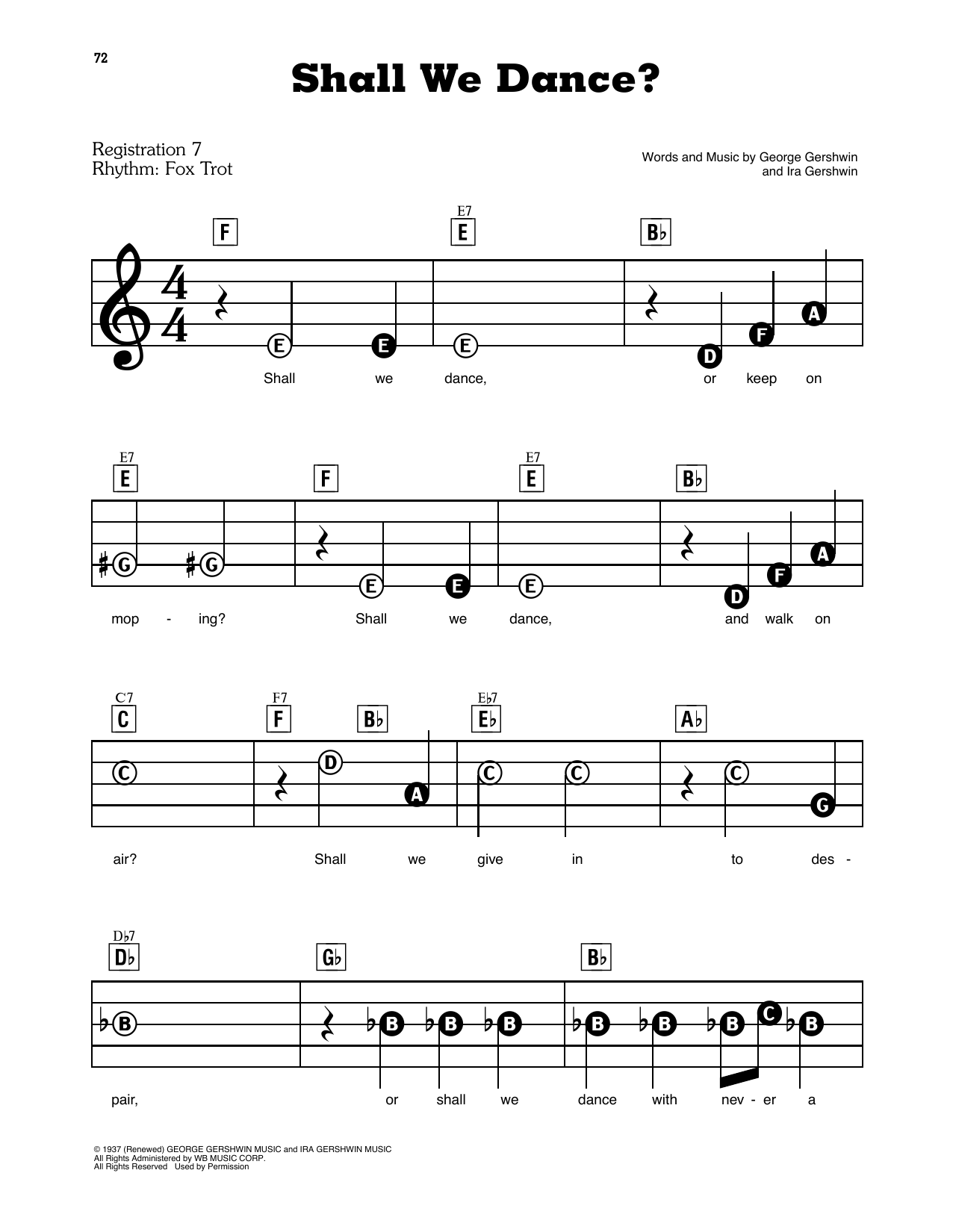
Shall We Dance?: E-Z Play Today

As performed by George Gershwin

Item: 35-DS00613891

Digital Download
$4.99
Description

Shall We Dance?: E-Z Play Today isn't in MakeMusic Cloud just yet...but it could be. Let us know you'd like to see it, and you'll help shape what comes next. In the meantime, start a free trial and dive into thousands of interactive titles your students can play along with today.

Sample Audio
No sample audio found.
Sample Video
Additional Details
Publisher: Hal Leonard
Page Count: 2
SKU: 35-DS00613891

More about this title

About the Artist: George Gershwin

George Gershwin (1898–1937) bridged classical music and American popular song in ways that shaped twentieth-century composition. His gift for melody was matched by his harmonic sophistication; he wrote music that works equally well in concert halls and on Broadway stages. For educators, Gershwin's output offers repertoire that engages students with jazz vocabulary, blues inflections, and orchestral textures while remaining deeply accessible.

Why we love this

Students recognize this tune instantly, which means they arrive at the piano already invested in nailing the interpretation. The straightforward two-page layout respects the piece's elegant simplicity while giving pianists room to add personality through rubato and dynamic shaping. It's a perfect anchor for teaching how a great melody can carry a performance even when the harmonic language is relatively transparent.

What to expect

Warmth mixed with playful sophistication. The tune has a conversational quality, as if someone is asking a genuine question with genuine hope for the answer. Gershwin's harmonic language adds subtle complexity without sacrificing the immediate charm of the melody.

Who it's for

Pianists at the early intermediate level who are ready to explore jazz-inflected repertoire and film music standards. Teachers seeking material that connects classical technique to American songwriting traditions will find this both engaging and pedagogically sound.

How to get the most out of it

  • Shape the melodic line with phrase-length breathing. Listen to where the tune naturally wants to rest, even if the harmony suggests continuing forward.
  • Avoid rushing the accompaniment figures. Let them settle into a relaxed groove that supports rather than drives the melody.
  • Balance touch between hands so the tune speaks clearly without drowning out the harmonic color underneath.

How to use it

Program this alongside other standards or film music selections to show students the variety within the repertoire they actually hear and love. It also pairs well in a unit exploring American songwriting, where students can compare Gershwin's approach to melody and harmony with his contemporaries.

Skills your students will build

  • Balancing melody and accompaniment textures
  • Recognizing jazz harmony and extended chords
  • Shaping long phrases with rubato and dynamic control
  • Performing with stylistic awareness in the American songbook idiom

You May Also Like