
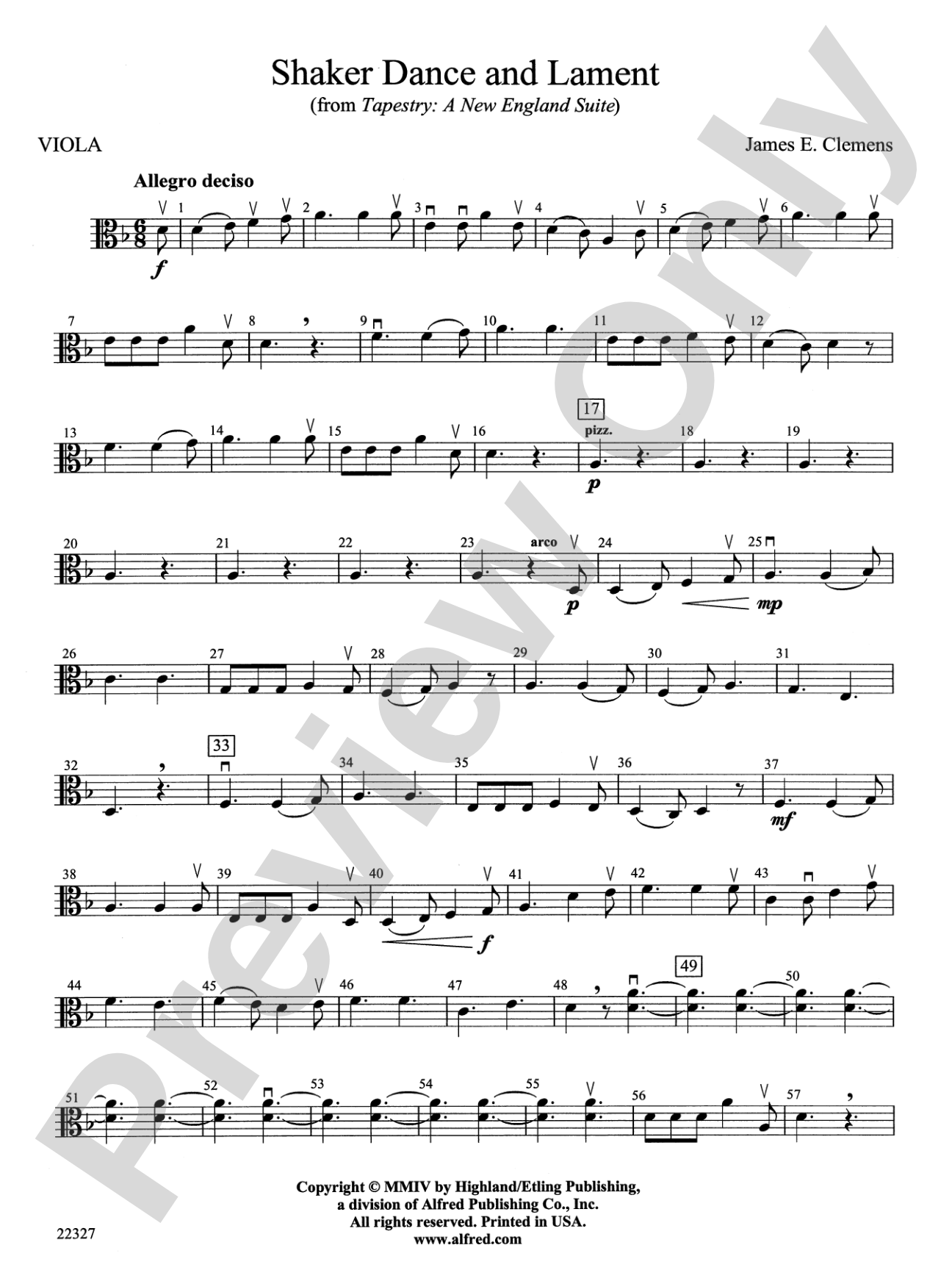

Shaker Dance and Lament: Viola
(from Tapestry: A New England Suite)
By James Clemens
Grade: 3
Item: 00-PC-0000576_VA1
$5.99
Pickup currently not available
Description
Two contrasting Shaker melodies provide the framework for this piece, which alternates between 6/8 and cut time. The first, Followers of the Lamb, was written by Sister Clarissa Jacobs (1833-1905). According to the Shaker Community of Sabbathday Lake, Maine, this lively song is often used to introduce a gift of joy. The second melody is "Father James's Song," a wordless tune, composed by Father James Whittaker (1751-1787) after he had endured one of many episodes of persecution. This piece is the opening movement of Tapestry: A New England Suite for String Orchestra.


Don't just read it, hear it, play along with it, and watch your students grow with it. In MakeMusic Cloud, Shaker Dance and Lament: Viola comes alive with professional accompaniment, adjustable tempo, and built-in practice tools that turn solo practice into real progress.
Open in the Player
Jump straight in and assign it today.
Start Your Free Trial
Open this title and explore the full library in minutes.
Sample Audio
1
Audio File
--:--
0:00
0:00
Sample Video
No sample videos found.
Additional Details
Series:
Highland/Etling String Orchestra
Publisher:
Alfred Music
Page Count:
124
SKU:
00-PC-0000576_VA1
More about this title
About the Composer: James Clemens

James Clemens comes from Goshen, Indiana, and developed his compositional voice largely through self-directed study. His musical training at Goshen College was remarkably broad: he performed as a violinist in the orchestra, sang in the chamber choir, played jazz piano, accompanied vocal soloists and ensembles, and explored early music on recorder and Renaissance instruments. He has also studied the erhu, a Chinese two-string fiddle, expanding his understanding of non-Western instrumental traditions.
Clemens actively seeks commissions that involve close collaboration with the musicians who will premiere and perform his work. He describes this process as both exciting and gratifying, suggesting that his compositions grow directly from dialogue with performers. This approach shapes how his pieces sit in the hands of players across different levels of expertise.
Why we love this
Clemens anchors this piece in genuine American spiritual music, drawing on two Shaker melodies with documented historical origins and real human stories behind them. The alternation between 6/8 and cut time creates rhythmic variety that feels natural rather than gimmicky, and the contrasting characters of the two melodies (joy and lament) give your orchestra something dramatically meaningful to shape. At Grade 3, it sits at exactly the sweet spot where students can engage with real composition without drowning in technical demands.
What to expect
Shaker Dance and Lament captures two distinct emotional landscapes. The opening movement pulses with folk simplicity and spiritual warmth, full of the joy that defined the Shaker gift experience. The shift to the lament brings you into quieter, more contemplative territory, a space where perseverance and faith are expressed through restraint rather than celebration.
Who it's for
This piece works beautifully for Grade 3 string orchestras looking to program American music with cultural substance. Directors seeking repertoire that teaches historical awareness alongside musical skills will find these Shaker melodies offer genuine educational content. Students perform better when they understand the context and human story of what they're playing.
How to get the most out of it
- Invest time in the character shift between the two melodies. 'Followers of the Lamb' should feel buoyant and celebratory, while 'Father James's Song' requires a more introspective, sustained quality. The contrast will be more powerful if you commit fully to each mood.
- Pay close attention to the metric modulation between 6/8 and cut time. Prepare the orchestra to feel the beat subdivisions differently in each section so the transitions land cleanly rather than feeling rushed or awkward.
- Balance the melody-to-accompaniment ratio carefully throughout. String orchestras at this level sometimes pile too much weight on harmonic support; pull back so the Shaker tunes remain clearly audible.
How to use it
Open a concert with this as your first piece to set a tone of Americana and cultural grounding. Pair it with other works in Clemens's Tapestry suite if your orchestra can handle longer repertoire, or stand it alone as a 5-10 minute anchor for a program exploring American string music. The opening position works especially well if you want to settle your audience into focused listening.
Skills your students will build
- Metric flexibility and understanding transitions between 6/8 and cut time
- Shaping lyrical melodies with clear phrasing and dynamic control
- Reading and realizing functional harmonic writing in a string context
- Historical literacy in American sacred music and Shaker culture
- Ensemble balance between melody and accompaniment voices