Shadows on the Moon Sheet Music Preview

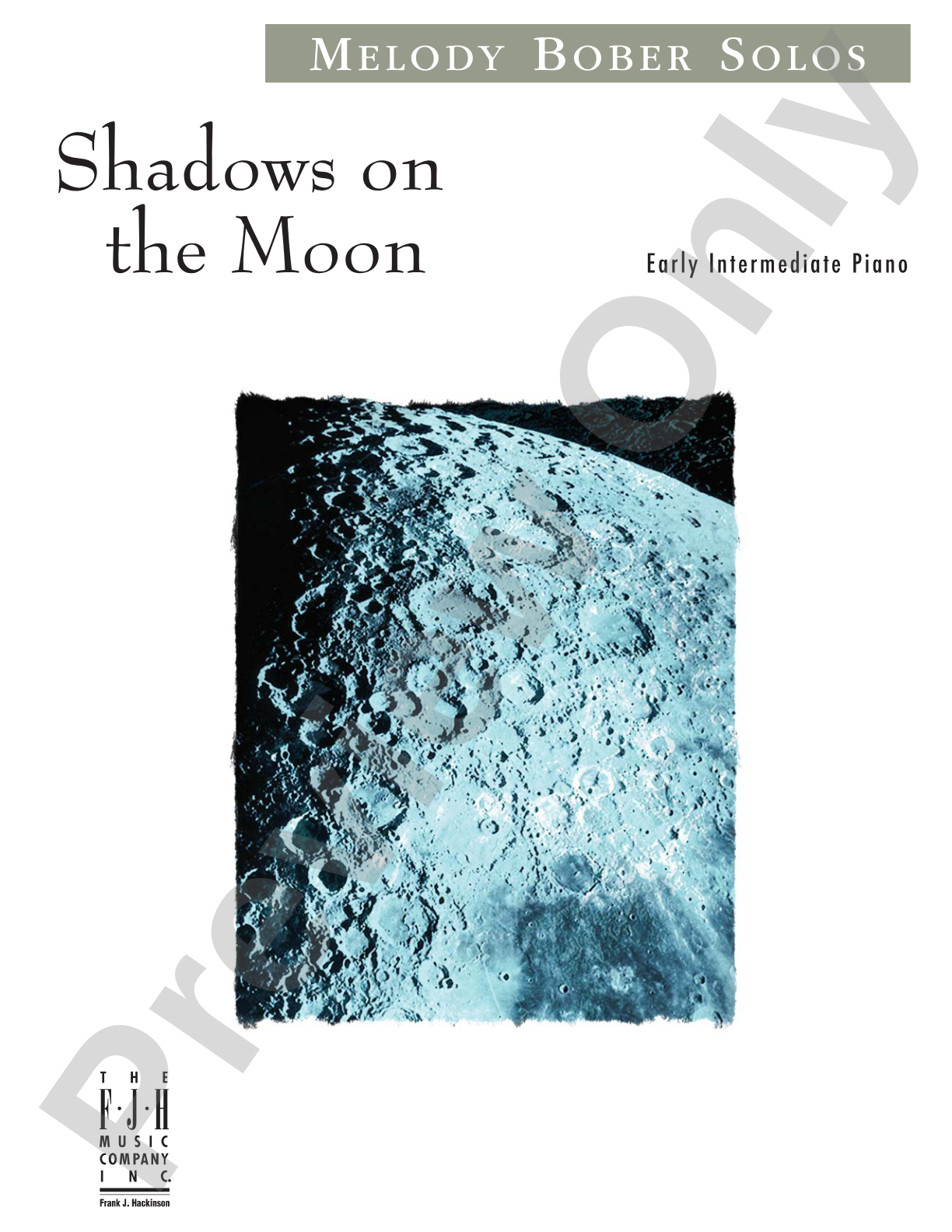
Shadows on the Moon: Piano

By Melody Bober

Item: 98-DW9222

Digital Download
$4.50
Description
An impressive sounding intermediate piece in 6/8 time offers cross hand arpeggios, and an artistic use of crescendos and decrescendos within one phrase, which enables the emphasizing and practicing of the "shaping" of phrases. The combination of its pedagogical value along with the musical appeal of this piece will make it a favorite for the teacher and student alike.

Shadows on the Moon: Piano isn't in MakeMusic Cloud just yet...but it could be. Let us know you'd like to see it, and you'll help shape what comes next. In the meantime, start a free trial and dive into thousands of interactive titles your students can play along with today.

Sample Audio
No sample audio found.
Sample Video
Additional Details
Series: Written For You
Publisher: The FJH Music Company, Inc.
SKU: 98-DW9222

More about this title

About the Composer: Melody Bober

Melody Bober

Melody Bober composes piano music rooted in her dual expertise as both a classroom educator and private studio teacher. She earned her bachelor's degree in music education from the University of Illinois at Champaign-Urbana (summa cum laude) and completed a Master of Arts in piano performance at Minnesota State University, Moorhead, studying under pianists Joel Shapiro and Andrew Froelich alongside mentors in music education and jazz.

With two decades of public school teaching, university-level instruction, and an active private studio in Minnesota, Bober writes pieces that balance genuine musical substance with clear pedagogical purpose. She remains a sought-after clinician and convention presenter, bringing her perspective on how students learn music through thoughtfully crafted repertoire. Her work as a church pianist and former music director further informs her understanding of what makes music both playable and meaningful.

Why we love this

Bober has engineered genuine musical sophistication into an intermediate framework without padding or condescension. The 6/8 time signature and cross-hand arpeggios give this piece real technical interest, while her deliberate use of phrase shaping through dynamic sculpting teaches students that musical maturity means thinking about sound as something you mold and direct, not just play accurately.

What to expect

Nocturnal and contemplative, with a gentle swaying motion in 6/8 that feels more like drifting than marching. The cross-hand patterns create a shimmering, impressionistic texture, while the flowing dynamics invite listeners into a world of subtle light and shadow.

Who it's for

Intermediate pianists ready to move beyond note-reading into genuine musical interpretation. This piece works especially well for students who have solid technique but need guided experience in phrase shaping and dynamic control.

How to get the most out of it

  • Shape each phrase by planning where the crescendo crests and where the decrescendo settles before you sit down; mark these moments clearly in your score and listen for the sound you want at each turning point.
  • Practice the cross-hand arpeggios in isolation at a slow tempo, focusing on even note spacing and consistent tone as your hands coordinate across the middle of the keyboard.
  • Allow the 6/8 meter to breathe with a gentle, lilting pulse rather than driving the beat; this character serves the moonlit imagery and lets the dynamic shapes read more naturally.
  • Record yourself playing the piece at performance tempo, then listen back focusing only on whether your crescendos and decrescendos feel purposeful and connected to the musical line.

How to use it

Include this on a student recital where you want to showcase interpretive maturity alongside technical growth, or use it as a bridge piece that demonstrates how intermediate students are learning to think like musicians, not just mechanics. It pairs naturally with other character pieces that emphasize phrasing and dynamic nuance.

Skills your students will build

  • Cross-hand arpeggios and hand coordination across the keyboard
  • Phrase shaping through dynamic sculpting (crescendo and decrescendo within a single line)
  • 6/8 meter and lilting rhythmic character
  • Listening for and controlling tonal quality across different registers

You May Also Like