
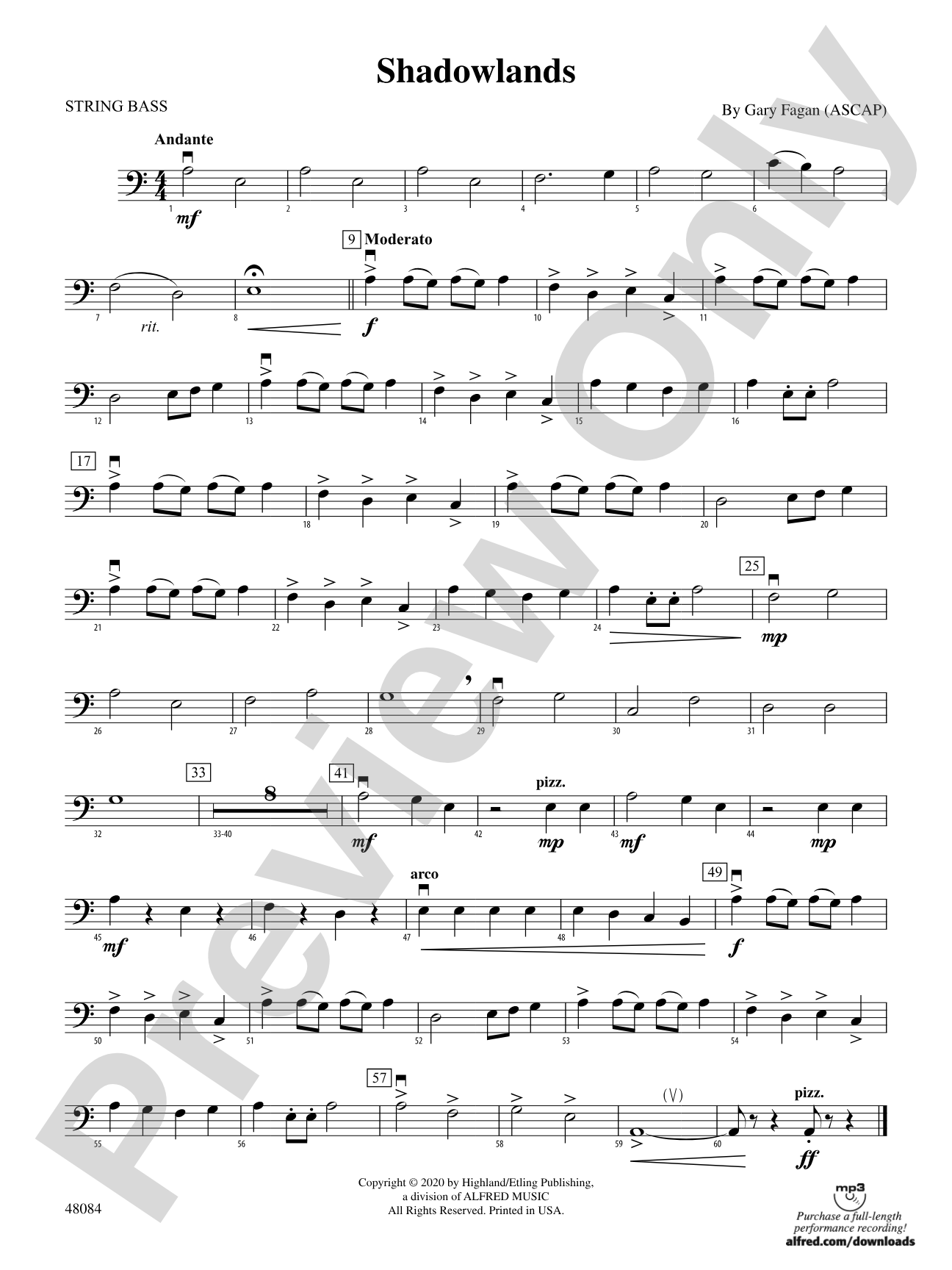

Shadowlands: String Bass
By Gary Fagan
Grade: 2
Item: 00-PC-0018520_SB
$3.00
Pickup currently not available
Description
Full of dark energy and mystery, with contemporary harmonies and moving melodic lines, Shadowlands by Gary Fagan will provide the means for directors to teach contrasting styles, dynamics, and varied articulations to young players in an easy and fun-to-play format. This lively piece, in A natural minor, will provide younger players with excellent opportunities for achieving rhythmic independence while also providing them with sections that are rhythmically similar. The slower lyrical opening section gives way to a contrasting tempo and style that will appeal to players and audiences alike. (2:15) This title is available in MakeMusic Cloud.


Don't just read it, hear it, play along with it, and watch your students grow with it. In MakeMusic Cloud, Shadowlands: String Bass comes alive with professional accompaniment, adjustable tempo, and built-in practice tools that turn solo practice into real progress.
Open in the Player
Jump straight in and assign it today.
Start Your Free Trial
Open this title and explore the full library in minutes.
Sample Audio
1
Audio File
--:--
0:00
0:00
Sample Video
Additional Details
Series:
Highland/Etling String Orchestra
Publisher:
Alfred Music
Page Count:
62
SKU:
00-PC-0018520_SB
More about this title
About the Composer: Gary Fagan

Gary Fagan brings three decades of classroom experience to his compositional work, having shaped young musicians throughout his 36-year tenure as a band director in Albemarle County, Virginia. His educational credentials include a bachelor's degree from Bridgewater College and a master's degree from James Madison University, where he now serves as a University Supervisor and adjunct instructor in arranging. His compositions and arrangements have reached audiences at prestigious venues including the Midwest Band and Orchestra Clinic, the White House, and the inauguration of Virginia Governor Douglas Wilder.
Recognized for his contributions to music education, Fagan has received the Outstanding Educator Award from both the Virginia Governor's School for the Visual and Performing Arts and the Piedmont Council of the Arts, and was named Central Virginia Outstanding Middle School Teacher by the University of Virginia Chapter of Phi Delta Kappa. Active as a clinician, adjudicator, and published composer, he maintains memberships in ASCAP, the National Band Association, and Phi Beta Mu Bandmasters Fraternity. He currently performs as a percussionist and Assistant Director with the Charlottesville Band.
Why we love this
Fagan crafts a piece that teaches without feeling like a teaching tool. The contrast between the lyrical opening and the energetic second section gives directors a natural platform for discussing character and style, while the mix of rhythmically independent and synchronized passages builds ensemble maturity at exactly the Grade 2 level where it's needed most.
What to expect
The opening draws you into shadowed, mysterious territory with sustained harmonies and introspective melodic movement. Energy builds as the piece shifts tempo and style, transforming that darkness into something more urgent and contemporary, keeping young players invested throughout its 2:15 duration.
Who it's for
String orchestra directors working with young players (Grade 2 level) who want repertoire that teaches authentic musical concepts while remaining engaging for both ensemble and audience. The piece works equally well in middle school and advanced elementary settings.
How to get the most out of it
- Shape the slower opening section with sustained tone quality and careful attention to the melodic phrasing; this establishes the "shadowlands" atmosphere and sets up the excitement of the tempo change that follows.
- Approach the faster section with clear articulation and rhythmic precision to highlight the contemporary harmonies without letting them sound disjointed; dynamic contrast between sections is key to maintaining musical coherence.
- Balance the darker A natural minor tonality by ensuring your lower strings have presence and definition, especially during the contrasting passages where they anchor the harmonic movement.
- Mark the transitions between sections clearly in your score so players understand the structural journey; this helps them grasp why the piece moves the way it does musically.
How to use it
Program this as a contrast to lighter or traditional repertoire on a concert to showcase your group's musical range and maturity. It also serves well as a festival selection, since its 2:15 length leaves room for additional pieces and the contemporary sound appeals to both traditional and progressive adjudicators.
Skills your students will build
- Rhythmic independence (performing different rhythmic patterns while maintaining ensemble cohesion)
- Contrasting articulation styles and dynamic control across lyrical and energetic sections
- Understanding minor tonality and contemporary harmonic language
- Phrasing and sustained tone production in slower passages
- Ensemble balance and intonation in A natural minor