
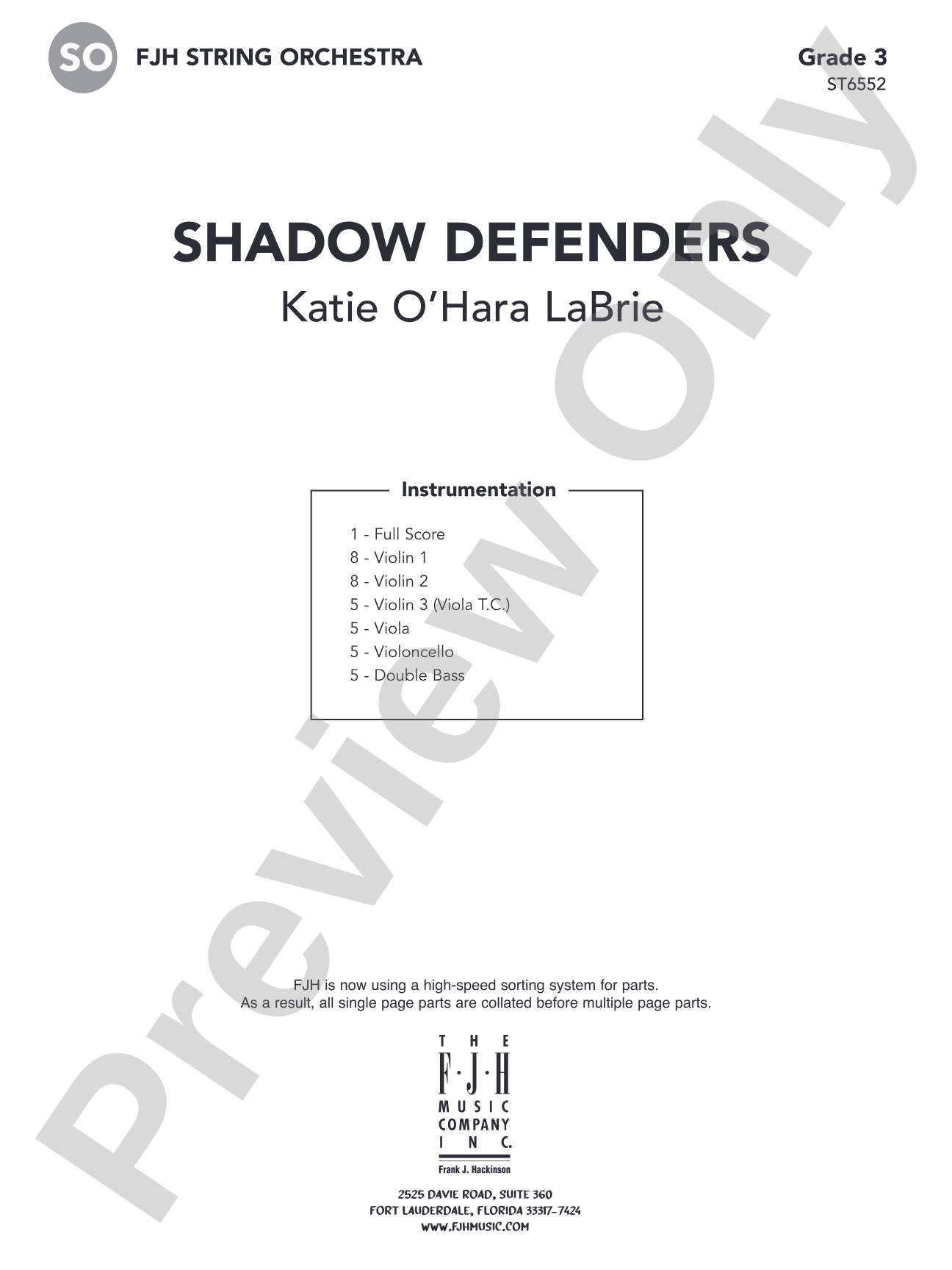
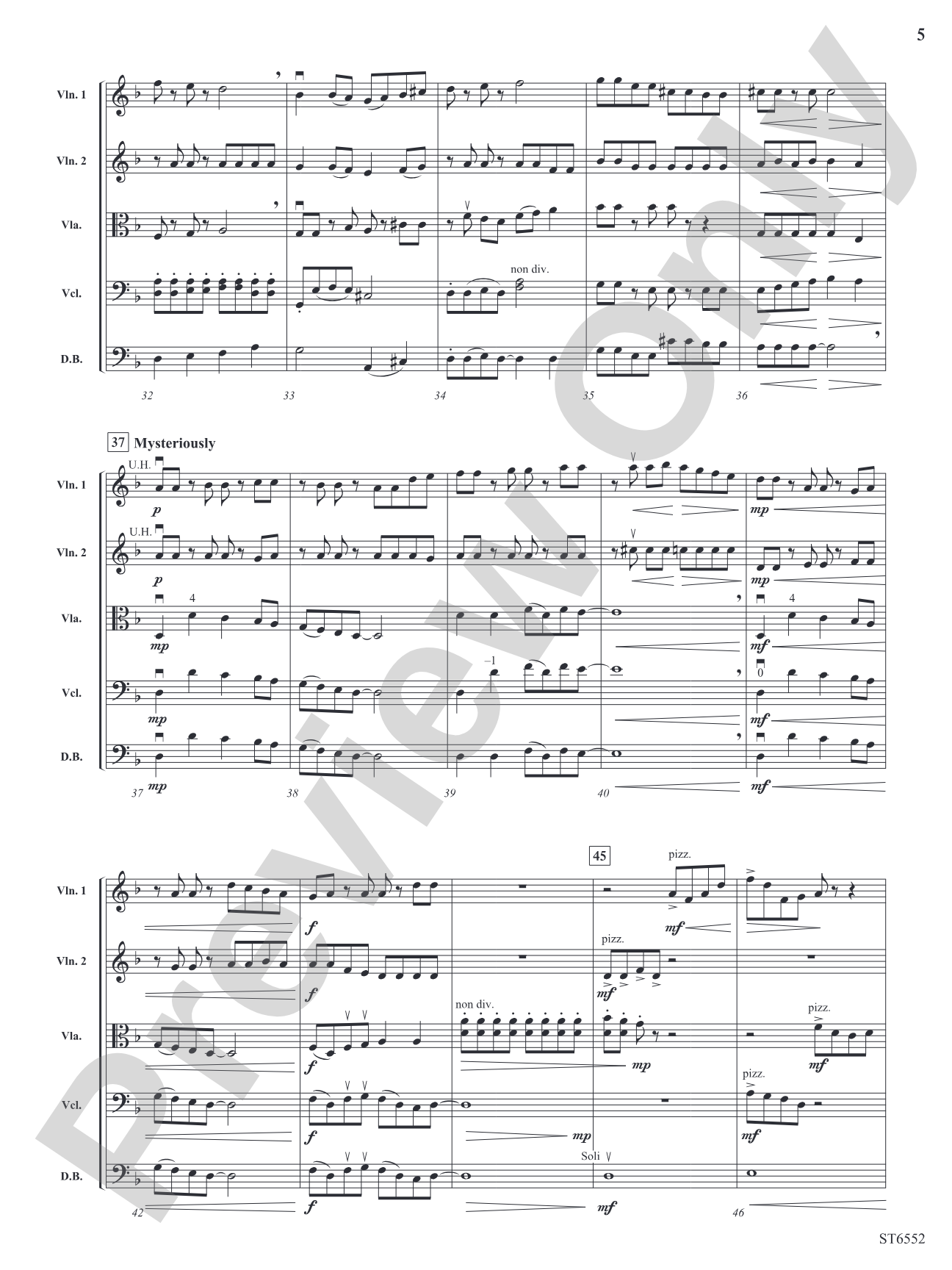
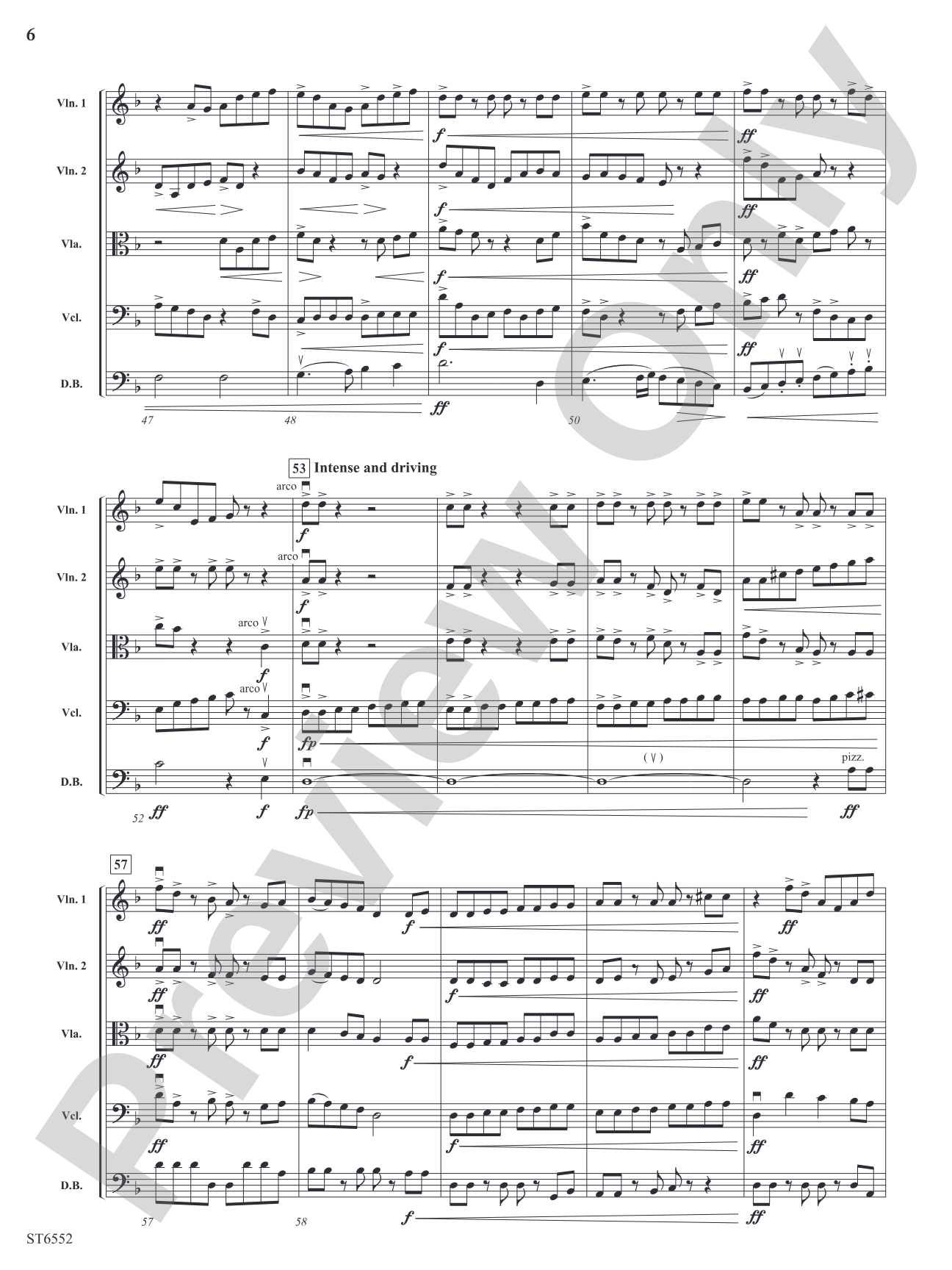
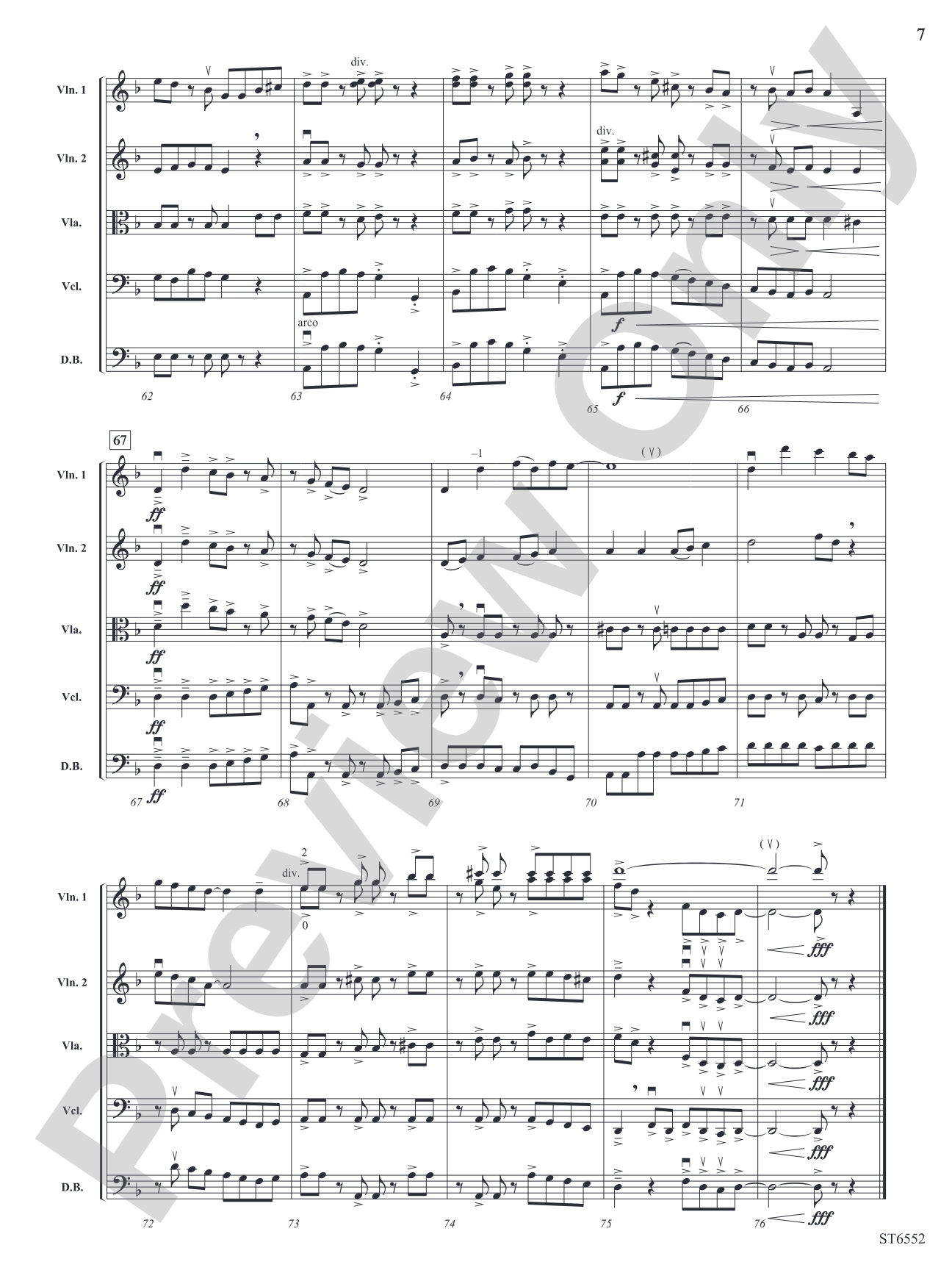

Shadow Defenders: String Orchestra Conductor Score & Parts
By Katie O'Hara LaBrie
Grade: 3
Item: 98-DST6552

$65.00
Pickup currently not available
Buy Extra Parts (Digital PDF Download)
| Product | Price | Quantity |
|---|---|---|
| Shadow Defenders: Score | $10.00 | |
| Shadow Defenders: Violin 1 | $7.00 | |
| Shadow Defenders: Violin 2 | $7.00 | |
| Shadow Defenders: Violin 3 (Viola T.C.) | $7.00 | |
| Shadow Defenders: Viola | $7.00 | |
| Shadow Defenders: Violoncello | $7.00 | |
| Shadow Defenders: Double Bass | $7.00 |
Parts Added to Cart!
Description
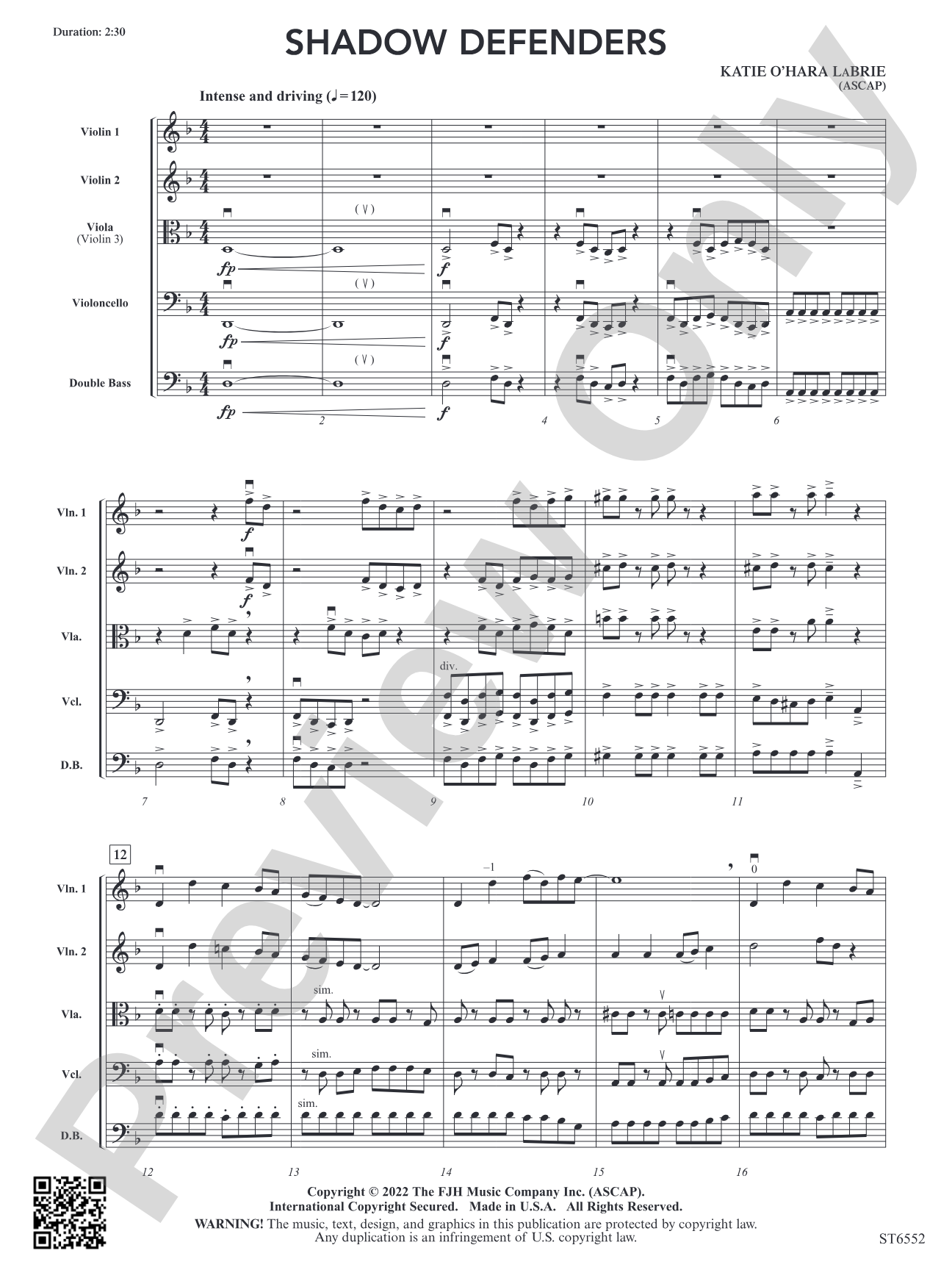
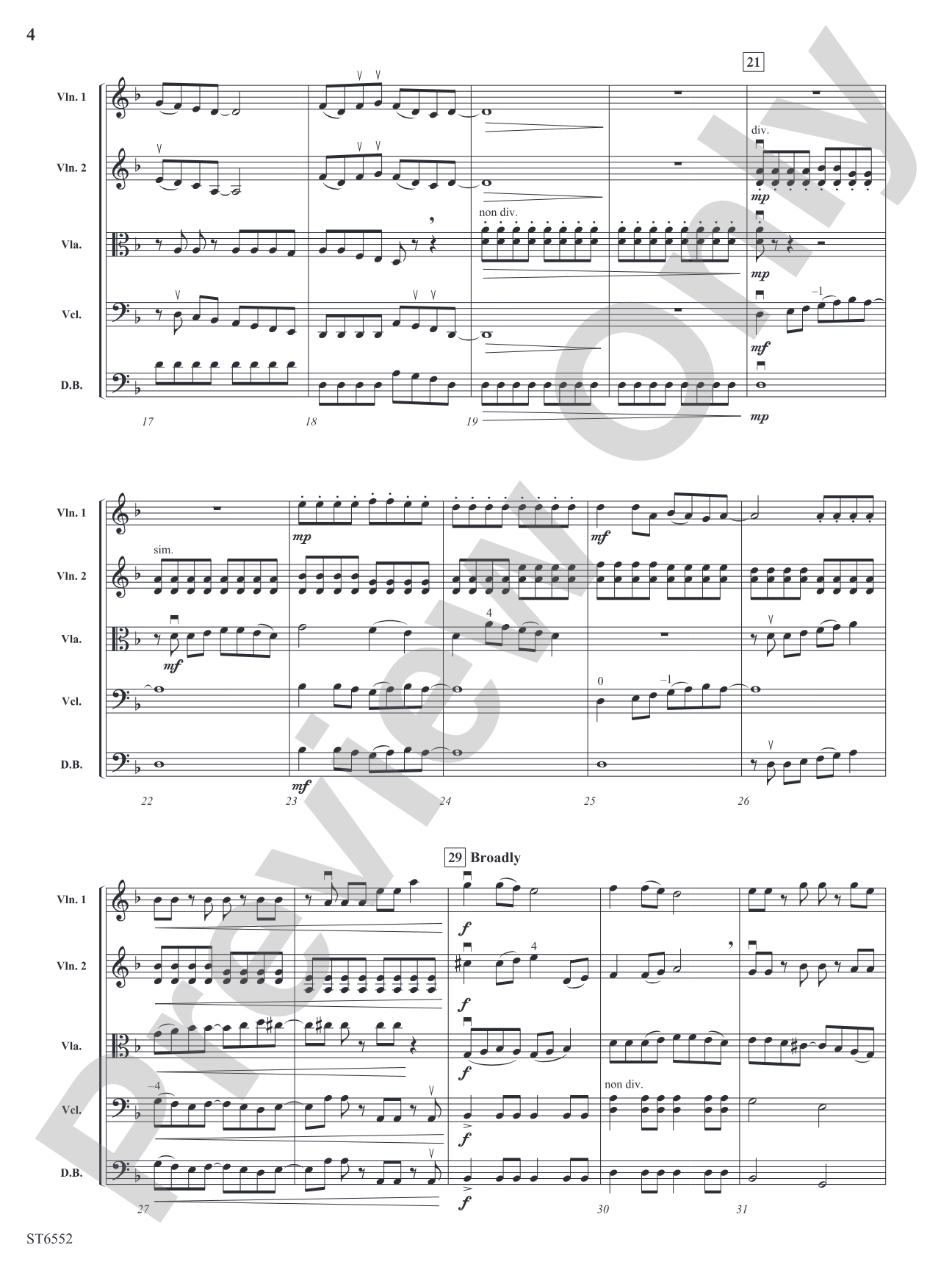
From the first note of this thrilling piece, a sense of suspense feeds an intense desire to protect and avenge, leaving listeners to wonder what is looming around the corner. Let students imagine a world of possibilities in this cinematic work, while developing their skills with independent rhythms, shifting, and interlaced syncopations that propel this journey through the shadows. (2:30)


Don't just read it, hear it, play along with it, and watch your students grow with it. In MakeMusic Cloud, Shadow Defenders: String Orchestra Conductor Score & Parts comes alive with professional accompaniment, adjustable tempo, and built-in practice tools that turn solo practice into real progress.
Open in the Player
Jump straight in and assign it today.
Start Your Free Trial
Open this title and explore the full library in minutes.
Sample Audio
1
Audio File
--:--
0:00
0:00
Sample Video
Additional Details
Series:
FJH String Orchestra
Publisher:
The FJH Music Company, Inc.
SKU:
98-DST6552
More about this title
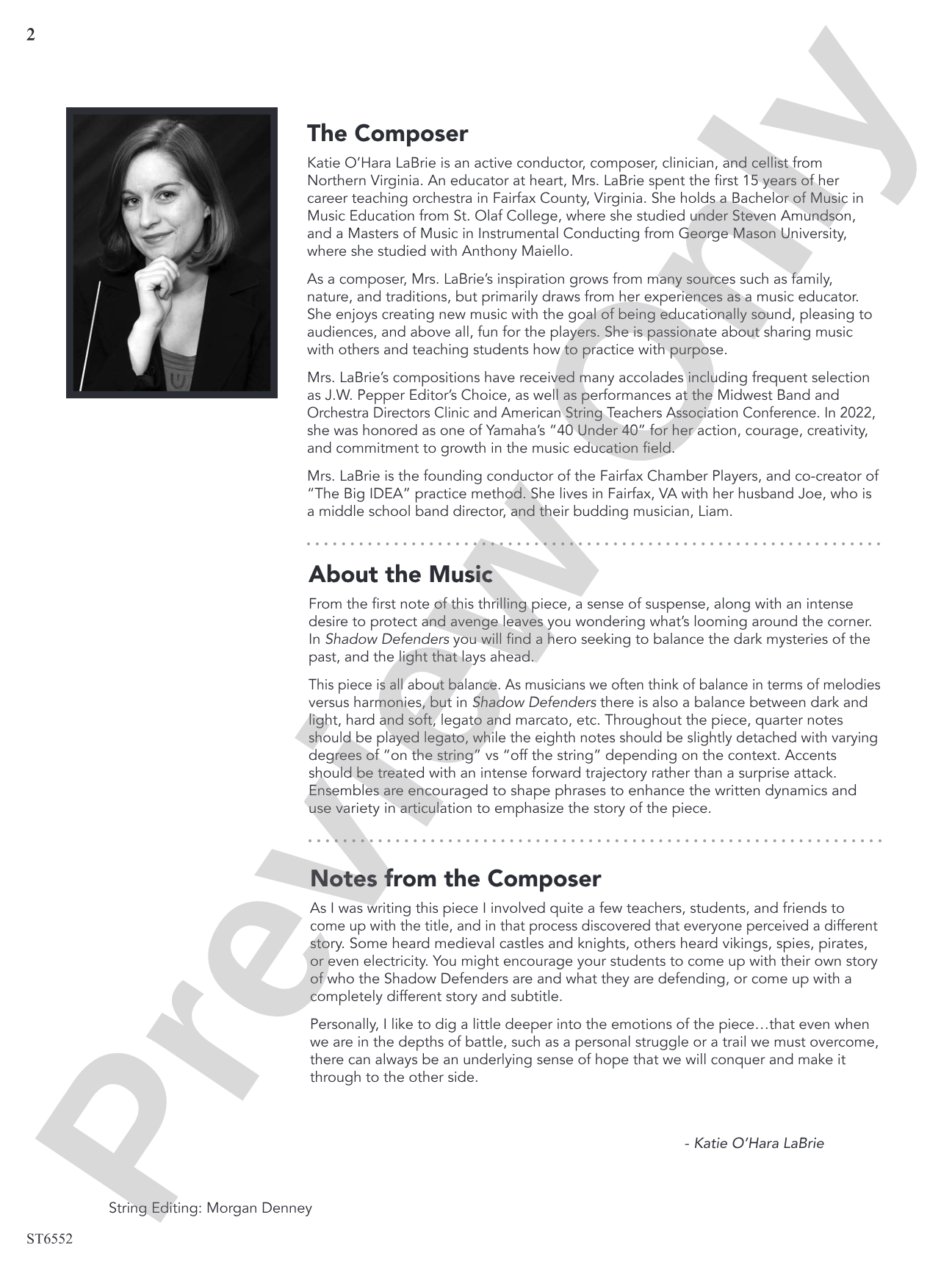
About the Composer: Katie O'Hara LaBrie

Katie O'Hara LaBrie brings fifteen years of orchestra teaching experience from Fairfax County, Virginia into her work as a composer and conductor. She earned her Bachelor of Music in Music Education from St. Olaf College and her Masters of Music in Instrumental Conducting from George Mason University, studying with mentors who shaped her approach to both conducting and composition.
LaBrie's creative voice grows directly from her dual identity as educator and musician. Her compositions consistently earn recognition for their pedagogical integrity and audience appeal, with frequent selections as J.W. Pepper Editor's Choice and performances at major conferences including the Midwest Band and Orchestra Directors Clinic and American String Teachers Association Conference. In 2022, Yamaha honored her as one of their "40 Under 40" for her contributions to music education. She founded the Fairfax Chamber Players and co-created "the Big IDEA" practice method, demonstrating her commitment to helping students develop purposeful practice habits.
Why we love this
Shadow Defenders captures the cinematic intensity that middle school students crave while teaching them genuine technical skills they'll use for years. The independent rhythmic lines and interlaced syncopations create enough complexity to hold an audience's attention without requiring advanced technical facility, making it a smart choice for festival programming or a concert centerpiece that leaves listeners genuinely engaged.
What to expect
Shadow Defenders immerses players and listeners in a world of cinematic suspense from the opening notes. The layered rhythms and syncopations create propulsive momentum, building an atmosphere of mystery and anticipation that rewards careful ensemble attention with moments of genuine dramatic impact.
Who it's for
Grade 3 string orchestras seeking repertoire with genuine dramatic weight and rhythmic sophistication. Directors programming festival or contest events will appreciate how this piece challenges students without demanding virtuosic technique, while student musicians gain experience with contemporary compositional language and ensemble interdependence.
How to get the most out of it
- Mark the shifting rhythmic patterns in rehearsal with clear verbal cues or conducting gestures so students lock in together before running passages at tempo.
- Balance the inner voices carrying syncopated lines with the outer voices; these interlaced rhythms only land when each part can hear its relationship to the whole.
- Experiment with dynamics as a storytelling tool; the cinematic quality depends on your orchestra understanding when to recede and when to surge forward.
- Allow time in sectional rehearsals for each part to hear how their rhythm interacts with adjacent voices, then bring sections together to feel the composite effect.
How to use it
This piece excels as a festival selection or as the dramatic anchor of a concert program, where its 2:30 runtime and intensity make it memorable without overwhelming a full evening. Programming it alongside lighter repertoire creates strong contrast, or use it as evidence of your orchestra's growing technical sophistication mid-year when students have developed the independence to manage complex rhythmic layers.
Skills your students will build
- Reading and executing independent rhythmic lines across the ensemble
- Maintaining pulse while playing syncopated rhythms against other parts
- Shifting between different metric feels and subdivisions
- Listening to and balancing interlaced parts within the orchestra
- Responding to conducting for dramatic shape and ensemble cohesion