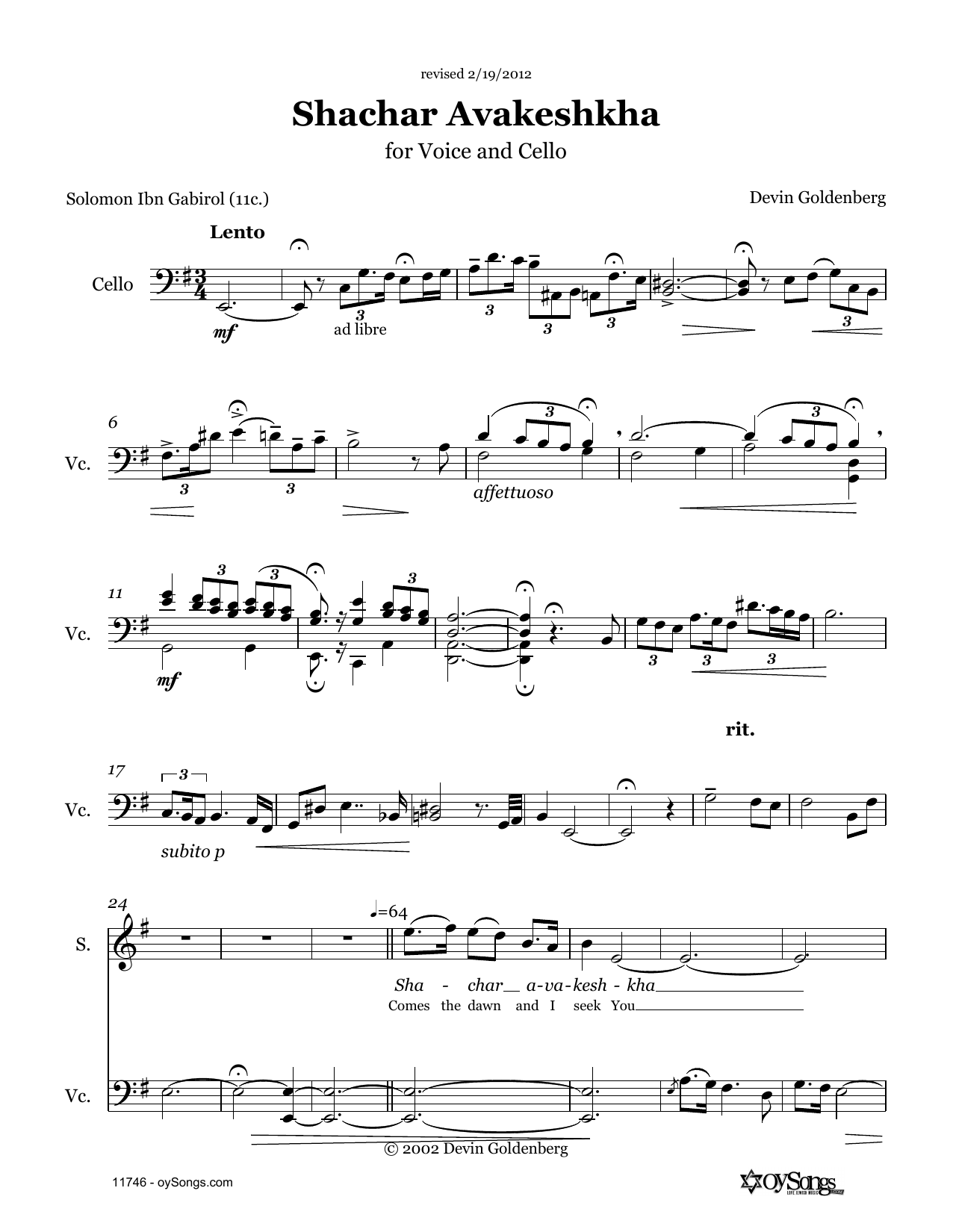
Shachar Avakeshcha Sheet Music Preview

Shachar Avakeshcha: Lead Sheet / Fake Book

As performed by Devin Goldenberg

Item: 35-DS00090343

Digital Download
$3.99
Description

Shachar Avakeshcha: Lead Sheet / Fake Book isn't in MakeMusic Cloud just yet...but it could be. Let us know you'd like to see it, and you'll help shape what comes next. In the meantime, start a free trial and dive into thousands of interactive titles your students can play along with today.

Sample Audio
No sample audio found.
Sample Video
Additional Details
Publisher: Hal Leonard
Page Count: 5
SKU: 35-DS00090343

More about this title

Why we love this

Goldenberg's lead sheet preserves the spiritual depth of this traditional text while making it accessible to contemporary musicians working from chord changes. The stripped-down format respects the song's liturgical roots without demanding specialized vocal training or orchestral forces.

What to expect

Intimate and devotional. The lead sheet format creates space for the text to breathe and for the vocalist's personal interpretation to emerge. There is a quiet intensity here, the kind that comes from stripping away arrangement and letting the prayer itself become the point.

Who it's for

Vocalists and keyboardists seeking a contemporary arrangement of this traditional prayer, and ensembles looking to add liturgical or spiritual music to their repertoire without relying on complex orchestrations. This works for singers at intermediate levels and above who are comfortable interpreting lead sheets and working with jazz-style harmonic notation.

How to get the most out of it

  • Shape phrases around the natural breathing points of the Hebrew text rather than melodic convenience; this keeps the prayer's intention clear.
  • Experiment with the rhythmic feel during rehearsal. Lead sheets invite flexibility, so test both rubato and metered interpretations to find what serves your ensemble.
  • Balance the melody against keyboard voicings by establishing the harmonic foundation early; this frees the vocalist to focus on text projection and emotional weight.

How to use it

Pair this with other traditional or contemporary liturgical music for a meditation concert, or use it as a soloist feature in a mixed program exploring different cultural approaches to sacred music. The five-page score works well as a rehearsal tool for developing ensemble understanding of lead sheet reading across keyboard, voice, and harmony.

Skills your students will build

  • Reading and interpreting lead sheet notation and chord symbols
  • Balancing melody against harmonic accompaniment
  • Singing with intention in Hebrew language text
  • Collaborative interpretation between voice and keyboard parts

You May Also Like