
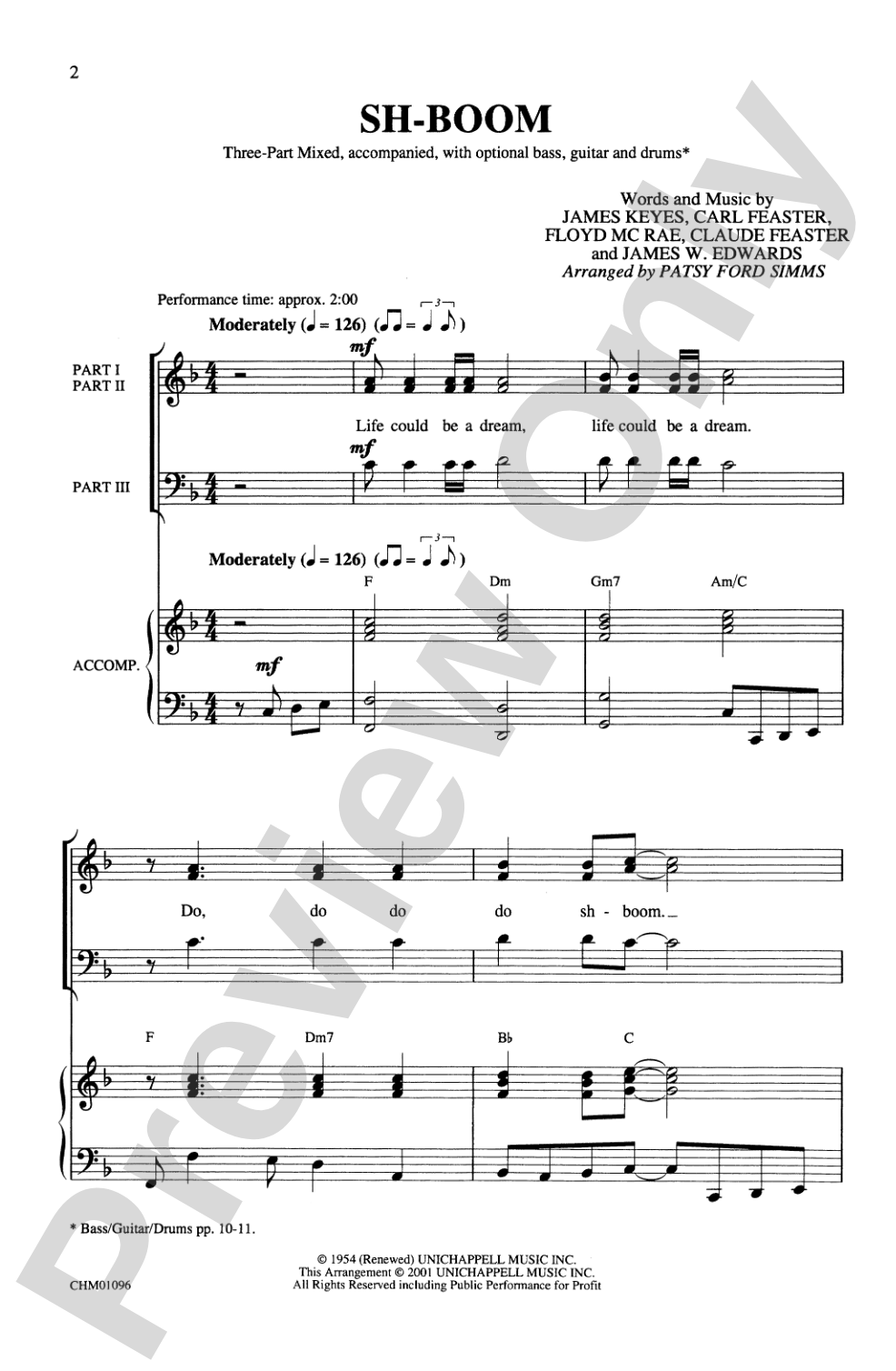
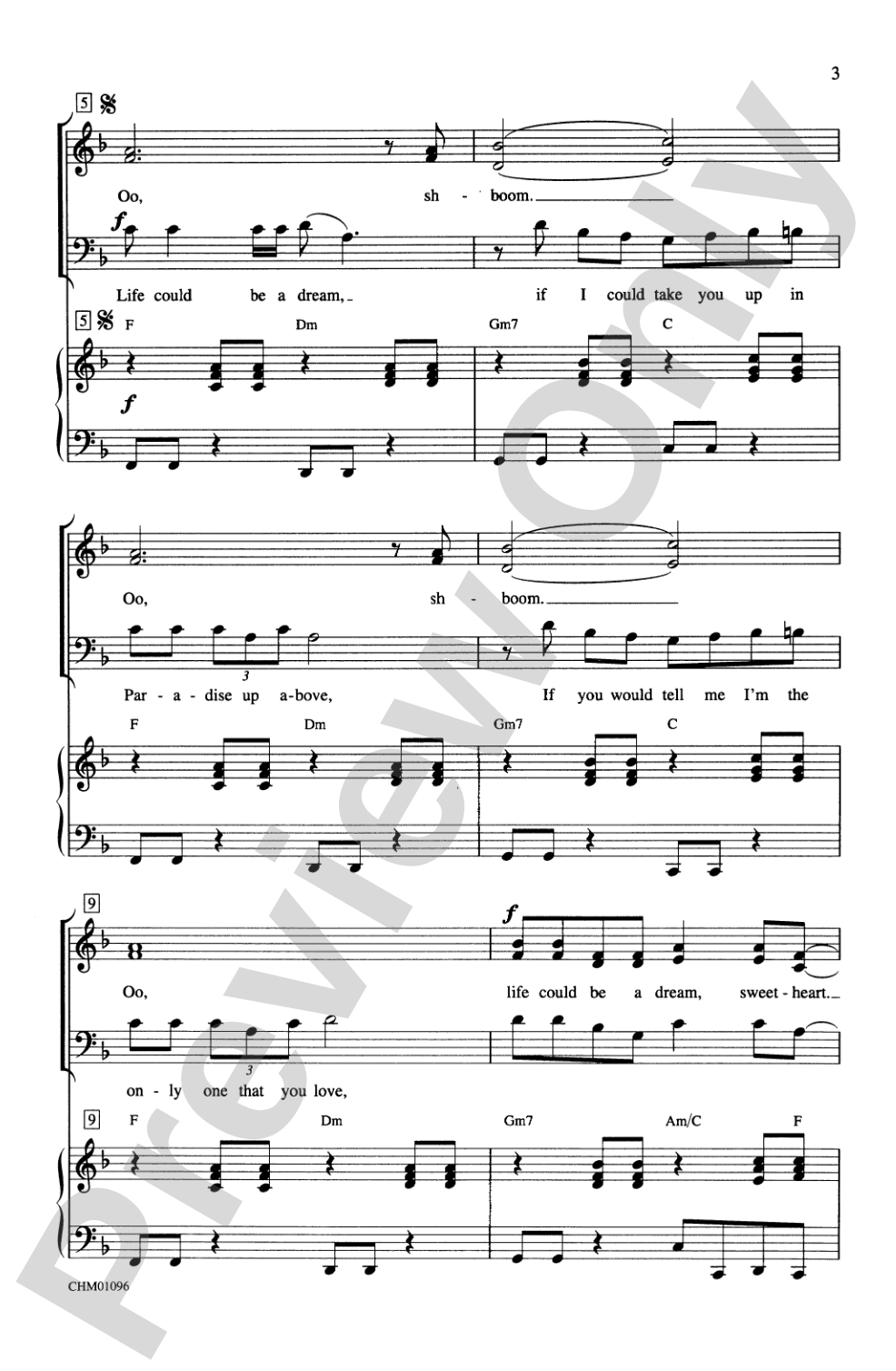

Sh-Boom: 3-Part Mixed Choral Octavo
Words and music by James Keyes, Carl Feaster, Floyd McRae, Claude Feaster and James W. Edwards / arr. Patsy Ford Simms
Level: Moderate
Item: 00-PO-0004787
$2.25
Minimum order quantity: 20 copies
One moment…
Description
Patsy Ford Simms has arranged one of the classic hits of the fifties in a setting that captures all the flavor of the original.


Sh-Boom: 3-Part Mixed Choral Octavo isn't in MakeMusic Cloud just yet...but it could be. Let us know you'd like to see it, and you'll help shape what comes next. In the meantime, start a free trial and dive into thousands of interactive titles your students can play along with today.
Request This Title
Tell us you want it.
Start Your Free Trial
Explore everything that's ready to play right now.
Sample Audio
No sample audio found.
Sample Video
No sample videos found.
Additional Details
Series:
Alfred Archive Edition: Alfred Pop Choral Series
Publisher:
Alfred Music
Page Count:
12
SKU:
00-PO-0004787
More about this title
About the Composer: James Keyes
James Keyes was the lead vocalist of The Crew-Cuts, the group that brought "Sh-Boom" to mainstream radio in 1954. As a composer and performer, Keyes helped define the sound of early rock and roll during a pivotal moment when pop music was transforming across American culture. His work remains a touchstone for music educators introducing students to the foundations of modern popular song.
Why we love this
Patsy Ford Simms' arrangement brings the infectious energy of a genuine 1950s hit into a setting that works beautifully for mixed voices without oversimplifying the song's charm. The moderate difficulty level means your singers can focus on capturing the style and fun rather than wrestling with complex voicing, and the recorded accompaniment lets you hear exactly how to balance the parts against the original groove.
What to expect
Bright, playful, and instantly recognizable. The arrangement captures the novelty and joy of the original hit while maintaining the vocal interplay and rhythmic drive that made it a standard. Singers come away energized, and audiences connect immediately to a song they know.
Who it's for
Middle school and early high school choirs seeking accessible pop repertoire with genuine historical roots. This works well for programs building mixed-voice ensembles or for any choir that wants a crowd-pleasing number with musical substance behind the fun.
How to get the most out of it
- Anchor the rhythm section (bass line and rhythm guitar from the accompaniment) by having your lower voices lock into the steady, syncopated pulse that drives the song. This creates the foundation for the upper voices to sit comfortably and add character.
- Lean into the doo-wop style of the original. Your singers should think of themselves as a vocal ensemble trading musical phrases, not singing in strict four-part harmony. Encourage lightness and a conversational quality.
- Use the recorded accompaniment to establish tempo and feel during rehearsals, but pull it back during performance to let the choir's voices shine. The arrangement is written to sit well with the backing tracks at moderate volume.
- Clarify the harmonic rhythm in spots where the three parts diverge. The moderate difficulty comes partly from maintaining SAB independence while keeping the blend tight and cohesive.
How to use it
Program this as a showcase moment in a pop or contemporary concert, or pair it alongside other fifties and sixties standards to demonstrate how popular music has roots in genuine songwriting and vocal arranging. It also works as a morale booster during the rehearsal process, breaking up heavier material while building blend and ensemble skills.
Skills your students will build
- Maintaining independent vocal lines in three-part mixed voicing
- Singing with rhythmic precision in a syncopated, doo-wop style
- Balancing melody and supporting harmony within a pop idiom
- Ensemble cohesion while preserving individual part clarity