Seven Lonely Days Sheet Music Preview

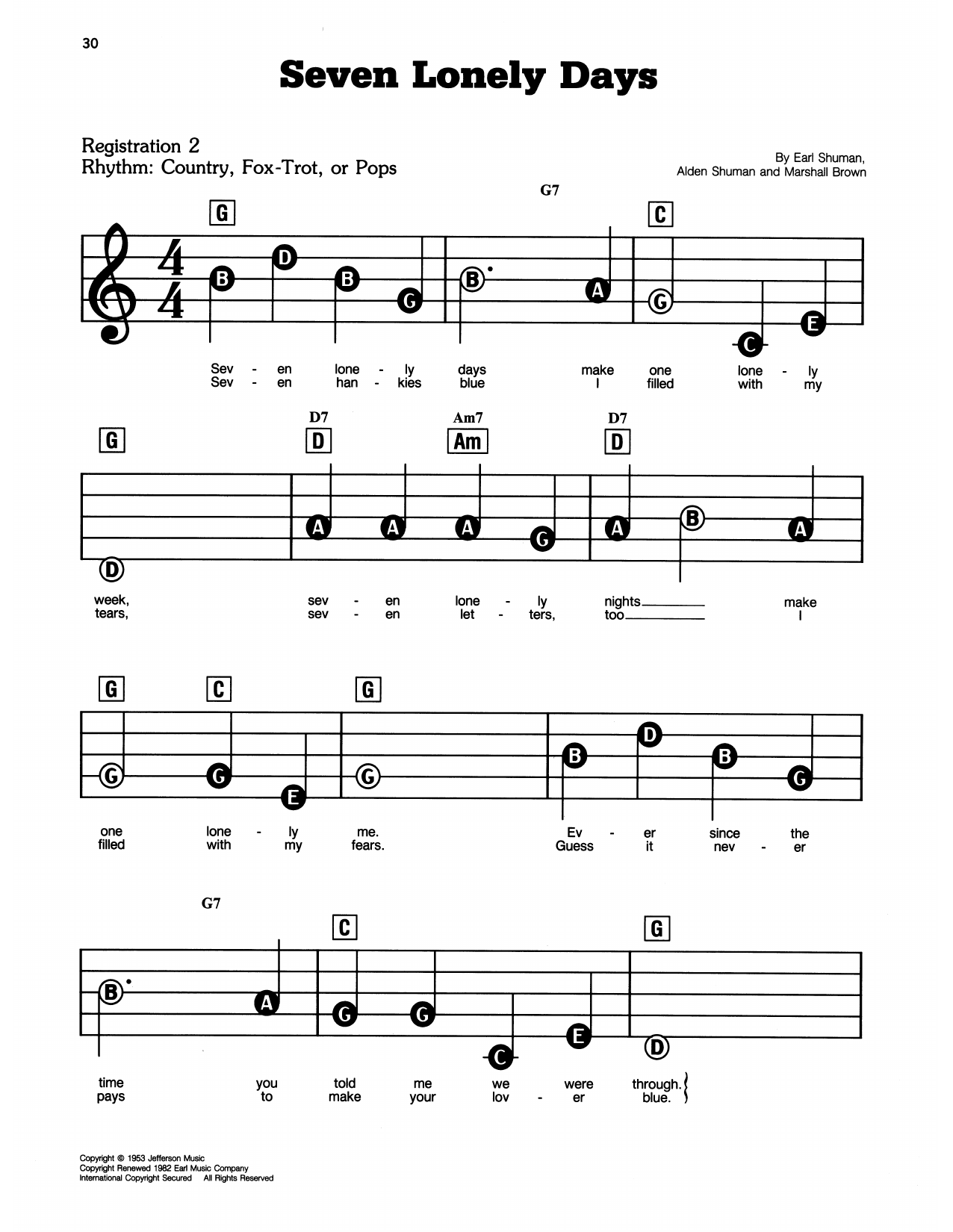
Seven Lonely Days: E-Z Play Today

As performed by Patsy Cline / As performed by Earl Schuman

Item: 35-DS01868748

Digital Download
$4.99
Description

Seven Lonely Days: E-Z Play Today isn't in MakeMusic Cloud just yet...but it could be. Let us know you'd like to see it, and you'll help shape what comes next. In the meantime, start a free trial and dive into thousands of interactive titles your students can play along with today.

Sample Audio
No sample audio found.
Sample Video
Additional Details
Publisher: Hal Leonard
Page Count: 3
SKU: 35-DS01868748

More about this title

About the Artist: Patsy Cline

Patsy Cline remains one of the most influential vocalists in American music history, bridging country and pop with unprecedented artistry. Her phrasing, control, and emotional directness transformed how singers approached both genres, making her recordings essential listening for musicians across styles.

Why we love this

Cline's catalog offers pianists accessible entry points into the vocabulary of mid-century country and jazz phrasing. This arrangement captures the warmth and restraint that made her interpretations so powerful, giving students a chance to inhabit a major artist's sensibility without requiring advanced technique.

What to expect

Melancholy and grounded. The piece sits in a reflective space where loneliness becomes something dignified rather than desperate. You feel the weight of each chord change and the careful placement of melody notes.

Who it's for

Piano students exploring jazz and country idioms, as well as singers preparing this song and wanting to understand the accompaniment intimately. The three-page format makes it manageable for intermediate pianists without oversimplifying the harmonic language.

How to get the most out of it

  • Let the melody breathe. Resist rushing into the next phrase; Cline's style depends on space and simplicity.
  • Voice the left hand softly to support rather than anchor. The arrangement lives in subtlety, not in thick voicings.
  • Study the original recording to internalize the phrasing and understand where Cline places the lyrical weight.

How to use it

Pair this with other standards from the 1950s and 60s to explore the American Songbook through a country lens. It works equally well as a solo piece in a jazz-inflected concert or as an accompaniment for a vocalist studying interpretive control.

Skills your students will build

  • Voice leading in jazz-influenced harmony
  • Balancing melody prominence with accompaniment texture
  • Understanding country phrasing and lyrical approach
  • Reading and executing dynamics across three pages

You May Also Like