
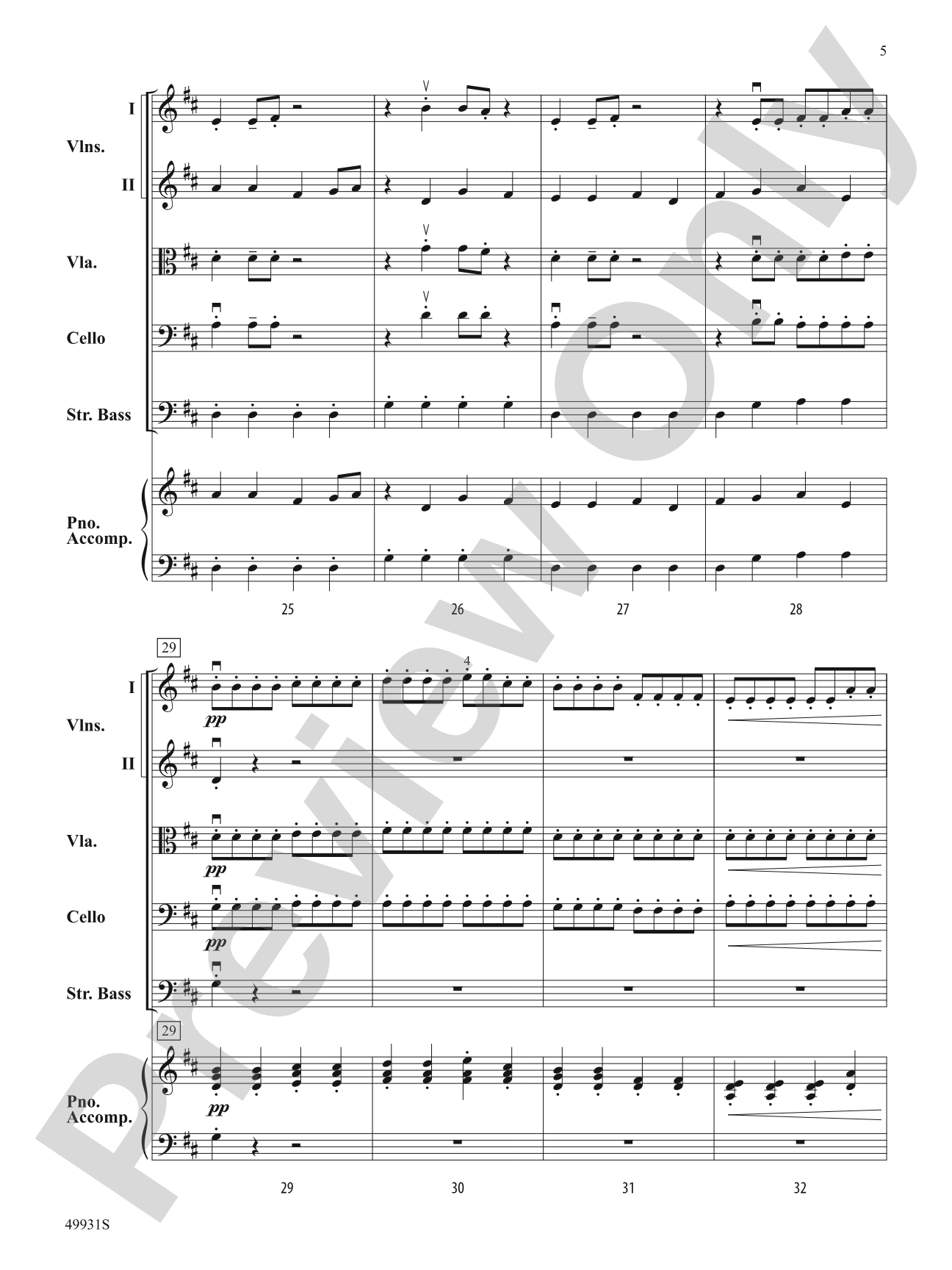
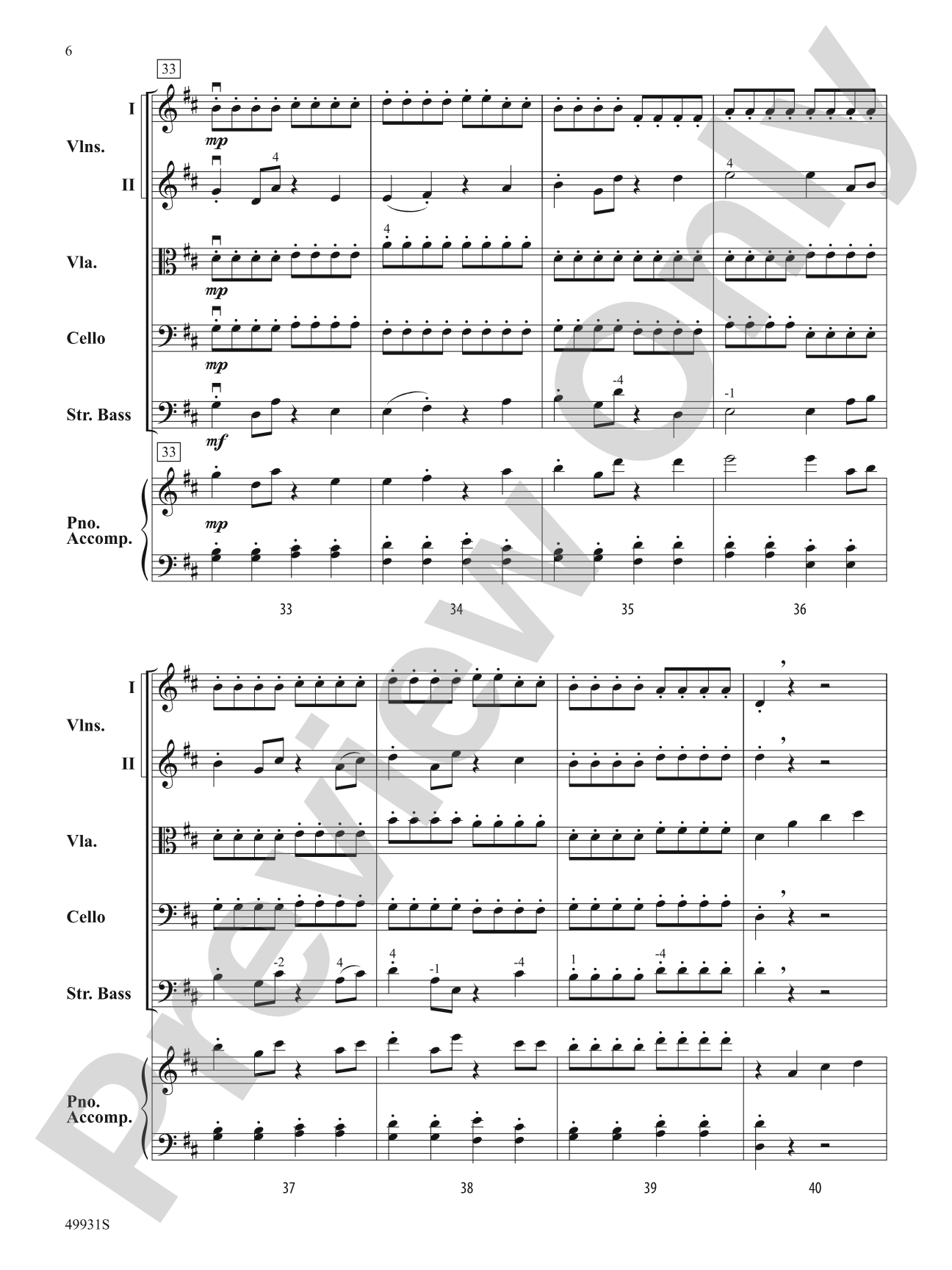
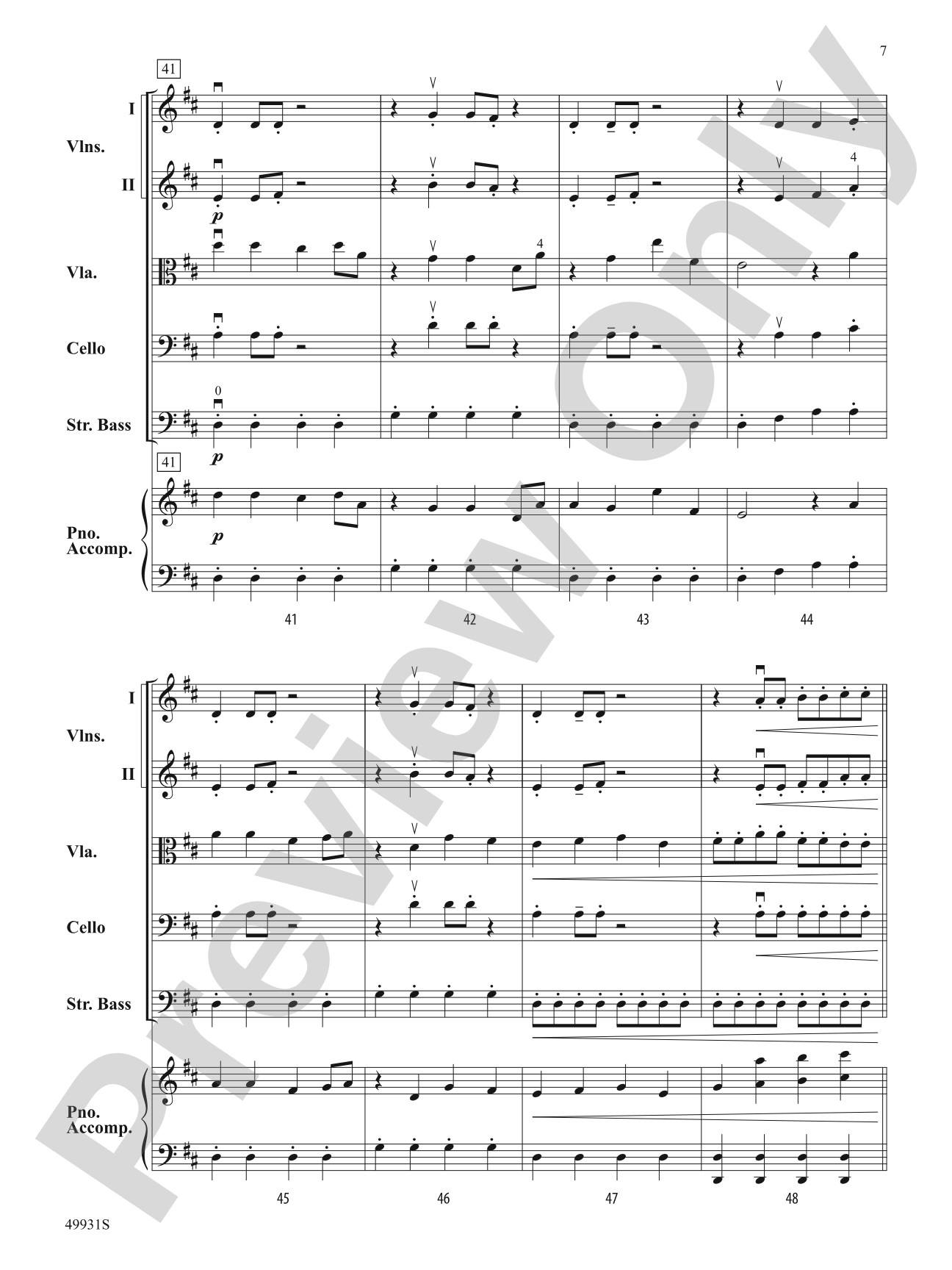
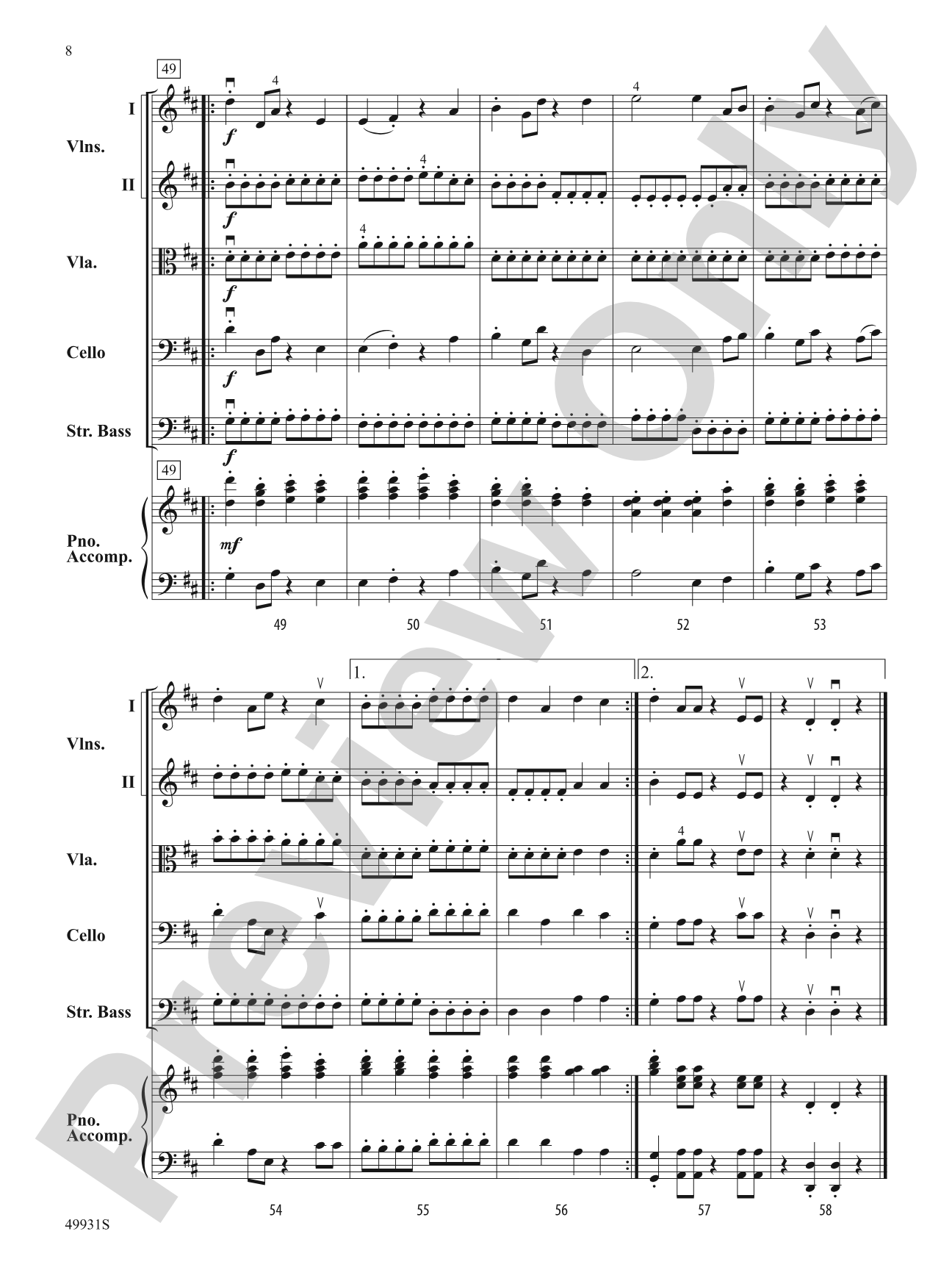

Set a Course: String Orchestra Score & Parts
By Doug Spata
Grade: 1.5
Item: 00-PK-0008665

$50.00
Pickup currently not available
Buy Extra Parts (Digital PDF Download)
| Product | Price | Quantity |
|---|---|---|
| Set a Course: Score | $10.00 | |
| Set a Course: 1st Violin | $3.00 | |
| Set a Course: 2nd Violin | $3.00 | |
| Set a Course: Viola | $3.00 | |
| Set a Course: Cello | $3.00 | |
| Set a Course: String Bass | $3.00 | |
| Set a Course: Piano Accompaniment | $3.00 |
Parts Added to Cart!
Description
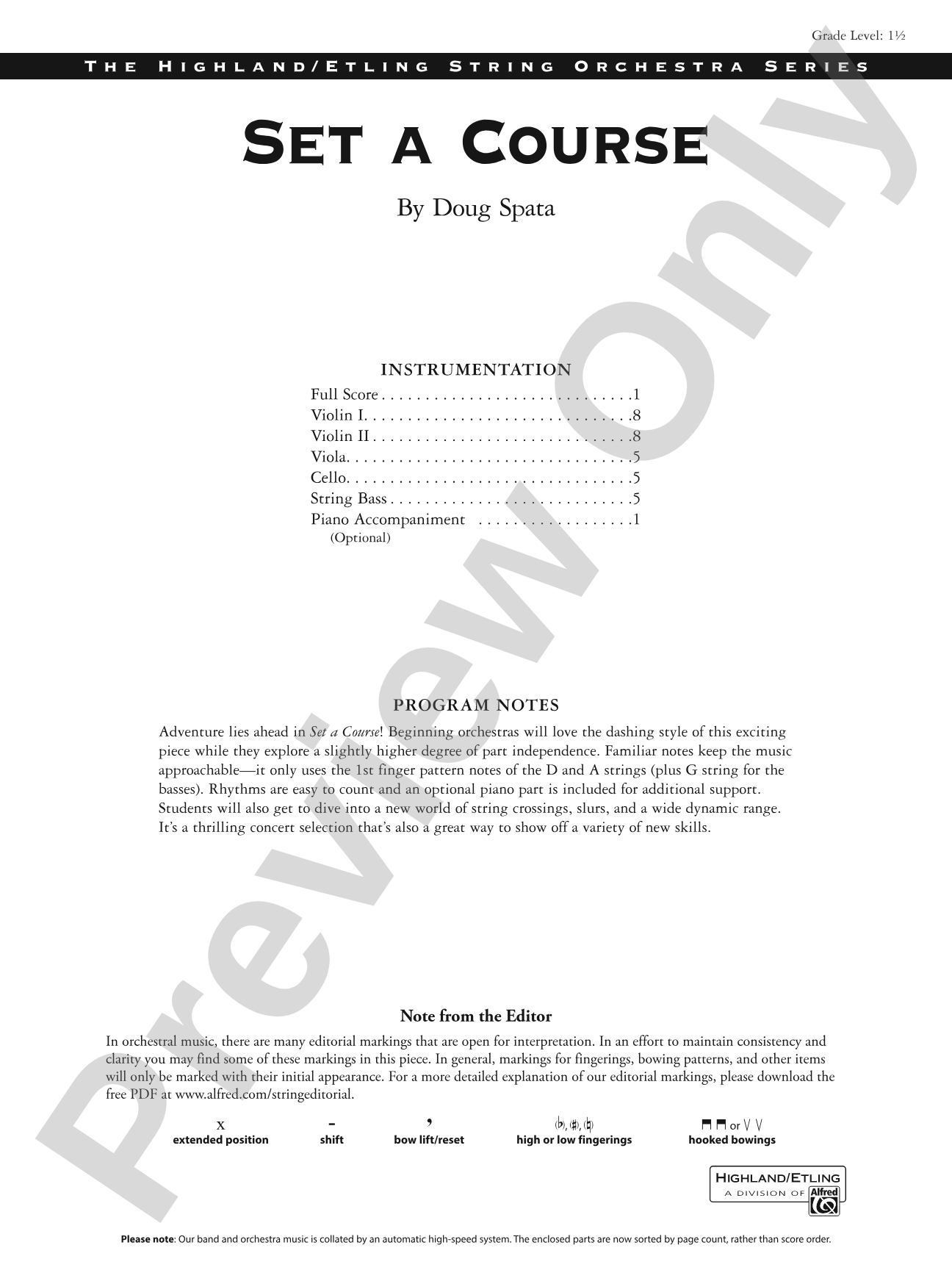
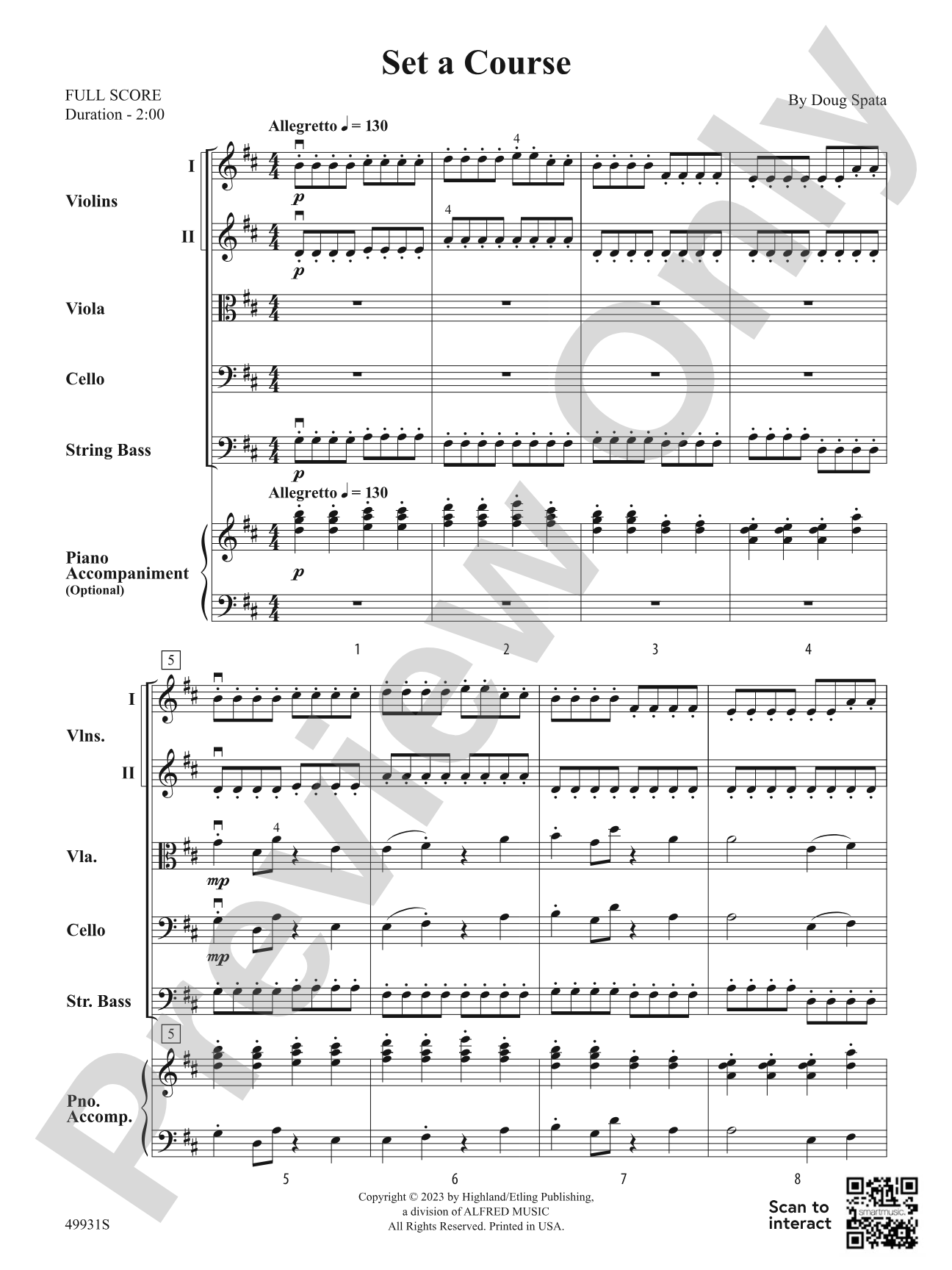
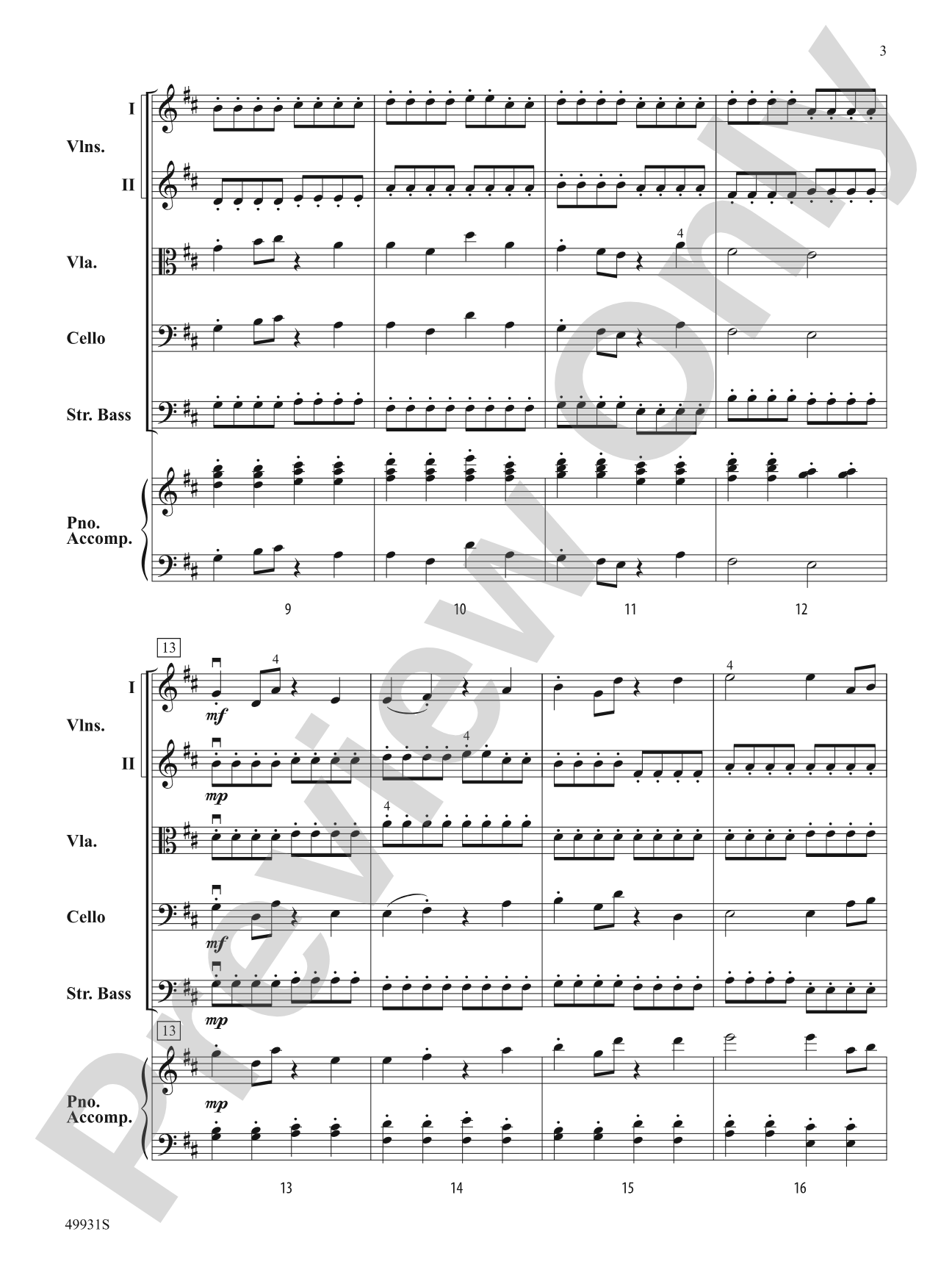
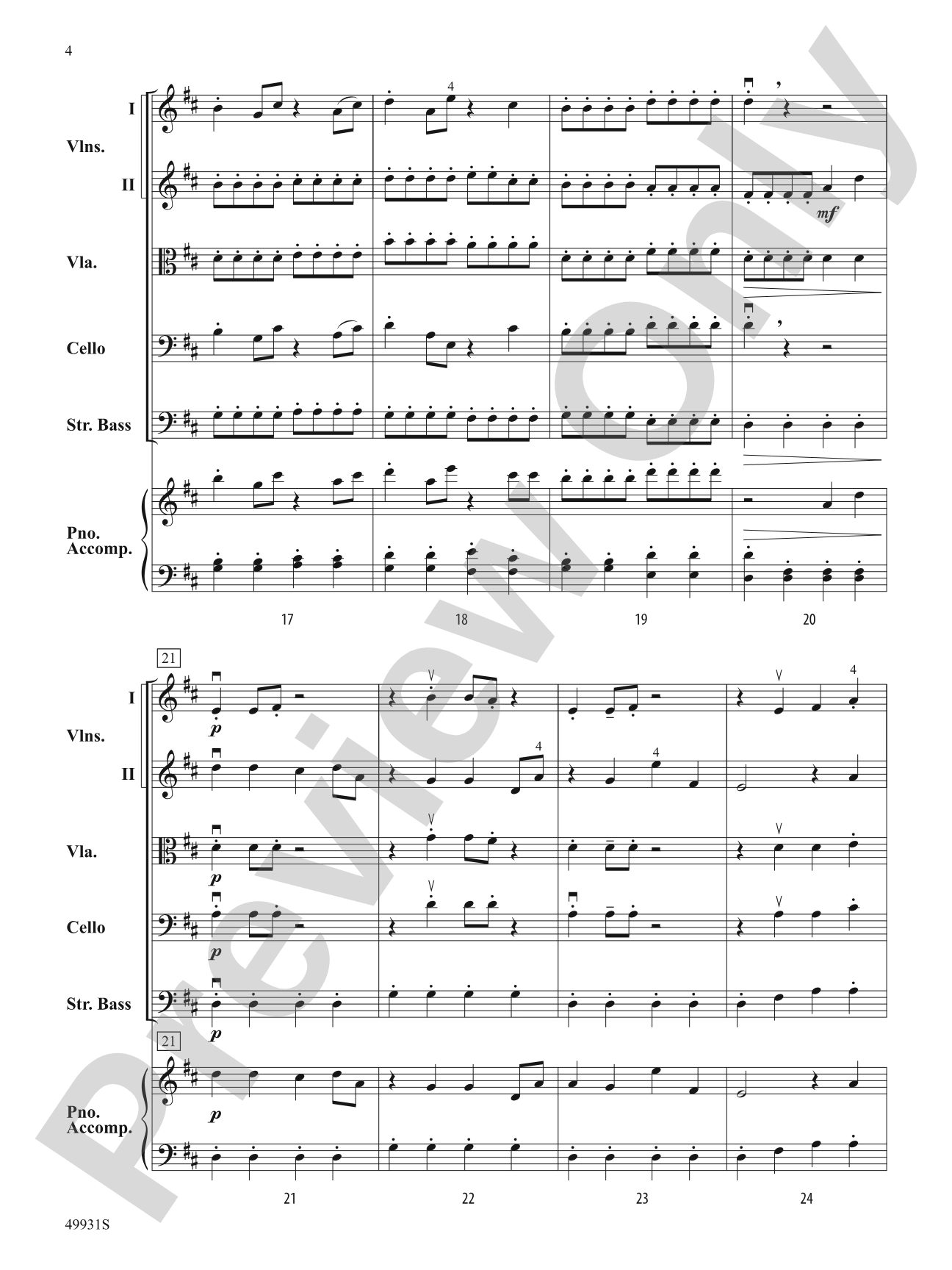
Beginners will enjoy the dashing style of Set a Course by Doug Spata while exploring new playing techniques! Familiar notes and rhythms keep the music approachable, and an optional piano part adds additional support. This is a thrilling concert selection that's also a great way to show off a variety of new skills. (2:00)


Don't just read it, hear it, play along with it, and watch your students grow with it. In MakeMusic Cloud, Set a Course: String Orchestra Score & Parts comes alive with professional accompaniment, adjustable tempo, and built-in practice tools that turn solo practice into real progress.
Open in the Player
Jump straight in and assign it today.
Start Your Free Trial
Open this title and explore the full library in minutes.
Sample Audio
1
Audio File
--:--
0:00
0:00
Sample Video
Additional Details
Series:
Highland/Etling String Orchestra
Publisher:
Alfred Music
SKU:
00-PK-0008665
More about this title
About the Composer: Doug Spata

Doug Spata began his musical training as a clarinetist, but his career took a decisive turn when he became an orchestra teacher. That classroom experience shaped his compositional voice; he writes primarily for strings with an intuitive understanding of what young players need to grow musically and technically. His works have earned recognition across the country and internationally, performed by student ensembles and professional orchestras alike.
Beyond his contributions to string education, Spata has composed across a broad range of genres and scales. His portfolio includes an opera, ballet scores, symphonies, and chamber works for ensembles of all sizes. What unites these diverse projects is his gift for writing music that engages performers and audiences in equal measure.
Why we love this
Spata understands exactly what a Grade 1.5 string orchestra can handle, and he refuses to let that limitation dull the music. Set a Course captures genuine excitement through confident orchestration and forward momentum, giving your students something genuinely rewarding to play rather than an exercise that happens to be musical. The optional piano part opens possibilities for smaller programs or those building accompaniment skills alongside instrumental technique.
What to expect
Set a Course has energy and purpose. The music moves with bright intention, using the orchestra's developing capabilities to create something that feels accomplished rather than tentative. There's a sense of forward motion and exploration, as if the players are genuinely setting out on something worthwhile.
Who it's for
String orchestra directors working with Grade 1.5 ensembles who want repertoire that challenges without overwhelming. This works equally well for a beginning orchestra building confidence or an advanced beginner group ready to explore new technical ground while maintaining musical shape.
How to get the most out of it
- Balance the ensemble so that melodic material reads clearly across parts. With new techniques and unfamiliar passages, students benefit from hearing exactly where the line should land.
- Use the optional piano part to stabilize ensemble cohesion during early rehearsals, then gradually reduce reliance on it as confidence builds.
- Shape the piece's arc by adjusting dynamics consciously. Young orchestras often play at one volume throughout; this score rewards attention to contrasts and phrase direction.
- Mark fingerings and bowing patterns in parts before the first rehearsal. New techniques stick faster when students see a clear, consistent approach from the start.
How to use it
This piece shines as a showcase concert opener or closing number for a school concert, where it can anchor a program and demonstrate ensemble growth. It also works well in a festival or contest setting, where the two-minute length fits time constraints and the Grade 1.5 difficulty level opens doors for younger orchestras to perform alongside more established groups.
Skills your students will build
- New playing techniques appropriate to Grade 1.5 strings
- Reading and executing rhythmic figures beyond whole notes and half notes
- Ensemble balance and listening across string sections
- Sustaining musical phrases and managing bow pressure for dynamic shape
- Coordinating with optional piano accompaniment