
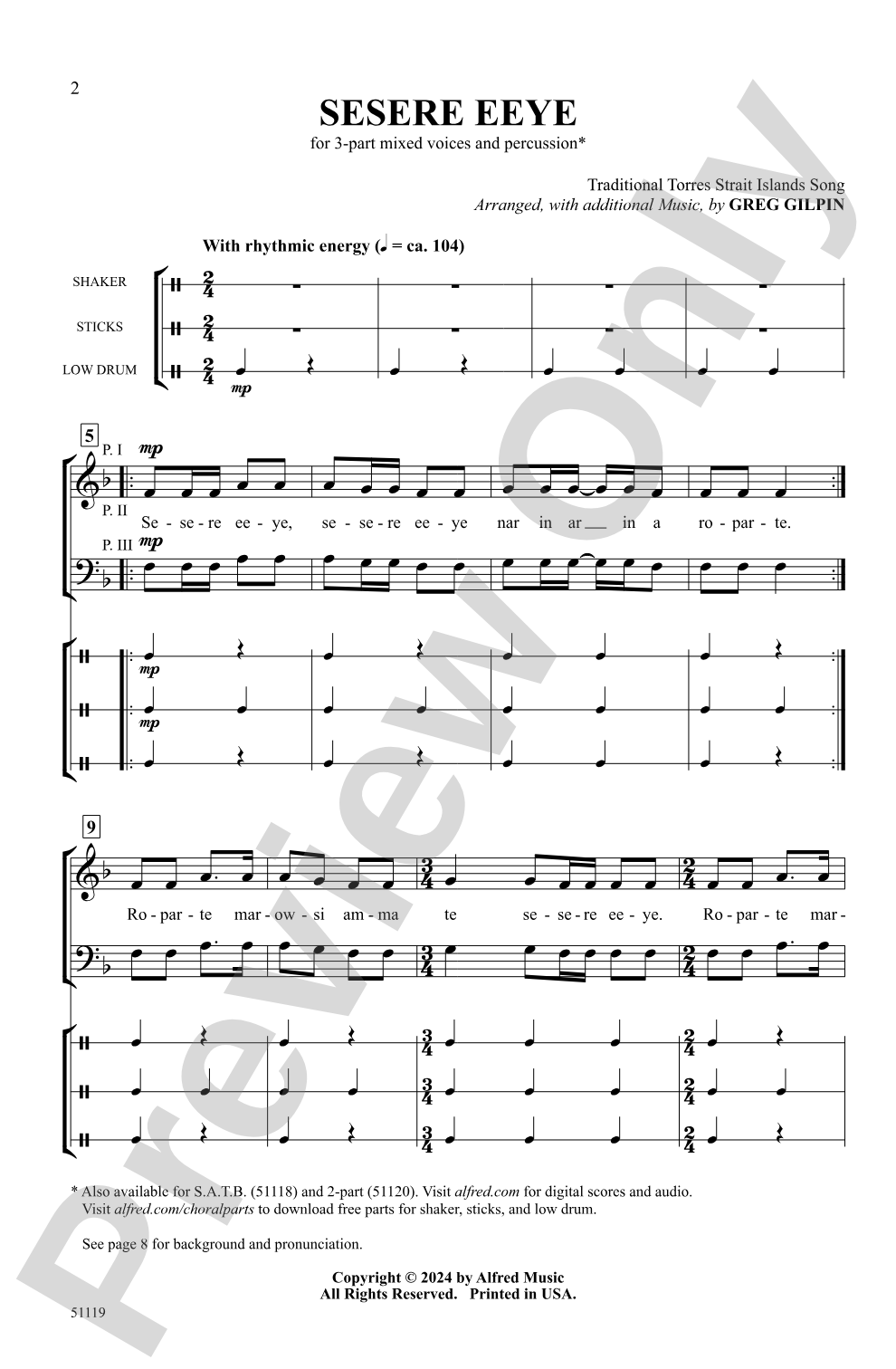

Sesere Eeye: 3-Part Mixed Choral Octavo
Traditional Torres Strait Islands Song / arr., with additional music, by Greg Gilpin
Item: 00-PO-0007188
$2.20
Minimum order quantity: 20 copies
Pickup currently not available
Description
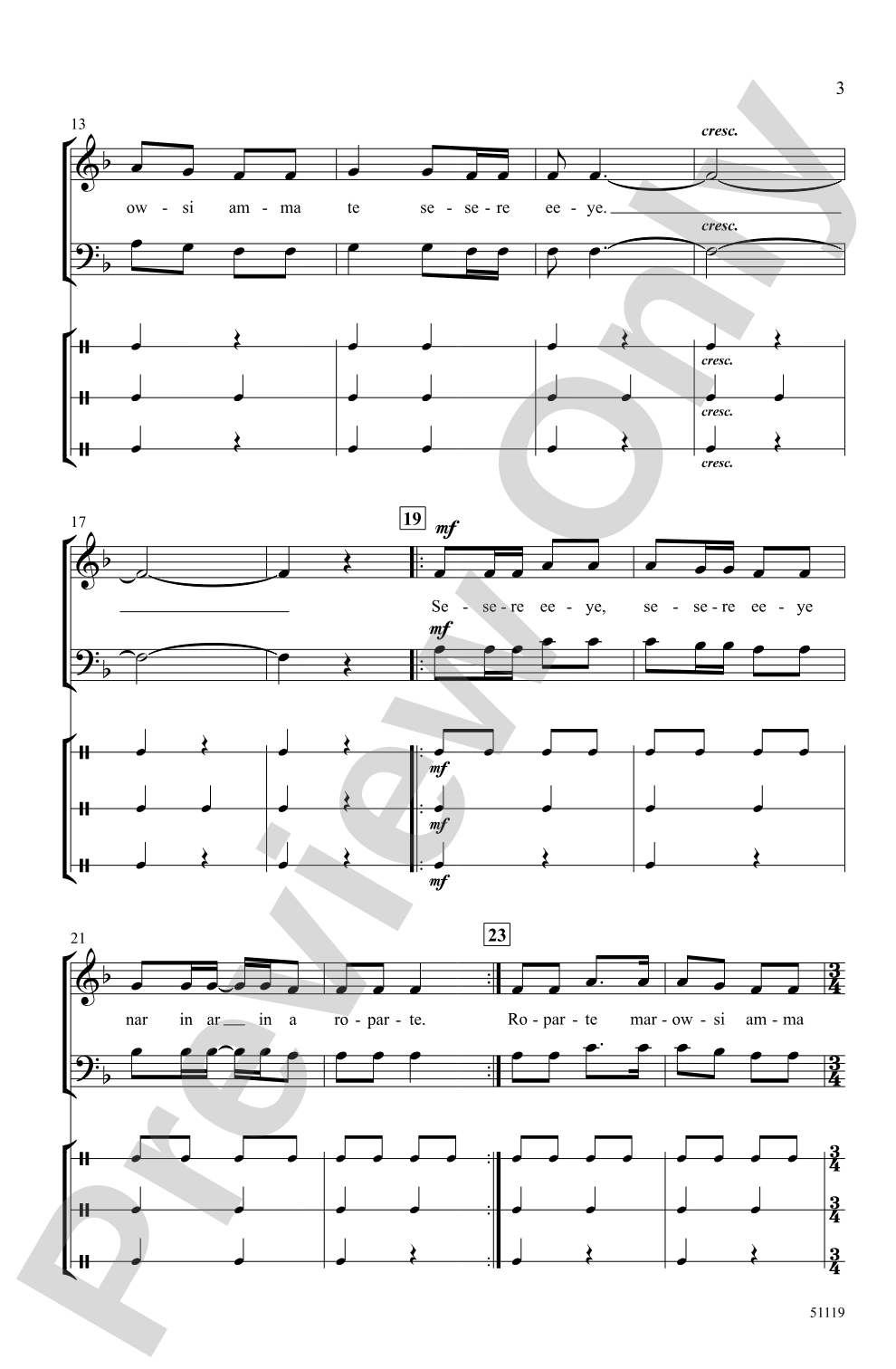
This Torres Strait Islands folk song presents a wonderful opportunity for a cappella choirs to perform with authentic world percussion instruments (common alternates offered). All the voicings are built on a traditional repeat structure that begins in unison and unfolds into more harmony with each verse. A brief bridge of original music punctuates the repeated sections. Choirs around the globe have enjoyed adding movement to this playful nature song.


Discover MakeMusic Cloud: thousands of interactive titles your students can play along with today.
Sample Audio
1
Audio File
--:--
0:00
0:00
Sample Video
Additional Details
Series:
Alfred Choral Designs
Publisher:
Alfred Music
Page Count:
8
SKU:
00-PO-0007188
Instrumentation:
Percussion
More about this title
About the Arranger: Greg Gilpin

Greg Gilpin brings together deep expertise in choral writing with a track record of major performances at venues including Carnegie Hall, Lincoln Center, and the Sydney Opera House. As Director of Educational Choral Publications for Shawnee Press, he shapes how thousands of choirs learn and perform, and his ASCAP-recognized compositions have become staples in concert programming across the country.
Beyond the concert hall, Gilpin has expanded his creative reach into film scoring and collaborative projects with internationally recognized artists. His work demonstrates a consistent commitment to accessible, engaging choral music that translates across skill levels and cultural contexts.
Why we love this
Gilpin's arrangement respects the Torres Strait Islands tradition while building in enough musical architecture to keep your singers engaged through repetition. The unison-to-harmony progression gives developing choirs a clear roadmap for learning, and the bridge passage provides that moment of contrast that audiences remember long after the final note.
What to expect
Playful and grounded at once. The repetitive structure and rhythmic drive create momentum that feels almost celebratory, while the unison sections and nature-song text root you in something genuine and unpretentious. Adding movement transforms it from a concert piece into a genuine participatory experience.
Who it's for
Any a cappella or lightly accompanied choir looking to expand beyond traditional Western repertoire without sacrificing musical substance. The SAB voicing and accessible harmonic language work equally well for high school ensembles, community choirs, and collegiate groups building world music literacy.
How to get the most out of it
- Establish the percussion sounds early in rehearsal so your singers understand how their parts interact with the rhythmic layer. Even if you're using classroom instruments instead of traditional ones, the percussive support shapes the entire groove.
- Take time exploring the movement possibilities with your ensemble. This piece invites physical expression, and finding what feels natural to your singers will enhance both their performance energy and their connection to the material.
- Keep the repeated sections loose and conversational in early verses. The harmonic complexity builds intentionally, so resist the urge to over-polish before the choir has time to understand where the piece is heading.
- Balance the unison opening so it lands with confidence and clarity. This is your foundation; give it weight before the harmony enters.
How to use it
Position this on a concert where you're intentionally building repertoire beyond the standard classical canon, or use it as a festival selection that stands out for its cultural authenticity and performance potential. It also works as a concert opener that energizes both singers and audience with its rhythmic clarity and immediate accessibility.
Skills your students will build
- Reading and executing unison-to-harmony transitions
- Maintaining rhythmic precision within a repeat-based structure
- Balancing a cappella blend across three parts
- Coordinating sung lines with percussion accompaniment
- Interpreting cultural music with stylistic sensitivity