Serenity: Piano (opt.) Sheet Music Preview

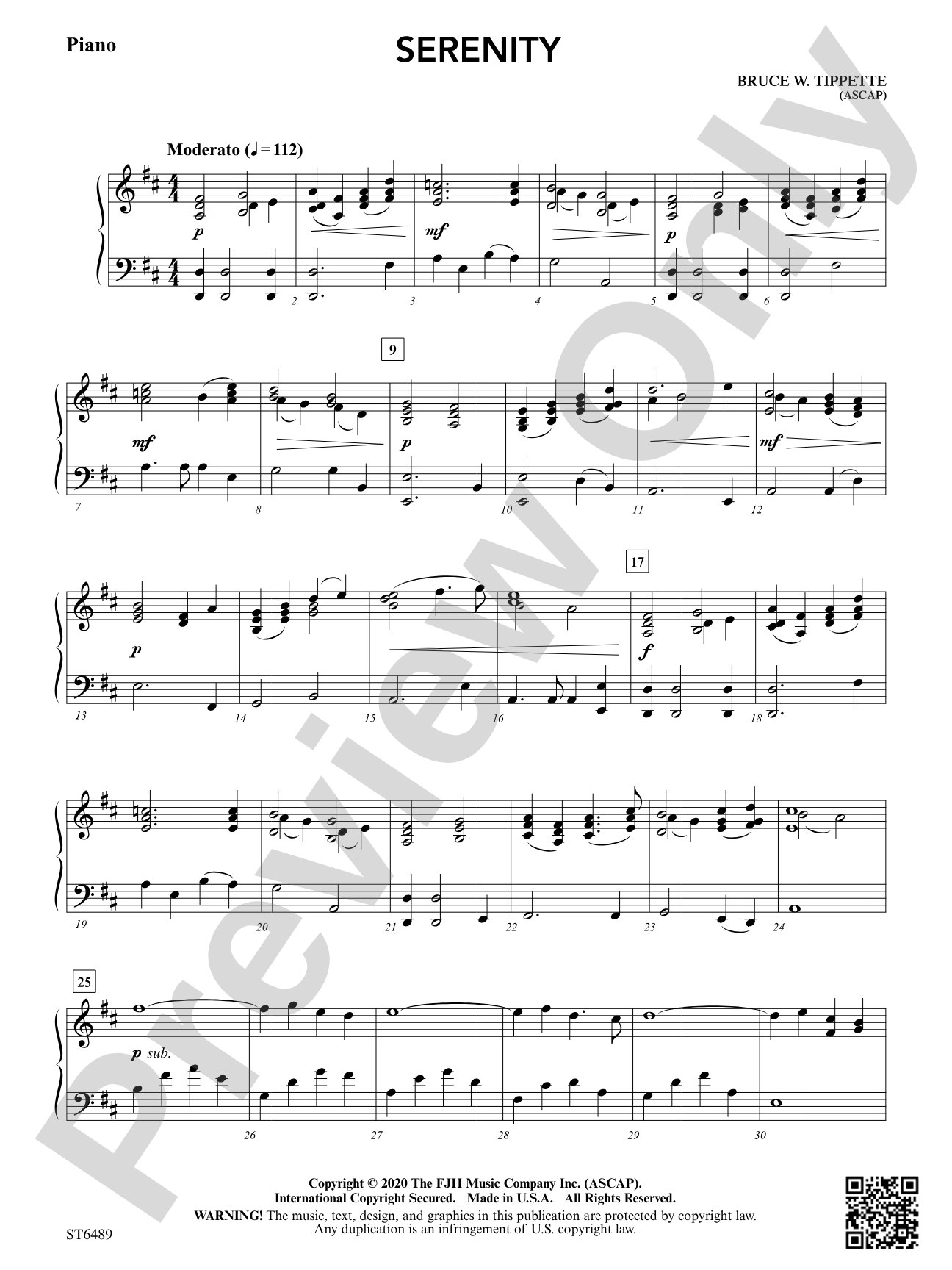
Serenity: Piano (opt.)

By Bruce W. Tippette

Grade: 2

Item: 98-PC-DST6489_OK

Digital Download
$7.00
Description
This expressive work aims to encapsulate the essence of serenity through its calm, moderate tempo and simple rhythms. A beautiful interplay between sweeping melodic lines and a gorgeous harmonic language provides unlimited potential for phrasing and music-making.

Serenity: Piano (opt.) isn't in MakeMusic Cloud just yet...but it could be. Let us know you'd like to see it, and you'll help shape what comes next. In the meantime, start a free trial and dive into thousands of interactive titles your students can play along with today.

Sample Audio
0:00
0:00
Sample Video
Additional Details
Series: FJH Developing Strings
Publisher: The FJH Music Company, Inc.
SKU: 98-PC-DST6489_OK

More about this title

About the Composer: Bruce W. Tippette

Bruce W. Tippette

Bruce W. Tippette earned his Master of Music in composition from the University of North Carolina School of the Arts and his Bachelor of Music in composition, theory, and music education from Appalachian State University. His concert works have been performed internationally, and he regularly receives commissions for choral and instrumental ensembles across multiple genres.

Beyond orchestral writing, Tippette has composed for choreographers, film, and collaborated on a children's musical. His orchestral work Unconquered won the 2012 Mary Starling Composition Competition and received multiple performances from the Winston-Salem Symphony. He was selected in 2012, 2013, and 2014 to create new works through an experimental partnership between Cirque du Soleil and UNCSA. Currently, he teaches composition, theory, piano, and voice at the Community Music School of UNCSA, directs youth music and handbells at Augsburg Lutheran Church, and serves as a collaborative pianist and rehearsal accompanist.

Why we love this

Tippette understands what Grade 2 ensembles can achieve without resorting to oversimplification. The harmonic language and phrasing opportunities reward thoughtful musicianship, while the moderate tempo and accessible rhythms let developing string players focus on tone production and ensemble balance rather than wrestling with technical demands. This is the kind of piece that sounds genuinely beautiful when played well and teaches players what they're actually listening for.

What to expect

Serenity lives in the sustained, unhurried space between reflection and gentle motion. Melodic lines float over a warm harmonic foundation, creating an atmosphere of calm attentiveness rather than complete stillness. The piece invites listeners into a moment of quiet clarity.

Who it's for

String orchestras at the Grade 2 level who are ready to move beyond note-reading into genuine expressive music-making. This work suits ensembles preparing for festivals and contests, as it showcases musicality and refined tone without requiring advanced technical facility.

How to get the most out of it

  • Shape the sweeping melodic lines with subtle dynamic waves rather than aggressive crescendos; the calmness comes from restraint and intentionality in phrasing.
  • Balance the interplay between melody and harmony by ensuring accompaniment figures support but never overwhelm the primary line; listen for transparency.
  • Let the moderate tempo breathe naturally; avoid the urge to rush through quiet passages, which often happens when players think 'calm' means 'slow.'

How to use it

Program this as a concert centerpiece when you want to highlight the artistic maturity of your ensemble without presenting a technically demanding showpiece. It pairs well alongside more energetic repertoire, offering contrast and demonstrating range. It also stands alone compellingly in festival or contest settings where adjudicators value musicianship.

Skills your students will build

  • Sustaining consistent tone across moderate phrase lengths
  • Responding to subtle dynamic and expressive shaping
  • Balancing melody and accompaniment within ensemble texture
  • Shaping longer melodic arcs with intentional phrasing
  • Listening for harmonic color and intonation stability

You May Also Like