
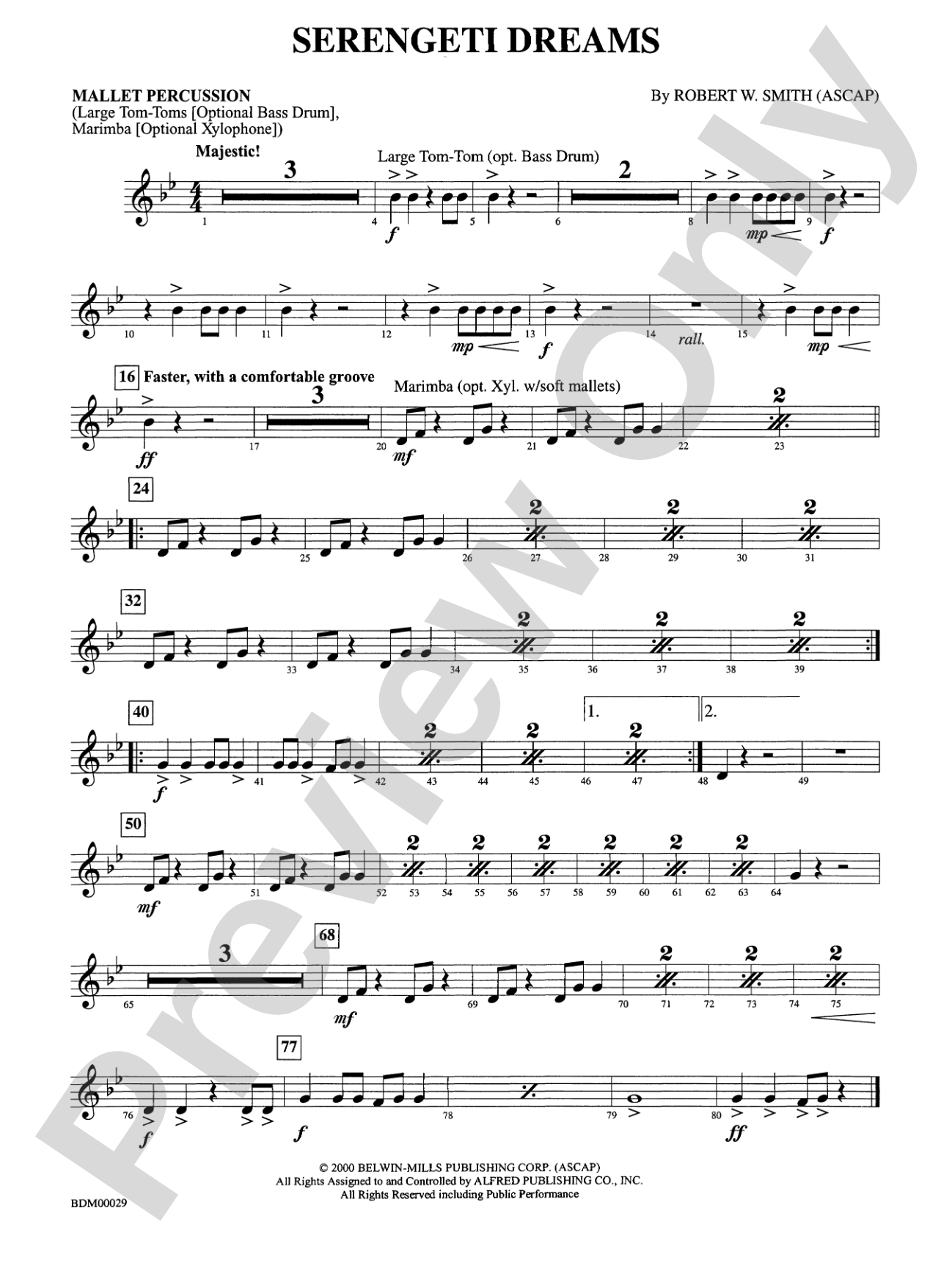

Serengeti Dreams: Mallets
By Robert W. Smith
Grade: 1 (Very Easy)
Item: 00-PC-0002123_M1
$3.00
Pickup currently not available
Description
Serengeti National Park, a wildlife refuge in northern Tanzania, East Africa serves as the inspiration for this work. Intended as an introduction to multicultural music for beginning instrumentalists, there are musical representations of the many exotic animal species found in the park. The beginning is majestic, depicting the hills and grassland ranges. A variety of interesting sounds in the wind and percussion sections culminates in a spectacular conclusion. (3:15) This title is available in MakeMusic Cloud.


Don't just read it, hear it, play along with it, and watch your students grow with it. In MakeMusic Cloud, Serengeti Dreams: Mallets comes alive with professional accompaniment, adjustable tempo, and built-in practice tools that turn solo practice into real progress.
Open in the Player
Jump straight in and assign it today.
Start Your Free Trial
Open this title and explore the full library in minutes.
Sample Audio
1
Audio File
--:--
0:00
0:00
Sample Video
Additional Details
Series:
Belwin Beginning Band
Publisher:
Alfred Music
Page Count:
154
SKU:
00-PC-0002123_M1
More about this title
About the Composer: Robert W. Smith

Robert W. Smith has established himself as a prolific voice in American band and orchestral composition, with over 400 works to his credit published primarily through Alfred Music. He holds degrees from Troy State University (Alabama) and the University of Miami, and his original compositions have been performed by ensembles across North America, Europe, Australia, and Asia.
Beyond the concert stage, Smith's work has reached audiences through television broadcasts, major national events, and cultural ceremonies. His symphonies, including The Divine Comedy and The Odyssey, and accessible band works like The Tempest have become repertoire standards. As a conductor and clinician, he has worked extensively throughout the United States, Canada, Japan, Australia, and Europe, bringing his expertise directly to musicians at all levels.
Why we love this
Smith crafts an engaging narrative arc that keeps beginners invested from the majestic opening through the animal-inspired middle sections to a satisfying climax. The programmatic approach transforms what could be a dry exercise in fundamentals into active storytelling, where students experience how orchestration and thematic material create vivid imagery. For a Grade 1 ensemble, this is sophisticated writing that respects young musicians' intelligence while staying within their technical grasp.
What to expect
The piece opens with the sweeping, golden light of African grasslands before shifting into a musical safari where each animal species arrives with its own character. Exotic percussion colors and playful instrumental combinations create wonder and movement, culminating in a triumphant celebration that feels earned and satisfying.
Who it's for
Beginning concert band students (Grade 1) who benefit from programmatic context to anchor their musicmaking. Directors building multicultural awareness and looking for accessible repertoire that challenges students to balance multiple textures and dynamic contrasts without overwhelming their technical abilities.
How to get the most out of it
- Build contrast between the opening majestic section and the animal portraits that follow by adjusting dynamics and articulation rather than tempo; a conductor's clear gesture here helps students understand character without overcomplicating their individual parts.
- Balance the exotic percussion and wind colors in the middle section by bringing out secondary melodic lines and counter-melodies; this prevents the piece from sounding cluttered even though many sections are active.
- Shape the conclusion as a true climax by gradually increasing energy through the final buildup; give the ensemble permission to play with momentum and confidence here, as this is where the piece rewards their effort.
How to use it
Program this as an opening piece on a concert featuring diverse world music or nature-inspired works, where its approachable musicality can warm an audience before more challenging selections. It works equally well as a festival or contest entry that demonstrates ensemble musicianship and artistic intent at an early developmental level.
Skills your students will build
- Balance and blend in ensemble contexts with varied instrumental doublings
- Dynamic control across a wide range (soft animal themes to powerful conclusion)
- Clear articulation of staccato and legato passages in rapid succession
- Reading and responding to descriptive musical language and programmatic intent
- Sustained tone quality and breath control in longer lyrical phrases