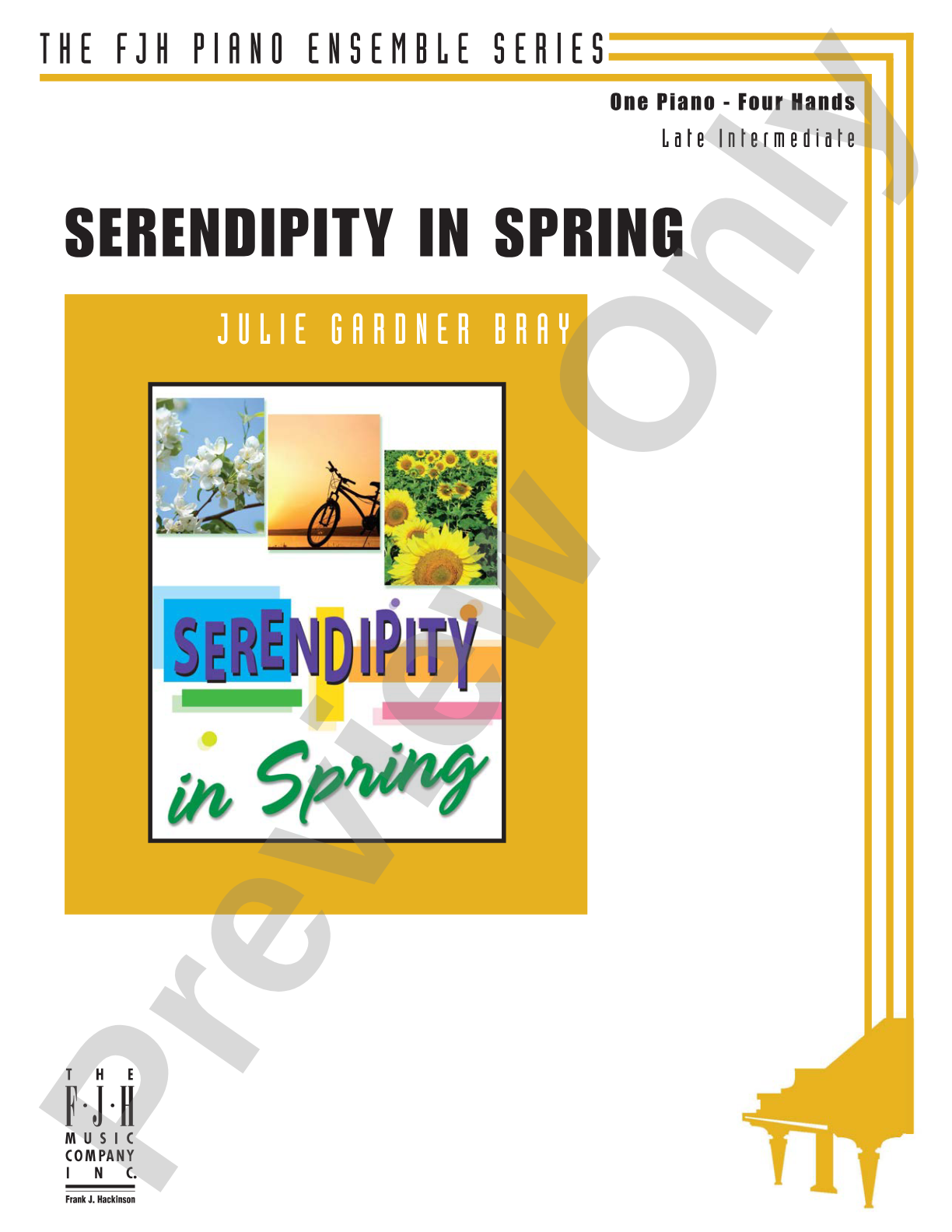
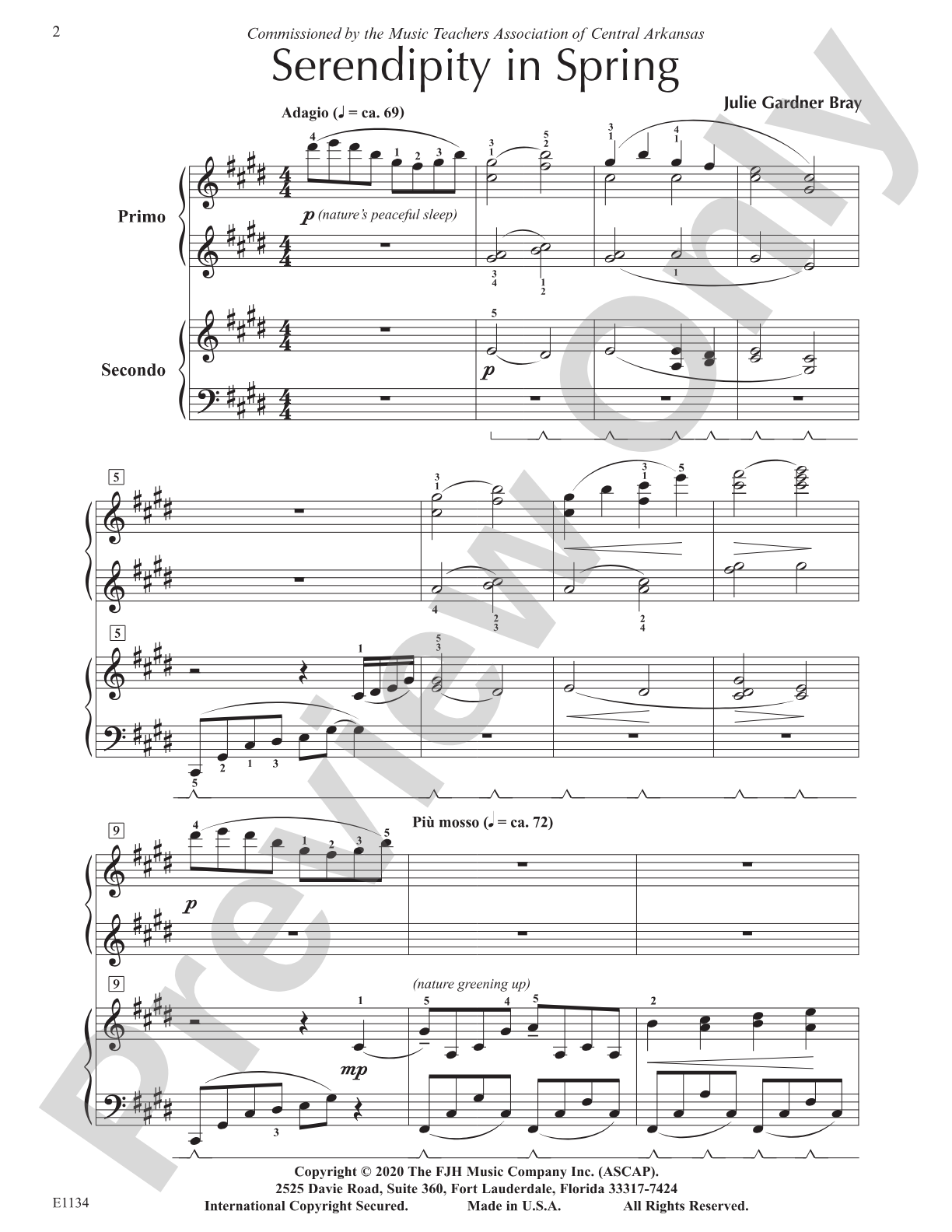
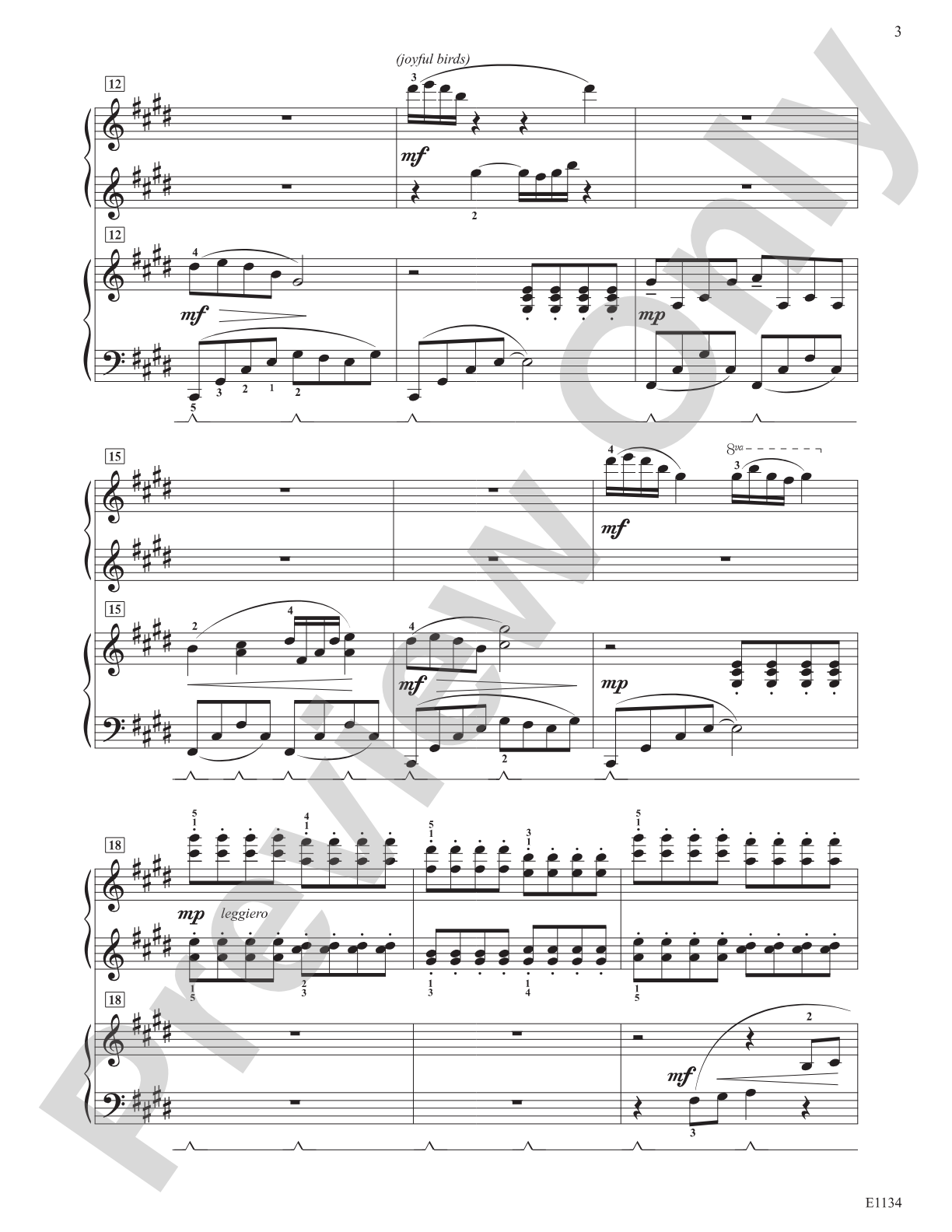
Appropriately named, this colorful piece is a tone poem that evokes the earth awakening to spring. The lush harmonies exploit the full range of the keyboard with frequent modulations to new keys. The thematic material is seamlessly woven into both parts. Often the primo and secondo hands are very close to each other. The composer includes short phrases above the staff such as “swaying branches”, “fragrant rain”, and “flowers blooming” plus others to depict the various sense of spring. Good piece for an experienced duet team.
Discover MakeMusic Cloud: thousands of interactive titles your students can play along with today.
Julie Gardner Bray brings a lyrical sensibility to contemporary piano writing, with a particular gift for descriptive works that challenge intermediate players without sacrificing musicality. Her compositions for piano duet have become staples in teaching studios and student recitals, valued for their accessible difficulty and genuine musical substance.
Why we love this
The descriptive phrases embedded throughout the score transform what could be a technical exercise into a genuine interpretive experience. Students must think beyond the notes and imagine swaying branches and fragrant rain, which deepens their connection to the music and keeps the piece engaging across multiple rehearsals.
What to expect
Serendipity in Spring unfolds like a garden coming to life. The piece moves through waves of harmonic warmth and textural shifts that mirror the gradual awakening of nature, from quiet renewal to full flourishing. Rich chords and the full keyboard range create a landscape that feels generous and alive.
Who it's for
Intermediate to late intermediate pianists with reliable hand independence and the maturity to interpret descriptive direction. This piece works best for established duet teams who have already built comfort playing in close proximity and are ready to tackle shifting textures across modulations.
How to get the most out of it
Study the hand positioning carefully at transitions where primo and secondo move close together; this prevents collisions and allows both parts to breathe as equal voices rather than relegating one to accompaniment.
Let the modulations guide your sense of harmonic color rather than treating them as theoretical surprises; each key change supports the imagery Bray provides, so lean into those tonal shifts.
Balance the thematic material between parts so the listener hears a conversation happening across the keyboard, not a melody with accompaniment underneath.
Use the lush harmonic texture to your advantage in slower passages, allowing resonance to build before moving to the next section.
How to use it
Program this as a spring recital anchor piece that shows off duet work to engaged listeners. The programmatic content and vivid imagery make it particularly effective in thematic concerts or student showcases where the piano's storytelling capacity deserves a spotlight.
Skills your students will build
Ensemble balance and shared phrasing across two keyboards
Hand coordination when primo and secondo parts approach or overlap
Voice leading through modulations to new key centers
Interpretive coloring based on descriptive imagery and text
Full-keyboard texture awareness and dynamic control across wider ranges
You May Also Like
Scan to Complete Your Purchase
Use your phone's camera to scan the code below
You'll log in on your phone and the order will be added to your account