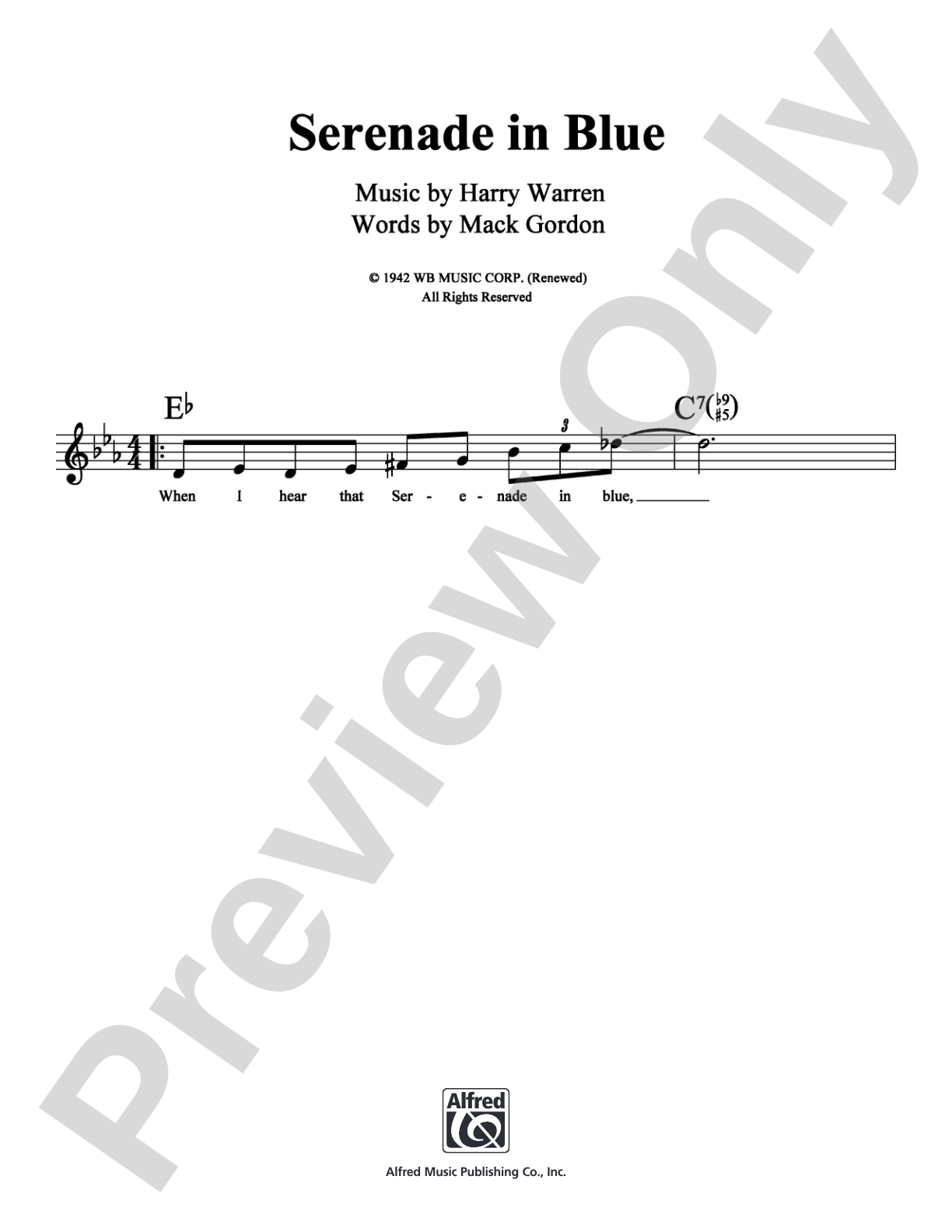
Serenade in Blue: Lead Sheet Digital Sheet Music

Serenade in Blue: Lead Sheet Digital Sheet Music

Harry Warren, Glenn Miller

Item: 00-PS-0006952

Digital Download
$1.99
Description

Serenade in Blue: Lead Sheet Digital Sheet Music isn't in MakeMusic Cloud just yet...but it could be. Let us know you'd like to see it, and you'll help shape what comes next. In the meantime, start a free trial and dive into thousands of interactive titles your students can play along with today.

Sample Audio
No sample audio found.
Sample Video
Additional Details
SKU: 00-PS-0006952

More about this title

About the Artist: Glenn Miller

Glenn Miller (1904–1944) led one of the most commercially successful big bands of the swing era, developing a distinctive sound that combined jazz sophistication with popular accessibility. His orchestra's tight arrangements and signature clarinet-over-saxophones voicing became instantly recognizable on radio and in film, establishing a template for swing that influenced generations of bandleaders and composers.

Why we love this

Serenade in Blue captures the elegance and melodic sophistication that made Miller's arrangements enduring models for modern jazz and pop ensembles. The lead sheet format lets musicians of any instrumentation and skill level tackle this standard while studying how Miller's era voiced melody and accompaniment.

What to expect

Serenade in Blue unfolds with unhurried elegance and a touch of romantic wistfulness. The melody floats above warm harmonic movement, evoking the intimate atmosphere of a 1940s ballroom where orchestral refinement meets genuine swing sensibility.

Who it's for

Jazz musicians preparing lead sheet repertoire, pop and standards vocalists, piano and guitar accompanists building jazz voicing vocabulary, and ensemble directors seeking authentic swing-era material for student performance. Anyone learning to read and interpret chord changes in a classic American song will benefit from this standard.

How to get the most out of it

  • Sing or play the melody with a warm, legato phrasing that mirrors the vocal character of the original recording.
  • Treat the chord symbols as a guide for comping and accompaniment voices; Miller's orchestration relied on lush, closely voiced harmonies that fill space without cluttering the melody line.
  • Establish a steady, relaxed tempo that leans toward the ballad side; rushing the time will flatten the song's lyrical quality.
  • Experiment with walking bass, blocked accompaniment, or sparse comping depending on your ensemble's instrumentation and the desired aesthetic.

How to use it

Include this in a jazz combo or standards night where students can explore authentic swing-era repertoire at a slower, more introspective tempo than uptempo jazz numbers. It pairs naturally with other Miller-era ballads and offers an accessible entry point for ensembles mixing classical training with popular music studies.

Skills your students will build

  • Reading and interpreting lead sheet chord symbols
  • Phrasing and interpretation of jazz ballads
  • Voicing harmonic accompaniment from changes
  • Understanding swing-era arranging conventions and instrumental balance

You May Also Like