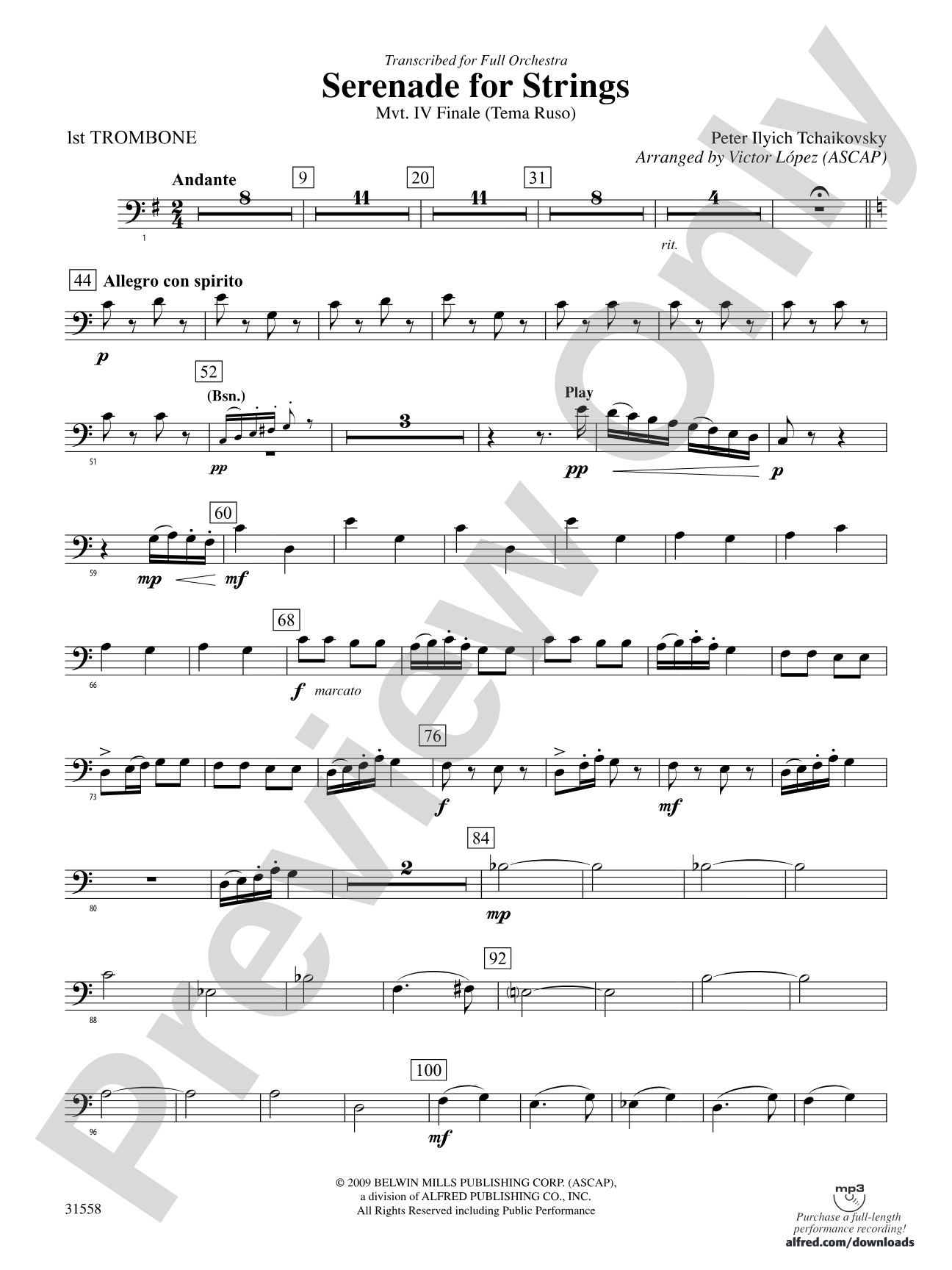
Serenade for Strings Mvt. IV Finale (Tema Ruso): 1st Trombone Sheet Music Preview

Serenade for Strings Mvt. IV Finale (Tema Ruso): 1st Trombone

By Peter Ilyich Tchaikovsky / arr. Victor López

Grade: 5

Item: 00-PC-0001739_TN1

Digital Download
$3.00
Description
Finally, a fantastic transcription for full orchestra of this much-beloved string piece! While true to the original, the addition of the winds serves to provide even deeper sonority and allows some flexibility in the number of string and wind players needed for a complete performance.

Don't just read it, hear it, play along with it, and watch your students grow with it. In MakeMusic Cloud, Serenade for Strings Mvt. IV Finale (Tema Ruso): 1st Trombone comes alive with professional accompaniment, adjustable tempo, and built-in practice tools that turn solo practice into real progress.

Sample Audio
0:00
0:00
Sample Video
Additional Details
Series: Belwin Concert Full Orchestra
Publisher: Alfred Music
Page Count: 228
SKU: 00-PC-0001739_TN1

More about this title

About the Composer: Peter Ilyich Tchaikovsky

Pyotr Ilyich Tchaikovsky (1840-1893) stands among the most performed composers of the Romantic era, and for good reason: his melodic gift, orchestral color, and emotional directness resonate across centuries and cultures. A Russian conservatory graduate who later taught composition, Tchaikovsky synthesized Western European forms with Russian nationalism, creating works that balance formal sophistication with immediate, visceral appeal.

Why we love this

Victor López's orchestration expands this beloved string serenade into full orchestra territory without sacrificing the intimacy and elegance of the original. The addition of winds enriches the harmonic palette while the conductor score remains clean and readable, and the flexibility to scale your wind or string sections up and down means you're not locked into a single instrumentation formula. A Grade 5 piece with this caliber of musical substance and orchestral color is refreshingly rare.

What to expect

Russian warmth meets symphonic grandeur. The Tema Ruso flows with the lyrical ease of a folk melody, but López's orchestration gives it the weight and shimmer of a full romantic-era ensemble. The finale unfolds with propulsive energy and genuine climactic sweep, never losing sight of the tune's inherent grace.

Who it's for

Orchestra directors seeking a substantial concert or festival piece that sits comfortably at Grade 5 and speaks to audiences of all ages. This arrangement works equally well for schools with robust wind sections looking for a showpiece and ensembles building from a smaller string foundation.

How to get the most out of it

  • Balance the string and wind sections carefully in rehearsal; López's orchestration gives winds important harmonic material that can easily overshadow the essential string melody lines if not monitored.
  • Establish the Russian character of the theme early; this is folk-inflected material that benefits from a warm, singing approach rather than a clipped or overly formal one.
  • Use sectional rehearsals to lock the rhythmic ensemble between strings and winds before full orchestra run-throughs; the transition points between sections are where precision matters most.
  • Shape the finale's climactic moments with clear dynamic intent; the accumulation of orchestral texture needs direction and momentum to avoid sounding thick or static.

How to use it

Program this as a concert centerpiece that opens doors to Tchaikovsky without demanding the rehearsal intensity of his larger works. It also serves well as a festival submission that showcases both string and wind sections, or as a bridge piece between lighter fare and the standard Romantic repertoire your orchestra is building toward.

Skills your students will build

  • Reading full orchestral texture and balancing multiple independent lines
  • Shaping Romantic-era phrasing across a sustained melodic arc
  • Coordinating articulation and dynamics across instrument families
  • Interpreting Russian character and folk-influenced melodic inflection
  • Building sectional independence while maintaining ensemble cohesion

You May Also Like