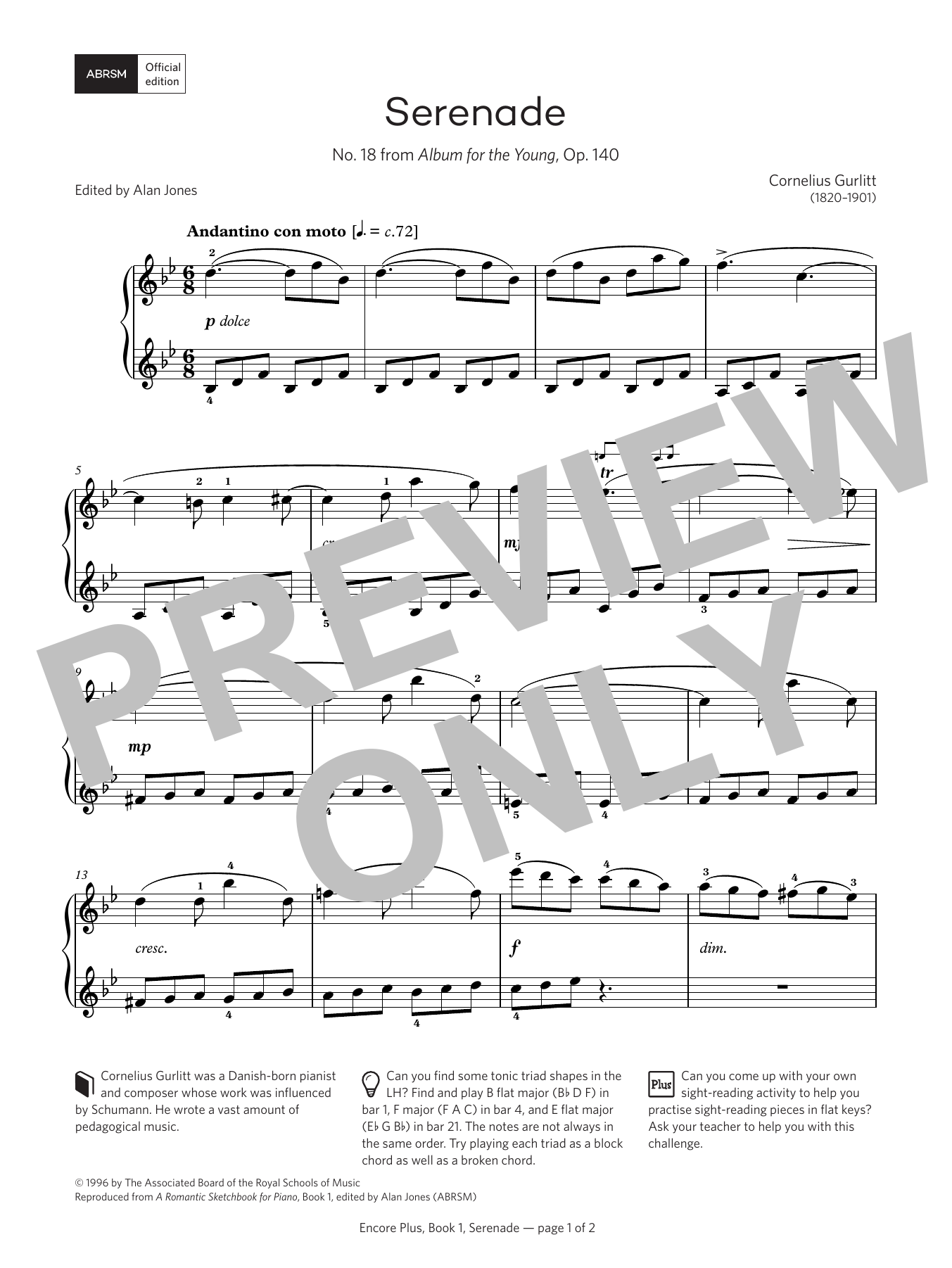
Serenade (Encore Plus, Book 1) Sheet Music Preview

Serenade (Encore Plus, Book 1): Piano Solo

By Cornelius Gurlitt

Grade: 2

Item: 35-DS01989316

Digital Download
$3.99
Description

Discover MakeMusic Cloud: thousands of interactive titles your students can play along with today.

Sample Audio
No sample audio found.
Sample Video
Additional Details
Publisher: Hal Leonard
Page Count: 2
SKU: 35-DS01989316

More about this title

About the Composer: Cornelius Gurlitt

Cornelius Gurlitt (1820-1901) was a German composer and pedagogue whose prolific output of teaching pieces shaped piano instruction across generations. His progressive approach to composition for young pianists emphasized musical substance over technical display, creating works that sounded accomplished while remaining genuinely playable at early levels.

Gurlitt's legacy rests on his understanding that students don't need simplified versions of "real" music; they need real music written for their hands and ears. His pieces remain staples in method books and collections precisely because they treat young learners as musicians first.

Why we love this

Grade 2 students rarely encounter pieces this charming and musically complete. Gurlitt writes melodies that sing naturally, textures that support rather than overwhelm, and harmonic language that feels sophisticated without requiring advanced technique. Students leave the practice room understanding that elegant playing doesn't demand pyrotechnics.

What to expect

A quiet conversation at dusk, unhurried and thoughtful. The music unfolds with the gentleness of a serenade, offering moments of simple beauty that feel far more substantial than the modest technical demands suggest.

Who it's for

Early intermediate pianists ready to move beyond exercise-based repertoire into genuine musical expression. This piece rewards students who can manage basic technique and want to experience how refined musicianship emerges from clarity and restraint.

How to get the most out of it

  • Shape the melody with consistent legato touch; let the hand weight sink into each note rather than striking the keys.
  • Listen for the harmonic movement beneath the melody line and allow subtle rubato to breathe with those shifts.
  • Practice the accompaniment pattern separately until it sits as automatic muscle memory, freeing your attention for melodic expression.
  • Keep the tempo steady and unhurried; serenades gain their character from gentle pacing, not speed.

How to use it

Program this in the first half of a student recital as a palette cleanser between more dramatic works, or use it to open a studio class and set a tone of musical maturity. It also works beautifully as an encore piece that leaves audiences with a sense of grace.

Skills your students will build

  • Legato phrasing across hand position changes
  • Balancing melody against accompaniment texture
  • Maintaining even rhythm in repetitive accompaniment figures
  • Shaping musical phrases without sudden dynamic shifts
  • Reading treble clef with occasional accidentals

You May Also Like