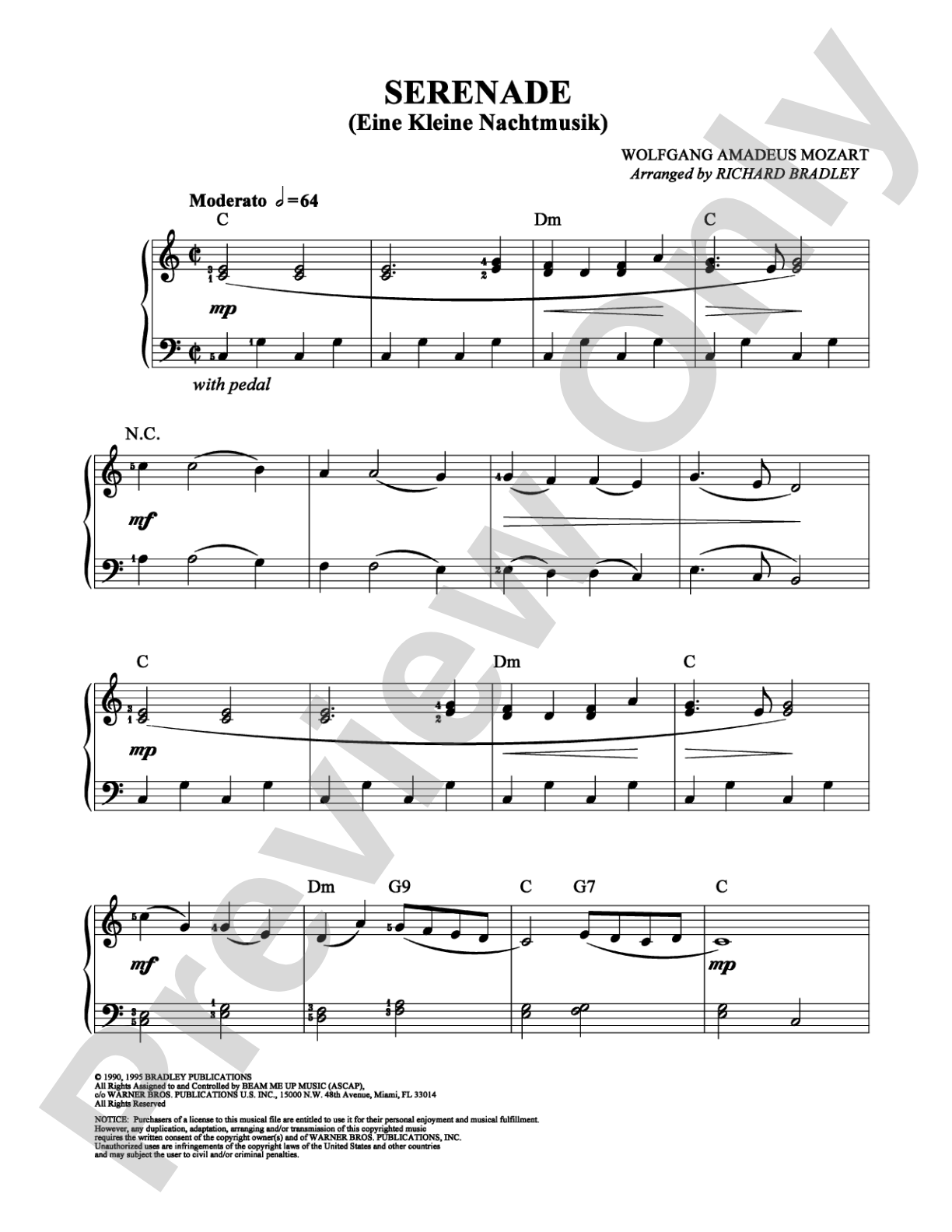
Serenade: Easy Piano Digital Sheet Music

Serenade: Easy Piano Digital Sheet Music

Wolfgang Amadeus Mozart

Item: 00-PS-0000206

Digital Download
$3.99
Description

Serenade: Easy Piano Digital Sheet Music isn't in MakeMusic Cloud just yet...but it could be. Let us know you'd like to see it, and you'll help shape what comes next. In the meantime, start a free trial and dive into thousands of interactive titles your students can play along with today.

Sample Audio
No sample audio found.
Sample Video
Additional Details
SKU: 00-PS-0000206

More about this title

About the Composer: Wolfgang Amadeus Mozart

Wolfgang Amadeus Mozart (1756-1791) was an Austrian composer whose prolific output spanned symphonies, concertos, operas, and chamber music across nearly three decades. His works remain foundational to music education because they balance structural clarity with emotional depth, making them ideal teaching tools for students learning phrasing, harmonic progression, and elegant melodic writing.

Why we love this

Mozart's serenades for piano translate beautifully to accessible arrangements because his melodies are so naturally singable and his textures so clean. This easy version preserves the charm and proportional elegance of the original while keeping technical demands within reach for developing pianists, making it an excellent piece for students building confidence without sacrificing musical substance.

What to expect

A graceful, unhurried miniature that invites listeners into an intimate drawing room. The melodic lines flow with characteristic Mozart elegance, supported by gentle accompaniment that never overwhelms the singing quality of the upper voice.

Who it's for

Early intermediate pianists (typically grades 3-5) will find this arrangement accessible and rewarding. It suits students ready to move beyond simplified folk melodies but still building finger strength and sustaining longer musical phrases.

How to get the most out of it

  • Shape the melody with gentle dynamic shaping rather than rigid interpretation; let the phrasing breathe naturally across the phrase boundaries.
  • Approach hand independence carefully in any sections where the melody and accompaniment patterns diverge; practice them separately at tempo before combining.
  • Maintain consistent pedal awareness even at an easy level; Mozart's harmonies benefit from subtle color without muddying the texture.

How to use it

Include this in a student recital when you need a piece that demonstrates musicality and restraint alongside technical growth. It pairs well with folk song arrangements or other Classical-era miniatures, and its moderate length makes it suitable for programs mixing solo piano with chamber or band selections.

Skills your students will build

  • Sustaining long melodic phrases with consistent tone production
  • Hand independence between melody and accompaniment
  • Pedal control and judicious use of resonance
  • Interpretation of Classical-era style conventions
  • Attention to proportional phrasing and harmonic structure

You May Also Like