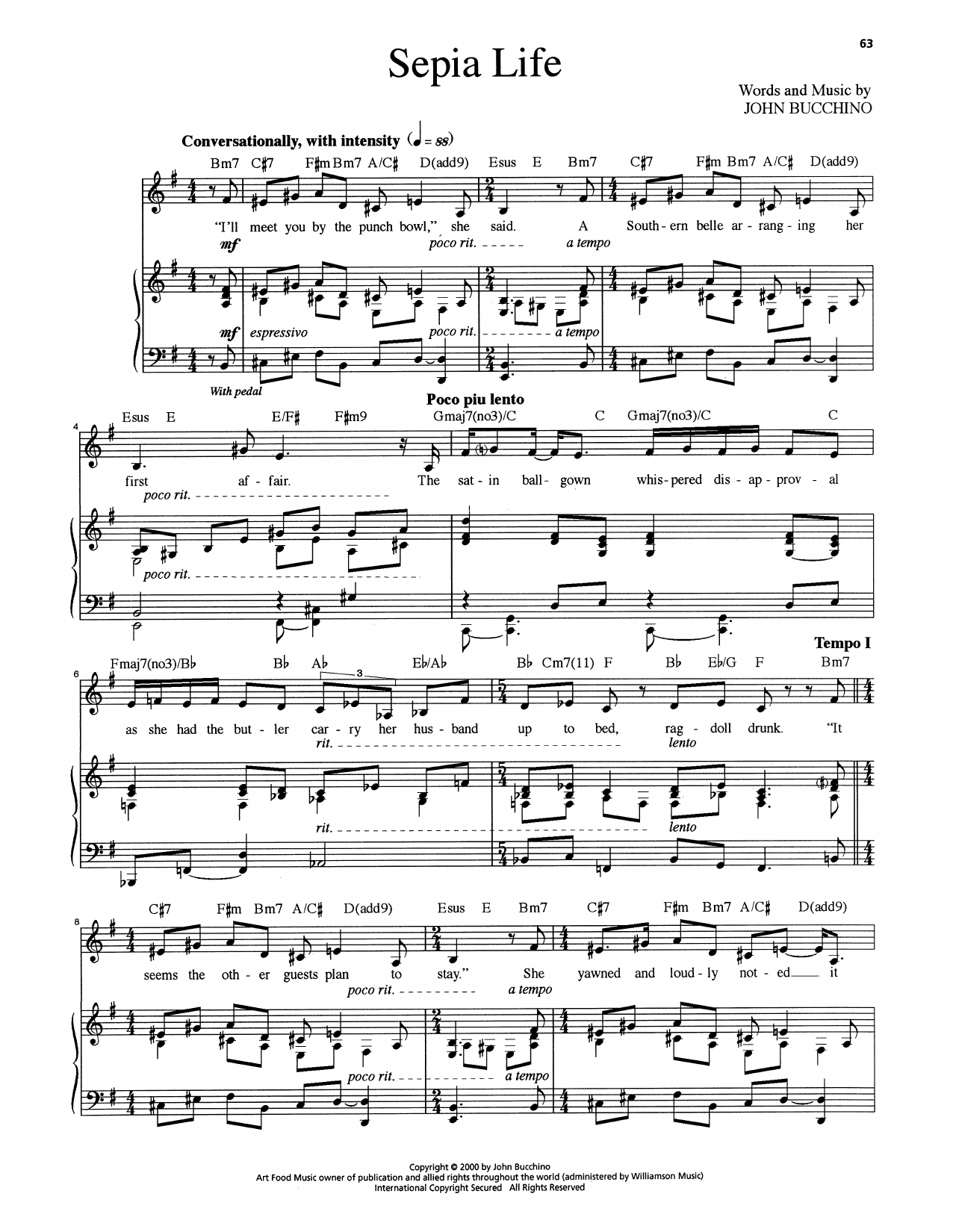
Sepia Life Sheet Music Preview

Sepia Life: Piano Vocal

As performed by John Bucchino / As performed by Andrea Marcovicci

Item: 35-DS01744359

Digital Download
$5.99
Description

Sepia Life: Piano Vocal isn't in MakeMusic Cloud just yet...but it could be. Let us know you'd like to see it, and you'll help shape what comes next. In the meantime, start a free trial and dive into thousands of interactive titles your students can play along with today.

Sample Audio
No sample audio found.
Sample Video
Additional Details
Publisher: Hal Leonard
Page Count: 5
SKU: 35-DS01744359

More about this title

About the Artist: John Bucchino

John Bucchino is a composer and lyricist whose work bridges art song and contemporary musical theater. His compositions are rooted in storytelling, with careful attention to text setting and emotional architecture. For music educators, his catalog offers accessible yet sophisticated material that develops interpretive depth without requiring virtuosic technical demands.

Bucchino's songs have become staples in voice studios and recital programs because they reward both performer and listener with memorable melodies and meaningful lyrics. His collaborations with artists like Andrea Marcovicci have helped establish new standards for the American art song tradition.

Why we love this

Bucchino crafts narratives with genuine emotional weight, and "Sepia Life" exemplifies his gift for pairing introspective lyrics with piano writing that enhances rather than overshadows the voice. This is the kind of repertoire that teaches singers how to balance vulnerability with technical control, and pianists how accompanying means listening actively.

What to expect

The sepia tone of the title suggests nostalgia and faded memory, inviting a performer to inhabit a moment of reflection. Bucchino's melodic gift makes the song feel instantly familiar even on first hearing, while the lyrical content and harmonic choices create genuine emotional resonance.

Who it's for

This song suits vocalists working on art song repertoire and contemporary classical material. It works equally well in voice lessons, student recitals, or chamber performances where intimate storytelling takes priority over spectacle.

How to get the most out of it

  • Shape the vocal line by following the natural cadences of the text; Bucchino's phrasing typically aligns with language patterns rather than squaring off into regular four-bar units.
  • Balance the piano accompaniment carefully so that both the harmonic foundation and any countermelodic material remain transparent to the vocalist's line.
  • Allow for organic rubato in moments of lyrical reflection, grounding it in the harmonic rhythm rather than becoming undisciplined.
  • Collaborate closely with your pianist during rehearsal to identify places where the accompaniment suggests a specific mood or tempo adjustment.

How to use it

Pair this with other art songs from the American classical tradition to create a recital section devoted to personal narrative and memory. It also serves as a bridge piece between more technically demanding selections, offering your audience a moment to settle into quiet listening.

Skills your students will build

  • Legit vocal technique with lyrical phrasing in American art song idiom
  • Text interpretation and emotional communication at a sophisticated level
  • Collaboration between vocalist and pianist; ensemble listening
  • Navigation of through-composed or song-form structures with subtle harmonic language

You May Also Like