Separate Ways (Worlds Apart): Drums Sheet Music Preview

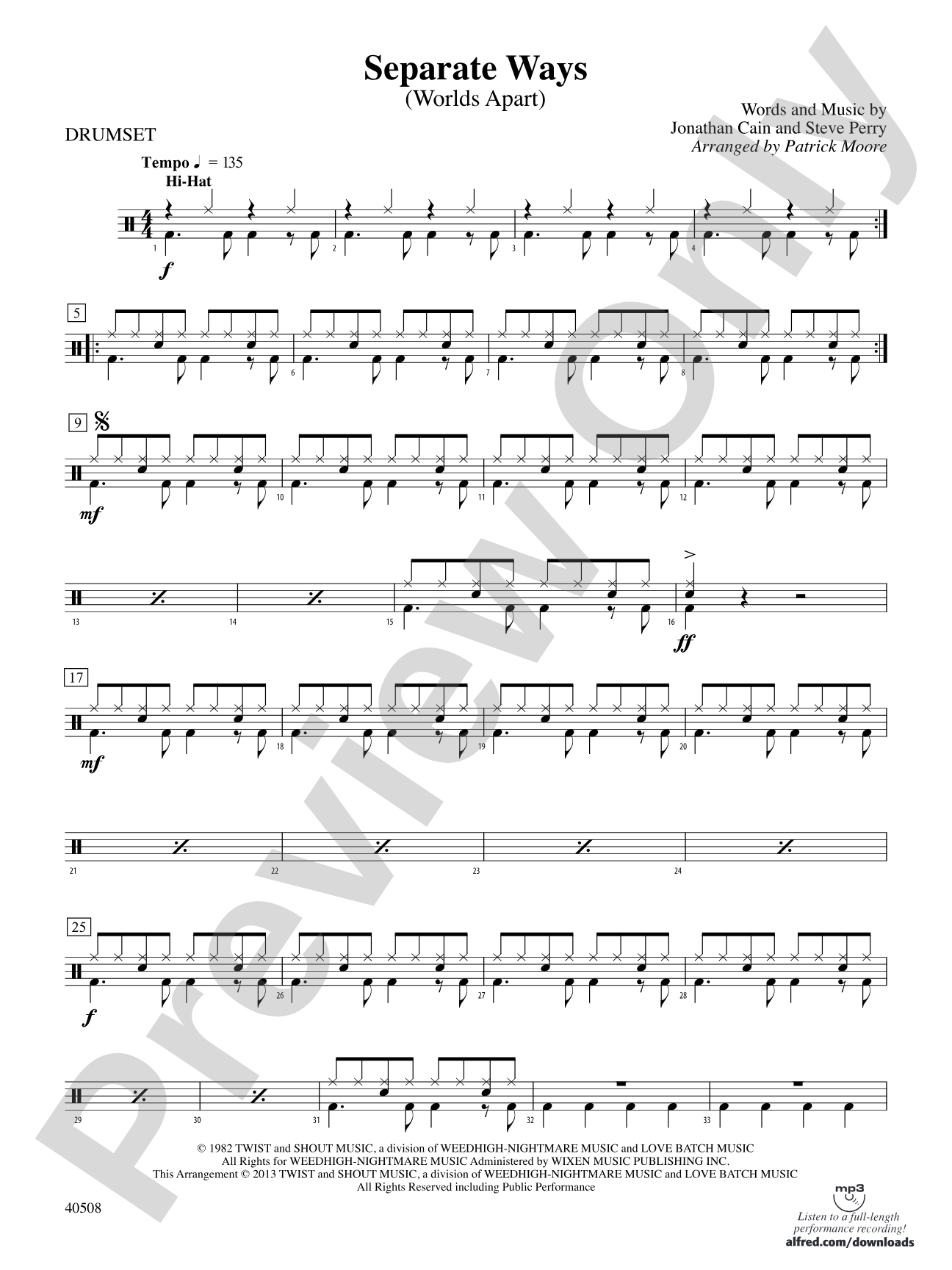
Separate Ways (Worlds Apart): Drums

(For 10 Players)

Words and music by Jonathan Cain and Steve Perry [Journey] / arr. Patrick Moore

Item: 00-PC-0016030_D

Digital Download
$3.00
Description
"Separate Ways" is a song by Journey from their album Frontiers. Released as a single, it peaked at No. 8 for six consecutive weeks on the Billboard Hot 100, and spent four weeks at No. 1. Now arranged for percussion ensemble, it will make a great selection for your next concert program. Instrumentation: orchestra bells, xylophone, vibraphone, marimba 1, marimba 2, electric bass, timpani, chimes, congas, drumset.

Don't just read it, hear it, play along with it, and watch your students grow with it. In MakeMusic Cloud, Separate Ways (Worlds Apart): Drums comes alive with professional accompaniment, adjustable tempo, and built-in practice tools that turn solo practice into real progress.

Sample Audio
No sample audio found.
Sample Video
Additional Details
Series: Alfred's Pop Percussion Ensemble Series
Publisher: Alfred Music
Page Count: 36
SKU: 00-PC-0016030_D

More about this title

About the Composer: Jonathan Cain

Jonathan Cain joined Journey in 1980 as keyboardist and became a principal songwriter for the band during their most commercially successful period. He co-wrote "Separate Ways (Worlds Apart)" with vocalist Steve Perry, crafting one of the group's signature hits that defined arena rock in the 1980s. Cain's work demonstrates a gift for melody and structural clarity that translates effectively to ensemble arrangements across multiple musical contexts.

Why we love this

This arrangement captures the propulsive energy and melodic hooks that made "Separate Ways" a chart staple while creating a percussion-specific challenge that goes well beyond simple rhythm section parts. The variety of mallet and percussion voices across ten instruments keeps every player engaged with meaningful musical material, and the Grade 3 accessibility means ensembles can succeed with it while still developing solid rhythmic independence and independence between parts.

What to expect

The driving pulse and synth-era sensibility of the original translates into a kinetic percussion landscape where bright mallets dance over a solid rhythmic foundation. There's an urgency to the melodic lines and a satisfying weight to the full ensemble moments that captures the song's emotional arc from yearning verse to anthemic chorus.

Who it's for

Percussion ensembles with players at intermediate level who can manage independent parts and coordinate across pitched and unpitched instruments. Directors seeking contemporary rock repertoire that avoids both cliché and oversimplification will find this arrangement delivers both accessibility and musical substance.

How to get the most out of it

  • Balance the melodic line between vibraphone and marimba 1 so the hook reads clearly even as the full ensemble fills in; resist the urge to let the rhythm section overpower the tune.
  • Lock the electric bass and drumset pocket tightly in the opening sections; this foundation makes the stacked mallet textures sit cleanly rather than feeling muddy.
  • Shape the chimes and congas parts as color rather than timekeeping; they add texture best when they breathe with the phrasing rather than competing for attention.
  • Emphasize the xylophone's bright articulation in countermelodies and fills to create separation between it and the warmer marimba voices.

How to use it

Program this alongside other contemporary pop or rock arrangements to create a concert section with immediate appeal to audiences and students alike. It works particularly well as a first-half closer or as a contrast to classical or jazz repertoire, and it's substantial enough (36 pages) to anchor a concert program without requiring additional padding.

Skills your students will build

  • Reading multiple staves and tracking individual parts in a dense ensemble texture
  • Maintaining steady timekeeping while playing syncopated rhythmic figures
  • Balancing volume and blend across pitched percussion (mallets) and unpitched percussion (drums, cymbals)
  • Rhythmic independence between rhythm section and melodic voices
  • Dynamic control on mallet instruments to support phrasing and articulation

You May Also Like