Sentimental Journey Sheet Music Preview

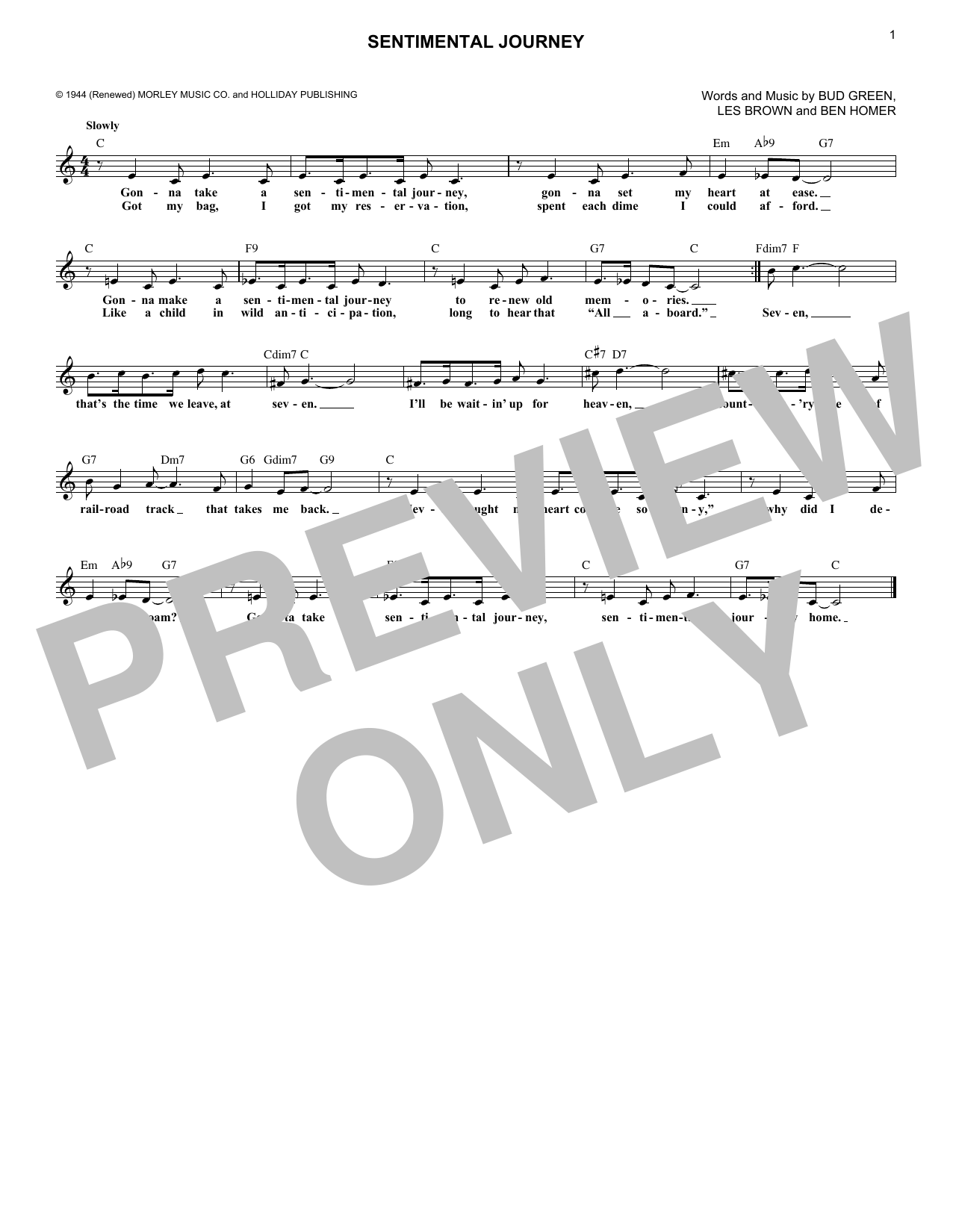
Sentimental Journey: Lead Sheet / Fake Book

As performed by Doris Day

Item: 35-DS00460677

Digital Download
$3.99
Description

Sentimental Journey: Lead Sheet / Fake Book isn't in MakeMusic Cloud just yet...but it could be. Let us know you'd like to see it, and you'll help shape what comes next. In the meantime, start a free trial and dive into thousands of interactive titles your students can play along with today.

Sample Audio
No sample audio found.
Sample Video
Additional Details
Publisher: Hal Leonard
Page Count: 1
SKU: 35-DS00460677

More about this title

About the Artist: Doris Day

Doris Day was one of the most successful recording artists of the mid-twentieth century, known for her warm contralto and impeccable phrasing across jazz, pop, and musical theater repertoire. Her interpretations of American standards became definitive recordings that continue to serve as models for singers seeking clarity, emotional restraint, and sophisticated swing.

Why we love this

This lead sheet captures a standard that rewards singers who understand the balance between rhythmic precision and rubato. The melody sits naturally for voices across multiple ranges, making it accessible for student singers while offering enough harmonic interest to challenge pianists who want to voice thoughtfully.

What to expect

Nostalgic without sentimentality, warm without saccharine sweetness. The melody unfolds with a gentle lilt that invites both straightforward interpretations and subtle swing inflections, evoking the golden age of vocal recordings when clarity and emotion coexisted naturally.

Who it's for

Vocalists exploring the American songbook and wanting access to clean lead sheet charts that include chord symbols for improvisation and comping. Pianists building their jazz standards repertoire and seeking scores that balance playability with harmonic sophistication.

How to get the most out of it

  • Shape the opening phrase with subtle dynamic growth; resist the urge to front-load the emotion in measure one.
  • Treat the jazz seventh and ninth chords as color rather than obstacles. Let them sit in the harmony without overcomplicating voicings.
  • Lock the melody to the beat on syncopated passages, then allow gentle rubato during sustained notes to breathe the lyric.
  • Consider the keyboard part as a conversational partner to the vocal line rather than accompaniment. Leave space for the voice to speak.

How to use it

Pair this with other mid-century standards in a "Timeless Songs" recital or jazz appreciation concert, or use it as a teaching vehicle for students learning to navigate real book charts and basic jazz comping. It works well as a vocalist's encore or lighter second half offering.

Skills your students will build

  • Reading and interpreting lead sheets with jazz chord symbols
  • Vocal phrasing across a 32-bar song form (AABA structure)
  • Comping patterns and voicing choices for jazz standards
  • Balancing metric precision with expressive rubato
  • Understanding chord substitutions and harmonic color in popular song

You May Also Like