
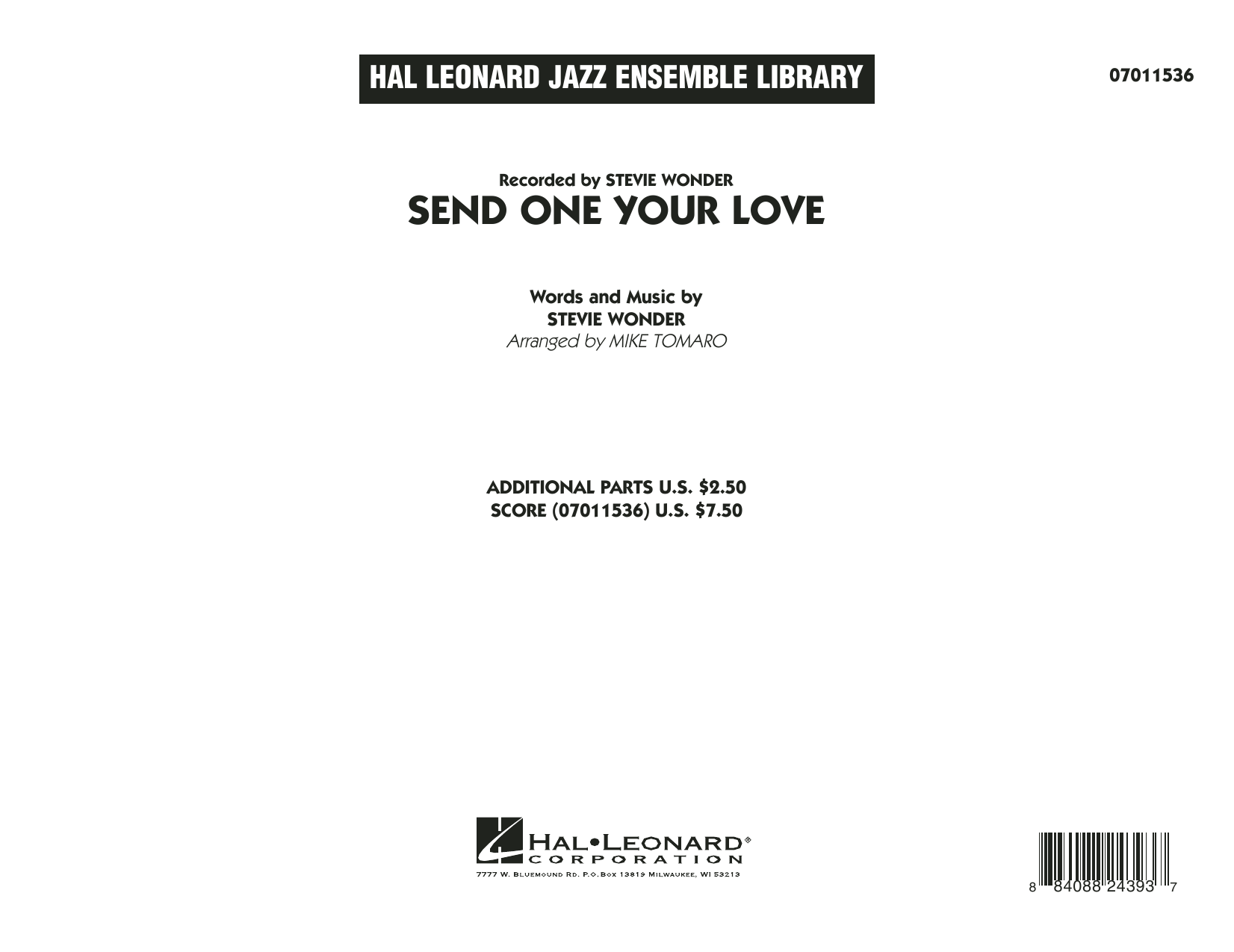

Send One Your Love: Jazz Ensemble Conductor Score & Parts
By Stevie Wonder / Arranged by Mike Tomaro
Grade: 4
Item: 35-PK00118512
$50.00
Pickup currently not available
Buy Extra Parts (Digital PDF Download)
| Product | Price | Quantity |
|---|---|---|
| Send One Your Love - Conductor Score (Full Score) | $7.50 | |
| Send One Your Love - Alto Sax 1 | $6.00 | |
| Send One Your Love - Alto Sax 2 | $6.00 | |
| Send One Your Love - Tenor Sax 1 | $6.00 | |
| Send One Your Love - Tenor Sax 2 | $6.00 | |
| Send One Your Love - Baritone Sax | $6.00 | |
| Send One Your Love - Trumpet 1 | $6.00 | |
| Send One Your Love - Trumpet 2 | $6.00 | |
| Send One Your Love - Trumpet 3 | $6.00 | |
| Send One Your Love - Trumpet 4 | $6.00 | |
| Send One Your Love - Trombone 1 | $6.00 | |
| Send One Your Love - Trombone 2 | $6.00 | |
| Send One Your Love - Trombone 3 | $6.00 | |
| Send One Your Love - Trombone 4 | $6.00 | |
| Send One Your Love - Guitar | $6.00 | |
| Send One Your Love - Piano | $6.00 | |
| Send One Your Love - Bass | $6.00 | |
| Send One Your Love - Drums | $6.00 | |
| Send One Your Love - Aux Percussion | $6.00 | |
| Send One Your Love - C Solo Sheet | $6.00 | |
| Send One Your Love - Bb Solo Sheet | $6.00 | |
| Send One Your Love - Eb Solo Sheet | $6.00 | |
| Send One Your Love - C Bass Clef Solo | $6.00 |
Parts Added to Cart!
Description
This familiar Stevie Wonder ballad was a pop hit in 1979 and has been imaginatively reworked here as a relaxed samba. Beautifully scored, this chart includes solos for alto sax and guitar (or piano). Nice change of pace!


Send One Your Love: Jazz Ensemble Conductor Score & Parts isn't in MakeMusic Cloud just yet...but it could be. Let us know you'd like to see it, and you'll help shape what comes next. In the meantime, start a free trial and dive into thousands of interactive titles your students can play along with today.
Request This Title
Tell us you want it.
Start Your Free Trial
Explore everything that's ready to play right now.
Sample Audio
No sample audio found.
Sample Video
No sample videos found.
Additional Details
Publisher:
Hal Leonard
SKU:
35-PK00118512
More about this title
About the Composer: Stevie Wonder
Stevie Wonder stands among the most consequential musicians in American popular music, with a career spanning five decades of innovation across soul, funk, R&B, and pop. His harmonic sophistication and melodic gift have made his songs enduring vehicles for jazz reinterpretation, offering arrangers rich harmonic material and instantly recognizable melodies that engage audiences immediately.
Wonder's influence extends deeply into jazz education and performance. His compositions have become standard repertoire in jazz ensembles precisely because they reward close listening and reharmonization. Charts like this one demonstrate how his foundational melodic ideas translate seamlessly across genres and instrumental settings.
Why we love this
Mike Tomaro's samba reimagining respects the song's lyrical beauty while giving it rhythmic life and forward momentum. The instrumentation is smart, with alto sax and guitar (or piano) solos that sit naturally in the ensemble without requiring soloists to carry the entire performance, making this accessible for groups with developing improvisers. Audiences recognize the tune immediately, but the arrangement's freshness reminds them why they loved it in the first place.
What to expect
Warm, inviting, and surprisingly sophisticated. The samba rhythm brings an unhurried sophistication to Wonder's original melody, transforming a tender pop ballad into something that feels both celebratory and intimate. There's space here to breathe, to swing, and to let the beauty of the song's harmonic movement shine through.
Who it's for
This works for jazz ensembles at the intermediate level who are ready to explore genre recontextualization. It suits groups that include developing soloists on alto and guitar or piano, since the arrangement gives them structured opportunity to play over changes without overwhelming complexity.
How to get the most out of it
- Let the samba rhythm establish itself early in rehearsal separate from the melody. Once your rhythm section owns the pocket, the horns and soloists will land much more confidently.
- Balance the solo sections carefully. The alto and guitar trades should feel conversational rather than spotlit, allowing the tune to breathe naturally.
- Pay attention to the voicings in the horn backgrounds during the head. These aren't just filler; they frame the solo passages and should be tuned as precisely as the melody itself.
- Consider the arrangement's tempo as a suggestion for finding the right groove with your band. The chart works best when the samba feels relaxed and inevitable, not rushed.
How to use it
Pair this with other contemporary jazz interpretations of pop standards to show your audience how great songs transcend their original genre. It also serves as an excellent mid-set palate cleanser on a concert, offering genuine variety without sacrificing musicianship or difficulty. The instantly familiar melody makes it an effective closer for pops concerts or community events.
Skills your students will build
- Reading and playing samba rhythms with precise articulation and swing feel
- Accompanying soloists while maintaining ensemble balance and groove
- Interpreting harmonic recontextualization across genre boundaries
- Comping and soloing over jazz changes in a relaxed, conversational style
- Tuning and blending complex jazz voicings in background figures