Semper Fidelis Sheet Music Preview

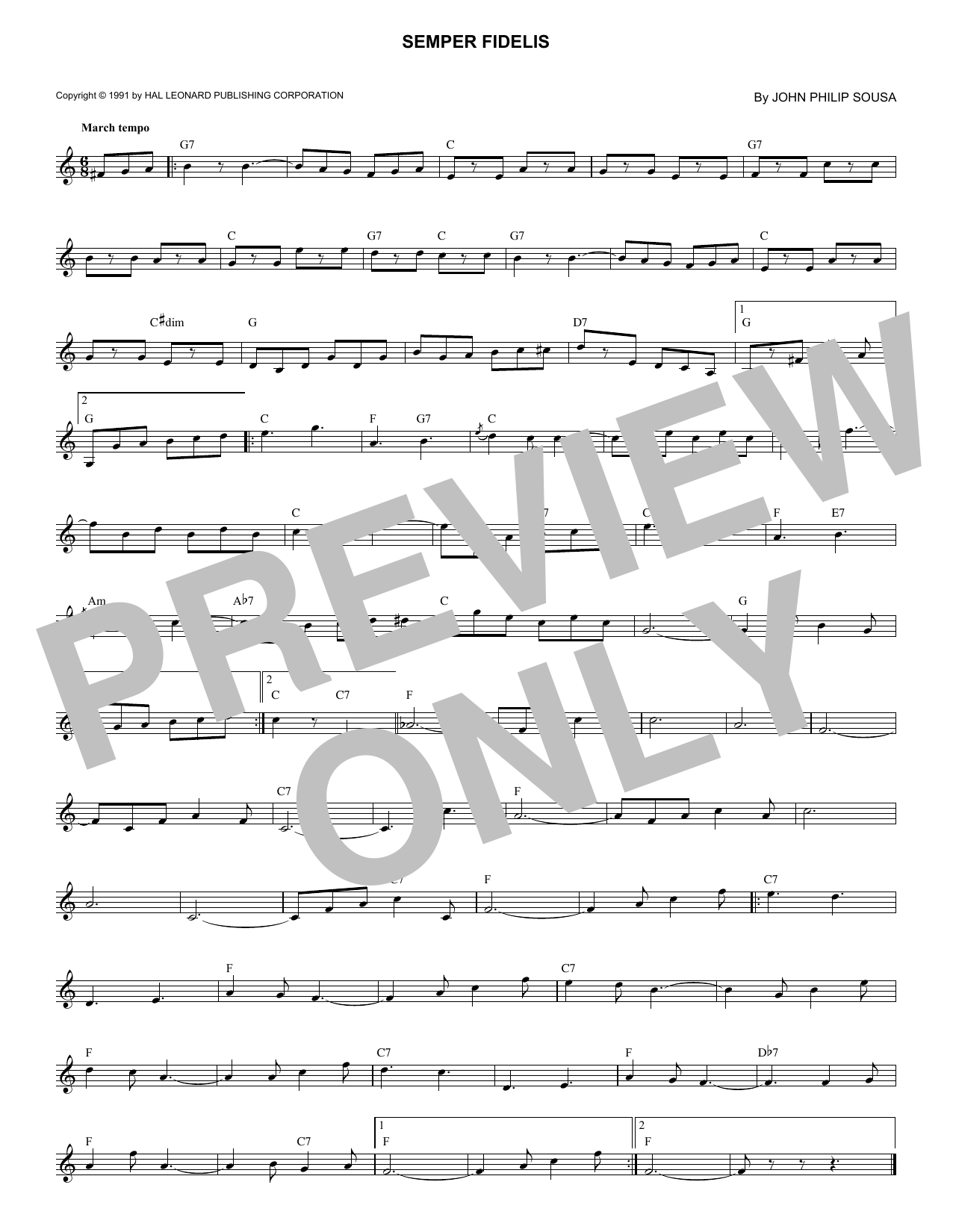
Semper Fidelis: Lead Sheet / Fake Book

Item: 35-DS00430866

Digital Download
$3.99
Description

Semper Fidelis: Lead Sheet / Fake Book isn't in MakeMusic Cloud just yet...but it could be. Let us know you'd like to see it, and you'll help shape what comes next. In the meantime, start a free trial and dive into thousands of interactive titles your students can play along with today.

Sample Audio
No sample audio found.
Sample Video
Additional Details
Publisher: Hal Leonard
Page Count: 1
SKU: 35-DS00430866

More about this title

About the Creator: John Philip Sousa

John Philip Sousa composed Semper Fidelis in 1888 as the official march of the United States Marine Corps. His gift for memorable melodic writing and his mastery of the march form made him one of the most celebrated composers of his era, and his works remain central to American musical identity.

Sousa's marches are characterized by strong harmonic foundation, clear structural logic, and melodies that seem to grow organically from simple musical ideas. His compositional approach prioritizes clarity and accessibility without sacrificing sophistication, making his works enduringly valuable for musicians of all levels.

Why we love this

This lead sheet version strips the march to its essential harmonic and melodic content, making it an excellent resource for jazz pianists, keyboard players, and vocalists who want to explore the tune's underlying structure. The single-page format and legible layout mean musicians can focus on interpretation rather than page management, and the familiar melody invites creative reharmonization and improvisation.

What to expect

Stately and purposeful, with an underlying sense of dignity and pride. The march character suggests forward momentum, though a lead sheet invites you to color that foundation with your own harmonic choices and emotional nuance.

Who it's for

Pianists and keyboard players seeking a straightforward harmonic map for solo performance, improvisation, or collaboration with vocalists. Voice students and singers will find this format practical for learning the tune's structure and preparing for rehearsal with accompanists.

How to get the most out of it

  • Identify the primary theme and any contrasting sections so you can balance statement with development; Sousa's marches often introduce a second strain that deserves equal weight in your interpretation
  • Reference a recorded version to absorb the characteristic rhythmic character and tempo, then bring your own touch to rubato and phrasing
  • If performing with ensemble or accompaniment, mark chord changes clearly and confirm the key center before the first rehearsal

How to use it

Include this in a patriotic or Americana concert program where it can anchor a set of Sousa works, or program it as an elegant interlude between heavier classical selections. It also works as a teaching tool in jazz harmony or popular song analysis, where students can explore how a melody sustains interest across repeated chord changes.

Skills your students will build

  • Reading lead sheet chord symbols and inversions
  • Understanding march form and structure
  • Adapting melody to keyboard voicings
  • Accompanying a singer from a single melodic line
  • Improvising reharmonization over a familiar tune

You May Also Like