
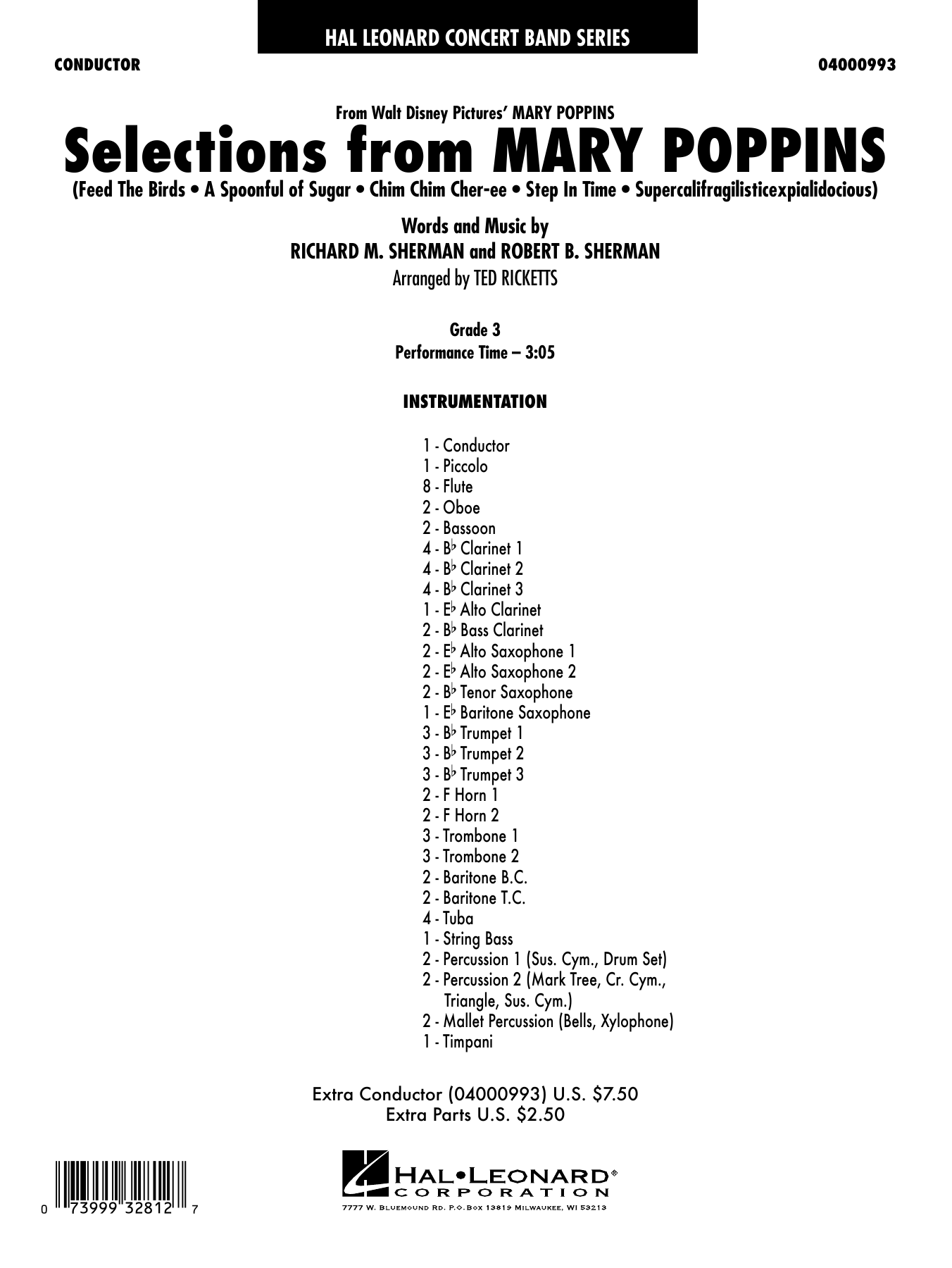

Selections from Mary Poppins: Concert Band Conductor Score & Parts
Arranged by Ted Ricketts
Grade: 3
Item: 35-PK01619452
$70.00
Pickup currently not available
Buy Extra Parts (Digital PDF Download)
Parts Added to Cart!
Description
One of the most endearing musicals of all time is this Disney classic featuring Julie Andrews and Dick Van Dyke. From top to bottom the quality and appeal of all the songs is unmatched. This medley is a guaranteed audience favorite and includes: Step in Time, Supercalifragilisticexpialidocious, Chim Chim Cher-ee, Feed the Birds and A Spoonful of Sugar.


Discover MakeMusic Cloud: thousands of interactive titles your students can play along with today.
Sample Audio
No sample audio found.
Sample Video
Additional Details
Publisher:
Hal Leonard
SKU:
35-PK01619452
More about this title
About the Arranger: Ted Ricketts
Ted Ricketts has built a reputation as an arranger who understands what makes music work in the concert band setting. His arrangements balance accessibility with musical substance, giving ensembles at intermediate levels the chance to perform recognizable material without sacrificing craftsmanship.
Why we love this
This medley captures five of Sherman Brothers' most memorable melodies in a single, cohesive package that audiences genuinely love. Ricketts handles the transitions with care, allowing each song to breathe while maintaining momentum across the full arrangement. At Grade 3, it sits at that sweet spot where students feel challenged but not overwhelmed, and the familiar source material keeps their engagement high throughout rehearsals.
What to expect
Stepping into this medley feels like a joyride through some of cinema's most whimsical moments. Ricketts captures the charm and optimism baked into every Sherman Brothers tune, from the sprightly bounce of chimney sweeps dancing across rooftops to the quiet wisdom of feeding the birds in the park. The arrangement invites your band to celebrate the emotional generosity these songs carry, turning a concert performance into something genuinely delightful.
Who it's for
Concert bands at the Grade 3 level, from middle school ensembles through adult community bands, will find this arrangement engaging and achievable. Directors seeking repertoire that connects with audiences beyond the music community will appreciate how instantly recognizable these melodies are. It works equally well for groups wanting a crowd-pleasing concert closer or a standalone program featuring film and television music.
How to get the most out of it
- Shape each song distinctly within the medley. 'Step in Time' demands rhythmic precision and energy, while 'Feed the Birds' calls for a gentler, more lyrical touch from your melodic voices.
- Balance the woodwind writing in 'Supercalifragilisticexpialidocious'. The tongue twisters move quickly, so lock in rhythmic clarity during sectional rehearsals before bringing it to full tempo.
- Use the contrasts between sections to your advantage. Letting dynamics drop noticeably before 'A Spoonful of Sugar' creates a refreshing moment of repose before the finale builds.
- Highlight the character of each tune through articulation choices. The playfulness that defines this score comes through when you commit fully to each song's personality rather than treating them as interchangeable melodies.
How to use it
Program this as your concert closer when you want the audience to leave smiling. It pairs beautifully alongside other film music selections, giving you thematic coherence for an entire program devoted to cinema. Early in the school year, this arrangement also serves as an excellent vehicle for building ensemble confidence, since students already know the melodies and can focus on intonation and blend rather than learning new material.
Skills your students will build
- Articulation clarity in fast passage work (Supercalifragilisticexpialidocious)
- Maintaining independent melodic lines while supporting harmonic texture
- Stylistic contrast across multiple songs within a single arrangement
- Phrasing and breath control in lyrical sections (Feed the Birds, A Spoonful of Sugar)
- Rhythmic precision in syncopated figures (Step in Time)
- Balance between section independence and ensemble cohesion