
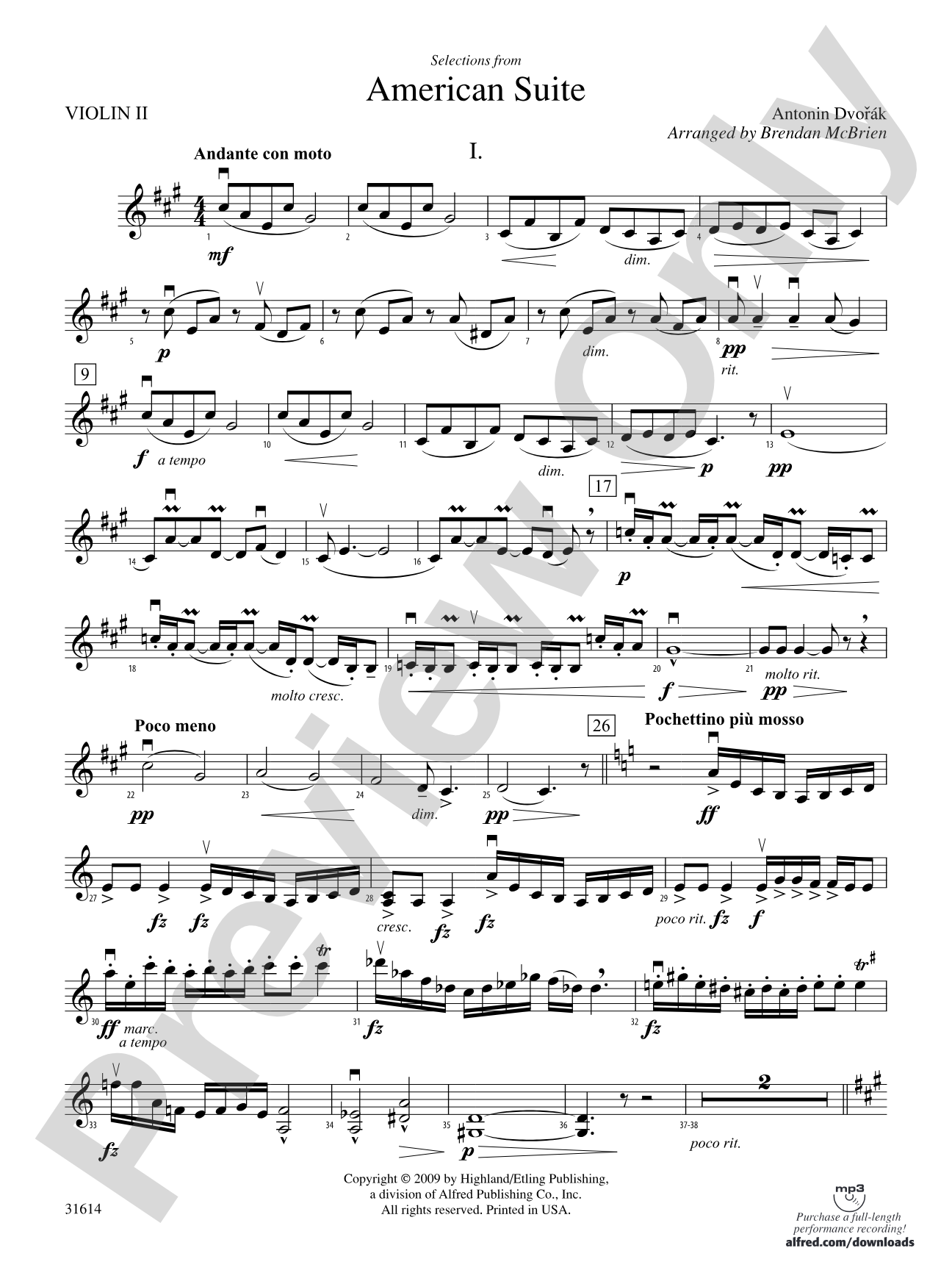

Selections from American Suite: 2nd Violin
By Antonín Dvorák / arr. Brendan McBrien
Grade: 4
Item: 00-PC-0001777_VN2
$3.00
Pickup currently not available
Description
A musical postcard to the world! Your audiences will be thrilled with this early piece of Americana, and your musicians will love the colors and energy of this uniquely American music as imagined by the great Czech master following his visit to America in the 1890s. This work contains music inspired by African-American, Native-American and Scottish music and features three movements (I, IV and V) of Antonín Dvorák's original five-movement suite.


Don't just read it, hear it, play along with it, and watch your students grow with it. In MakeMusic Cloud, Selections from American Suite: 2nd Violin comes alive with professional accompaniment, adjustable tempo, and built-in practice tools that turn solo practice into real progress.
Open in the Player
Jump straight in and assign it today.
Start Your Free Trial
Open this title and explore the full library in minutes.
Sample Audio
1
Audio File
--:--
0:00
0:00
Sample Video
No sample videos found.
Additional Details
Series:
Highland/Etling Full Orchestra
Publisher:
Alfred Music
Page Count:
200
SKU:
00-PC-0001777_VN2
More about this title
About the Composer: Antonin Dvorák
Antonín Dvořák (1841-1904) stands as one of the most significant composers of the Romantic era and among the first to synthesize European classical forms with folk music traditions. Born in Bohemia, he rose from relative obscurity to international prominence, earning respect from Brahms and becoming a bridge between the nationalist movements of Eastern Europe and the concert halls of Western music capitals.
Dvořák's 1892-1895 tenure in America profoundly shaped his compositional voice. During this period, he encountered African-American spirituals, Native-American melodies, and the broader musical landscape of the young nation, all of which influenced works including his celebrated Symphony No. 9 ("From the New World"). The American Suite reflects this cross-cultural curiosity and stands as a testament to his belief that great music emerges from authentic folk sources, regardless of their origin.
Why we love this
Dvořák's orchestration crackles with personality and color without sacrificing clarity or ensemble balance. At Grade 4, this arrangement maintains the structural integrity and harmonic sophistication of the original while remaining accessible to secondary orchestras. Programming Dvořák signals to your audience that your ensemble tackles substantive repertoire with cultural resonance, yet the music itself is so engaging that even younger listeners connect immediately.
What to expect
This is American music filtered through a European composer's fascination and admiration. The three movements pulse with rhythmic vitality, folk melody, and orchestral color that feels both intimate and grand. You'll hear echoes of spirituals and Native-American song woven into classical form, creating something genuinely unique that feels both nostalgic and fresh.
Who it's for
Grade 4 orchestras ready to explore masterworks beyond the standard Hollywood film-score arrangements. This selection works for orchestras with mixed experience levels because strong sections can carry those still developing, and the music itself is so rewarding that it motivates ensemble improvement.
How to get the most out of it
- Balance the melodic voices carefully across sections; Dvořák often layers folk-like themes in unexpected instrumental combinations, and clarity of line matters more than volume.
- Shape the phrase endings with intentional releases and breaths. This music breathes in the style of folk song, not symphonic grandiosity.
- Bring out the rhythmic vitality in the energetic sections without rushing. Dvořák's syncopations and cross-rhythms create forward momentum when kept steady rather than pressed.
- Use the conductor score to study how Dvořák distributes thematic material across the orchestra. This awareness helps you guide players toward understanding their role in the larger musical narrative.
How to use it
Program this early in your season to establish your orchestra's range and ambition, or use it as a centerpiece in a concert exploring cultural dialogue in music. The three-movement format allows flexibility in concert pacing, and the Americana theme pairs naturally with other 19th-century repertoire or contemporary works inspired by American vernacular traditions.
Skills your students will build
- Reading a full conductor score and understanding orchestral texture
- Balancing inner voices and obligato lines across multiple instrumental families
- Playing folk-inspired melodies with idiomatic style and flexibility of phrasing
- Coordinating rhythmic precision in syncopated passages and cross-rhythmic figures
- Responding to subtle dynamic shaping and color changes across large ensemble sections