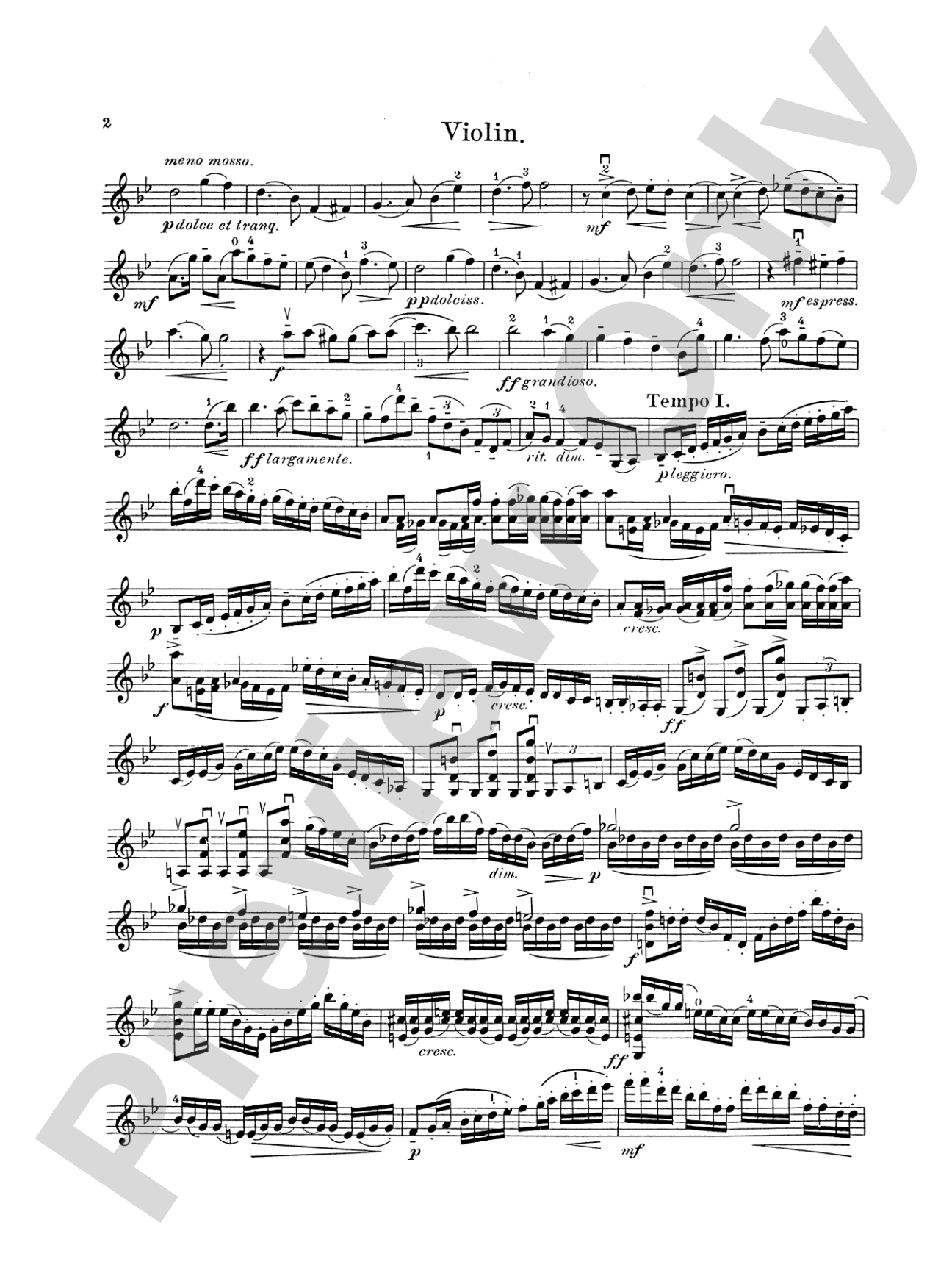
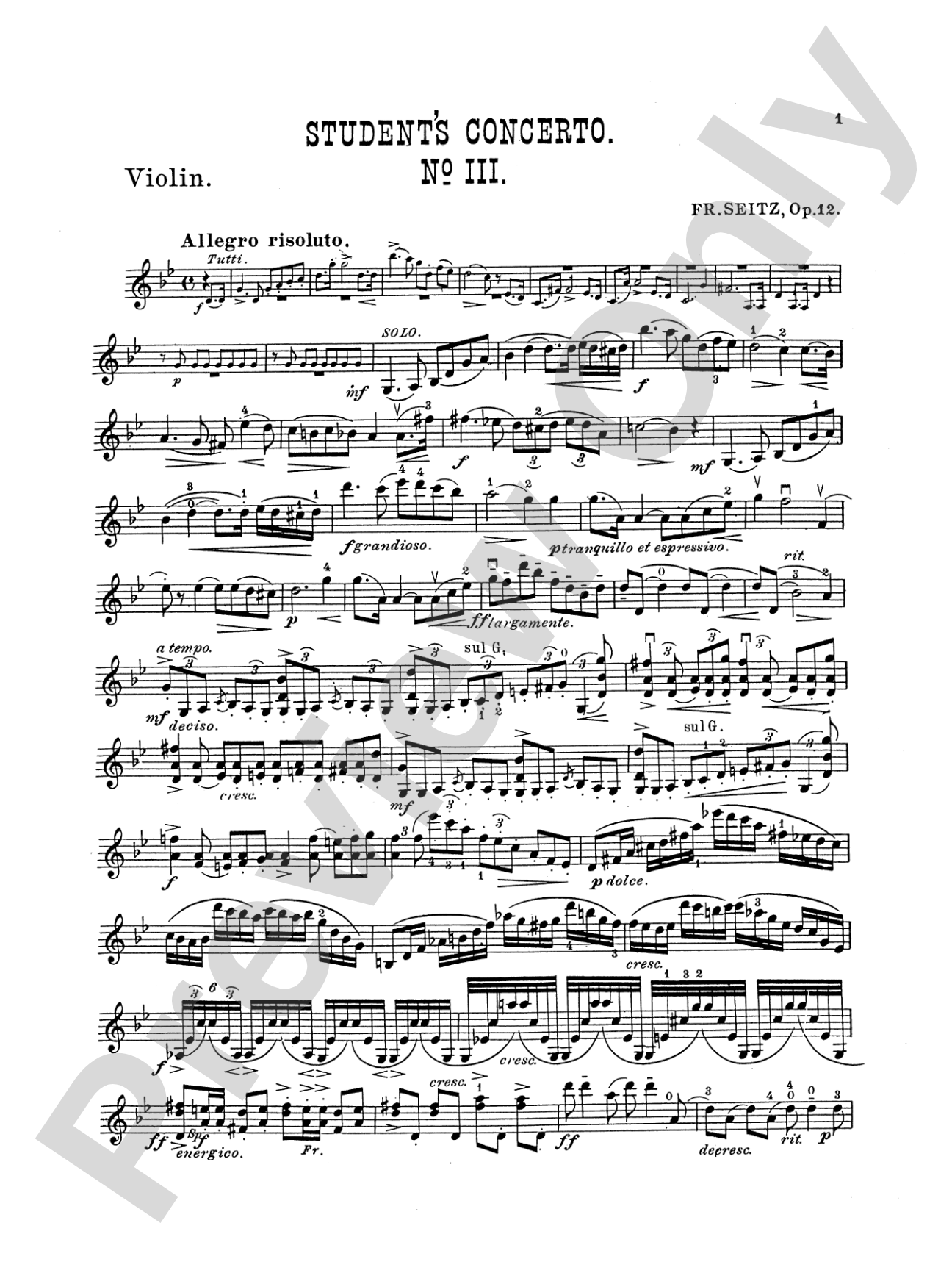
Seitz: Student's Concerto No. 3 in G Minor, Op. 12 Sheet Music Preview

Seitz: Student's Concerto No. 3 in G Minor, Op. 12

By Friedrich Seitz

Item: 00-PC-0009424

Digital Download
$3.99
Description
(1st to 5th Pos.)

Don't just read it, hear it, play along with it, and watch your students grow with it. In MakeMusic Cloud, Seitz: Student's Concerto No. 3 in G Minor, Op. 12 comes alive with professional accompaniment, adjustable tempo, and built-in practice tools that turn solo practice into real progress.

Sample Audio
No sample audio found.
Sample Video
Additional Details
Series: Kalmus Edition
Publisher: Alfred Music
Page Count: 28
SKU: 00-PC-0009424

More about this title

About the Composer: Friedrich Seitz

Friedrich Seitz (1848-1918) was a German violinist and composer whose pedagogical works remain central to violin training worldwide. His Student Concertos have shaped generations of young violinists, combining technical progression with genuine musical substance. Seitz understood the learning process intimately, writing pieces that challenge students at precisely the right moments without overwhelming them.

Why we love this

This concerto balances pedagogical purpose with real artistry in a way that rewards genuine practice. Students don't feel like they're playing an exercise; they're exploring a complete musical statement that will sound polished even at moderate tempos. The position work progresses naturally, and the violin writing sings throughout.

What to expect

The piece carries the earnest lyricism of the Romantic era without sentimentality. The minor key lends introspection and depth, while clear harmonic structure gives the writing directness. Opening phrases feel intimate; tuttis rise with genuine drama.

Who it's for

Advanced intermediate violinists (typically ages 11-15) preparing for contests, festivals, or examination recitals. This concerto assumes solid fundamentals in lower positions and is designed for students ready to extend their range into fifth position and beyond within a single coherent work.

How to get the most out of it

  • Establish a steady tempo in the first movement before adding expression; the harmonic language is clearer when the pulse is secure
  • Work the shift into fifth position separately, isolating the hand frame shift before integrating it into the phrase
  • Shape the theme with dynamic inflection rather than relying on rubato; Romantic-era clarity demands precise rhythm even at slower speeds
  • Use the piano part strategically in rehearsal to anchor your intonation across position changes

How to use it

Program this as a full recital centerpiece or as the main work on a student concerto competition. It pairs well with a shorter contemporary piece or character study, letting the Seitz anchor a 15-20 minute set. Teachers often select it for festival competitions because adjudicators recognize it as a standard benchmark for this level.

Skills your students will build

  • Position work in first through fifth positions
  • Thumb position awareness and hand frame adjustment
  • Intonation across extended range
  • Vibrato integration in sustained passages
  • Bow control and tone production in fast passagework
  • Shaping Romantic-era phrasing with dynamic arc
  • Reading and interpreting articulation and expressive markings

You May Also Like