Seems Like Old Times Sheet Music Preview

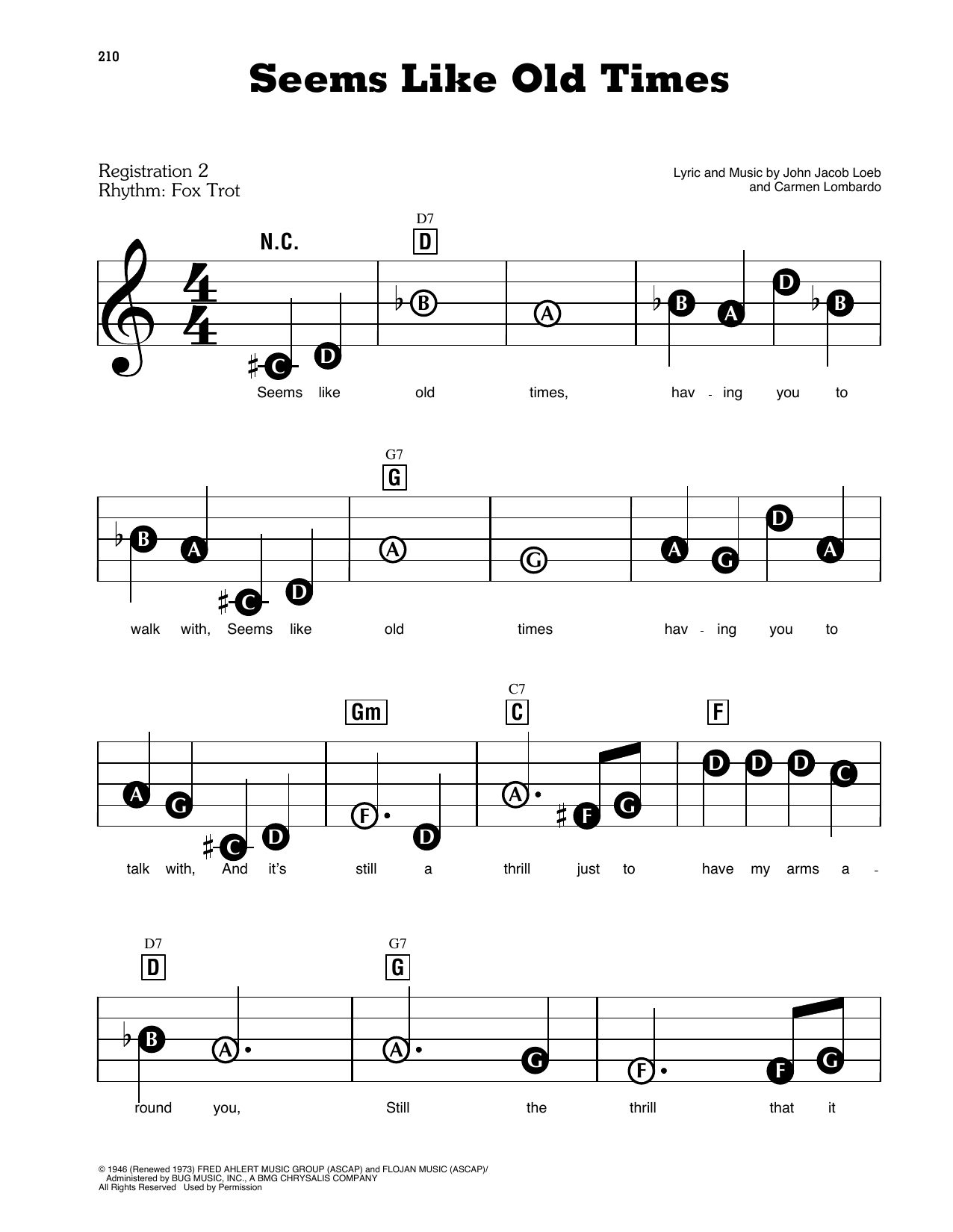
Seems Like Old Times: E-Z Play Today

As performed by John Jacob Loeb

Item: 35-DS00499328

Digital Download
$4.99
Description

Seems Like Old Times: E-Z Play Today isn't in MakeMusic Cloud just yet...but it could be. Let us know you'd like to see it, and you'll help shape what comes next. In the meantime, start a free trial and dive into thousands of interactive titles your students can play along with today.

Sample Audio
No sample audio found.
Sample Video
Additional Details
Publisher: Hal Leonard
Page Count: 2
SKU: 35-DS00499328

More about this title

About the Artist: John Jacob Loeb

John Jacob Loeb composed "Seems Like Old Times" during the golden age of American popular song, creating a standard that captures the warmth and sophistication of mid-century jazz and pop aesthetics. His work embodies the melodic clarity and harmonic elegance that defined the Great American Songbook, making his compositions enduring fixtures in jazz repertoire and piano curricula.

Why we love this

This tune sits in that sweet spot where students can access authentic jazz harmony without drowning in technical complexity. The E-Z Play format preserves the song's emotional arc while the manageable arrangement keeps focus on phrasing, touch, and the subtle swing that separates "playing the notes" from playing the song.

What to expect

Nostalgic and intimate, with the kind of harmonic warmth that suggests a piano bar or small club setting. The melody has a conversational quality, like reminiscing over an old memory, while the harmonies provide sophisticated underpinning that rewards listening to versions by great jazz pianists.

Who it's for

Pianists developing jazz and popular song repertoire who want a standard that teaches both melodic storytelling and jazz harmony. Students progressing from classical technique into the world of lead sheets and chord symbols will find this an inviting entry point.

How to get the most out of it

  • Approach the melody with conversational phrasing rather than metronomic regularity; let the familiar tune guide your rubato naturally.
  • Balance the left hand voicings so they support without overwhelming the melody line, especially in the bridge section.
  • Lean into the nostalgic quality by allowing slightly warmer pedal colors than you might use in a more modern idiom.
  • Consider the harmonic movement beneath the surface and voice-lead smoothly through chord changes rather than striking them mechanically.

How to use it

Include this in a jazz history unit exploring standards from the American songbook, or program it as a solo piece in a pop or jazz concert to demonstrate how classical pianists can authentically interpret non-classical repertoire. Its accessibility makes it suitable for both recitals and informal performances.

Skills your students will build

  • Interpreting lead sheet notation and chord symbols
  • Jazz phrasing and rubato within a formal structure
  • Voicing jazz harmonies on piano
  • Balancing melody and accompaniment in popular song arrangements
  • Stylistic authenticity in swing and jazz idioms

You May Also Like