
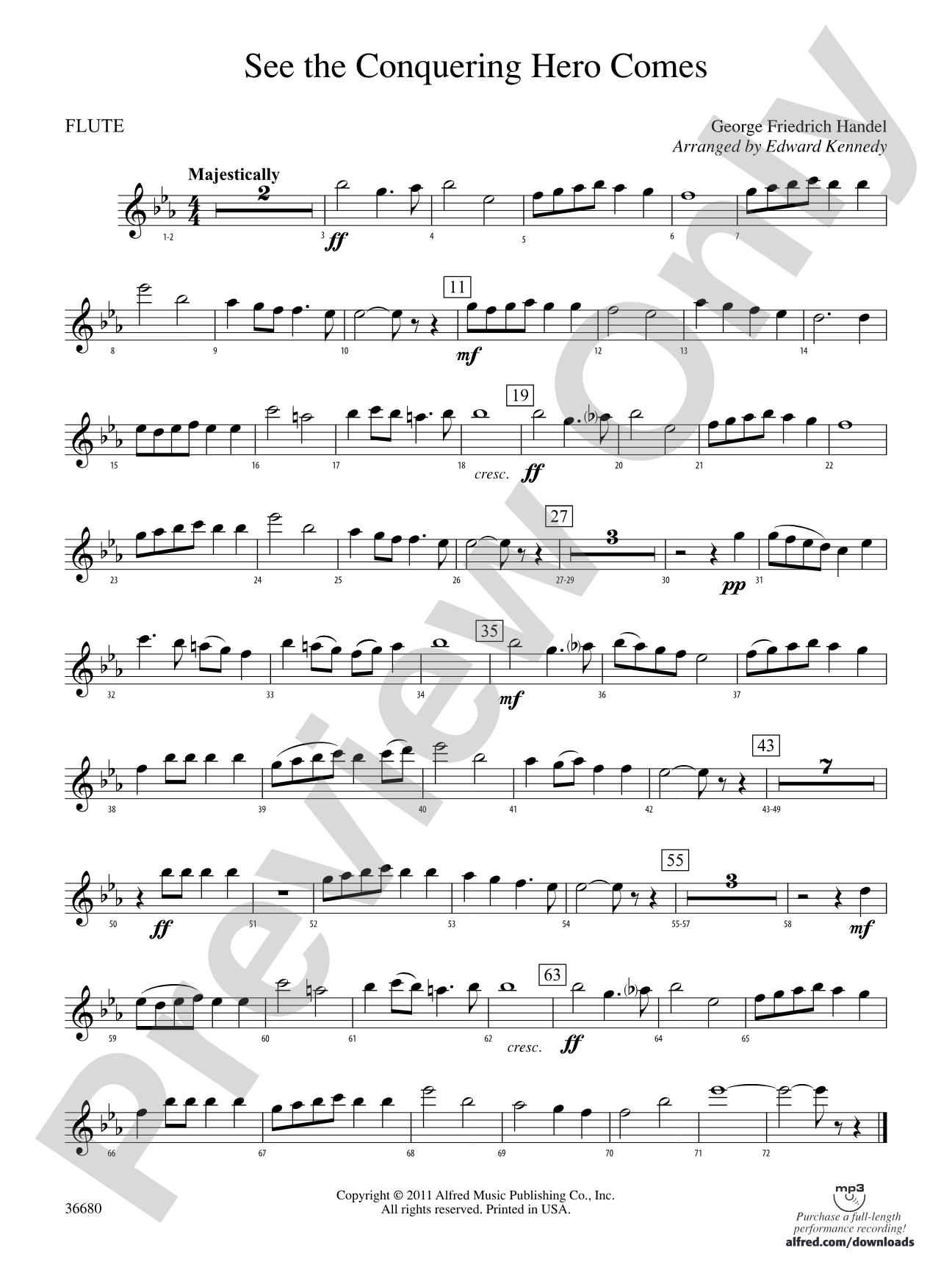

See the Conquering Hero Comes: Flute
By George Freidrich Handel / arr. Edward Kennedy
Grade: 1 (Very Easy)
Item: 00-PC-0015108_F1
$3.00
Pickup currently not available
Description
See the Conquering Hero Comes was composed by the great baroque composer George Friedrich Handel and is a chorus from his popular Oratorio Judas Maccabaeus. The work was composed in 1746 and was first performed in Covent Garden, London in 1747. In 1884, Edmund Louis Budry wrote new words to this chorus to create the very stirring and well known hymn "Thine Be the Glory." This theme and variations arrangement of Handel's famous piece features all sections of the band and makes a very effective concert opener or finale for young bands.
"Effective as an opener or closer, this is a satisfying way to introduce students to a significant composer."
- The Instrumentalist


"Effective as an opener or closer, this is a satisfying way to introduce students to a significant composer."
- The Instrumentalist
Don't just read it, hear it, play along with it, and watch your students grow with it. In MakeMusic Cloud, See the Conquering Hero Comes: Flute comes alive with professional accompaniment, adjustable tempo, and built-in practice tools that turn solo practice into real progress.
Open in the Player
Jump straight in and assign it today.
Start Your Free Trial
Open this title and explore the full library in minutes.
Sample Audio
1
Audio File
--:--
0:00
0:00
Sample Video
No sample videos found.
Additional Details
Series:
Alfred Debut Series
Publisher:
Alfred Music
Page Count:
118
SKU:
00-PC-0015108_F1
More about this title
About the Composer: George Freidrich Handel
George Frideric Handel (1685-1759) was a German-born composer who spent most of his professional life in England, where he became the dominant figure in operatic and oratorio composition. His prolific output included over 40 operas and 30 oratorios, establishing him as one of the most performed composers of the Baroque era. Handel's gift for memorable melody and dramatic expression made his work instantly popular with audiences, and his music remains central to concert repertoires across instrumental and vocal ensembles.
For music educators, Handel represents an essential bridge between Renaissance counterpoint and Classical form. His instrumental writing is direct and rewarding for student musicians; parts are clearly voiced with logical doublings, and his themes lend themselves naturally to variations and orchestration studies. Generations of young musicians have encountered Handel's genius through accessible arrangements like this one, gaining exposure to compositional techniques that influenced centuries of music that followed.
Why we love this
This arrangement captures what makes Handel's melody so enduring: it's instantly singable, harmonically satisfying, and works beautifully across the entire band. Edward Kennedy's variations structure gives young musicians something to anticipate and react to musically rather than simply reading notes, and the piece moves briskly enough that it never sags. Programming it as an opener or closer creates a moment of genuine substance without requiring advanced technical facility.
What to expect
Stately and triumphant, with the character of a processional or fanfare. The famous melody carries warmth and dignity; even in simple voicing, it projects confidence. Handel's harmonic language feels both historic and inviting, never archaic.
Who it's for
Beginning and young concert bands (Grades 1-2) seeking repertoire that combines accessibility with legitimate musical substance. This works for directors introducing students to Baroque composition and for ensembles looking for a concert piece that sounds polished without demanding technical virtuosity.
How to get the most out of it
- Shape each variation distinctly. The first statement might be straightforward and lyrical; when the melody passes to different sections, adjust articulation and dynamics to highlight the new color. This teaches students to listen for orchestration changes.
- Balance sustained voices against moving figures. In variations where some sections hold harmony notes, ensure those players understand they are the foundation and resist rushing to match lighter, faster passages around them.
- Let the theme breathe at natural phrase endings. Even in Grade 1 literature, small pauses or slight tempo flexibility at perfect cadences will clarify the harmonic structure and make the piece feel more intentional than mechanical.
- Establish a confident tempo before the downbeat. This piece thrives on forward motion. A rehearsal that settles the opening tempo through a full measure count or conductor gesture gives your band confidence and prevents the opening from feeling tentative.
How to use it
Open your concert with this piece to establish a sense of occasion and musical sophistication from the first notes. The title and connection to Handel also work well in thematic programs exploring Baroque composers or in educational contexts where you want to highlight masterworks arranged for young ensembles. Its ceremonial quality makes it equally effective as a concert finale, leaving the audience with a stately, memorable conclusion.
Skills your students will build
- Sustaining lyrical phrasing across simple harmonic progressions
- Recognizing and responding to melodic variation across instrumental sections
- Balancing sustained voices against moving figures in multi-part textures
- Reading and performing standard concert band voicings
- Understanding historical context of Baroque composition through performance