
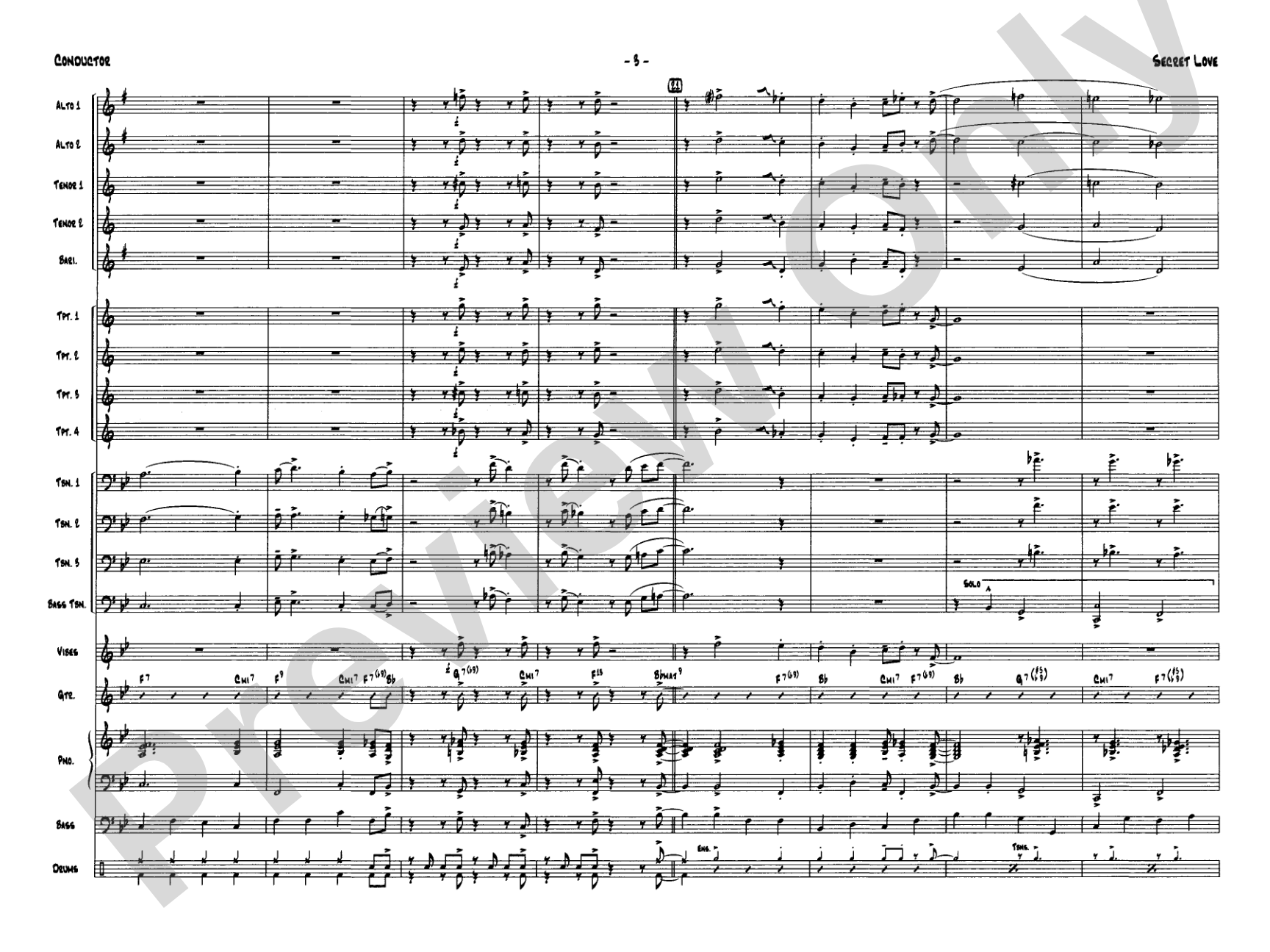
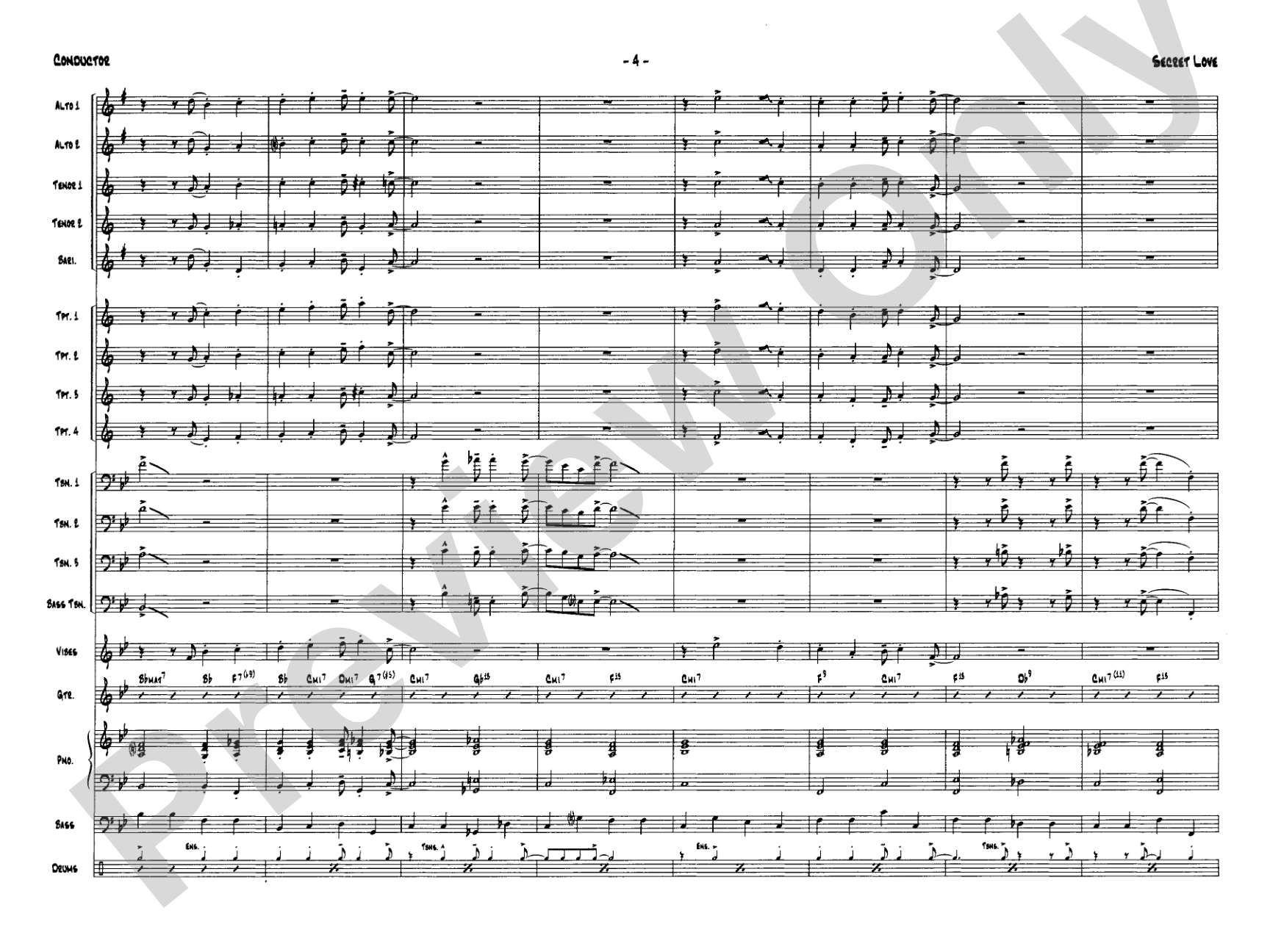
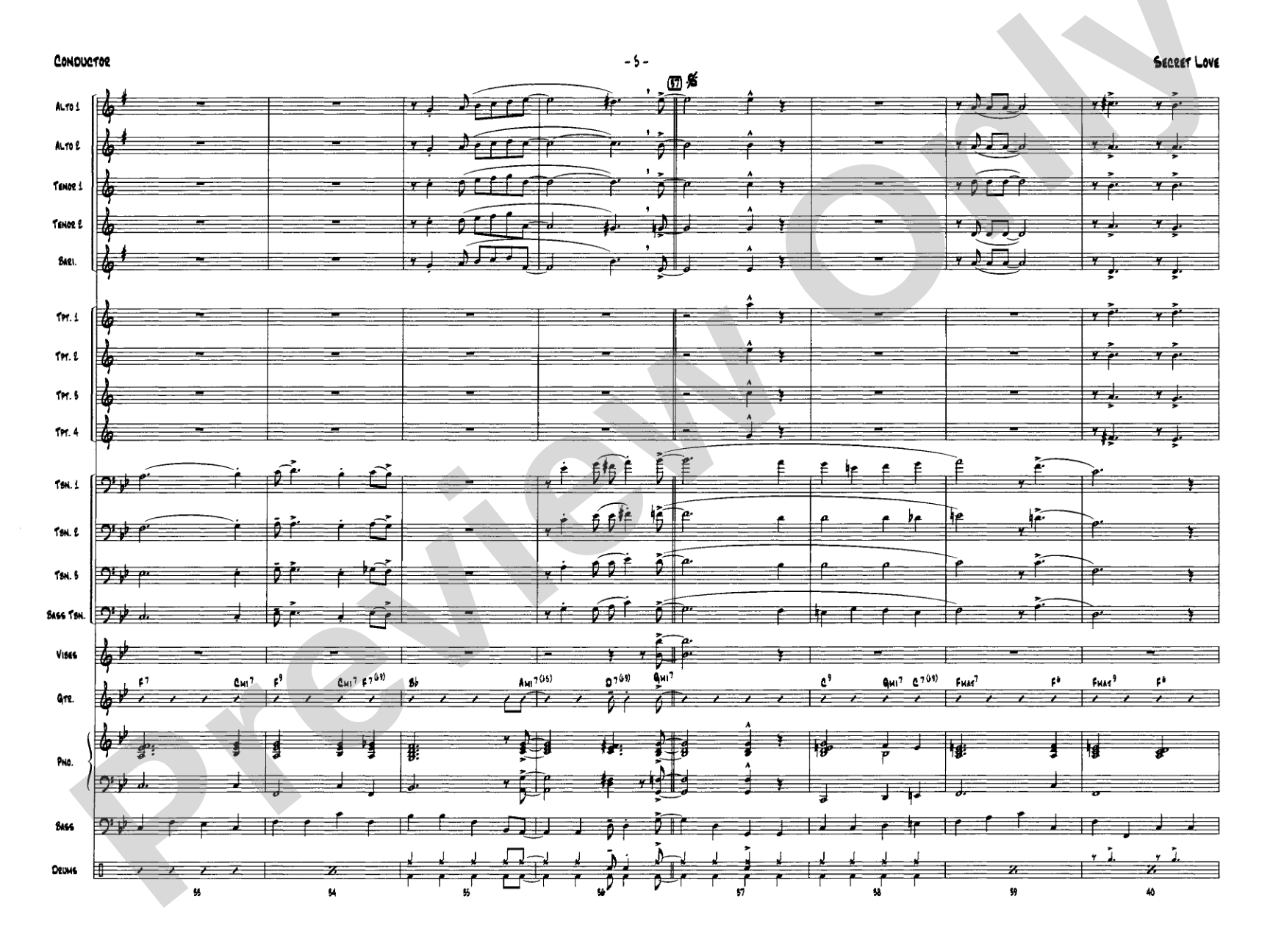
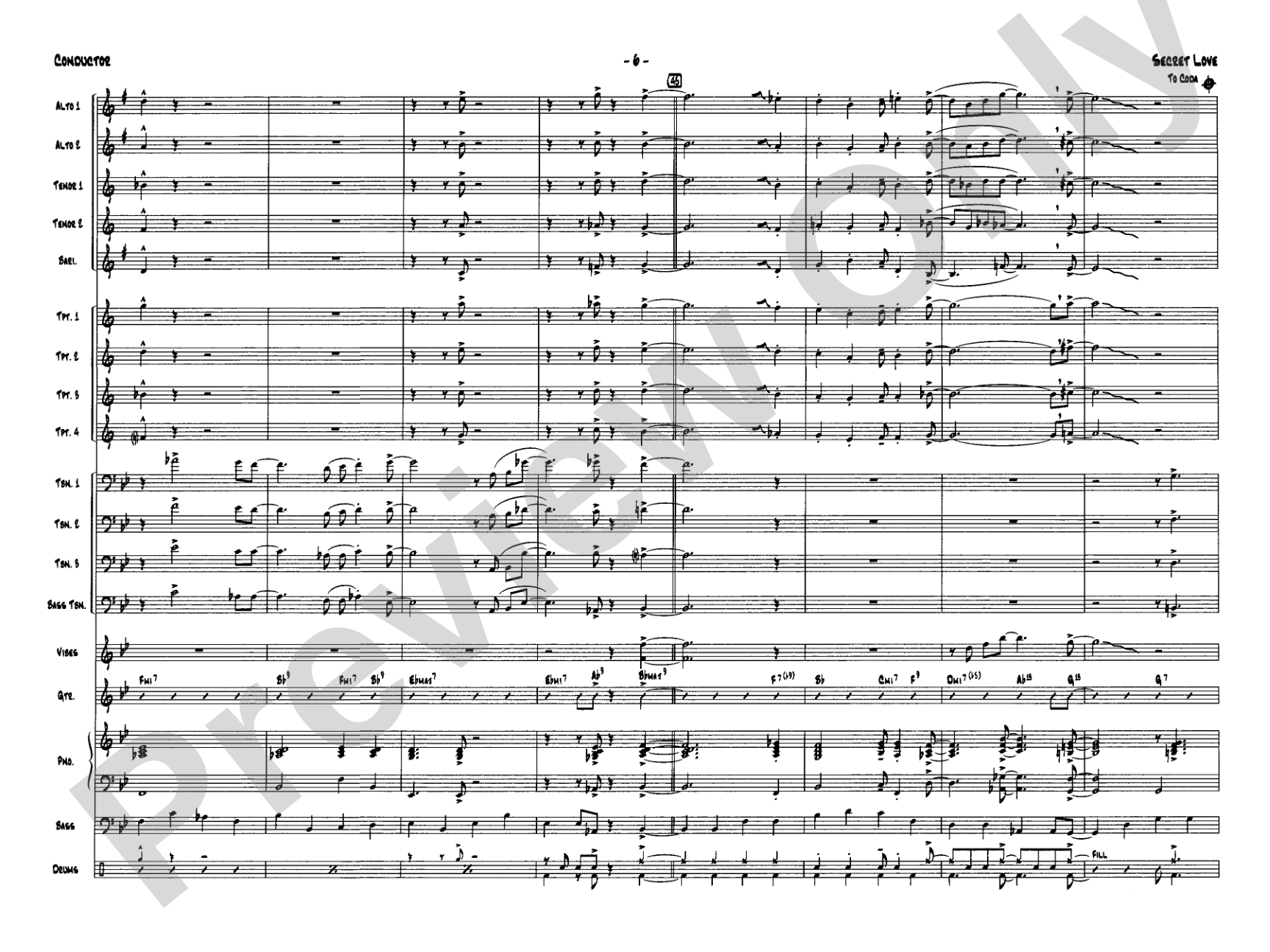
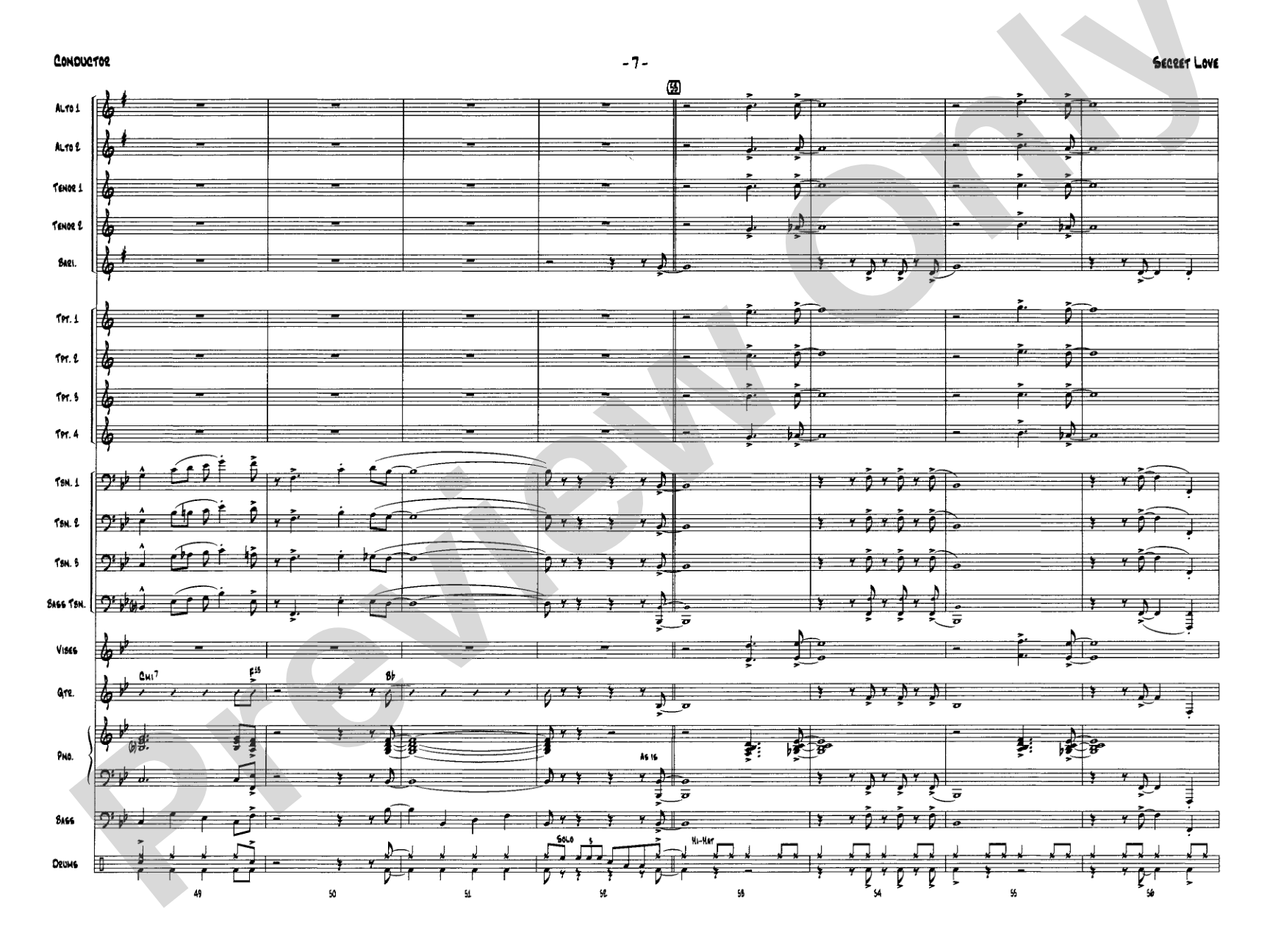
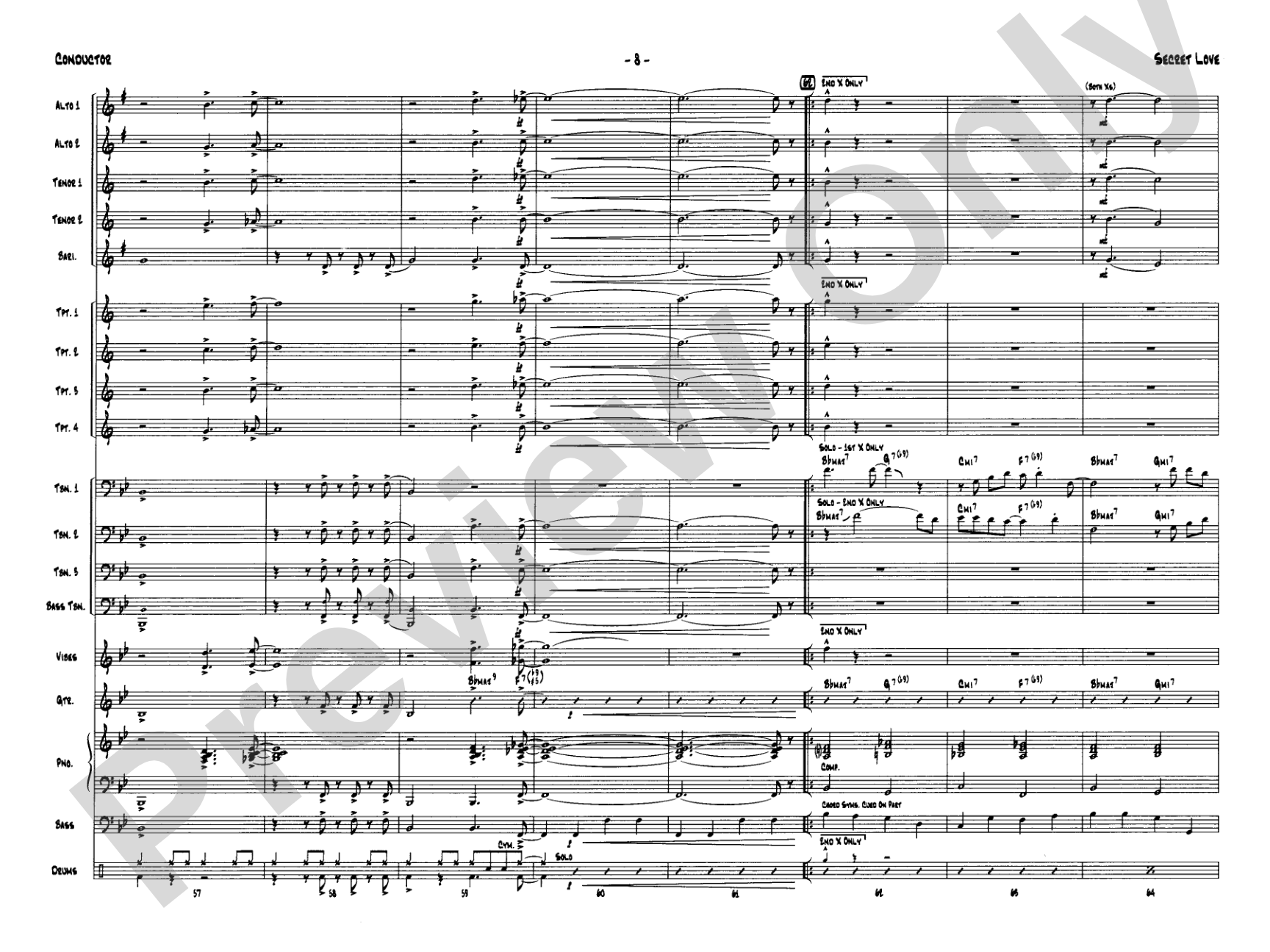
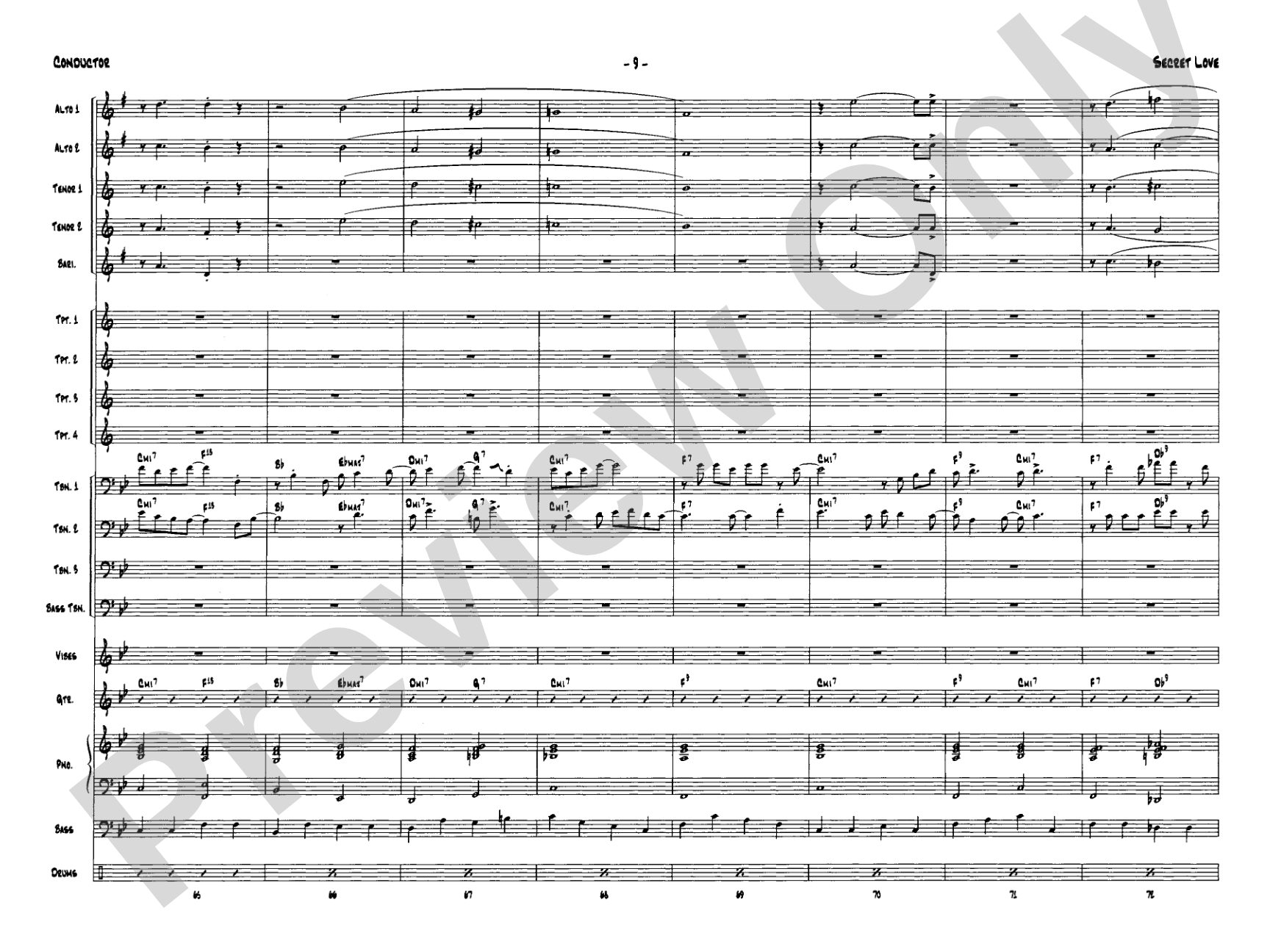
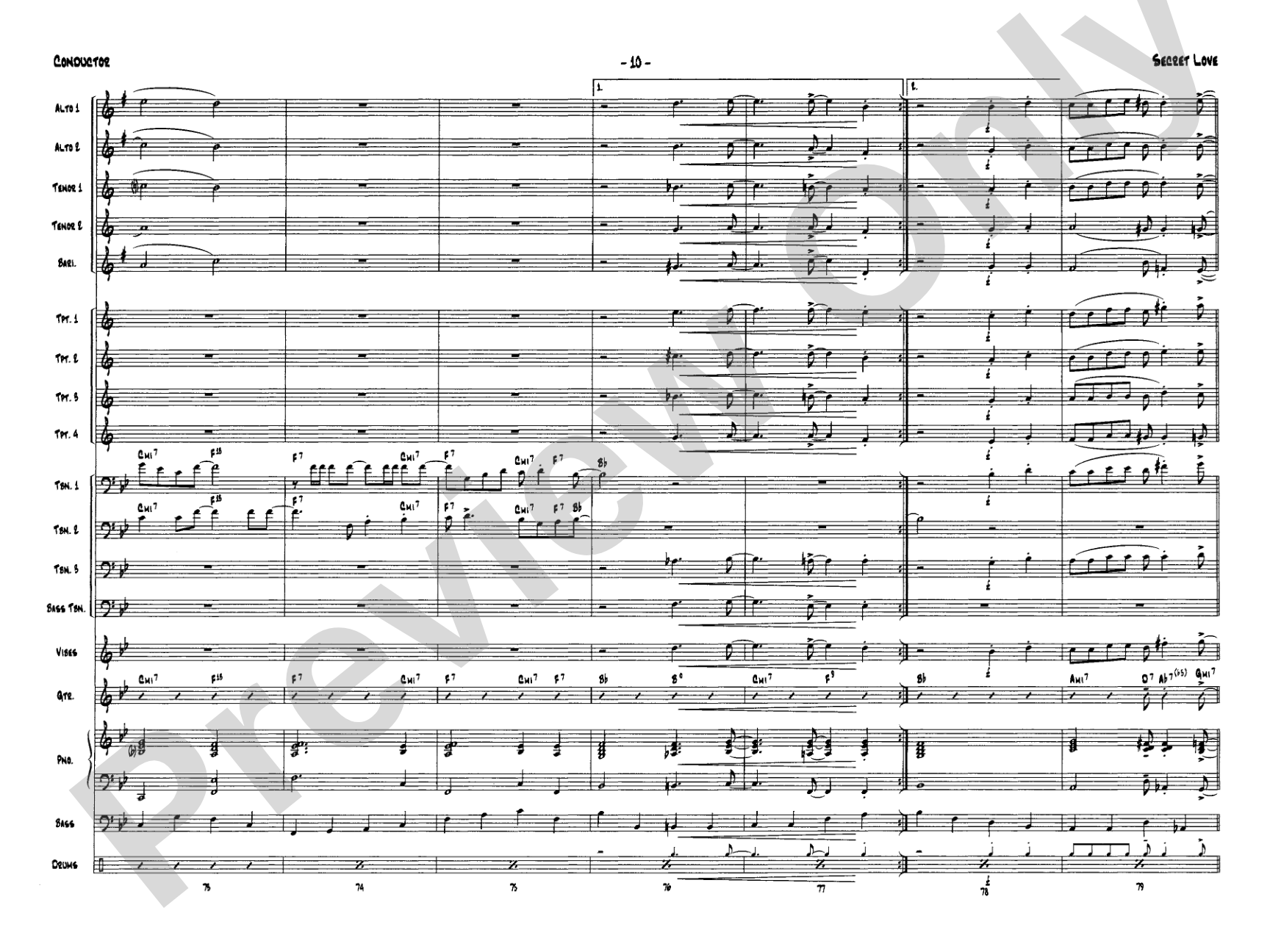
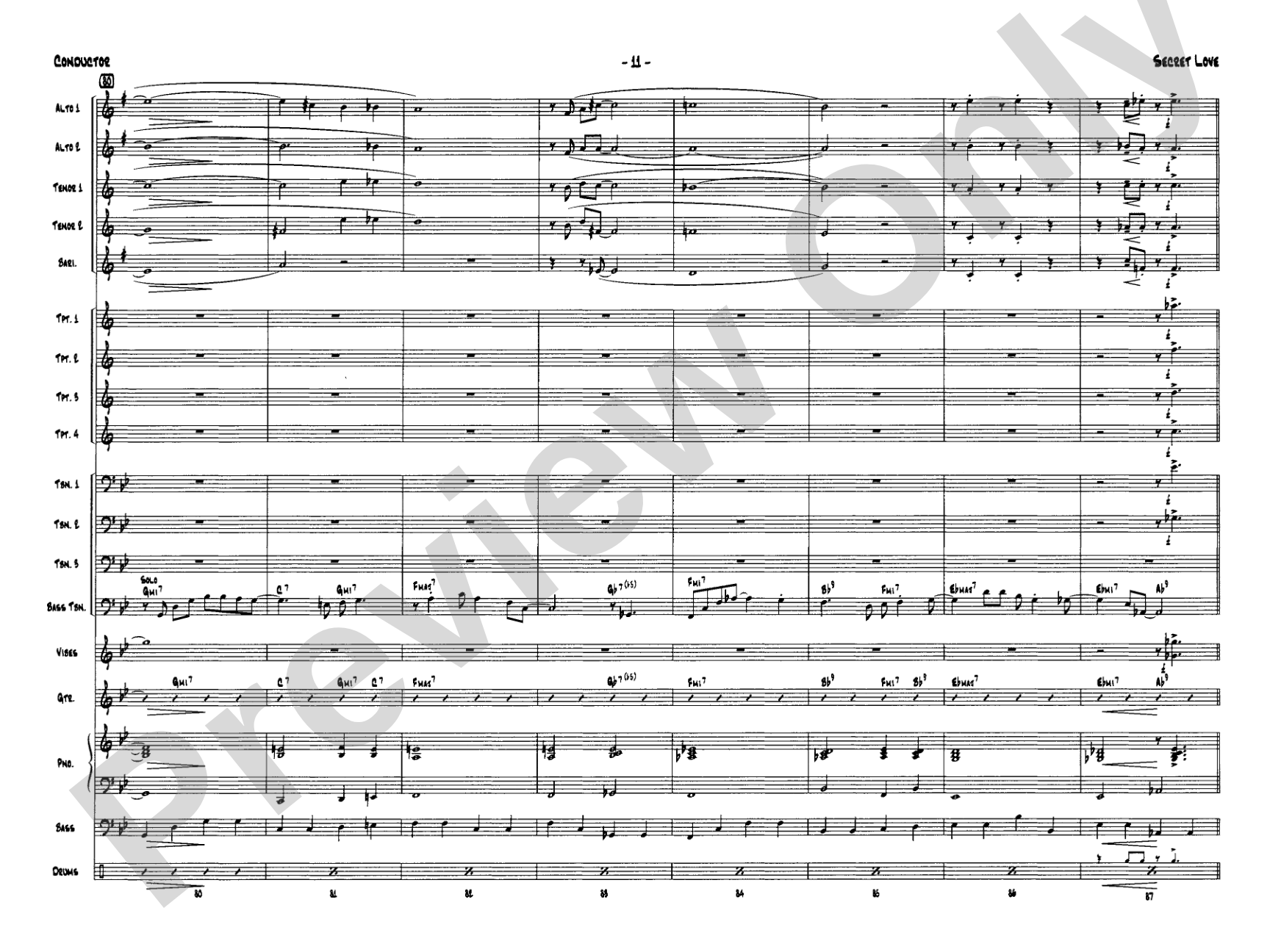
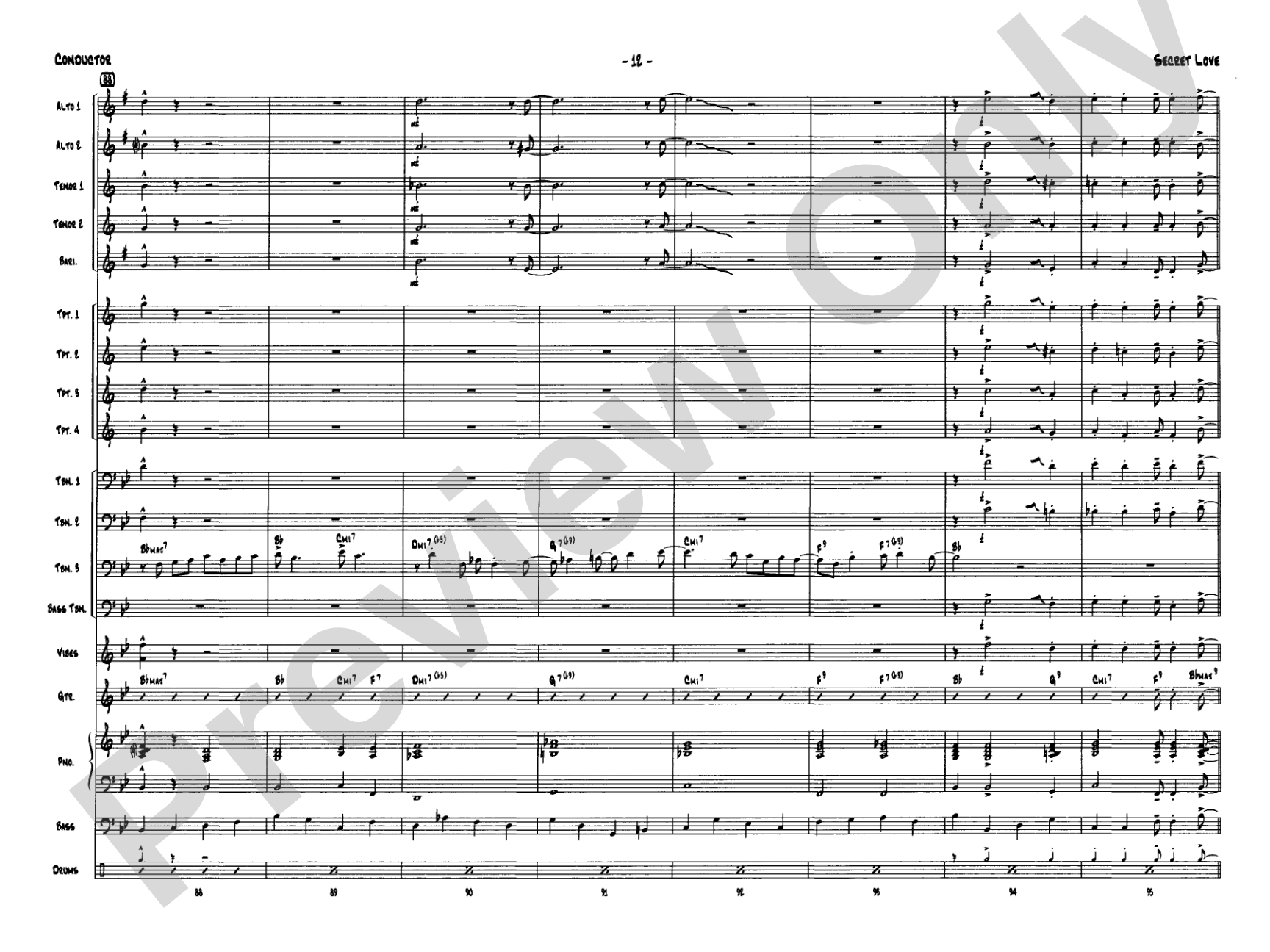
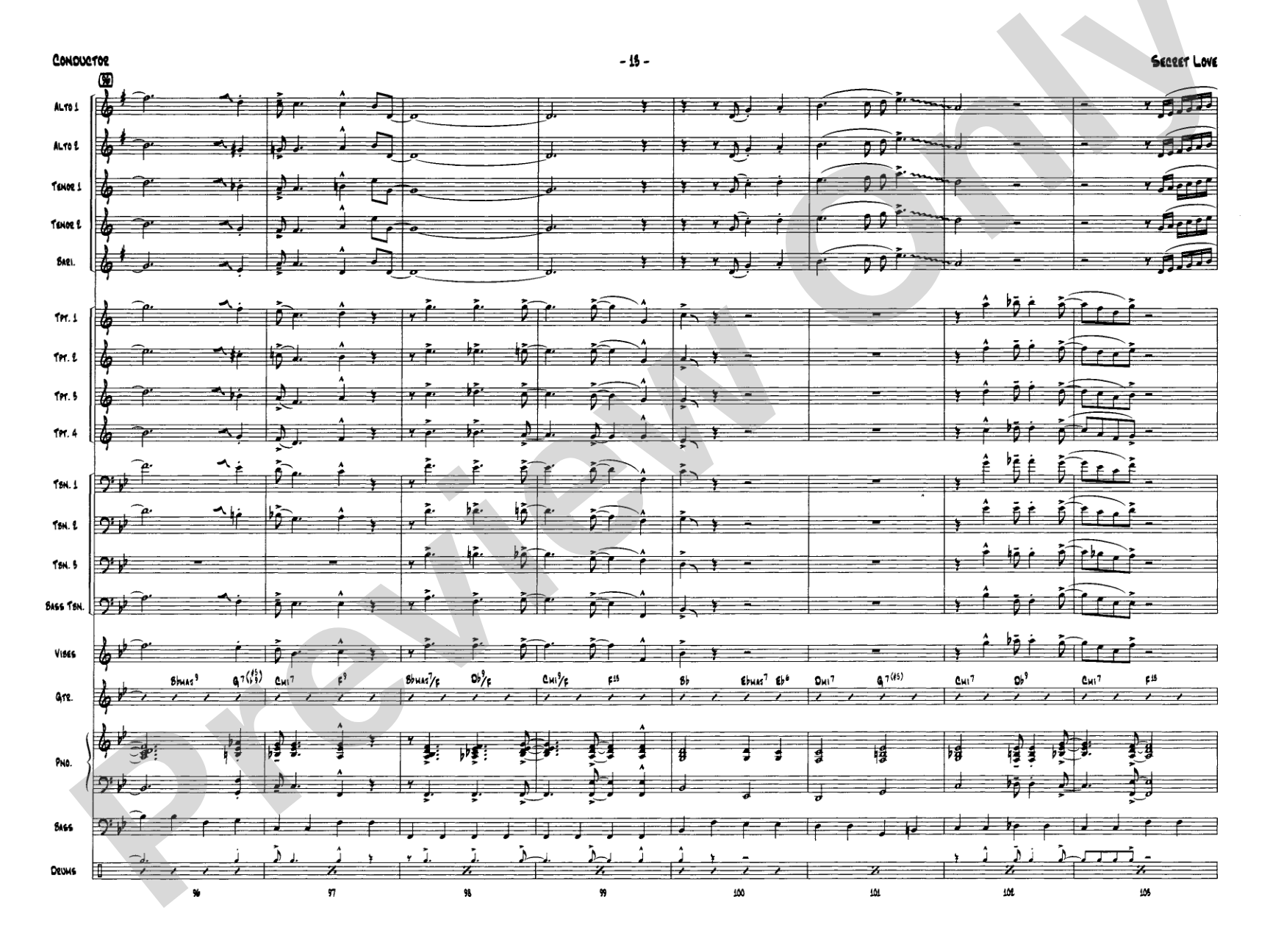
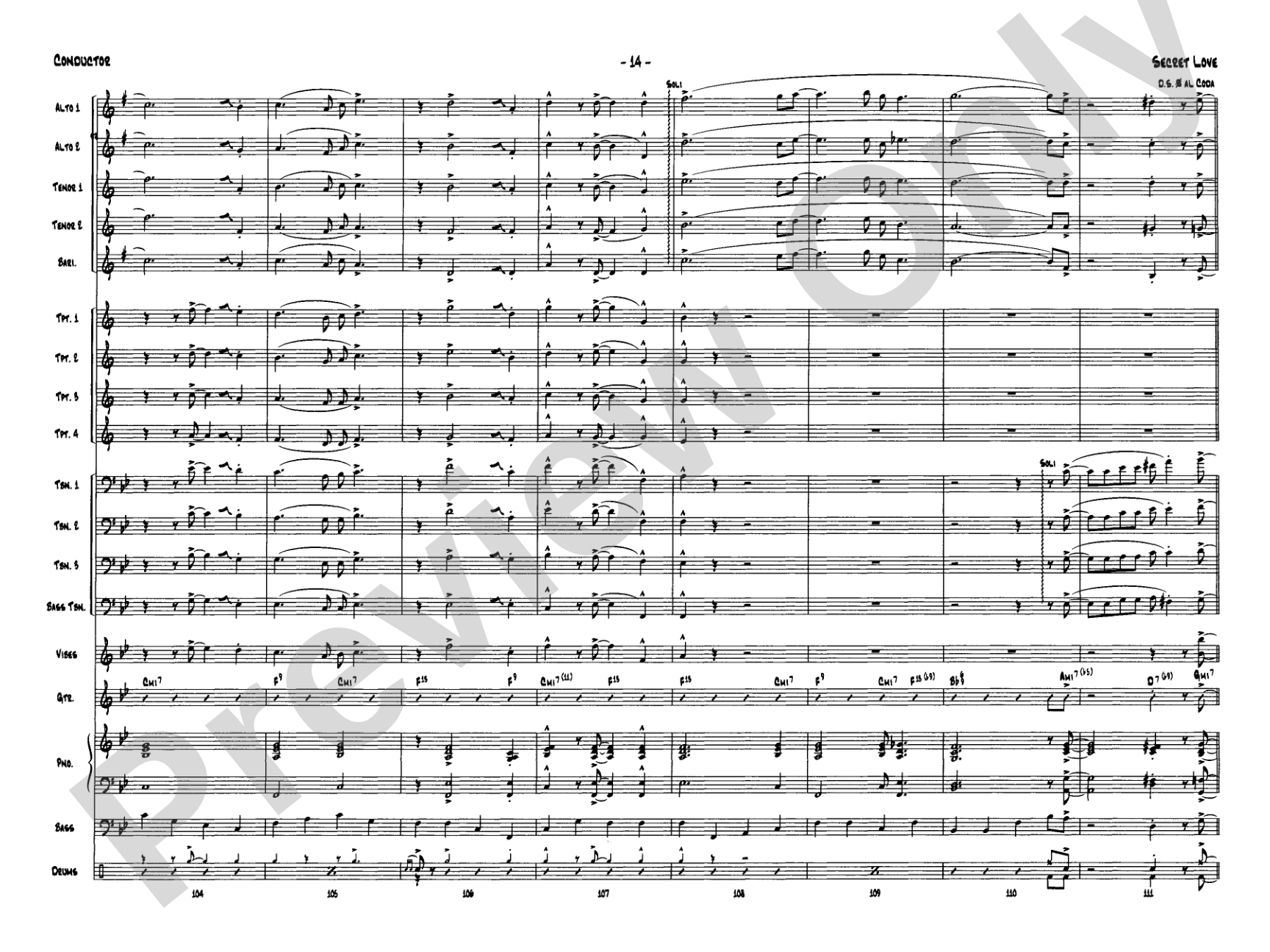
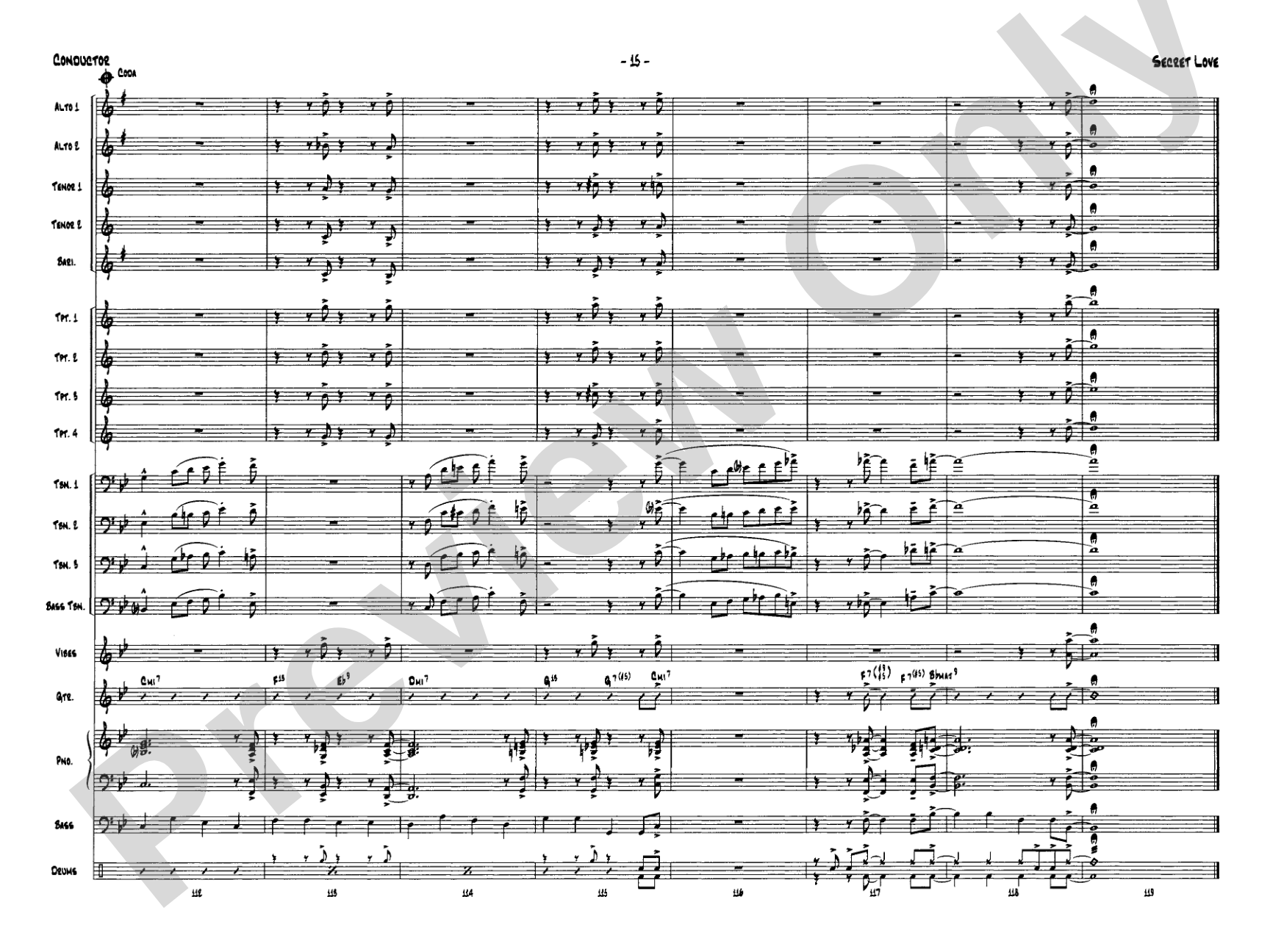




Secret Love: Score
Words by Paul Francis Webster, music by Sammy Fain / arr. Dave Wolpe
Grade: 3 (Medium)
Item: 00-PR-0004032
$10.00
Pickup currently not available
Description
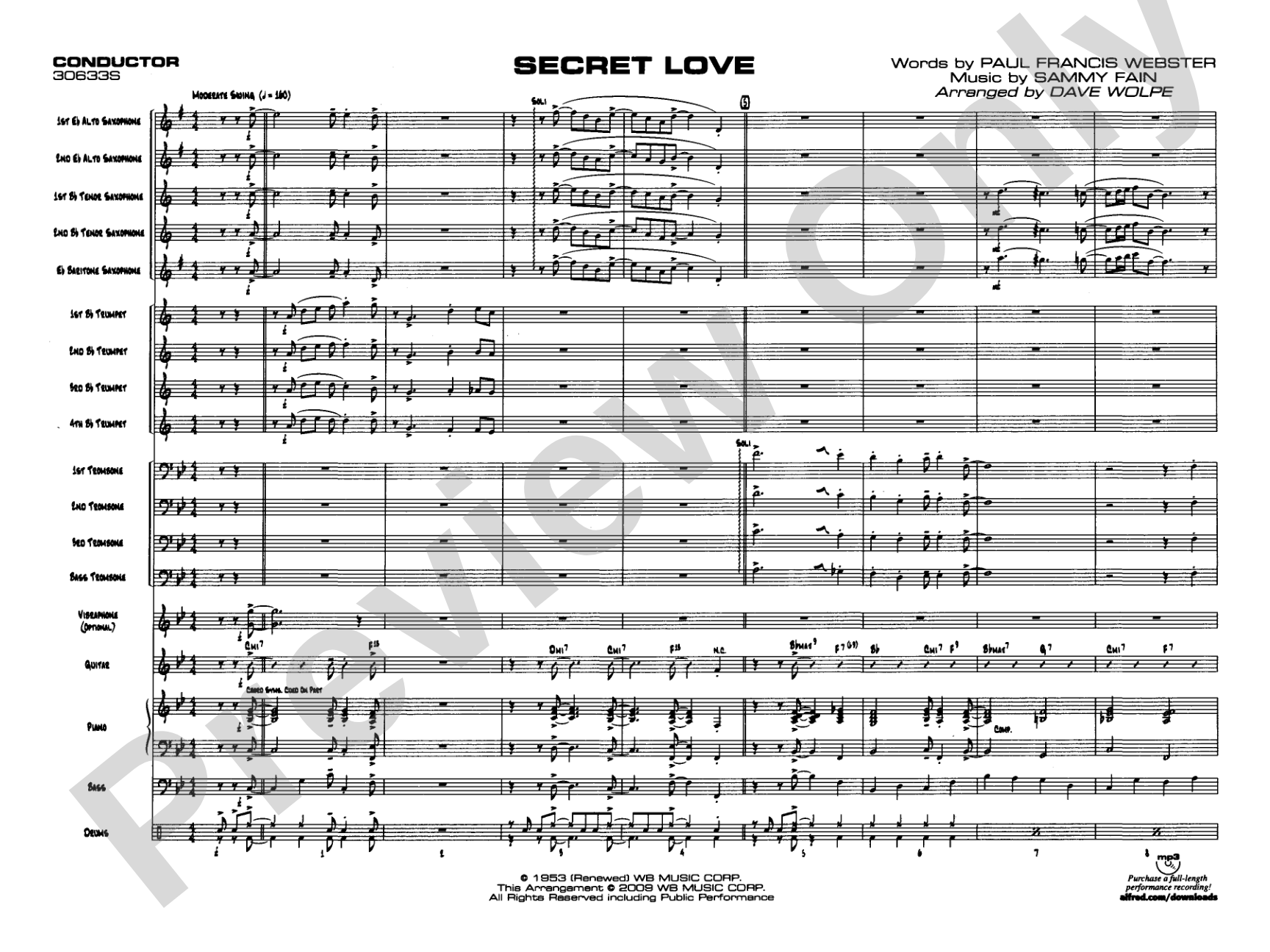
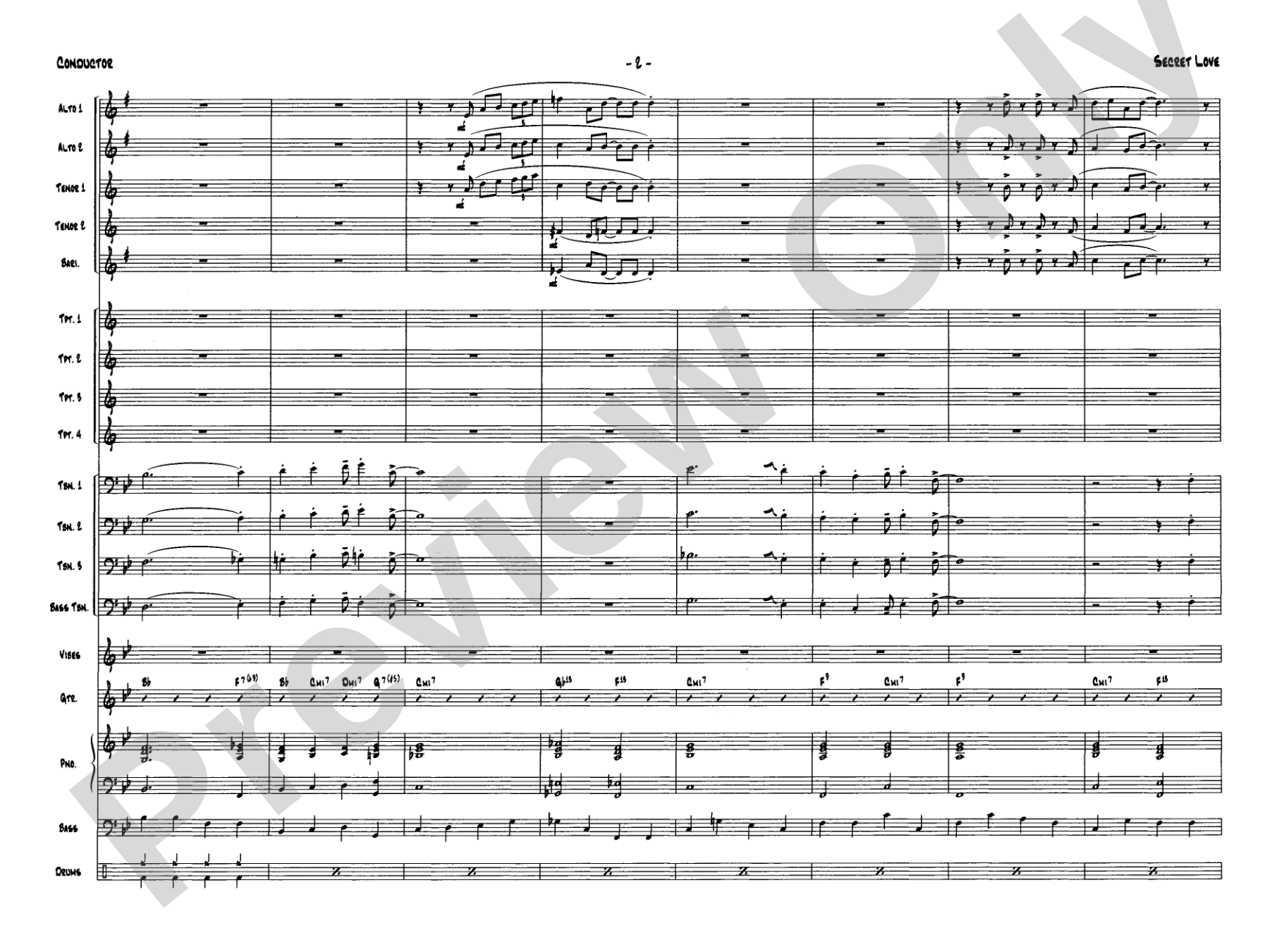
Featuring the trombone section, Dave Wolpe's chart on Secret Love is outstanding! All four parts have written-out solo sections, plenty of section work and nice ensemble parts. Lead 'bone range is to high B-flat and lead trumpet is to written B, above the staff. A terrific chart to showcase your trombones. (3:43)


Don't just read it, hear it, play along with it, and watch your students grow with it. In MakeMusic Cloud, Secret Love: Score comes alive with professional accompaniment, adjustable tempo, and built-in practice tools that turn solo practice into real progress.
Open in the Player
Jump straight in and assign it today.
Start Your Free Trial
Open this title and explore the full library in minutes.
Sample Audio
1
Audio File
--:--
0:00
0:00
Sample Video
No sample videos found.
Additional Details
Series:
Jazz Band Series
Publisher:
Alfred Music
Page Count:
102
SKU:
00-PR-0004032
More about this title
About the Composer: Sammy Fain
Sammy Fain (1902-1989) composed for Broadway, Hollywood, and popular song throughout a prolific career that spanned decades. His melodies are singable and memorable, with harmonic sophistication that translates beautifully to jazz arrangements. Fain's work appears regularly in jazz repertoire because his songs have natural swing and enough harmonic interest to sustain improvisation and reharmonization.
Why we love this
Dave Wolpe's arrangement puts the trombone section front and center without sacrificing ensemble cohesion. The written-out solos across all four bone parts give every trombonist a chance to shine, while the section work and full ensemble passages keep the whole band engaged and sounding unified.
What to expect
Classic swing with warmth and charm. The melody sits naturally in the trombone range, and Wolpe's voicings let the bone section sing while the ensemble parts bounce with that easy, rolling feel that makes audiences smile. There's sophistication here without pretension.
Who it's for
Jazz ensemble directors working with Grade 3 players who have a solid trombone section and want a vehicle that showcases that strength. Lead trumpet and lead trombone players need comfortable facility in the upper register, but the rest of the ensemble parts are well-balanced for developing players.
How to get the most out of it
- Balance the trombone solo sections carefully against the rhythm section so the written lines remain clear and present; these solos are the feature.
- Ensure the lead trumpet player is comfortable at written B above the staff before finalizing the rehearsal schedule; plan extra sectional time if needed.
- Let the lead bone player know the part sits up to high B-flat and schedule time to build range if that's a stretch for your current lead.
- Use the recorded accompaniment to lock the rhythm section's pocket before bringing in the horns, then layer the ensemble parts once the foundation is solid.
How to use it
Program this as a feature for a jazz concert, sandwiching it between a high-energy opener and a closing number to give the audience a moment to settle into the swing feel. It's also an excellent piece for a student jazz recital or a community concert where you want something recognizable and crowd-pleasing that also demonstrates your ensemble's musicianship.
Skills your students will build
- Reading and executing written solo lines within a full ensemble context
- Balancing section work with featured solo passages
- Intonation and voicing in the upper register (lead trumpet and lead trombone)
- Swing feel and phrasing across the full ensemble
- Listening to the rhythm section while playing written parts